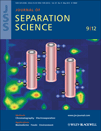
JOURNAL OF SEPARATION SCIENCE
metrics 2024
Advancing the Frontiers of Separation Science
Introduction
JOURNAL OF SEPARATION SCIENCE, published by WILEY-V C H VERLAG GMBH in Germany, is a premier platform dedicated to the advancement of knowledge in the fields of analytical chemistry and filtration and separation technologies. With an impact factor that reflects its strong influence—ranking #42 in Analytical Chemistry and #8 in Filtration and Separation—the journal strives to disseminate high-quality research findings from both academia and industry. The journal has established a significant readership, evidenced by its Scopus rankings, and is indexed under ISSN 1615-9306 and E-ISSN 1615-9314. As part of its commitment to accessibility, the journal provides open access options, enabling broader dissemination of innovative research. Since its convergence in 2000 and continuing through 2024, JOURNAL OF SEPARATION SCIENCE has become essential for researchers, professionals, and students aiming to stay at the forefront of separation science methodologies and applications, thereby actively influencing advancements in both theoretical knowledge and practical implementations.
Metrics 2024
 0.532.802.70117
Metrics History
Rank 2024
Scopus
IF (Web Of Science)
JCI (Web Of Science)
Quartile History
Similar Journals
THEORETICAL FOUNDATIONS OF CHEMICAL ENGINEERING
Building Bridges Between Theory and PracticeTHEORETICAL FOUNDATIONS OF CHEMICAL ENGINEERING is an esteemed academic journal published by PLEIADES PUBLISHING INC, dedicated to advancing the field of chemical engineering and chemistry through rigorous theoretical discourse and scholarly communication. With a history of publication dating back to 1974, the journal has been a vital resource for researchers and professionals, contributing to the foundation of knowledge in this multidisciplinary domain. Although it does not offer open-access options, it remains an essential platform for innovative research, boasting a 2023 ranking in the Q3 quartile for both Chemical Engineering and General Chemistry categories. The journal is indexed in Scopus, where it ranks #210 out of 273 in Chemical Engineering and #317 out of 408 in Chemistry, emphasizing its growing relevance within the scholarly community. Researchers, educators, and students alike can benefit from the insights and findings shared within its pages, making it a critical venue for those seeking to enhance their expertise in theoretical chemical engineering.
JPC-JOURNAL OF PLANAR CHROMATOGRAPHY-MODERN TLC
Exploring Modern TLC for Tomorrow's Discoveries.JPC-JOURNAL OF PLANAR CHROMATOGRAPHY-MODERN TLC, published by Springer Heidelberg, is a pivotal resource in the fields of Analytical Chemistry, Biochemistry, and Clinical Biochemistry. With an ISSN of 0933-4173 and an E-ISSN of 1789-0993, this journal serves as an essential platform for the dissemination of innovative research on planar chromatography techniques, specifically modern thin-layer chromatography (TLC). With its upcoming coverage extending to 2024 and a third quartile ranking (Q3) across major scientific categories in 2023, it addresses the critical advancements and applications in analytical methods. Although it does not offer open access, the journal's rigorous peer-review process ensures high-quality findings that contribute to the progression of these vital scientific disciplines. The journal is located in Heidelberg, Germany, and continues to be a beacon for researchers, professionals, and students who seek to enhance their knowledge and practice in chromatographic techniques.
Journal of the Taiwan Institute of Chemical Engineers
Elevating knowledge exchange in the chemical sciences.The Journal of the Taiwan Institute of Chemical Engineers is a prestigious publication in the field of chemical engineering and chemistry, published by Elsevier. With an impressive impact factor placing it in the top quartiles (Q1) of both the Chemical Engineering (miscellaneous) and Chemistry (miscellaneous) categories, this journal serves as a vital platform for disseminating cutting-edge research and innovative findings. Since its inception in 2009 and continuing through 2024, it has established a strong reputation with notable Scopus rankings—ranked 40th out of 273 in General Chemical Engineering and 62nd out of 408 in General Chemistry, reflecting the journal’s significance in its field. By offering open access options, the journal ensures that research is readily available to a global audience, fostering collaboration and knowledge exchange among researchers, professionals, and students. The Journal of the Taiwan Institute of Chemical Engineers is dedicated to advancing the discipline of chemical engineering and supporting the development of novel scientific methodologies and applications.
JOURNAL OF MEMBRANE SCIENCE
Unleashing Breakthroughs in Separation ProcessesJOURNAL OF MEMBRANE SCIENCE, published by Elsevier, is a premier academic journal dedicated to advancing the field of membrane technology and its applications in various scientific domains. With its ISSN 0376-7388 and E-ISSN 1873-3123, this journal is recognized for its significant contributions to the study of filtration, separation processes, and materials science. As of 2023, it boasts an outstanding impact factor, ranking in the Q1 quartile across several categories including Biochemistry, Filtration and Separation, and Physical and Theoretical Chemistry, making it a leading resource in these fields. Researchers benefit from its rigorous peer-review process and the inclusion of breakthrough research, critical reviews, and cutting-edge developments. With converged years spanning from 1976 to 2025, the JOURNAL OF MEMBRANE SCIENCE stands out as an essential platform for professionals, students, and academics eager to explore innovative solutions and findings in membrane science. Although it operates under a traditional access model, its wealth of knowledge and global reach ensure that it remains an indispensable asset for anyone engaged in this dynamic area of study.
LCGC EUROPE
Exploring the forefront of chromatographic techniques in Europe.LCGC EUROPE is a prominent journal dedicated to the field of analytical chemistry, specifically highlighting the latest trends and innovations in chromatographic techniques. Published by MJH Life Sciences, this journal has served as a valuable resource for researchers, professionals, and students interested in the nuances of laboratory practices and the advancement of instrumentation. Although LCGC EUROPE ceased its coverage in Scopus from 2018, it has maintained a significant influence within the community, evidenced by its Scopus rank of 90/114 in Analytical Chemistry, placing it in the 21st percentile. With its inception dating back to 1996, the journal provided essential insights and peer-reviewed articles, fostering a rich understanding of chromatographic science. While the journal is not currently open access, it remains an integral part of the literature for anyone engaged in the analytical chemistry landscape, especially as it pertains to laboratory methodologies and innovations.

BMC Chemistry
Empowering Discoveries in the World of ChemistryBMC Chemistry, published by BMC, is a reputable open access journal that has made significant strides since its inception in 2019. Operating under e-ISSN 2661-801X, this journal is dedicated to advancing the field of general chemistry by promoting high-quality research across various sub-disciplines. Headquartered in the United Kingdom, BMC Chemistry boasts a commendable impact factor and is classified in Q2 within the prestigious field of Chemistry (miscellaneous) according to the 2023 category quartiles. The journal's Scopus ranking places it at #139 out of 408 in its category, highlighting its growing relevance and influence in the academic community, with a commendable 66th percentile standing. With a commitment to open access, BMC Chemistry ensures that groundbreaking discoveries and innovative research are available to a global audience, fostering collaboration and development in chemistry. Researchers, professionals, and students alike will find this journal to be an invaluable resource for disseminating knowledge and driving scientific advancement.
CHEMICAL ENGINEERING SCIENCE
Unveiling Insights that Shape Modern Engineering PracticesChemical Engineering Science is an esteemed journal published by Pergamon-Elsevier Science Ltd, dedicated to advancing the field of chemical engineering through high-quality research and innovation. With a storied history spanning from 1951 to 2025, this journal is recognized as a leading platform for disseminating cutting-edge studies, encompassing a diverse range of topics within chemical engineering, applied mathematics, and industrial engineering. Notably, it holds a prestigious Q1 ranking in several categories, including Chemical Engineering and Industrial and Manufacturing Engineering, indicating its significant impact and influence in these fields. The journal is not open access, yet it maintains a robust readership and is widely cited in academic circles, reflecting its vital role in shaping modern engineering practices. As a vital resource for researchers, professionals, and students alike, Chemical Engineering Science continues to bridge theoretical concepts and practical applications, fostering a deeper understanding of the complex challenges in chemical processes and manufacturing.
Separation Science Plus
Connecting scholars to the forefront of separation innovation.Separation Science Plus is an emerging academic journal dedicated to advancing the field of analytical chemistry and separation science. Published by WILEY-VCH Verlag GmbH, this journal provides a platform for researchers to disseminate high-quality studies and reviews that address innovative techniques and breakthroughs in separation methodologies. With its ISSN 2573-1815, the journal has made significant inroads since its inception in 2018, encompassing a convergence period until 2024. Despite currently holding a Q3 ranking in Analytical Chemistry and a Q4 ranking in Filtration and Separation, its dedication to publishing impactful research makes it a vital resource for professionals and students alike. The journal operates under the robust scholarly reputation of WILEY, which is known for its commitment to excellence in scientific communication. Researchers interested in the latest advancements in separation techniques will find Separation Science Plus an essential read, fostering the exchange of knowledge and facilitating greater understanding within this specialized field.
CHIRALITY
Navigating the Complexities of Chirality in Modern ScienceCHIRALITY is a prominent journal in the field of chemistry, published by Wiley. Established in 1989, it has become a critical resource for researchers and professionals interested in the intricate study of chiral compounds across various applications, including analytical chemistry, catalysis, drug discovery, organic chemistry, pharmacology, and spectroscopy. With an ISSN of 0899-0042 and an E-ISSN of 1520-636X, CHIRALITY currently holds a Q2 ranking in Analytical Chemistry and Q3 rankings in several other categories based on the latest assessments. Although it does not offer open access, the journal is widely recognized for disseminating high-quality research that contributes significantly to our understanding of chirality. Its impact is reflected in its Scopus rankings, indicating the journal's influence and relevance within the broader scientific community. Researchers, students, and professionals alike will find CHIRALITY an invaluable conduit for cutting-edge findings and developments in chirality-related research.

SEPARATION AND PURIFICATION TECHNOLOGY
Innovating purification processes for a sustainable future.SEPARATION AND PURIFICATION TECHNOLOGY is a leading multidisciplinary journal published by Elsevier, focused on advancing the fields of Analytical Chemistry and Filtration and Separation. With its ISSN 1383-5866 and E-ISSN 1873-3794, this prestigious journal has achieved remarkable recognition, ranking in the top quartile (Q1) in both its categories, reflecting its substantial impact and relevance in the scientific community. Operating from its headquarters in Amsterdam, Netherlands, SEPARATION AND PURIFICATION TECHNOLOGY serves as a vital platform for researchers, professionals, and students to disseminate innovative findings and methodologies related to separation processes and purification techniques. The journal not only promotes open access research but also maintains a rigorous peer-review process to ensure high-quality publications. With a convergence period spanning from 1997 to 2025, it highlights the ongoing evolution and importance of separation technology in various applications, establishing it as an essential resource for those interested in cutting-edge advancements in analytical and chemical engineering domains.