
BMC Chemistry
metrics 2024
Empowering Discoveries in the World of Chemistry
Introduction
BMC Chemistry, published by BMC, is a reputable open access journal that has made significant strides since its inception in 2019. Operating under e-ISSN 2661-801X, this journal is dedicated to advancing the field of general chemistry by promoting high-quality research across various sub-disciplines. Headquartered in the United Kingdom, BMC Chemistry boasts a commendable impact factor and is classified in Q2 within the prestigious field of Chemistry (miscellaneous) according to the 2023 category quartiles. The journal's Scopus ranking places it at #139 out of 408 in its category, highlighting its growing relevance and influence in the academic community, with a commendable 66th percentile standing. With a commitment to open access, BMC Chemistry ensures that groundbreaking discoveries and innovative research are available to a global audience, fostering collaboration and development in chemistry. Researchers, professionals, and students alike will find this journal to be an invaluable resource for disseminating knowledge and driving scientific advancement.
Metrics 2024
 -4.304.40-
Metrics History
Rank 2024
IF (Web Of Science)
JCI (Web Of Science)
Quartile History
Similar Journals
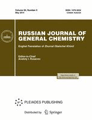
RUSSIAN JOURNAL OF GENERAL CHEMISTRY
Exploring New Horizons in General ChemistryThe Russian Journal of General Chemistry is a prominent scholarly publication dedicated to advancing the field of general chemistry. Published by MAIK NAUKA/INTERPERIODICA/SPRINGER, this journal contributes significantly to the global chemistry landscape, offering a platform for researchers and professionals to share their latest findings and methodologies. With an ISSN of 1070-3632 and an E-ISSN of 1608-3350, it has established itself as a resource for high-quality research articles since its inception in 1996. Though currently indexed in the Q4 category for chemistry (miscellaneous) and ranking #299 out of 408 in general chemistry according to Scopus, the journal remains an important venue for academic contributions that bridge gaps in traditional chemical disciplines. Desiring to cater to a diverse range of interests within chemistry, the journal actively encourages submissions that reflect significant scientific achievements, innovations, and collaborative studies. Although the journal does not currently offer open access, its role in disseminating crucial chemical research cannot be overstated. Researchers and students alike will find valuable insights and rigorous scientific discourse in its pages.
Eurasian Journal of Chemistry
Diving into the Dynamic World of ChemistryEurasian Journal of Chemistry is an emerging open-access journal published by KARAGANDA STATE UNIVERSITY in Kazakhstan. With a focus on the diverse and dynamic field of chemistry, this journal aims to disseminate cutting-edge research and innovative findings from various branches of chemistry, engaging a global audience of researchers, professionals, and students. Despite its recent inception in 2023, the journal is strategically positioned within the field, currently ranked in the fourth quartile of Scopus for General Chemistry, indicating its potential for growth and contribution to the scientific community. The ISSN of the journal is 2959-0663 with an electronic counterpart of 2959-0671, ensuring wide accessibility to its rich content. With an open-access model, the Eurasian Journal of Chemistry promotes the sharing of knowledge and advances in research to foster collaboration and inspiration across the globe.
Physical Chemistry Research
Empowering global access to pioneering physical chemistry findings.Physical Chemistry Research, published by the Iranian Chemical Society, is an esteemed academic journal dedicated to advancing knowledge within the fields of *Fluid Flow and Transfer Processes*, *Physical and Theoretical Chemistry*, and *Statistical and Nonlinear Physics*. Since its inception in 2013, the journal has established a crucial platform for researchers, professionals, and students to share innovative findings and methodologies, enhancing collaboration and knowledge dissemination in the physical chemistry community. With impactful contributions recognized in Quartile 3 and Quartile 4 classifications across various categories, the journal is positioned to cultivate emerging research trends as it continues to converge through 2024. Researchers can benefit from diverse perspectives on crucial phenomena in physical chemistry, as the journal is indexed in prominent databases, further increasing accessibility and visibility. The *open access* policy ensures that cutting-edge research remains available to a broad audience, promoting the growth of the discipline globally.
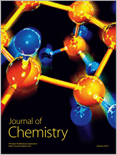
Journal of Chemistry
Empowering Researchers Through Open Access ChemistryJournal of Chemistry, published by Hindawi Ltd, serves as a critical platform for advancing knowledge in the field of chemistry, particularly in its miscellaneous sub-disciplines. With an impressive 2023 Scopus Rank of #123 out of 408 and positioned in the Q2 quartile, this journal exemplifies a robust academic rigor that appeals to researchers, professionals, and students alike. It features articles related to innovative chemical research and developments, catering to a diverse audience eager to contribute to the growing body of literature in the chemical sciences. The journal has been operational from 2013 to 2024, and its Open Access model ensures that findings are easily accessible to a global audience, fostering collaboration and knowledge sharing. With a commitment to quality and relevance, the Journal of Chemistry continues to play a significant role in shaping contemporary chemical research and education.
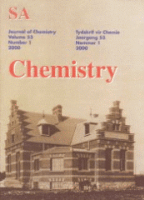
SOUTH AFRICAN JOURNAL OF CHEMISTRY-SUID-AFRIKAANSE TYDSKRIF VIR CHEMIE
Empowering Chemical Knowledge for a Global CommunitySouth African Journal of Chemistry (Suid-Afrikaanse Tydskrif vir Chemie), published by Bureau Scientific Publications, is a pivotal open-access journal that has been disseminating groundbreaking research in the field of chemistry since its inception in 1996. With an ISSN of 0379-4350 and an E-ISSN of 1996-840X, this journal serves as a vital platform for researchers and professionals seeking to share their work and engage with the global chemistry community. Recognized for its significant contributions, the journal holds a Q3 quartile ranking in the miscellaneous chemistry category as of 2023 and ranks #216 out of 408 in General Chemistry according to Scopus. The South African Journal of Chemistry is dedicated to advancing knowledge in the discipline by publishing a wide array of articles, reviews, and studies that address pertinent chemical research and applications. With open access options available since 2000, it fosters a collaborative environment, ensuring that research is accessible to all, thereby enhancing the visibility and impact of chemists' work across South Africa and beyond.
JPC-JOURNAL OF PLANAR CHROMATOGRAPHY-MODERN TLC
Innovating Analytical Chemistry, One Layer at a Time.JPC-JOURNAL OF PLANAR CHROMATOGRAPHY-MODERN TLC, published by Springer Heidelberg, is a pivotal resource in the fields of Analytical Chemistry, Biochemistry, and Clinical Biochemistry. With an ISSN of 0933-4173 and an E-ISSN of 1789-0993, this journal serves as an essential platform for the dissemination of innovative research on planar chromatography techniques, specifically modern thin-layer chromatography (TLC). With its upcoming coverage extending to 2024 and a third quartile ranking (Q3) across major scientific categories in 2023, it addresses the critical advancements and applications in analytical methods. Although it does not offer open access, the journal's rigorous peer-review process ensures high-quality findings that contribute to the progression of these vital scientific disciplines. The journal is located in Heidelberg, Germany, and continues to be a beacon for researchers, professionals, and students who seek to enhance their knowledge and practice in chromatographic techniques.
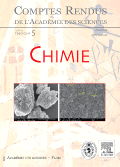
COMPTES RENDUS CHIMIE
Exploring New Frontiers in Chemistry and Engineering.COMPTES RENDUS CHIMIE, published by the prestigious Académie des Sciences in France, stands as a significant journal in the fields of chemistry and chemical engineering. With an ISSN of 1631-0748 and an E-ISSN of 1878-1543, this open-access journal has been committed to disseminating high-quality research since its transition to open access in 2020. Featuring a diverse array of studies, the journal covers innovative research trends and applications, while maintaining a Q3 category ranking in both Chemical Engineering (miscellaneous) and Chemistry (miscellaneous) as of 2023. Its Scopus rankings, positioning at #251 out of 408 in general chemistry and #169 out of 273 in general chemical engineering, highlight its growing impact within the scientific community. Authored by a global cohort of scientists and researchers, COMPTES RENDUS CHIMIE is dedicated to the advancement of knowledge and sharing insights that are vital for ongoing research and development in the chemical sciences. Located in the heart of Paris at 23 Quai de Conti, 75006, France, the journal is an essential resource for those passionate about chemistry and engineering disciplines, fostering collaboration and innovation across the world.
Chemical Methodologies
Connecting Scholars to Transform Chemical KnowledgeWelcome to Chemical Methodologies, a premier journal published by SAMI PUBLISHING CO-SPC, dedicated to advancing the field of chemistry through innovative research and methodologies. With an ISSN of 2645-7776 and an E-ISSN of 2588-4344, this journal provides a vital platform for researchers and scholars to share their findings in areas encompassing physical, theoretical, and organic chemistry. Despite its initial HIndex and quartile rankings still being established, the journal's evolving impact within the academic landscape is underscored by its Scopus Ranks, which place it in the 35th percentile for physical and theoretical chemistry and the 33rd percentile for organic chemistry. Since its inception in 2022, and continuing through 2024, Chemical Methodologies aims to foster collaboration and knowledge dissemination among academics and practitioners alike, bridging theoretical concepts and practical applications. This open-access platform enhances accessibility for researchers and students worldwide, ensuring that groundbreaking contributions to chemical science reach a broad audience.
JOURNAL OF CHROMATOGRAPHY A
Pioneering Insights in Analytical ChemistryJOURNAL OF CHROMATOGRAPHY A, published by Elsevier, is a leading journal in the disciplines of Analytical Chemistry, Biochemistry, and Organic Chemistry, boasting an impressive 2023 Q2 categorization across multiple fields. With an ISSN of 0021-9673 and an E-ISSN of 1873-3778, this prestigious journal has been at the forefront of chromatography research since its inception in 1958. The journal serves as a vital platform for disseminating high-quality research articles, reviews, and insights into the latest developments in chromatographic techniques and applications, reflecting its standing in the top tier of analytical and organic chemistry literature, evidenced by its impressive Scopus rankings. While it currently operates under a subscription model, the journal continues to make significant contributions to the scientific community by fostering collaboration and innovation in chromatography methodologies. We invite researchers, professionals, and students to engage with the essential findings shared within its pages, which are foundational for advancements in various scientific fields, making it an indispensable resource for enhancing chromatographic knowledge and practice.
Open Chemistry
Illuminating the Path of Chemical InnovationOpen Chemistry, published by DE GRUYTER POLAND SP Z O O, is a distinguished peer-reviewed journal that has been serving the global chemistry community since its inception. With an ISSN of 2391-5420 and an E-ISSN also of 2391-5420, this open-access journal has been accessible to researchers and practitioners alike since 2015, ensuring a wide dissemination of high-quality research findings. Located in Germany, specifically at BOGUMILA ZUGA 32A STR, 01-811 WARSAW, MAZOVIA, POLAND, Open Chemistry aims to publish innovative research across various chemical disciplines, with special attention to miscellaneous chemistry and materials chemistry. It is currently ranked in the Q3 category for both fields as of 2023, reflecting its solid standing within the academic community, with specific ranks of 187/408 in General Chemistry and 153/317 in Materials Chemistry, corresponding to respective percentiles of 54 and 51. Open Chemistry not only enhances the accessibility of cutting-edge research but also serves as a vital resource for students, professionals, and scholars seeking to advance their knowledge in the rapidly evolving landscape of chemical sciences.