JPC-JOURNAL OF PLANAR CHROMATOGRAPHY-MODERN TLC
metrics 2024
Pioneering Techniques in Planar Chromatography.
Introduction
JPC-JOURNAL OF PLANAR CHROMATOGRAPHY-MODERN TLC, published by Springer Heidelberg, is a pivotal resource in the fields of Analytical Chemistry, Biochemistry, and Clinical Biochemistry. With an ISSN of 0933-4173 and an E-ISSN of 1789-0993, this journal serves as an essential platform for the dissemination of innovative research on planar chromatography techniques, specifically modern thin-layer chromatography (TLC). With its upcoming coverage extending to 2024 and a third quartile ranking (Q3) across major scientific categories in 2023, it addresses the critical advancements and applications in analytical methods. Although it does not offer open access, the journal's rigorous peer-review process ensures high-quality findings that contribute to the progression of these vital scientific disciplines. The journal is located in Heidelberg, Germany, and continues to be a beacon for researchers, professionals, and students who seek to enhance their knowledge and practice in chromatographic techniques.
Metrics 2024
 0.351.101.1034
Metrics History
Rank 2024
Scopus
IF (Web Of Science)
JCI (Web Of Science)
Quartile History
Similar Journals
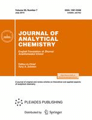
JOURNAL OF ANALYTICAL CHEMISTRY
Catalyzing Progress in Analytical ChemistryJOURNAL OF ANALYTICAL CHEMISTRY, published by PLEIADES PUBLISHING INC, stands as a pivotal resource in the field of analytical chemistry, offering an innovative platform for researchers, professionals, and students to advance their knowledge and contribute to the discourse within the discipline. With an ISSN of 1061-9348 and an E-ISSN of 1608-3199, this journal features a focused exploration of analytical methodologies, instrumentation developments, and applications across various domains, contributing to practical and theoretical advancements in the field. Currently ranked in the Q3 category in Analytical Chemistry with a Scopus rank of #111 out of 156, it provides critical insights and innovation strategies for professionals aiming to enhance their analytical capabilities. Access to the journal is through standard subscription models, and it covers an extensive range of topics pertinent to the discipline from 1996 to 2024. Engage with the JOURNAL OF ANALYTICAL CHEMISTRY to be part of a vibrant research community dedicated to push the boundaries of analytical practices.
Analytical and Bioanalytical Chemistry Research
Unlocking the Secrets of Analytical Excellence.Analytical and Bioanalytical Chemistry Research is an esteemed open-access journal published by the Iranian Chemical Society, dedicated to the advancement of knowledge in the fields of analytical chemistry, biochemistry, and spectroscopy. Since its inception in 2014, this journal has provided a platform for researchers, professionals, and students to publish and access high-quality research articles that contribute to the understanding of chemical analysis and bioanalytical methods. With an ISSN of 2383-093X and an open-access model that promotes global dissemination of findings, it ensures that innovative research reaches a broad audience. The journal has consolidated its presence in the scientific community, currently ranked in quartile Q4 for analytical chemistry, biochemistry, and spectroscopy as of 2023. Its Scopus rankings, including a percentile of 34th in Analytical Chemistry, reflect its commitment to quality research and scholarly contribution. Situated in Tehran, Iran, the journal serves as a vital resource for academic discourse, offering insights into emerging trends and methodologies in analytical and bioanalytical chemistry.
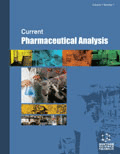
Current Pharmaceutical Analysis
Bridging Knowledge Gaps in Pharmaceutical AnalysisCurrent Pharmaceutical Analysis, published by Bentham Science Publishers Ltd, is a vital resource for professionals and researchers in the fields of Pharmaceutical Science, Biochemistry, and Molecular Medicine. Established in 2006, this peer-reviewed journal aims to provide a platform for the latest advancements and analytical methodologies in pharmaceutical research and drug development. Over the years, it has garnered attention for its rigorous scrutiny and contributions to the landscape of pharmacology, evidenced by its quartile placements in various categories, most notably Q3 in Pharmaceutical Science. Despite its current rankings placing it in the lower quartile in several disciplines, the journal remains an essential venue for both emerging and established researchers seeking to disseminate their findings. With the widespread accessibility of its articles, researchers, professionals, and students can engage with cutting-edge studies to foster innovation in pharmaceutical analysis. For access to the latest research contributions, readers can explore the digital archive and stay updated on pivotal discussions shaping the future of the pharmaceutical sciences.
Chinese Journal of Chromatography
Transforming Challenges into Solutions through ChromatographyChinese Journal of Chromatography, published by SCIENCE PRESS, is a dedicated platform for disseminating pioneering research in the fields of Analytical Chemistry, Biochemistry, and Organic Chemistry. Established in 1997, this esteemed journal offers invaluable insights into chromatographic techniques and their applications, showcasing studies that contribute to the advancement of chemical engineering and electrochemistry. Although it currently holds a Q4 ranking in several categories, the journal aims to foster growth and knowledge among researchers, professionals, and students alike. With a continuous publication window extending until 2024, the Chinese Journal of Chromatography invites submissions that not only enhance scientific understanding but also address real-world challenges through innovative chromatographic solutions. Researchers looking for a collaborative community will find this journal a vital resource in their ongoing academic endeavors.
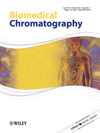
BIOMEDICAL CHROMATOGRAPHY
Elevating Standards in Biomedical Research ExcellenceBiomedical Chromatography is a prestigious journal published by Wiley, focusing on the vital intersections of analytical chemistry, biochemistry, and clinical studies. With an ISSN of 0269-3879 and E-ISSN of 1099-0801, it has served the research community since its inception in 1986. The journal provides a platform for innovative research in areas such as drug discovery and pharmacology, achieving a commendable placement in Q3 across multiple categories in the 2023 metrics, including Analytical Chemistry and Biochemistry. Although it currently does not offer open access, it plays a crucial role in disseminating scientific developments and methodologies that contribute to advancements in health, safety, and pharmaceuticals. Researchers, professionals, and students can anticipate high-quality, peer-reviewed articles that drive forward the collective knowledge in biomedical applications. Located in the United Kingdom at 111 River St, Hoboken, NJ, the journal continues to attract contributions from global thought leaders in the field.
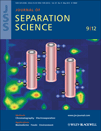
JOURNAL OF SEPARATION SCIENCE
Empowering Researchers with Cutting-Edge InsightsJOURNAL OF SEPARATION SCIENCE, published by WILEY-V C H VERLAG GMBH in Germany, is a premier platform dedicated to the advancement of knowledge in the fields of analytical chemistry and filtration and separation technologies. With an impact factor that reflects its strong influence—ranking #42 in Analytical Chemistry and #8 in Filtration and Separation—the journal strives to disseminate high-quality research findings from both academia and industry. The journal has established a significant readership, evidenced by its Scopus rankings, and is indexed under ISSN 1615-9306 and E-ISSN 1615-9314. As part of its commitment to accessibility, the journal provides open access options, enabling broader dissemination of innovative research. Since its convergence in 2000 and continuing through 2024, JOURNAL OF SEPARATION SCIENCE has become essential for researchers, professionals, and students aiming to stay at the forefront of separation science methodologies and applications, thereby actively influencing advancements in both theoretical knowledge and practical implementations.

BMC Chemistry
Driving Scientific Advancement, One Article at a TimeBMC Chemistry, published by BMC, is a reputable open access journal that has made significant strides since its inception in 2019. Operating under e-ISSN 2661-801X, this journal is dedicated to advancing the field of general chemistry by promoting high-quality research across various sub-disciplines. Headquartered in the United Kingdom, BMC Chemistry boasts a commendable impact factor and is classified in Q2 within the prestigious field of Chemistry (miscellaneous) according to the 2023 category quartiles. The journal's Scopus ranking places it at #139 out of 408 in its category, highlighting its growing relevance and influence in the academic community, with a commendable 66th percentile standing. With a commitment to open access, BMC Chemistry ensures that groundbreaking discoveries and innovative research are available to a global audience, fostering collaboration and development in chemistry. Researchers, professionals, and students alike will find this journal to be an invaluable resource for disseminating knowledge and driving scientific advancement.
Bulletin of the University of Karaganda-Chemistry
Advancing Chemistry Knowledge for Tomorrow's InnovatorsBulletin of the University of Karaganda-Chemistry is an esteemed academic journal published by KARAGANDA STATE UNIVERSITY, focusing on the field of chemistry and related disciplines. With an ISSN of 2518-718X and an E-ISSN of 2663-4872, this journal aims to disseminate high-quality research articles, reviews, and scholarly discussions that contribute to the advancement of knowledge in chemistry. Although it has experienced a transition in its coverage from 2021 to 2022, the journal remains a significant platform for researchers and students alike, promoting open access to its valuable content. Despite its current Scopus rank of #379/407 in the general chemistry category, the Bulletin of the University of Karaganda-Chemistry serves as a vital resource for the academic community in Kazakhstan and beyond, fostering collaboration and innovation in various chemical research domains. Researchers, professionals, and students are encouraged to engage with the journal as it continues to evolve and contribute to significant scientific discussions.
JOURNAL OF FOOD AND DRUG ANALYSIS
Advancing Knowledge in Food Safety and Drug EfficacyJOURNAL OF FOOD AND DRUG ANALYSIS, an esteemed publication in the realms of Food Science and Pharmacology, is published by DIGITAL COMMONS BEPRESS. With an impactful commitment to open access since 2013, this journal facilitates the dissemination of critical research findings, making them readily available to a global audience. Boasting a commendable Q2 ranking in both Food Science and Pharmacology, the journal occupies a prominent position in its respective categories, reflecting its quality and relevance in the field. Established in 1994, the journal has successfully converged its focus to encompass a wide range of topics related to the analysis of food and drugs, thereby providing valuable insights to researchers, practitioners, and students alike. With its indexed indicators in Scopus showcasing a strong performance—ranking #85 among 389 in Food Science and #108 among 313 in Pharmacology—it stands as a crucial platform for the advancement of knowledge and innovation. For those looking to stay abreast of pivotal developments in food safety and drug efficacy, JOURNAL OF FOOD AND DRUG ANALYSIS is an indispensable resource.
Acta Chemica Iasi
Championing Excellence in Chemical ResearchActa Chemica Iasi is a distinguished open-access journal dedicated to advancing the field of chemistry, published by the esteemed ALEXANDRU IOAN CUZA UNIVERSITY PRESS located in Iasi, Romania. Since its inception, this journal has served as a vital platform for the dissemination of significant research findings, theoretical advancements, and methodological innovations in various chemistry disciplines. As an open-access publication since 2013, it provides unrestricted access to high-quality articles, fostering collaboration and knowledge sharing among researchers, professionals, and students globally. Although specific metrics such as H-Index and Scopus rankings may be forthcoming, the journal's commitment to rigor and excellence ensures that it remains an invaluable resource for those seeking to stay at the forefront of chemical research. With a focus on promoting scientific inquiry and innovation, Acta Chemica Iasi continues to uphold a legacy of scholarly excellence and contribution to the chemical sciences.