
JOURNAL OF SOUND AND VIBRATION
Scope & Guideline
Empowering discoveries in the world of sound and vibration.
Introduction
Aims and Scopes
- Acoustic Metamaterials and Structures:
Research on the design, modeling, and application of metamaterials that manipulate sound waves, including studies on acoustic black holes and waveguides. - Vibration Control Techniques:
Development and analysis of innovative methods for controlling vibrations in mechanical systems, including the use of passive, semi-active, and active damping strategies. - Structural Health Monitoring:
Utilization of vibration-based techniques for the identification and assessment of structural integrity, including damage detection and monitoring in civil and mechanical structures. - Nonlinear Dynamics and Resonance Phenomena:
Investigation of nonlinear effects in dynamic systems, including bifurcations, chaos, and resonance phenomena, particularly in rotating machinery and structural systems. - Thermoacoustic and Aeroacoustic Effects:
Exploration of sound generation and propagation in fluid flows, including studies on combustion noise, jet noise, and the interaction of sound with thermal effects. - Computational Methods in Vibration and Acoustics:
Advancements in numerical methods for analyzing complex vibro-acoustic systems, including finite element methods, boundary element methods, and hybrid approaches.
Trending and Emerging
- Machine Learning and Data-Driven Approaches:
An increasing number of studies leverage machine learning techniques for sound and vibration analysis, including predictive modeling, fault diagnosis, and structural health monitoring. - Active Vibration Control Systems:
Research on active control systems, including piezoelectric and electromagnetic devices, is trending as industries seek to enhance performance and reduce noise in mechanical systems. - Acoustic Metamaterials and Wave Manipulation:
There is a growing interest in the design and application of acoustic metamaterials for sound manipulation, including noise reduction and vibration isolation technologies. - Hybrid Energy Harvesting Systems:
Innovations in hybrid systems that combine energy harvesting with vibration control are emerging, particularly in applications related to renewable energy and autonomous systems. - Nonlinear and Time-Varying Dynamics:
Research focusing on the nonlinear dynamics of systems, including time-varying and stochastic phenomena, is gaining traction, reflecting the need for more comprehensive modeling approaches.
Declining or Waning
- Traditional Linear Vibration Analysis:
Research focused solely on linear vibration analysis of simple systems is becoming less prominent, as more studies incorporate nonlinear dynamics and complex interactions. - Basic Acoustic Measurements:
Studies that primarily report basic acoustic measurements without significant analytical or computational advancements are declining, as the field moves towards more application-driven research. - Static Structural Analysis:
Research centered exclusively on static structural analysis without consideration of dynamic interactions or environmental influences is waning, with a shift towards more dynamic and time-dependent studies. - Conventional Damping Techniques:
The focus on conventional damping techniques is diminishing as newer, more advanced methods and materials for vibration control are being developed and implemented.
Similar Journals
MECHANICS BASED DESIGN OF STRUCTURES AND MACHINES
Advancing the Art of Mechanical InnovationMECHANICS BASED DESIGN OF STRUCTURES AND MACHINES is a premier academic journal published by Taylor & Francis Inc, dedicated to advancing knowledge in the fields of mechanical engineering, aerospace engineering, and more. With an impressive Q1 ranking in multiple engineering and physics categories for 2023, the journal is recognized for its high impact and critical contributions to research, as evidenced by its Scopus rankings that position it in the top percentiles across various disciplines. The journal focuses on innovative methodologies and applications pertaining to mechanics-based design, making it an essential resource for researchers, professionals, and students looking to enhance their understanding and application of design principles in structures and machines. As an open access publication, it ensures widespread dissemination of knowledge and facilitates collaboration across the global research community. For those interested in the latest developments and scholarly discussions, MECHANICS BASED DESIGN OF STRUCTURES AND MACHINES offers a vital platform that nurtures interdisciplinary dialogue and practical applications.
SHOCK AND VIBRATION
Unveiling the intricacies of shock and vibration.SHOCK AND VIBRATION, published by HINDAWI LTD, is an esteemed open-access journal that has been disseminating vital research in the fields of Civil and Structural Engineering, Condensed Matter Physics, Geotechnical Engineering and Engineering Geology, Mechanical Engineering, and Mechanics of Materials since its inception in 1993. Based in Egypt, this journal has earned its place within the Q3 quartile rankings across multiple engineering and science categories, showcasing its growing influence and commitment to advancing knowledge in these domains. Accessible to a global audience, it allows researchers, professionals, and students to share findings and foster innovation without paywalls. The journal proudly contributes to a deeper understanding of shock and vibration phenomena, addressing both theoretical and practical applications essential for various engineering disciplines. As a vital resource for academics and industry professionals alike, SHOCK AND VIBRATION serves as a cornerstone for the ongoing exploration and development of cutting-edge solutions in the engineering landscape.

Journal of Vibration Engineering & Technologies
Advancing the Science of Vibration EngineeringJournal of Vibration Engineering & Technologies, published by Springer Heidelberg in Switzerland, is a premier open-access journal dedicated to the expansive field of vibration engineering, focusing on both acoustics and mechanical engineering. With its ISSN 2523-3920 and E-ISSN 2523-3939, the journal has gained significant recognition, achieving a prestigious Q2 ranking in both Acoustics and Ultrasonics and Mechanical Engineering in the 2023 category quartiles. In just a decade since its inception in 2014, it has established a solid foothold in the academic community, as indicated by its Scopus ranks, placing it among the top journals in acoustics (Rank #17/44, 62nd percentile) and in mechanical engineering (Rank #269/672, 60th percentile). The journal aims to disseminate cutting-edge research that advances the understanding and applications of vibration technologies, fostering dialogue among researchers, educators, and industry professionals. As an essential resource for those in academia and industry alike, the Journal of Vibration Engineering & Technologies invites contributions that challenge existing paradigms and propel innovation in the field.
JOURNAL OF LOW FREQUENCY NOISE VIBRATION AND ACTIVE CONTROL
Advancing the Frontiers of Noise and Vibration ControlJOURNAL OF LOW FREQUENCY NOISE VIBRATION AND ACTIVE CONTROL is a premier peer-reviewed publication, dedicated to advancing the understanding and applications of low-frequency noise, vibration, and active control technologies. Published by SAGE PUBLICATIONS LTD, this journal has established itself as a critical resource in its field, boasting an impressive range of quartile rankings in key academic categories including Acoustics and Ultrasonics, Building and Construction, and Geophysics. With an Open Access model since 2017, it has expanded its reach to a global audience, enabling researchers, professionals, and students alike to easily access cutting-edge research. The journal aims to foster collaboration and innovation, serving as a vital platform for the dissemination of findings that address real-world challenges in noise and vibration control across various engineering disciplines. Residing at the intersection of mechanical, civil, and geophysical engineering, its convergence from 1996 to 2024 ensures a comprehensive repository of knowledge for continued interdisciplinary exploration. For those committed to pushing the boundaries of engineering science, JOURNAL OF LOW FREQUENCY NOISE VIBRATION AND ACTIVE CONTROL stands out as an essential publication that reflects the latest advancements and encourages groundbreaking research.
Archive of Mechanical Engineering
Exploring the Dynamics of Materials and MechanicsThe Archive of Mechanical Engineering, published by Polska Akademia Nauk (Polish Academy of Sciences), is a distinguished platform for disseminating cutting-edge research in the fields of Mechanical Engineering and Mechanics of Materials. Since its inception, the journal has evolved and embraced an Open Access model since 2010, thereby enhancing accessibility and fostering wider dissemination of knowledge among researchers, professionals, and students globally. The journal covers a broad spectrum of topics, ensuring that vital advancements in mechanical engineering are communicated effectively. Recognized as a Q3 category journal in both its relevant categories as of 2023, the Archive continues to establish itself with a competitive Scopus Rank, aiming to elevate the standard of research and innovation. By merging historical insights with contemporary advancements, the journal serves as an essential resource for those seeking to delve into the evolution and future of mechanical engineering.
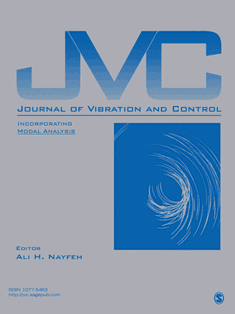
JOURNAL OF VIBRATION AND CONTROL
Advancing the Dynamics of InnovationJOURNAL OF VIBRATION AND CONTROL, published by SAGE PUBLICATIONS LTD, is a distinguished peer-reviewed journal that serves as a pivotal resource for researchers and professionals in the fields of aerospace, automotive, materials science, and mechanical engineering. Since its inception in 1995, this journal has been instrumental in disseminating cutting-edge findings on the dynamics of vibrations and control systems, addressing both theoretical developments and practical applications. With an impressive array of impact metrics—ranking in the top quartile (Q2) across various engineering categories—it ensures that high-quality research is accessible to its audience, fostering innovation and collaboration. Although currently not an open-access journal, it remains influential within its domain, indexing a breadth of topics that bridge fundamental science and engineering practices. Researchers and students interested in exploring the dynamics of materials and structures will find the JOURNAL OF VIBRATION AND CONTROL an invaluable tool for advancing their knowledge and contributing to ongoing discussions in the field.
International Journal of Mechanics and Materials in Design
Transforming Ideas into Engineering ExcellenceInternational Journal of Mechanics and Materials in Design is a leading publication in the field of mechanical engineering and materials science, published by Springer Heidelberg. With an impressive impact factor, it holds esteemed rankings as Q1 in both Mechanical Engineering and Mechanics of Materials, and Q2 in Materials Science for the year 2023, solidifying its reputation as a significant contributor to the advancement of design methodologies. The journal focuses on the intersection of mechanics and materials, encouraging innovative research that addresses contemporary challenges faced in engineering disciplines. Researchers and professionals alike can benefit from accessing cutting-edge studies contributing to various applications, making it an invaluable resource for staying informed in this dynamic field. While the journal operates under a subscription model, its comprehensive reviews and high-quality original research foster a deeper understanding of material behavior and design principles, thus supporting the academic growth and professional development of its readers.

SAE International Journal of Vehicle Dynamics Stability and NVH
Elevating Standards in Automotive Engineering ExcellenceSAE International Journal of Vehicle Dynamics Stability and NVH is a prestigious publication dedicated to advancing knowledge in the domains of automotive engineering, computational mechanics, control and optimization, and mechanical engineering. Published by SAE International, this journal boasts an impressive impact factor within its category, achieving a Q1 ranking in 2023 across multiple fields, including automotive engineering and computational mechanics. With ISSN 2380-2162 and E-ISSN 2380-2170, it serves as a crucial platform for the dissemination of innovative research and technological advancements in vehicle dynamics and noise, vibration, and harshness (NVH) analysis. Researchers, professionals, and students benefit from the journal's rigorous peer-review process and its commitment to high-quality publications. With a wide-reaching influence and an emphasis on interdisciplinary approaches, the journal is pivotal for those seeking to contribute to the evolution of vehicle technology and related areas.

ACTA ACUSTICA
Pioneering Research in Acoustics and UltrasonicsACTA ACUSTICA, published by EDP SCIENCES S A, is an esteemed open access journal dedicated to advancing the fields of Acoustics and Ultrasonics, Computer Science Applications, Electrical and Electronic Engineering, as well as Speech and Hearing. Since its transition to open access in 2020, this journal has provided a platform for high-quality research that is freely accessible to scholars, practitioners, and students alike. With a respectable categorization in Q3 across multiple disciplines as of 2023, it reflects the ongoing commitment to disseminating relevant findings and innovations within these fields. Researchers interested in meaninful contributions to acoustic science will find ACTA ACUSTICA to be an invaluable resource that encourages collaboration and knowledge sharing, thereby fostering advancements that resonate across academia and industry. The journal aims to publish results that enhance understanding of sound phenomena and their applications, positioning itself as a pivotal channel for academic discourse.
Acoustics Australia
Pioneering Insights in the Science of SoundAcoustics Australia is a prominent journal dedicated to advancing research and knowledge in the fields of acoustics and ultrasonics. Published by Springer Singapore Pte Ltd, this esteemed journal holds a Q2 ranking in the 2023 Scopus categories, reflecting its significant impact and reputation within the academic community, particularly evidenced by its position in the 67th percentile among its peers. Since its inception, with publication converging in years from 1986 to 1991 and again from 1996 to 2024, Acoustics Australia has been a vital platform for scholars to publish innovative research, share findings, and foster collaboration among professionals dedicated to the science of sound. Although not an Open Access journal, it remains an essential resource for researchers, academics, and students alike, providing insights that drive advancements in technology, environmental science, and health-related applications linked to acoustics.