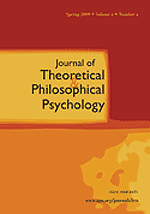
Journal of Theoretical and Philosophical Psychology
Scope & Guideline
Challenging Perspectives, Shaping Psychological Thought
Introduction
Aims and Scopes
- Interdisciplinary Approaches to Psychology:
The journal emphasizes the integration of philosophical frameworks with psychological research, encouraging submissions that explore how philosophical concepts can inform and enhance psychological theories and practices. - Critical Examination of Psychological Theories:
A core focus is the critical analysis of existing psychological theories, promoting discussions that challenge conventional wisdom and investigate the epistemological and ethical dimensions of psychological practice. - Cultural and Contextual Perspectives:
The journal highlights the importance of cultural and contextual factors in psychological research, advocating for perspectives that consider the sociopolitical and historical dimensions of psychological phenomena. - Exploration of Emerging Psychological Constructs:
It supports research on innovative psychological constructs and methodologies, including those that address contemporary issues such as trauma, identity, and moral psychology. - Ethics and Social Justice in Psychology:
The journal promotes discussions around ethics, diversity, equity, and inclusion within psychological research, seeking contributions that address the implications of psychological practice on social justice.
Trending and Emerging
- Intersections of Psychology and Law:
There is an increasing focus on the relationship between psychological constructs and legal frameworks, exploring how psychological insights can inform legal practices and vice versa, particularly in the context of moral responsibility and trauma. - Cultural Competence and Social Justice:
Recent articles emphasize the importance of cultural competence in psychological practice, addressing issues of diversity, equity, and inclusion, and reflecting a broader societal demand for psychological frameworks that are sensitive to cultural contexts. - Philosophical Critiques of Positive Psychology:
A trend towards critiquing the foundational assumptions of positive psychology is emerging, with discussions exploring the ethical implications and limitations of this movement within the broader landscape of psychological inquiry. - Developmental and Lifespan Perspectives:
There is a notable trend towards exploring psychological phenomena through developmental and lifespan lenses, emphasizing the dynamic and contextual nature of psychological experiences throughout different life stages. - Integration of Trauma Studies:
The journal has seen a rise in contributions focused on trauma, its psychological implications, and its intersections with philosophical discourse, highlighting the relevance of trauma in contemporary psychological practice.
Declining or Waning
- Traditional Psychoanalytic Approaches:
There has been a noticeable decline in papers exclusively centered on traditional psychoanalytic theories, suggesting a shift towards more integrative and contemporary approaches that incorporate neuroscience and cultural critiques. - Quantitative Measurement in Psychology:
The journal seems to be moving away from discussions heavily focused on quantitative measurement and psychometrics, which were more prominent in earlier issues, favoring qualitative and philosophical inquiries that explore the subjective experience. - Behavioral Psychology:
Themes related to behavioral psychology and conditioning appear to be less frequent, indicating a potential waning interest in these areas in favor of more complex and nuanced explorations of human experience. - Cognitive Psychology and Neuropsychology:
While still relevant, traditional cognitive psychology themes seem to be overshadowed by discussions emphasizing the philosophical implications of cognition, suggesting a shift towards more holistic and integrative perspectives.
Similar Journals
PACIFIC PHILOSOPHICAL QUARTERLY
Exploring the Depths of Contemporary ThoughtWelcome to the PACIFIC PHILOSOPHICAL QUARTERLY, a leading journal in the field of philosophy, published by Wiley. With an impressive impact factor and ranked in the top 15% of its category (Q1 in Philosophy), this esteemed journal has become a vital source for scholars and practitioners alike. Established in 1996, the journal presents groundbreaking articles that explore contemporary philosophical issues, ensuring its relevance through converged contributions up to 2024. With robust Scopus rankings, including a position of #122 out of 806 in the Arts and Humanities category, the quarterly serves as a platform for innovative ideas and rigorous debates in the philosophical community. Though it does not offer open access, its insights are invaluable for researchers, professionals, and students eager to deepen their understanding of philosophical discourse.
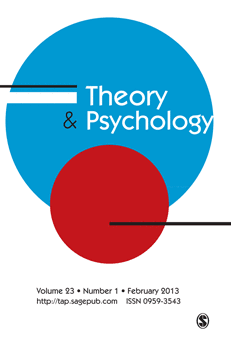
THEORY & PSYCHOLOGY
Exploring the Nexus of Theory and Practice in PsychologyTHEORY & PSYCHOLOGY is an esteemed scholarly journal published by SAGE PUBLICATIONS LTD, devoted to exploring the intricate relationships between theoretical frameworks and psychological practices. With an ISSN of 0959-3543, this journal serves as a crucial platform for the intersection of History and Philosophy of Science and Psychology, showcasing cutting-edge research that contributes to the advancements of these disciplines. The journal has achieved a remarkable Q1 quartile ranking in the realm of History and Philosophy of Science and maintains a robust Scopus ranking, placing it in the top 10% of its category. Through its commitment to academic rigor and innovation, THEORY & PSYCHOLOGY aims to foster a deeper understanding of psychological theories and their practical applications, thus appealing to a diverse audience of researchers, professionals, and students. Though not open access, its extensive archives from 1991 to 2024 provide invaluable resources for critical reflection and scholarly discourse within the psychological community.
AUSTRALASIAN JOURNAL OF PHILOSOPHY
Inspiring New Perspectives in Philosophical ThoughtAustralasian Journal of Philosophy, published by Routledge Journals, Taylor & Francis Ltd, serves as a premier platform for scholarly discourse in the field of Philosophy. With its origins dating back to 1947, this esteemed journal maintains a rich tradition of fostering high-quality, peer-reviewed research and is recognized for its significant contribution to the philosophy community. Holding a distinguished Q1 ranking in the field for 2023 and standing at #75 out of 806 in the Scopus Arts and Humanities ranking, it occupies a vital niche in advancing philosophical knowledge and inquiry. Although the journal is not open access, it periodically offers articles that contribute to the dissemination of philosophical thought, making it a valuable resource for researchers, professionals, and students alike. The AUSTRALASIAN JOURNAL OF PHILOSOPHY continues to inspire and challenge thinkers worldwide as it presents critical analyses, innovative ideas, and rigorous arguments, ensuring its relevance and importance in contemporary philosophical discussions.

Sibirskiy Psikhologicheskiy Zhurnal-Siberian Journal of Psychology
Unlocking the complexities of psychology in a dynamic landscape.Sibirskiy Psikhologicheskiy Zhurnal-Siberian Journal of Psychology, published by TOMSK STATE UNIVERSITY, is a dynamic platform dedicated to advancing the field of psychology through the dissemination of innovative research, perspectives, and theoretical discussions. With its ISSN 1726-7080 and E-ISSN 2411-0809, the journal focuses on a broad spectrum of psychological topics, offering invaluable insights and findings that contribute to both the local and global discourse in the field. Although it currently holds a Q4 rank in the miscellaneous category of psychology and a modest standing in Scopus rankings, this journal fosters a collaborative spirit among researchers, professionals, and students striving for academic growth and comprehensive understanding of psychological phenomena. The journal operates within an open-access framework, ensuring that knowledge is widely available, thereby enhancing its impact on the scientific community. As it continues to publish works from 2019 to 2024, the Sibirskiy Psikhologicheskiy Zhurnal remains a crucial resource for those seeking to explore the complexities of psychology in the Russian context and beyond.

BIOLOGY & PHILOSOPHY
Challenging Perspectives on Life through Philosophical LensesBIOLOGY & PHILOSOPHY, published by SPRINGER, is a leading journal that explores the intricate and dynamic interplay between biology and philosophy. With an impressive impact factor in the Q1 category across multiple disciplines including Agricultural and Biological Sciences, History and Philosophy of Science, and Philosophy, this journal has firmly established itself as an essential resource for researchers, professionals, and students alike. Since its inception in 1986 and continuing through 2024, BIOLOGY & PHILOSOPHY fosters critical inquiry and discussion, inviting contributions that advance the understanding of biological sciences from philosophical perspectives. Although it operates under a traditional subscription model without Open Access options, its high Scopus rankings—#38 in Philosophy and #14 in History and Philosophy of Science—underscore its significance and influence in contemporary research. For those keen on delving deeper into the ethical, epistemological, and conceptual challenges posed by biological research, this journal serves as a compelling platform for groundbreaking scholarship.
Educational Philosophy and Theory
Transforming Education Through Philosophical InquiryEducational Philosophy and Theory, published by Taylor & Francis Ltd, serves as a premier platform for scholarly discourse at the intersection of education, philosophy, and science. With an impressive impact factor reflected by its Q1 categorization in both Education and History and Philosophy of Science, this journal has established itself as a leading voice since its inception in 1969. It is notably ranked 13th in History and Philosophy of Science and 366th in Education according to Scopus, positioning it within the top tiers of academic research. This journal encourages critical discussions, innovative methodologies, and interdisciplinary approaches to educational issues, making it an essential resource for researchers, educators, and students alike who seek to deepen their understanding of the philosophical frameworks that underpin educational practices. Although currently not an Open Access journal, it remains committed to providing high-quality, peer-reviewed content that influences both theoretical and practical aspects of education. Join the dialogue in shaping the future of educational philosophy by exploring the latest research and theories published herein.
ZEITSCHRIFT FUR PHILOSOPHISCHE FORSCHUNG
Fostering Interdisciplinary Insights in Philosophical Research.ZEITSCHRIFT FUR PHILOSOPHISCHE FORSCHUNG is a prestigious academic journal published by Vittorio Klostermann GmbH in Germany, dedicated to the interdisciplinary field of philosophy. With its ISSN 0044-3301 and E-ISSN 1439-2615, this journal has made significant contributions to the philosophical discourse since its inception in 1977, continuing its pursuit of excellence in scholarship through 2024. Recognized in the 2023 category quartiles as Q2 in Philosophy, it is ranked #498 out of 806 in the Arts and Humanities' Philosophy classification by Scopus, placing it in the 38th percentile. Although it currently does not offer open access options, its rigorous peer-reviewed articles serve to enrich the scholarly community's understanding of complex philosophical issues. ZEITSCHRIFT FUR PHILOSOPHISCHE FORSCHUNG plays a vital role in advancing philosophical research in a collaborative academic environment, making it a valuable resource for researchers, professionals, and students alike.
JOURNAL OF PSYCHOLOGY
Fostering Excellence in Psychological Research and ApplicationWelcome to the JOURNAL OF PSYCHOLOGY, a premier publication dedicated to fostering innovative research in the field of psychology and its intersections with education and management. Published by ROUTLEDGE JOURNALS, TAYLOR & FRANCIS LTD, this journal has been a vital resource since its inception in 1936, providing a platform for scholarly discourse until 2024. As a testament to its quality and impact, the journal consistently ranks in the top quartiles across various categories including Q1 in Business, Management and Accounting and Q1 in Education, reflecting its broad relevance and application. The JOURNAL OF PSYCHOLOGY is recognized within Scopus, demonstrating a strong analytical presence with ranks in both Psychology and Education. While the journal is not open access, it continues to draw contributions from leading experts and emerging scholars alike, positioning itself at the forefront of psychological research. Researchers, professionals, and students will find rich, thought-provoking articles that address contemporary challenges and advances within the realm of psychology.

EDUCATIONAL THEORY
Shaping the Future of Education with Rigorous ResearchEDUCATIONAL THEORY is a prestigious journal published by Wiley, focused on advancing the field of education through critical and insightful research. With an ISSN of 0013-2004 and E-ISSN 1741-5446, this journal has been a cornerstone of educational scholarship since its inception in 1951. Positioned in the second quartile (Q2) of the Education category and ranked #747 out of 1543 in Social Sciences - Education according to Scopus, it reflects a commitment to high-quality, peer-reviewed contributions that explore theoretical frameworks, methodologies, and contemporary issues in education. While not open access, it provides access options for educational institutions and researchers, facilitating a wide dissemination of knowledge. Covering converged years until 2024, EDUCATIONAL THEORY aims to engage researchers, professionals, and students alike, fostering a dialogue that enhances understanding and practice in educational theory.
INTERNATIONAL PHILOSOPHICAL QUARTERLY
Illuminating the Landscape of Philosophical ThoughtINTERNATIONAL PHILOSOPHICAL QUARTERLY, published by the PHILOSOPHY DOCUMENTATION CENTER, stands as a vital resource for scholars and practitioners engaged in philosophical inquiry. With an ISSN of 0019-0365 and an E-ISSN of 2153-8077, this esteemed journal has published thought-provoking discussions and analyses in philosophy since its inception in 1974. The journal is housed in the United States at PO BOX 7147, CHARLOTTESVILLE, VA 22906-7147, and has shown a commitment to advancing philosophical debates across its converged years from 1974 to 2023. Recognized with a Q3 rating in the philosophy category for 2023, it ranks 511 out of 806 within Scopus, positioning it within the 36th percentile of its peers. Although not an open-access publication, it continues to offer critical insights that foster scholarly dialogue and research within the field. This journal is especially pertinent to researchers, professionals, and students who seek to deepen their understanding of contemporary philosophical issues and engage with a diverse array of philosophical perspectives.