JAMA Ophthalmology
Scope & Guideline
Empowering Global Collaboration in Ophthalmology
Introduction
Aims and Scopes
- Research on Eye Diseases and Disorders:
The journal publishes studies on various ocular conditions, including glaucoma, diabetic retinopathy, age-related macular degeneration, and inherited retinal diseases, focusing on their pathophysiology, diagnosis, and treatment. - Clinical Trials and Therapeutic Interventions:
JAMA Ophthalmology features randomized clinical trials assessing the efficacy and safety of new therapies, surgical techniques, and interventions in managing ocular diseases. - Public Health and Epidemiology:
The journal addresses the impact of social determinants on eye health, exploring disparities in access to care, prevalence of eye diseases, and public health initiatives aimed at improving ocular health. - Innovations in Ophthalmic Technology:
Research on advancements in imaging technologies, artificial intelligence applications, and telemedicine in ophthalmology is a significant focus, highlighting their role in enhancing diagnosis and treatment. - Genetic and Molecular Studies:
Studies investigating genetic factors related to eye diseases, including genetic mutations and biomarkers, are central to the journal's scope, contributing to personalized medicine in ophthalmology. - Patient-Centered Research:
Research emphasizing the experiences and perspectives of patients, including quality of life assessments and the psychosocial impact of ocular diseases, is an important component of the journal's aims.
Trending and Emerging
- Artificial Intelligence and Machine Learning:
The integration of AI and machine learning in diagnosing and managing ocular diseases is a rapidly growing focus, with numerous studies exploring its application in retinal imaging and predictive analytics. - Telemedicine and Remote Care:
The COVID-19 pandemic has accelerated the adoption of telemedicine in ophthalmology, leading to an increase in research on remote monitoring, virtual consultations, and their effectiveness. - Health Equity and Social Determinants of Health:
There is a growing emphasis on understanding and addressing disparities in eye care access and outcomes, with studies focusing on the influence of socioeconomic and demographic factors. - Gene Therapy and Genetic Research:
Emerging research on gene therapy for inherited retinal diseases and the role of genetic testing in personalized treatment plans is gaining traction, reflecting advancements in molecular medicine. - Patient-Centered Outcomes and Quality of Life:
Research that emphasizes the importance of patient-reported outcomes, satisfaction, and quality of life in managing ocular diseases is becoming increasingly prevalent.
Declining or Waning
- Traditional Surgical Techniques:
There has been a noticeable decrease in the publication of studies focusing on conventional surgical methods as more emphasis is placed on minimally invasive techniques and technological advancements. - General Ophthalmology Topics:
Research covering broad or general topics in ophthalmology is waning, with more specialized and targeted studies gaining traction, reflecting a shift towards precision medicine. - Pharmacological Interventions without Novelty:
Papers discussing established pharmacological treatments without new insights or comparative studies are less frequently accepted, indicating a preference for novel therapeutic approaches. - Non-Evidence-Based Practices:
The journal appears to be moving away from studies that do not employ rigorous evidence-based methodologies, favoring those that provide stronger scientific validation.
Similar Journals
Ophthalmology and Therapy
Leading the Way in Vision Science and TherapyOphthalmology and Therapy is a premier open-access journal published by Springer International Publishing AG, dedicated to advancing the field of ophthalmology through innovative research and clinical studies. With an ISSN of 2193-8245 and an E-ISSN of 2193-6528, this journal serves as a vital resource for researchers, healthcare professionals, and students interested in the latest developments in eye care and vision science. The journal has achieved a remarkable impact factor and has been recognized as a Q1 journal in Ophthalmology, reflecting its contributions to the discipline and its high-quality publications. Operating from the United Kingdom, Ophthalmology and Therapy is an open-access platform that has been available since 2012, ensuring that critical research is accessible to a global audience. Its commitment to fostering collaboration and knowledge sharing is exemplified by its ranking of #39 out of 137 in the Scopus category for Medicine – Ophthalmology, placing it in the 71st percentile of its peers. Together, these attributes highlight the journal's importance as a key forum for the dissemination of cutting-edge research, making it an essential addition to the libraries of institutions and professionals engaged in ophthalmic care.
Saudi Journal of Ophthalmology
Innovative Insights: Shaping the Future of Eye CareSaudi Journal of Ophthalmology, published by Wolters Kluwer Medknow Publications, stands as a crucial platform for the dissemination of innovative research and clinical practices in the field of ophthalmology. Since its inception in 2009, this journal has effectively contributed to the growing body of knowledge with a focus on addressing the diverse visual health challenges faced globally. With an ISSN of 1319-4534 and a E-ISSN of 2542-6680, the journal is indexed in Scopus, where it ranks in the Q3 category of ophthalmology, reflecting its commitment to quality research despite the competitive landscape. Situated in India, it provides a unique regional perspective while facilitating global discourse among researchers, practitioners, and students in ophthalmological sciences. Although it currently does not operate as an open-access journal, the Saudi Journal of Ophthalmology is essential for those aiming to expand their understanding of advancements in eye care, making it a valuable resource for professionals dedicated to enhancing patient outcomes through informed research and clinical practice.

Journal of Ophthalmology
Transforming Ophthalmology with Cutting-Edge InsightsThe Journal of Ophthalmology, published by HINDAWI LTD, is an esteemed open-access journal that has been disseminating significant research in the field of ophthalmology since 2009. With an ISSN of 2090-004X and an E-ISSN of 2090-0058, this journal facilitates global access to cutting-edge studies, making it an essential resource for researchers, clinicians, and students alike. Ranked in the Q2 category of ophthalmology for 2023, the journal holds a commendable position with a Scopus rank of #37 out of 137 in its field, placing it in the 73rd percentile. The journal encompasses a variety of topics such as clinical advancements, surgical techniques, and innovative technologies in eye care, aiming to advance scientific knowledge and clinical practice in ophthalmology. By providing a platform for both novel research and comprehensive reviews, the Journal of Ophthalmology is instrumental in fostering collaboration and scholarly communication within the global eye health community, and its commitment to open access ensures that impactful research reaches a wide audience without barriers.
Augenheilkunde Up2date
Elevating Eye Care Knowledge.Augenheilkunde Up2date is a pivotal journal in the field of ophthalmology, published by GEORG THIEME VERLAG KG, a renowned publisher known for its commitment to advancing medical knowledge. With its ISSN 1616-9719 and E-ISSN 1616-9735, this journal serves as a vital resource for researchers, professionals, and students interested in the latest developments and nuanced discussions in eye health. Although not available as open access, its curated content offers significant insights into contemporary research, clinical practices, and emerging trends in ophthalmology, thus promoting the continuous professional development of its readers. There is an emphasis on providing comprehensive reviews that encapsulate the pertinent advancements in the field, making it an essential publication for those aiming to enhance their expertise in eye care and vision science.

Asia-Pacific Journal of Ophthalmology
Advancing eye health through innovative research.Asia-Pacific Journal of Ophthalmology is a distinguished open access journal published by the Asia-Pacific Academy of Ophthalmology (APAO), specializing in the latest advancements and research in ophthalmology. Since its inception in 2013, this journal has established itself as a vital platform for disseminating innovative findings and clinical practices across the Asia-Pacific region and beyond. With an impressive Scopus ranking of #10 out of 137 in the field of Medicine (Ophthalmology), placing it in the 93rd percentile, it garners significant attention and respect within the academic community. Currently holding a Q1 categorization in both Medicine (miscellaneous) and Ophthalmology, the journal embraces a broad scope that encompasses clinical studies, experimental research, and reviews aimed at enhancing the understanding and management of eye health. Its open access model since 2019 ensures that all published works are freely accessible, promoting greater collaboration and knowledge sharing among researchers, clinicians, and students. Situated in the Netherlands with a prominent address in Hong Kong, the journal serves as an essential resource for anyone dedicated to the field of ophthalmology.
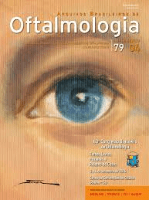
ARQUIVOS BRASILEIROS DE OFTALMOLOGIA
Pioneering open access to vital ophthalmology insights.ARQUIVOS BRASILEIROS DE OFTALMOLOGIA is a prominent peer-reviewed journal dedicated to the field of ophthalmology, published by CONSEL BRASIL OFTALMOLOGIA since its inception in 1945. With its commitment to disseminating high-quality research, the journal has transitioned to an Open Access model since 2001, ensuring that vital findings in ophthalmology are freely available to researchers, clinicians, and students alike. Located in São Paulo, Brazil, this esteemed publication occupies a significant position in the medical field, currently holding a Q3 ranking in both the miscellaneous medicine and ophthalmology categories. Although it maintains a legacy of fluctuating impact, recognized for its contribution to the academic community, ARQUIVOS BRASILEIROS DE OFTALMOLOGIA continues to attract a diverse international readership, making it a valuable resource for advancements in eye health, surgical techniques, and ocular research.

Nepalese Journal of Ophthalmology
Transforming Ophthalmology with Cutting-edge ResearchNepalese Journal of Ophthalmology, established by the NEPAL OPHTHALMIC SOC, is a premier Open Access journal dedicated to advancing the field of ophthalmology. With its ISSN 2072-6805 and E-ISSN 2091-0320, the journal provides an important platform for sharing innovative research and clinical findings in eye health. Since its inception in 2009, the journal has aimed to disseminate high-quality research that addresses contemporary challenges in ophthalmic practices, thus supporting improved patient care and outcomes within Nepal and beyond. The journal has achieved notable recognition, evidenced by its Scopus rank of #267 out of 915 in the field of General Medicine, placing it within the 70th percentile. Researchers, professionals, and students will find valuable information in its comprehensive articles, which cater to a multidisciplinary audience interested in the latest developments in ophthalmology. Emphasizing accessibility, the journal ensures that all published content is freely available, fostering collaboration and knowledge sharing in the global medical community.
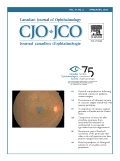
CANADIAN JOURNAL OF OPHTHALMOLOGY-JOURNAL CANADIEN D OPHTALMOLOGIE
Transforming vision care with impactful research.Canadian Journal of Ophthalmology - Journal Canadien d'Ophtalmologie, published by the prestigious Canadian Ophthalmological Society, serves as a leading platform for disseminating cutting-edge research in the field of ophthalmology. With an ISSN of 0008-4182 and E-ISSN 1715-3360, the journal boasts a commendable impact factor and maintains a strong presence within the medicine and ophthalmology categories, ranking in the Q2 quartile. This journal not only provides significant insights into clinical practices and advancements but also contributes to the understanding of ocular health issues facing contemporary society. Since its inception in 1966, it has published high-quality research, making substantial strides in both practical and theoretical aspects of ophthalmology until 2024. Although it is not an open-access journal, it establishes a vital resource for researchers, professionals, and students alike, fostering an informed community dedicated to improving vision care.
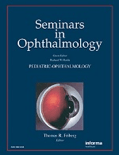
Seminars in Ophthalmology
Enriching Ophthalmic Knowledge Since 1986Seminars in Ophthalmology is a prestigious journal published by Taylor & Francis Inc, dedicated to advancing knowledge in the field of ophthalmology and related medical areas. Established in 1986, this journal has consistently provided a platform for high-quality research and insights, supporting the community with its impactful publications. With an impressive ranking of #55 out of 137 in the Ophthalmology category, the journal currently holds a Q2 quartile in both ophthalmology and miscellaneous medicine as of 2023, reflecting its significant contribution to the discipline. Researchers and practitioners can access a wealth of information covering a comprehensive range of topics, bolstering both clinical practice and academic inquiry. While not an open-access publication, Seminars in Ophthalmology remains a crucial resource for advancing ophthalmic research, fostering collaboration, and disseminating valuable findings in a rapidly evolving specialty.
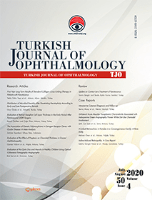
Turk Oftalmoloji Dergisi-Turkish Journal of Ophthalmology
Connecting Research and Clinical Practice in OphthalmologyTurk Oftalmoloji Dergisi - Turkish Journal of Ophthalmology is a premier peer-reviewed publication dedicated to the field of ophthalmology, published by GALENOS PUBL HOUSE. Since its inception in 1997, this Open Access journal has championed the dissemination of high-quality research, fostering an inclusive environment for sharing knowledge and advancements in eye health. With an ISSN of 1300-0659 and an E-ISSN of 2147-2661, the journal serves as a vital resource for researchers, clinicians, and students interested in the latest findings and innovations in ophthalmic sciences. Although its coverage in Scopus has been discontinued since 2017, the journal has garnered a significant rank of 80 out of 114 in the field of Medicine – Ophthalmology, highlighting its relevance and impact within the discipline. Operating out of Istanbul, Turkey, the Turkish Journal of Ophthalmology continues to be a crucial platform for ophthalmologists and researchers to publish their work and advance the understanding of ocular health.