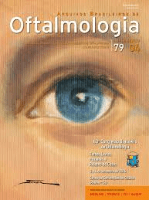
ARQUIVOS BRASILEIROS DE OFTALMOLOGIA
Scope & Guideline
Empowering the global community with groundbreaking findings.
Introduction
Aims and Scopes
- Clinical Research in Ophthalmology:
The journal publishes clinical studies focused on various ophthalmic conditions, including cataracts, glaucoma, retinal diseases, and pediatric ophthalmology, aiming to improve patient outcomes through evidence-based practices. - Innovative Surgical Techniques:
Papers discussing novel surgical approaches, techniques, and technologies in ophthalmology, including cataract surgery, keratoplasty, and minimally invasive procedures, are a significant focus. - Epidemiological Studies:
The journal includes epidemiological research that analyzes the prevalence, risk factors, and outcomes of various eye diseases within specific populations, particularly in Brazil. - Ocular Pathology and Disease Mechanisms:
Research on the pathophysiology of ocular diseases, including studies on genetic factors, inflammatory processes, and the impact of systemic diseases on eye health, is a core area. - Public Health and Policy in Ophthalmology:
The journal addresses public health issues related to eye care access, health policies, and the impact of socioeconomic factors on ocular health in Brazil. - Technological Advances in Ophthalmology:
The integration of new technologies such as telemedicine, artificial intelligence, and imaging techniques in ophthalmology is highlighted, showcasing the journal's commitment to modernizing eye care.
Trending and Emerging
- Telemedicine and Remote Monitoring:
The COVID-19 pandemic has accelerated the adoption of telemedicine in ophthalmology, with increasing publications on remote monitoring, virtual consultations, and their efficacy in managing eye health. - Artificial Intelligence in Diagnostics:
There is a growing trend in the use of artificial intelligence and machine learning for the diagnosis and management of ocular diseases, reflecting the technological advancements in the field. - Impact of Systemic Diseases on Ocular Health:
Research exploring the connections between systemic conditions, such as diabetes and hypertension, and their effects on ocular health is gaining traction, highlighting the importance of a multidisciplinary approach. - Patient-Centered Outcomes:
Studies focusing on quality of life, patient satisfaction, and psychosocial aspects of eye diseases are emerging, emphasizing the importance of patient-centered care in ophthalmology. - Innovations in Surgical Techniques:
There is an increasing interest in novel surgical techniques and technologies, including minimally invasive procedures and advancements in refractive surgery, contributing to better patient outcomes.
Declining or Waning
- Traditional Pharmacological Treatments:
Research focusing on conventional pharmacological treatments for ocular diseases has seen a decline, possibly due to the increasing interest in innovative and combination therapies. - Basic Science Research:
The journal has shifted towards more clinically relevant studies, leading to a decrease in basic science research that does not directly translate to clinical applications. - Historical Reviews and Case Reports:
There has been a noticeable reduction in the publication of historical reviews and case reports, which may indicate a preference for larger-scale studies and systematic reviews. - Ocular Trauma Studies:
Though still important, the volume of studies specifically addressing ocular trauma has waned, potentially overshadowed by emerging topics like telemedicine and digital health solutions. - Conventional Contact Lens Research:
Research focused on traditional contact lens materials and designs appears to be declining, as the field moves towards innovative lens technologies and personalized fitting techniques.
Similar Journals
Turk Oftalmoloji Dergisi-Turkish Journal of Ophthalmology
Pioneering Discoveries in Eye HealthTurk Oftalmoloji Dergisi - Turkish Journal of Ophthalmology is a premier peer-reviewed publication dedicated to the field of ophthalmology, published by GALENOS PUBL HOUSE. Since its inception in 1997, this Open Access journal has championed the dissemination of high-quality research, fostering an inclusive environment for sharing knowledge and advancements in eye health. With an ISSN of 1300-0659 and an E-ISSN of 2147-2661, the journal serves as a vital resource for researchers, clinicians, and students interested in the latest findings and innovations in ophthalmic sciences. Although its coverage in Scopus has been discontinued since 2017, the journal has garnered a significant rank of 80 out of 114 in the field of Medicine – Ophthalmology, highlighting its relevance and impact within the discipline. Operating out of Istanbul, Turkey, the Turkish Journal of Ophthalmology continues to be a crucial platform for ophthalmologists and researchers to publish their work and advance the understanding of ocular health.

EUROPEAN JOURNAL OF OPHTHALMOLOGY
Advancing Eye Health Through Innovative ResearchThe EUROPEAN JOURNAL OF OPHTHALMOLOGY, published by SAGE PUBLICATIONS LTD, is a leading international journal in the field of ophthalmology, dedicated to advancing the understanding and treatment of ocular diseases and disorders. With an ISSN of 1120-6721 and an E-ISSN of 1724-6016, the journal aims to provide a platform for innovative research, critical reviews, and comprehensive studies that span the diverse aspects of the discipline. As part of its commitment to disseminating high-quality research, the journal is indexed in Scopus, achieving an impressive rank of #47 out of 137 in the Medicine - Ophthalmology category, indicating its strong impact within the academic community. With a current impact factor that places it in the Q2 quartile for both Medicine (miscellaneous) and Ophthalmology as of 2023, it offers researchers and practitioners access to important findings and developments in eye health. The journal's converged years from 1991 to 2024 exemplify its longstanding commitment to the field, making it an essential resource for anyone looking to stay at the forefront of ophthalmological research.

Ophthalmic Surgery Lasers & Imaging Retina
Pioneering Insights in Retinal HealthOphthalmic Surgery Lasers & Imaging Retina is a distinguished journal dedicated to the dissemination of cutting-edge research and clinical advancements in the fields of ophthalmology, surgery, and the application of lasers in retinal care. Published by SLACK INC since its inception in 2013, this journal operates without an open access model, catering primarily to a scholarly audience seeking in-depth and impactful studies. With an impressive impact factor and categorized within the Q2 quartile in respective fields for 2023, it features contributions that significantly enhance the understanding and treatment of ocular diseases. The journal's robust editorial board ensures that only rigorous and innovative research is presented, making it a vital resource for researchers, healthcare professionals, and students who aim to stay at the forefront of ophthalmic surgery and imaging techniques. It continues to forge a path for collaboration and knowledge sharing within the global ophthalmology community.
Saudi Journal of Ophthalmology
Pioneering Research: Illuminating the Path to Better Eye HealthSaudi Journal of Ophthalmology, published by Wolters Kluwer Medknow Publications, stands as a crucial platform for the dissemination of innovative research and clinical practices in the field of ophthalmology. Since its inception in 2009, this journal has effectively contributed to the growing body of knowledge with a focus on addressing the diverse visual health challenges faced globally. With an ISSN of 1319-4534 and a E-ISSN of 2542-6680, the journal is indexed in Scopus, where it ranks in the Q3 category of ophthalmology, reflecting its commitment to quality research despite the competitive landscape. Situated in India, it provides a unique regional perspective while facilitating global discourse among researchers, practitioners, and students in ophthalmological sciences. Although it currently does not operate as an open-access journal, the Saudi Journal of Ophthalmology is essential for those aiming to expand their understanding of advancements in eye care, making it a valuable resource for professionals dedicated to enhancing patient outcomes through informed research and clinical practice.
Journal of the Egyptian Ophthalmological Society
Elevating the standards of ophthalmological excellence.Journal of the Egyptian Ophthalmological Society is a premier academic journal dedicated to advancing the field of ophthalmology through high-quality peer-reviewed research. Published by Wolters Kluwer Medknow Publications, this journal plays a critical role in disseminating vital findings and innovations in eye care, fostering knowledge exchange among researchers, practitioners, and educators worldwide. Since its transformation to Open Access in 2014, it has significantly enhanced the accessibility of eye health information, thereby broadening its impact on the global scientific community. With an ISSN of 2090-0686 and an E-ISSN of 2314-6648, the journal aims to tackle contemporary issues in ophthalmology, including clinical practices, public health, and technological advancements in eye care. The journal's commitment to excellence ensures that it remains a vital resource for those looking to contribute meaningfully to this dynamic and crucial field.
JOURNAL FRANCAIS D OPHTALMOLOGIE
Connecting professionals to the latest in vision care advancements.JOURNAL FRANCAIS D OPHTALMOLOGIE, published by MASSON EDITEUR, is a prominent peer-reviewed journal that serves as a vital resource in the field of ophthalmology. Launched in 1978, this esteemed publication continues to make significant contributions to the advancement of ocular health and vision science, with its scope encompassing clinical practices, innovative research, and the latest technological advancements in ophthalmic care. Based in France, the journal is recognized in the 2023 category quartiles with a Q3 ranking in ophthalmology, reflecting its dedication to quality scholarship within a competitive landscape, as evidenced by its positioning in the 30th percentile of the Scopus rankings. While it operates without Open Access, the journal remains crucial for professionals, researchers, and students alike, providing a platform for sharing knowledge and fostering collaborations in the global ophthalmological community.
Open Ophthalmology Journal
Connecting knowledge and collaboration in ophthalmology.The Open Ophthalmology Journal, published by Bentham Science Publishers Ltd, is a vital resource in the field of ophthalmology, dedicated to advancing knowledge through open-access research. With an ISSN of 1874-3641, it offers a platform for the dissemination of innovative studies from 2011 to 2024, focusing on the latest developments in eye care and vision science. Despite being categorized in the lower quartile (Q4) according to the 2023 rankings, and holding a position in the Scopus Ricks at 113 out of 137 in the ophthalmology domain, the journal serves as a valuable outlet for emerging scholars and seasoned researchers alike to share their findings. The journal's commitment to accessibility ensures that its content is available to a broad audience, promoting collaboration and knowledge exchange. Located in the Netherlands, The Open Ophthalmology Journal aspires to become a cornerstone for those passionate about understanding and improving ocular health through rigorous scientific inquiry.
Journal of Current Ophthalmology
Leading the Way: Discovering New Horizons in OphthalmologyJournal of Current Ophthalmology is a premier scholarly platform dedicated to advancing the field of ophthalmology, published by Wolters Kluwer Medknow Publications. Established as an Open Access journal since 2015, it aims to provide unrestricted access to high-quality research that fosters knowledge sharing and collaboration among researchers, practitioners, and students in the field. The journal covers a broad spectrum of topics within ophthalmology, from clinical practices to groundbreaking research, contributing significantly to the medical community's understanding of eye health and diseases. With an impact factor reflecting its significance, it ranks in the Q2 category of ophthalmology and stands at #66 out of 137 in Scopus rankings, placing it in the 52nd percentile of its field as of 2023. The Journal of Current Ophthalmology is committed to publishing cutting-edge findings and innovative solutions, establishing itself as an essential resource for all professionals engaged in ocular research and care.
INDIAN JOURNAL OF OPHTHALMOLOGY
Empowering Eye Care: Where Research Meets PracticeThe Indian Journal of Ophthalmology is a prestigious, peer-reviewed publication dedicated to advancing the field of ophthalmology. Published by Wolters Kluwer Medknow Publications, this journal plays a vital role in disseminating high-quality research and clinical insights since its inception in 1946. With an impact factor placing it in the Q2 category in Ophthalmology for 2023, it ranks #42 out of 137 in Scopus, reflecting its influence and reliability in the medical community. As an Open Access journal since 2005, it ensures that impactful research is accessible to a global audience, fostering innovation and knowledge sharing among researchers, healthcare professionals, and students alike. The journal's commitment to publishing cutting-edge studies, comprehensive reviews, and clinical guidelines makes it an essential resource for those navigating the rapidly evolving landscape of eye care and ophthalmology.

Asia-Pacific Journal of Ophthalmology
Shaping the future of ophthalmology, one study at a time.Asia-Pacific Journal of Ophthalmology is a distinguished open access journal published by the Asia-Pacific Academy of Ophthalmology (APAO), specializing in the latest advancements and research in ophthalmology. Since its inception in 2013, this journal has established itself as a vital platform for disseminating innovative findings and clinical practices across the Asia-Pacific region and beyond. With an impressive Scopus ranking of #10 out of 137 in the field of Medicine (Ophthalmology), placing it in the 93rd percentile, it garners significant attention and respect within the academic community. Currently holding a Q1 categorization in both Medicine (miscellaneous) and Ophthalmology, the journal embraces a broad scope that encompasses clinical studies, experimental research, and reviews aimed at enhancing the understanding and management of eye health. Its open access model since 2019 ensures that all published works are freely accessible, promoting greater collaboration and knowledge sharing among researchers, clinicians, and students. Situated in the Netherlands with a prominent address in Hong Kong, the journal serves as an essential resource for anyone dedicated to the field of ophthalmology.