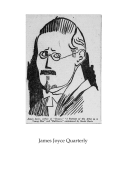
JAMES JOYCE QUARTERLY
Scope & Guideline
Fostering New Perspectives on Joyce's Mastery
Introduction
Aims and Scopes
- Modernist Literary Analysis:
The journal emphasizes critical analyses of Joyce's texts, particularly 'Ulysses' and 'Finnegans Wake', exploring their narrative structures, themes, and stylistic innovations. - Cultural and Historical Contextualization:
It seeks to situate Joyce's work within broader cultural, historical, and social frameworks, examining the interplay between his literature and the socio-political landscape of early 20th-century Ireland. - Interdisciplinary Approaches:
The journal promotes interdisciplinary research, integrating perspectives from fields such as visual arts, music, philosophy, and psychoanalysis to enrich the understanding of Joyce's impact. - Comparative Literature:
There is a strong focus on comparative studies with other literary figures and movements, particularly in relation to modernism and its global manifestations. - Joyce's Legacy and Influence:
The journal continues to explore Joyce's enduring influence on contemporary literature, culture, and critical theory, showcasing how his work resonates in modern contexts.
Trending and Emerging
- Disability Studies and Representation:
Recent publications increasingly examine themes surrounding ability and disability in Joyce's work, indicating a growing interest in how these concepts play out in modernist literature. - Posthumanism and Nonhuman Perspectives:
There is a notable trend towards exploring posthumanist themes, particularly in relation to how nonhuman entities and perspectives are represented in Joyce's narratives. - Digital Humanities and New Media:
As technology evolves, there is a rising interest in how digital humanities can be applied to Joyce studies, including the use of digital tools for textual analysis and representation. - Gender and Queer Studies:
Emerging scholarship is increasingly focusing on gender dynamics and queer readings of Joyce's texts, reflecting broader societal conversations about identity and representation. - Environmental Studies:
Themes related to ecology and the environment are gaining traction, with scholars exploring how Joyce's work engages with notions of nature, nation, and consumption.
Declining or Waning
- Traditional Biographical Studies:
There is a noticeable decline in papers solely focused on Joyce's biography or personal life, as the journal shifts towards more thematic and analytical approaches to his texts. - Narrowly Focused Textual Exegesis:
Papers that solely aim to provide line-by-line textual analysis without broader contextualization or interdisciplinary connections are becoming less prevalent. - Historical Contextualization:
While historical perspectives remain important, there appears to be a waning interest in papers that solely focus on Joyce's historical context, as scholars increasingly seek to connect his work to contemporary issues.
Similar Journals

Carte Romanze
Exploring the Depths of Narrative and CultureCarte Romanze is a prominent academic journal published by Milano University Press, dedicated to the field of literature and cultural studies. With an ISSN of 2282-7447, it offers an invaluable platform for researchers, professionals, and students interested in exploring the rich landscapes of narrative and cultural expression. Since its transition to Open Access in 2013, the journal has championed the dissemination of knowledge, making high-quality research freely available to a global audience. Situated in the historic city of Milan, the journal aims to foster interdisciplinary dialogue and innovation in literary scholarship while maintaining rigorous academic standards. As it continues to contribute to the landscape of contemporary literature studies, Carte Romanze is poised to inspire new scholarly conversations and ideas.
SHAKESPEARE QUARTERLY
Illuminating Shakespeare's Legacy in Literature and the ArtsSHAKESPEARE QUARTERLY is a premier academic journal dedicated to the interdisciplinary study of William Shakespeare’s works and their profound impact on literature and the arts. Published by Oxford University Press Inc, this influential journal has established itself as a vital resource for scholars and students alike, catering to a wide-ranging audience interested in the intersections of literature, performance, and visual arts. With its consistent ranking in the Q1 category for both Literature and Literary Theory, as well as Visual Arts and Performing Arts, SHAKESPEARE QUARTERLY maintains a formidable presence in the academic landscape, currently positioned in the 65th percentile for literature within the Arts and Humanities. The journal's effective and rigorous peer-review process ensures that only high-quality research articles are published, contributing significantly to ongoing scholarly conversations. By fostering critical dialogue and innovation in the study of Shakespearean texts, this journal plays a crucial role in advancing the field and inspiring future research.

Monteagudo
Nurturing Inclusive Dialogue in Literature and the ArtsMonteagudo, published by UNIV MURCIA, is an important academic journal dedicated to the fields of Arts and Humanities, particularly focusing on Literature, Literary Theory, Visual Arts, and Linguistics. Since its inception in 2019, it has aimed to provide a scholarly platform for innovative research and critical discourse within these disciplines. With an ISSN of 0580-6712 and an E-ISSN of 1989-6166, the journal seeks to enhance the visibility of emerging ideas and methodologies, while fostering an inclusive academic dialogue. Although Monteagudo does not currently offer Open Access options, its significance is reflected in its Scopus rankings, which position it within the 14th to 32nd percentile across various categories. With its operations based in the heart of Murcia, Spain, the journal is poised to influence both regional and international scholarly conversations, making it an essential resource for researchers, professionals, and students aiming to expand their understanding of contemporary issues in Arts and Humanities.
MFS-Modern Fiction Studies
Navigating the Landscape of Contemporary LiteratureMFS-Modern Fiction Studies is a premier journal in the field of literature and literary theory, published by Johns Hopkins University Press. With an impressive impact factor and a 2023 classification in Q1, this journal stands out as a vital resource for scholars, researchers, and practitioners interested in contemporary fiction analysis and criticism. The journal aims to foster innovative scholarship, enhance discussions around literary trends, and explore the intricacies of modern narrative forms. Notably, it ranks #119 among 1,106 in the Scopus Arts and Humanities category, placing it within the top 89th percentile. Published four times a year, MFS is committed to making significant contributions to the understanding of modern fiction, making it a must-read for anyone vested in the evolution of literature. Access options are available through institutional subscriptions, ensuring that readers can engage with cutting-edge research and discourse in the literary community.
RUSSIAN LITERATURE
Connecting Past and Present in Russian Literary DiscourseRUSSIAN LITERATURE is a premier academic journal published by ELSEVIER, dedicated to advancing the study of Russian literary traditions, critical theory, and cultural contexts. With an ISSN of 0304-3479 and an E-ISSN of 1878-3678, this journal has firmly established itself as a vital resource in the field, achieving a commendable Q1 ranking in Literature and Literary Theory as of 2023. The journal benefits from a strong impact factor and ranks #178 out of 1106 in the Scopus database, placing it in the 83rd percentile of arts and humanities research. RUSSIAN LITERATURE covers an extensive timeline, converging years from 1971 to 1974 and from 1976 to 2023, reflecting its rich academic lineage. Although not an open-access publication, the journal remains influential among scholars, professionals, and students seeking in-depth analyses and critical insights into Russian literature and literary theory. Its commitment to scholarly rigor makes it an essential read for anyone engaging with the complexities of literary studies.
Mark Twain Annual
Exploring the Depths of Twain's InfluenceMark Twain Annual, published by Penn State University Press, is a distinguished journal dedicated to the exploration of the life and work of Mark Twain, as well as the broader implications of his contributions to literature and culture. With an ISSN of 1553-0981 and E-ISSN of 1756-2597, this scholarly publication serves as a vital resource for researchers, professionals, and students interested in American literature, particularly within the realm of literary theory. Since its inception, the journal has developed a reputation for its rigorous scholarship, achieving a Q3 ranking in Literature and Literary Theory for 2023, and placing it at position #313 out of 1106 in the Scopus Ranks, signifying a robust standing within its field. The Mark Twain Annual features a diverse range of articles, critical essays, and book reviews that illuminate Twain’s works and their enduring influence, fostering an enriched understanding of his literary legacy. Although it does not currently offer open access options, its commitment to academic rigor and scholarly discourse ensures that it remains an essential platform for vibrant academic exchange.

World Literature Studies
Unveiling Diverse Narratives from Around the WorldWorld Literature Studies is a leading academic journal published by the Institute of World Literature at the Slovak Academy of Sciences, dedicated to advancing the field of literary studies. With an ISSN of 1337-9275 and an E-ISSN of 1337-9690, this journal has established itself as a prominent platform for scholarly research and discourse, earning a prestigious Q1 ranking in the Literature and Literary Theory category as of 2023, placing it in the top 25% of journals in its field according to Scopus metrics. Operating from Slovakia, the journal caters to a global audience, highlighting diverse perspectives in world literature and fostering interdisciplinary collaboration. Though it currently offers no Open Access option, it maintains a rigorous peer-review process that ensures the quality and integrity of published works. Researchers, students, and literary professionals alike will find the journal's comprehensive articles and critical analyses essential for staying informed about the latest developments and trends in literature and literary theory.

DAPHNIS-ZEITSCHRIFT FUR MITTLERE DEUTSCHE LITERATUR
Unveiling the Rich Tapestry of Middle German TextsDAPHNIS-ZEITSCHRIFT FUR MITTLERE DEUTSCHE LITERATUR, published by EDITIONS RODOPI BV, is a distinguished journal dedicated to the exploration and critical analysis of Middle German literature, offering scholars a dedicated platform to contribute to the field. With an ISSN of 0300-693X and an E-ISSN of 1879-6583, the journal has established itself as a vital resource for researchers and students alike, fostering academic discourse and advancing scholarship in literature and literary theory. Operating from the Netherlands, DAPHNIS holds a notable position in the academic community, currently categorized in the Q3 quartile of literature and literary theory, ranked in the 59th percentile among its peers on Scopus. The journal’s commitment to promoting critical insights and comprehensive studies makes it an essential reference point for anyone engaged in the literary academic landscape. While it is not currently open access, access options are available through institutional subscriptions, ensuring that valuable research is disseminated widely. For contributors and readers, DAPHNIS is not just an academic journal; it is a collaborative space where scholarship meets creativity, enriching the understanding of the rich tapestry of Middle German literature.
CAHIERS ELISABETHAINS
Bridging the Gap Between History and Literary TheoryCAHIERS ELISABETHAINS is a prominent academic journal published by Univ Montpellier, dedicated to the exploration of historical and literary themes. With ISSN 0184-7678 and E-ISSN 2054-4715, it has garnered attention both within the United States and internationally. As of 2023, it has achieved respectable rankings in its fields, holding a Q3 quartile in History and a Q2 quartile in Literature and Literary Theory, reflecting its commitment to scholarly excellence. The journal spans a comprehensive timeline from 2004 to 2024, offering a rich tapestry of research and insights into the intersection of history and literature. Although it does not currently operate under an Open Access model, the journal endeavours to present quality contributions that expand academic discourse. Researchers, professionals, and students alike will find in CAHIERS ELISABETHAINS a valuable resource that fosters critical engagement with the past and enriches the understanding of literary contexts.
Bulletin of Spanish Studies
Showcasing Peer-Reviewed Research in Spanish StudiesBulletin of Spanish Studies is a prominent academic journal dedicated to the exploration and discourse of Spanish studies within the diverse realms of Cultural Studies and Literature and Literary Theory. Published by Routledge Journals, Taylor & Francis Ltd, this journal serves as a crucial platform for scholars, researchers, and students to disseminate their findings and engage in scholarly debates related to Spanish literature, culture, and linguistics. With an emphasis on high-quality, peer-reviewed research, the journal holds a reputable Q3 ranking in Cultural Studies and a commendable Q2 ranking in Literature and Literary Theory, reflecting its significant impact within the academic community. The Bulletin is indexed in notable databases, achieving a rank of #314 out of 1106 in Literature and Literary Theory and #738 out of 1304 in Cultural Studies, signaling its vital role in advancing knowledge in these fields. Although it does not currently offer open access options, the journal remains an essential resource for those passionate about the study of Spanish culture and literature from 2010 to 2024 and beyond.