
Knjizevna Smotra
Scope & Guideline
Illuminating the Intersection of Culture and Literature
Introduction
Aims and Scopes
- Literary Analysis and Critique:
The journal features in-depth analyses of various literary works, exploring themes, narrative techniques, and character development across different genres. - Cultural Studies:
A significant focus on cultural representations, identity formations, and the roles of literature in reflecting and shaping cultural narratives. - Translation Studies:
The exploration of translation practices, theories, and the impact of translation on literary reception and intercultural communication. - Intermediality and Adaptation:
Research on the relationships between literature and other media, including film, theatre, and visual arts, highlighting adaptations and intertextual dialogues. - Historical and Contextual Studies:
The journal examines the historical contexts of literary works, including socio-political influences and the evolution of literary movements. - Gender Studies and Feminism:
A focus on gender dynamics in literature, particularly the representation of female characters and feminist readings of texts.
Trending and Emerging
- Cultural Identity and Memory:
Recent publications increasingly explore themes of cultural identity, memory, and trauma, particularly in relation to post-colonial contexts and personal narratives. - Eco-Criticism and Feminist Perspectives:
There is a growing interest in eco-critical approaches, particularly eco-feminism, which examines the intersections of gender and environmental concerns in literature. - Globalization and Transnational Literature:
A trend towards examining literature in a globalized context has emerged, with studies focusing on transnational narratives and the impact of globalization on literary forms. - Digital Humanities and New Media:
The incorporation of digital humanities perspectives and analyses of new media representations in literature are gaining prominence, reflecting the changing landscape of literary consumption. - Pandemic Literature and Social Commentary:
The journal has begun to feature more works discussing literature's response to global crises, including the pandemic, highlighting the relevance of literary studies in contemporary societal issues.
Declining or Waning
- Postmodernist Critique:
There has been a noticeable decrease in papers explicitly critiquing postmodernist literature, suggesting a shift towards more contemporary frameworks and themes. - Focus on Classical Literature:
The exploration of classical texts and their relevance to modern contexts seems to be waning, with fewer papers dedicated to traditional literary canon. - Isolation of National Literatures:
The emphasis on national literatures in isolation appears to be diminishing, possibly in favor of more global and interconnected literary studies. - Theoretical Approaches to Genre:
There is a reduced focus on theoretical discussions surrounding genre conventions, as the journal seems to prioritize thematic and contextual analyses. - Historical Literary Figures:
Research centered on historical literary figures and their biographies is less frequent, indicating a potential shift towards contemporary authors and current literary trends.
Similar Journals
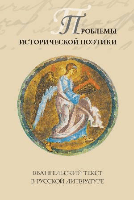
Problemy Istoricheskoi Poetiki
Transforming Literary Understanding Through Rigorous ResearchProblemy Istoricheskoi Poetiki is a leading academic journal in the field of Literature and Literary Theory, published by PETROZAVODSK STATE UNIVERSITY since 1990. With an impact factor that places it in the Q1 category for 2023, this journal is distinguished for its scholarly contributions, ranked #169 out of 1106 in the Scopus Arts and Humanities category, which positions it in the 84th percentile. Focused on advancing the understanding of historical poetics, the journal encourages rigorous research and offers Open Access to its published works, ensuring the dissemination of knowledge across borders, while fostering collaboration among scholars globally. The editorial board is committed to publishing innovative and insightful articles that address crucial themes in literary history, theory, and interpretation, making it an essential resource for researchers, professionals, and students alike. The journal's harmonious convergence of traditional literary studies with contemporary analytical approaches makes it a vital platform for exploring the dynamics of literature within its historical contexts.

RIVISTA DI LETTERATURA ITALIANA
Fostering Scholarly Discourse in Italian Literary StudiesRIVISTA DI LETTERATURA ITALIANA, published by Fabrizio Serra Editore, stands as a prestigious journal in the field of Italian literature, with a focus on critical analysis and the exploration of literary themes, movements, and historical contexts within Italian literary traditions. With an ISSN of 0392-825X and an E-ISSN of 1724-0638, the journal serves as a valuable resource for scholars, professionals, and students seeking to deepen their understanding of Italian literary works and authors. Although it does not currently offer open access, its rigorous peer-review process ensures that all published articles meet high academic standards, contributing to ongoing scholarly discourse. Operating from its base in Pisa, Italy, RIVISTA DI LETTERATURA ITALIANA aims to provide readers with insightful research, fostering a greater appreciation for the rich tapestry of Italian literature.

Swiat i Slowo
Connecting Scholars Through Diverse PerspectivesSwiat i Slowo is a distinguished academic journal published by UNIV BIELSKO-BIALA that plays a crucial role in the study of humanities and social sciences. Dedicated to exploring diverse themes such as literature, philosophy, and cultural studies, this journal serves as a platform for scholars to disseminate their research findings, engage in intellectual discourse, and foster collaboration across disciplines. With an increasing impact factor reflecting its growing relevance in the academic community, Swiat i Slowo is committed to providing access to a wide range of scholarly articles that enrich the understanding of human experience and societal dynamics. Although currently not an open access journal, it remains a valuable resource for researchers, professionals, and students looking to deepen their knowledge within the humanities. For more information and to access published issues, please visit the journal's website at UNIV BIELSKO-BIALA.

Folia Linguistica et Litteraria
Bridging Disciplines: Where Language Meets LiteratureFolia Linguistica et Litteraria, published by the University of Montenegro's Institute of Language and Literature, is an esteemed academic journal that provides a vital platform for the exploration and discourse in the fields of Linguistics and Literary Theory. With an ISSN of 1800-8542, this journal serves as a significant resource for researchers, educators, and students alike, fostering an understanding of language, literature, and their interrelationship. Having established its presence in the scholarly community, Folia Linguistica et Litteraria has been ranked in the 2023 quartiles, achieving Q3 in Linguistics and Language, and Q2 in Literature and Literary Theory, indicating its growing influence and relevance. Its Scopus rankings further underscore the journal’s commitment to high-quality research, reflecting its standing within the arts and social sciences. While the journal operates without open access, its rigorous peer-review process ensures that only the most impactful studies are published. As it converges its focus from 2019 to 2024, this journal invites contributions that challenge conventional boundaries, encouraging interdisciplinary dialogue and innovative research in the rich fields of linguistics and literary studies.

Litera-Journal of Language Literature and Culture Studies
Empowering Emerging Voices in the Arts and HumanitiesLitera - Journal of Language Literature and Culture Studies is a pioneering open-access journal published by the esteemed Istanbul University, Faculty of Letters, since 2017, dedicated to the in-depth exploration and critical analysis of language, literature, and cultural studies. With an ISSN of 1304-0057 and an E-ISSN of 2602-2117, the journal aims to foster a diverse discourse within the arts and humanities, particularly in literature and literary theory, linguistics, and cultural studies. Although it currently holds a modest Scopus rank among its peers, it serves as a valuable platform for emerging scholars and seasoned researchers alike, aiming to enhance understanding and appreciation of cultural narratives within the global context. The journal provides a unique opportunity for authors and readers to engage with original research, critical reviews, and creative works that are vital to the advancement of interdisciplinary studies. Based in Istanbul, Turkey, it is positioned at the heart of cultural exchange, making it a significant contributor to scholarly communication in the region and beyond.

CAMBRIDGE QUARTERLY
Advancing Scholarly Discourse in LiteratureCAMBRIDGE QUARTERLY, published by Oxford University Press, stands as a dedicated outlet for scholarly discourse in the realm of Literature and Literary Theory. Since its inception in 1965, this journal has fostered a rich landscape for academic inquiry and discussion, with a commitment to exploring the intricate dynamics of literary studies up to 2024 and beyond. With an ISSN of 0008-199X and an E-ISSN of 1471-6836, CAMBRIDGE QUARTERLY offers a platform for innovative research, although it currently does not provide open access options. The journal is noted for its scholarly contributions, ranking in the Q4 quartile within its category based on the 2023 metrics, and holds the 635th rank in Scopus for Arts and Humanities specifically focused on Literature and Literary Theory, placing it in the 42nd percentile. As such, it appeals to researchers, professionals, and students alike, seeking to deepen their understanding of literary discourse and theoretical frameworks.
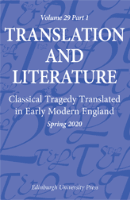
Translation and Literature
Illuminating the Art of Translation in LiteratureTranslation and Literature is a leading academic journal published by Edinburgh University Press, focusing on the intricate relationship between language and literature within the realms of translation studies. With an ISSN of 0968-1361 and an E-ISSN of 1750-0214, this journal provides a crucial platform for scholars and practitioners to explore and disseminate research that addresses both the theoretical and practical aspects of translation. Since its inception in 1996, Translation and Literature has established itself as an essential resource, particularly noted for its contributions to the fields of linguistics and literary theory, as indicated by its Q4 ranking in both categories in 2023. The journal's articles are designed to foster dialogue across disciplines, encouraging innovative thinking and collaboration among researchers, professionals, and students alike. Access to this valuable resource is currently available through subscription, ensuring high-quality scholarship reaches a diverse audience dedicated to advancing the understanding of translation's role in literature.

LITTERATURES
Exploring the Depths of Literary DiscourseLITTERATURES is a distinguished academic journal dedicated to the exploration of literature and literary theory, published by UNIV TOULOUSE MIRAIL. With its ISSN 0563-9751, this journal provides a platform for innovative research and critical analysis in the humanities, particularly within the field of literature. Although currently not indexed with an official e-ISSN and with a history of coverage discontinued from Scopus from 2004 to 2015, LITTERATURES continues to contribute valuable insights and scholarly discourse in contemporary literary studies. Researchers will find its publications vital for examining the intersections of literary theory and practice, while students and professionals can benefit from its rigorous academic contributions. While the journal's Scopus rank places it within the 14th percentile among literature journals, its focus on French and international literature enriches the global literary landscape and encourages meaningful scholarly exchange. The journal is based in Toulouse, France, and invites contributions that challenge existing paradigms and inspire new interpretations within the realm of literature.

Anales de Literatura Hispanoamericana
Connecting Scholars Through the Lens of Hispanic LiteratureAnales de Literatura Hispanoamericana, published by UNIV COMPLUTENSE MADRID, SERVICIO PUBLICACIONES, is a prominent journal dedicated to the field of Hispanic literature and literary theory. With a history of publication spanning from 1996 to 2023, this journal provides an essential platform for scholars and researchers exploring diverse aspects of literature within the Hispanic cultural context. Though it currently operates without an open-access model, its scholarly contributions are vital for advancing the understanding of literary phenomena in Spanish-speaking countries. As a Q3 ranked journal in the Literature and Literary Theory category, it engages a global audience interested in high-quality research, and its Scopus ranking places it among the notable publications in the arts and humanities. The journal aims to foster interdisciplinary dialogue, showcasing innovative research and critical analyses that enhance the appreciation of Hispanic literary heritage. Whether you are a seasoned researcher or an emerging scholar, Anales de Literatura Hispanoamericana serves as a crucial resource for advancing your understanding of the rich tapestry of Hispanic literature.
JOURNAL OF BIBLICAL LITERATURE
Exploring the Depths of Scripture and Narrative.The JOURNAL OF BIBLICAL LITERATURE, published by the Société Biblique de Littérature, is a premier academic platform dedicated to the interdisciplinary exploration of biblical texts through the lenses of literature and religious studies. With impressive Scopus rankings—placing it in the top 5% of journals in both Literature and Literary Theory as well as Religious Studies—the journal exemplifies quality and rigor in its scholarship. Despite its lack of open-access options, it is highly regarded for its contributions to scholarly discourse, aiming to enrich understanding of biblical literature within both historical and contemporary contexts. The journal operates within the elite Q1 quartile, underscoring its significance in the field and making it an essential resource for researchers, professionals, and students alike. Conveniently based in the United States, at 825 Houston Mill Rd, Suite 350, Atlanta, GA 30329, the journal is poised to continue impacting the scholarly landscape leading into its converged years from 2002 to 2024.