
LATOMUS
Scope & Guideline
Illuminating the Past, Shaping the Future
Introduction
Aims and Scopes
- Ancient History and Politics:
The journal publishes research on the political dynamics, governance, and historical events of ancient Rome and Greece, exploring themes such as power, governance, and the sociopolitical structures of these civilizations. - Literary Analysis and Criticism:
LATOMUS features studies that analyze classical texts, including poetry, prose, and drama, employing various literary theories and methodologies to interpret their significance and historical context. - Cultural Studies and Social History:
Research focusing on the cultural practices, societal norms, and everyday life in ancient societies, often examining the interplay between different social classes, ethnicities, and genders. - Epigraphy and Linguistics:
The journal includes works that delve into the linguistic aspects of ancient texts, including epigraphic studies, syntax, and the evolution of Latin and Greek languages. - Interdisciplinary Approaches:
LATOMUS encourages interdisciplinary research that combines history, archaeology, literature, and philosophy to provide a more nuanced understanding of ancient cultures.
Trending and Emerging
- Gender Studies and Representation:
There is a growing interest in exploring gender dynamics and representations in ancient texts, indicating a shift towards understanding the role of gender in historical narratives and cultural practices. - Cultural Exchange and Interaction:
Research increasingly focuses on the interactions between different cultures within the ancient Mediterranean, examining how these exchanges shaped identities and societies. - Digital Humanities and Textual Analysis:
The integration of digital tools and methodologies in the analysis of ancient texts is on the rise, allowing for innovative approaches to textual criticism and the study of language. - Environmental History:
An emerging theme in LATOMUS is the exploration of environmental factors that influenced ancient societies, including climate, agricultural practices, and the relationship between humans and their environment. - Emotions and Affective Histories:
Scholarly work increasingly emphasizes the study of emotions in antiquity, investigating how feelings influenced social behaviors, political decisions, and cultural expressions.
Declining or Waning
- Traditional Historical Narratives:
There appears to be a decline in articles that focus solely on traditional historical narratives of ancient Rome, as scholars increasingly seek to challenge established narratives and incorporate diverse perspectives. - Epic Poetry:
Research on epic poetry, particularly the works of Virgil and Homer, has diminished, suggesting a shift towards more varied literary forms and genres, including lesser-known texts and contemporary interpretations. - Military History:
While military history remains a significant area of study, there is a noticeable reduction in the frequency of publications focused exclusively on military campaigns and tactics, with more scholars opting to contextualize military events within broader social and cultural frameworks. - Philosophical Texts:
The examination of classical philosophical texts has seen a downturn, likely due to the increasing focus on practical applications of philosophy in historical contexts rather than on theoretical discourse. - Economic History:
Studies strictly centered on economic frameworks of the ancient world have become less common, as interdisciplinary research tends to integrate economic discussions within broader cultural or historical analyses.
Similar Journals
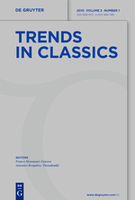
Trends in Classics
Elevating classical discourse for a modern audience.Trends in Classics is a distinguished academic journal published by WALTER DE GRUYTER GMBH, dedicated to advancing the field of Classics through critical scholarship and innovative research. With an ISSN of 1866-7473 and an E-ISSN of 1866-7481, this journal offers a platform for scholars from around the globe to share insights on classical literature, history, and archaeology. Indexed in Scopus and awarded a respectable Q4 classification in Classics, it ranks 48th out of 170 in the Arts and Humanities category, placing it in the top 72nd percentile—an indicator of its growing influence and contribution to the field. Operating from Germany, specifically from Genthin Strasse 13, D-10785 Berlin, the journal spans converged years from 2009 to 2024, fostering ongoing dialogues and developments within classical studies. Although it does not currently offer open access, its commitment to scholarly excellence makes it a vital resource for researchers, professionals, and students alike, who seek to deepen their understanding of ancient cultures and their lasting impacts on contemporary society.
CLASSICAL JOURNAL
Cultivating Knowledge of the Classical WorldCLASSICAL JOURNAL, published by the esteemed Johns Hopkins University Press, stands as a premier academic platform dedicated to the exploration and analysis of classical studies, focusing on ancient Greek and Roman literature, history, and culture. With an impressive impact factor and categorized in the Q1 quartile for Classics in 2023, the journal provides high-quality, peer-reviewed articles that contribute significantly to our understanding of classical antiquity. Researchers and students from around the globe turn to CLASSICAL JOURNAL for groundbreaking insights, as it consistently ranks in the top tier of its field, occupying rank #52 in the Scopus listings within the Arts and Humanities sector, placing it in the 69th percentile. While the journal maintains a traditional subscription model, its rich content and scholarly relevance make it an essential resource for anyone engaged in the study of the classical world, enhancing the academic discourse surrounding this timeless and influential area of study.
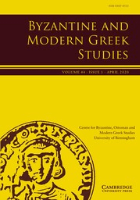
BYZANTINE AND MODERN GREEK STUDIES
Bridging Byzantine Legacy with Modern IdentityBYZANTINE AND MODERN GREEK STUDIES, published by Cambridge University Press, is a premier journal dedicated to the exploration of Byzantine and modern Greek history, literature, culture, and linguistics. With an ISSN of 0307-0131 and an E-ISSN of 1749-625X, the journal has established itself as a significant contribution to the field since its inception in 1975, with converged publication years extending to 2024. It currently holds a commendable ranking in various categories, including Q2 in Cultural Studies and History, as well as Q1 in Literature and Literary Theory, reflecting its academic rigor and impact. Researchers and scholars can access a wealth of knowledge that highlights the intricate connections between Byzantine heritage and modern Greek identity, all while benefiting from the journal's high visibility in indexes such as Scopus, which ranks it favorably within the top percentiles of related fields. The journal's commitment to fostering interdisciplinary dialogue makes it an invaluable resource for those seeking to deepen their understanding and appreciation of Greece's historical and cultural narrative.
MNEMOSYNE
Exploring the intersections of history and language.MNEMOSYNE is a prestigious academic journal published by BRILL, specializing in the fields of Archeology, Classics, History, Linguistics and Language, and Literature and Literary Theory. With a remarkable history dating back to its inception in 1948, this journal continues to be a crucial resource for scholars and researchers, spanning its publication years that extend to 2024. The journal boasts high rankings in multiple categories according to Scopus, including Q1 status in Classics and History, reflecting its impact and relevance in the academic community. Although it is not an Open Access journal, its selection of peer-reviewed articles ensures rigorous scholarship that contributes to ongoing discussions and discoveries in the humanities. By providing a platform for innovative research and critical discourse, MNEMOSYNE plays an integral role in advancing the understanding of cultural and historical contexts, making it an essential read for both seasoned academics and emerging scholars alike.

Eirene-Studia Graeca et Latina
Fostering Scholarly Inquiry into AntiquityEirene-Studia Graeca et Latina, ISSN 0046-1628, is a prominent academic journal published by the Institute of Classical Studies, Academy of Sciences of the Czech Republic. Focusing on the fields of Classics, Linguistics, and Archaeology, this journal serves as a vital platform for scholarly discourse and research dissemination since its inception in 2002. Although it operates under a traditional access model, the journal has established itself within the academic community, evidenced by its placement in the Q4 category across multiple disciplines in 2023. This includes significant rankings in areas such as Archaeology and Language and Linguistics, where it finds itself within the 27th to 16th percentiles of its respective categories. Eirene aims to foster the advancement of research in the Humanities, providing a rigorous forum for scholars and practitioners interested in classical studies. Its contribution to the academic landscape is essential for those who aspire to explore the depths of ancient languages, cultures, and methodologies, making it a valuable resource for researchers, professionals, and students alike.

Listy Filologicke
Exploring the Intersections of History, Language, and Literature.Listy Filologicke is a distinguished academic journal published by the Institute of Classical Studies at the Academy of Sciences of the Czech Republic, focusing on the interdisciplinary fields of History, Linguistics and Language, and Literature and Literary Theory. With an ISSN of 0024-4457 and an E-ISSN of 2570-9410, this journal has been a pivotal platform for scholarly discourse since its convergence years began in 2003. Notably, it holds a Q3 classification in History and Linguistics and Language, and a Q2 in Literature and Literary Theory as of 2023. Its rankings within Scopus illustrate its relevance and impact in academia, with noteworthy positions in the Arts and Humanities and Social Sciences categories. Researchers, professionals, and students will find Listy Filologicke an invaluable resource for exploring cutting-edge research, critical analyses, and discourse that contribute significantly to their respective fields. Based in the heart of the Czech Republic, it continues to promote scholarly excellence and foster international collaboration.

Cuadernos de Filologia Clasica-Estudios Griegos e Indoeuropeos
Illuminating the Foundations of Greek and Indo-European StudiesCuadernos de Filologia Clasica-Estudios Griegos e Indoeuropeos, published by Universidad Complutense de Madrid, serves as a vital platform in the fields of Classics and Linguistics. With an ISSN of 1131-9070 and an E-ISSN of 1988-2637, this journal showcases rigorous academic research that spans both Greek studies and Indo-European linguistics. Recognized within the Q1 quartile in Classics and the Q2 quartile in Linguistics and Language, it highlights its standing among peers in these disciplines, particularly reflecting its commitment to advancing scholarly conversation. Though currently lacking in Open Access options, its emphasis on quality content ensures it maintains an intellectual influence, as evidenced by its ranking of #112 in Classics and efforts to engage researchers and students alike. The journal's coverage from 2011 to 2024 positions it as a rich historical resource, while its address in Madrid places it at the heart of European classical studies. By offering insights into the fundamental aspects of language, literature, and ancient cultures, Cuadernos de Filologia Clasica remains a critical resource for those seeking to deepen their understanding of the classical world and its enduring linguistic legacies.

BULLETIN OF THE INSTITUTE OF HISTORY AND PHILOLOGY ACADEMIA SINICA
Navigating the Complexities of Human Culture.BULLETIN OF THE INSTITUTE OF HISTORY AND PHILOLOGY ACADEMIA SINICA is a distinguished academic journal published by the Academia Sinica's Institute of History and Philology, based in Taiwan. Focused on the interdisciplinary fields of history, linguistics, archaeology, and religious studies, this journal provides a scholarly platform for researchers and professionals seeking to disseminate innovative findings and theoretical advancements. Despite its recent Q4 categorization in several areas including archaeology and linguistics, the journal is committed to fostering rigorous dialogue and enriching the academic community's understanding of historical and philological nuances. As an essential resource for those invested in the humanities, particularly within the context of Asian studies, it remains dedicated to enhancing visibility and accessibility to pivotal research. While currently not an open-access publication, it continues to shape the discourse within its field through concise contributions from credible scholars. Join the journal's ongoing mission to illuminate the complexities of history and language, bridging gaps across cultures and time.
JOURNAL OF MODERN GREEK STUDIES
Unveiling the Complex Narratives of Modern GreeceJOURNAL OF MODERN GREEK STUDIES, published by Johns Hopkins University Press, is an esteemed academic journal dedicated to the exploration and analysis of contemporary Greek culture, history, and society. With its ISSN 0738-1727 and E-ISSN 1086-3265, this journal significantly contributes to the fields of Cultural Studies, History, Sociology, and Political Science, consistently ranking within the upper quartiles in 2023. As a vital resource for researchers, professionals, and students, the journal provides a platform for interdisciplinary scholarship and critical discourse, enhancing our understanding of modern Greece from various perspectives. Readers can access a range of scholarly articles and reviews that delve into the complexities of Greek identity and its historical narratives. With converged years from 2002 to 2024, the JOURNAL OF MODERN GREEK STUDIES remains a pivotal reference point for those interested in Greek studies, underlining its importance and relevance within both national and international academic circles.
LATIN AMERICAN ANTIQUITY
Unearthing the Rich Tapestry of Latin American HeritageLATIN AMERICAN ANTIQUITY is a prestigious journal published by Cambridge University Press, focusing on the archaeology and history of Latin America. With an impressive impact factor reflecting its critical role in the academic community, this journal exemplifies excellence in research, landing in Q1 across multiple categories, including Archaeology and History, as per the 2023 category quartiles. The journal's scope covers a broad range of topics related to pre-Columbian cultures, ancient civilizations, and historical developments, making it essential reading for researchers, professionals, and students keen on exploring the rich tapestry of Latin American heritage. Although it is not an open-access publication, LATIN AMERICAN ANTIQUITY remains a vital resource for those dedicated to advancing knowledge in this dynamic field. With its commitment to scholarly rigor and a strong ranking in Scopus, it serves as a cornerstone for academic dialogue and investigation.