
Law & Literature
Scope & Guideline
Illuminating the Synergy Between Law and Literary Expression.
Introduction
Aims and Scopes
- Interdisciplinary Exploration:
The journal focuses on the intersection of law, literature, and philosophy, encouraging contributions that analyze how literary texts can illuminate legal concepts and vice versa. - Critical Examination of Legal Narratives:
Papers often investigate legal narratives in various forms, including literature, theater, and media, examining how these narratives shape public understanding of justice and law. - Cultural and Historical Contexts:
The journal emphasizes the importance of cultural and historical contexts in understanding the law, encouraging submissions that analyze legal issues through the lens of specific literary traditions or historical events. - Theoretical and Philosophical Underpinnings:
Contributions frequently engage with theoretical frameworks from legal studies, literary criticism, and philosophy, aiming to deepen the understanding of both fields. - Focus on Marginalized Voices:
The journal highlights narratives that explore the experiences of marginalized groups within legal frameworks, emphasizing the role of literature in giving voice to these perspectives.
Trending and Emerging
- Narratives of Justice and Injustice:
There is a growing focus on narratives that address systemic injustices, particularly regarding marginalized communities, reflecting contemporary societal concerns about equity and representation in the legal system. - Interrogation of Legal Fictions:
An increasing number of papers are examining the role of legal fictions in both literature and law, exploring how these constructs influence perceptions of truth and justice. - Environmental Justice and Law:
Emerging discussions on environmental justice highlight the intersection of ecological concerns with legal frameworks, reflecting a broader societal focus on sustainability and climate change. - Global Perspectives on Law:
The journal is increasingly publishing works that explore law and literature within a global context, addressing issues like migration, colonialism, and transnational legal frameworks. - Digital Humanities and Legal Narratives:
There is an emerging interest in the application of digital humanities methodologies to legal narratives, which allows for innovative analyses of text and context in the digital age.
Declining or Waning
- Traditional Legal Theory:
There appears to be a waning interest in papers strictly adhering to traditional legal theories or doctrines, as the journal increasingly favors innovative, interdisciplinary approaches that incorporate literary analysis. - Historical Legal Analysis:
Submissions focusing purely on historical legal texts without a contemporary or literary lens have been decreasing, suggesting a shift towards more current and relevant discussions. - Legal Realism:
Themes centered around legal realism, which emphasizes practical law application over theoretical frameworks, have become less frequent, indicating a move towards more abstract and theoretical explorations.
Similar Journals

TEXT & KRITIK
Stimulating intellectual inquiry in the realm of literature.TEXT & KRITIK, an esteemed academic journal published by EDITION TEXT KRITIK GMBH in Germany, serves as a critical platform for advancing scholarship in the fields of literature and literary theory. With an ISSN of 0040-5329, this publication aims to foster rigorous discourse and stimulate intellectual inquiry from 2009 to 2023, reflecting the evolving landscape of literary studies. Although categorized in the fourth quartile (Q4) in the 2023 measure of literature and literary theory, TEXT & KRITIK consistently engages with a diverse array of literary perspectives and methodologies, addressing both historical texts and contemporary literature. Researchers, professionals, and students alike are encouraged to explore this resource to deepen their understanding of critical texts and theoretical frameworks. While it does not currently operate on an open access model, its curated content remains a vital resource for anyone dedicated to exploring the nuances of literary analysis and criticism.
Revista Hispanica Moderna
Illuminating Diverse Perspectives in Literature and CultureRevista Hispanica Moderna, published by University of Pennsylvania Press, is a scholarly journal dedicated to exploring the rich tapestry of Hispanic cultural, historical, and literary studies. With an ISSN of 0034-9593 and an E-ISSN of 1944-6446, this esteemed publication operates within the United States, ensuring a broad international reach. While it currently does not offer Open Access, the journal provides significant insights across diverse fields, categorized as Q4 in Cultural Studies, History, and Literature and Literary Theory as per the 2023 standards. Although the journal ranks in the lower quartiles of its fields, its systematic approach to modern Hispanic studies offers valuable opportunities for gaining perspectives that are often underrepresented. Researchers, professionals, and students are encouraged to engage with its content as it navigates the complexities of cultural identities and historical narratives from 2019 to 2024 and beyond, making important contributions to the ongoing discourse in the humanities.

TWENTIETH CENTURY LITERATURE
Fostering Critical Dialogue in Literary StudiesTWENTIETH CENTURY LITERATURE is a renowned journal published by Hofstra University Press, dedicated to the exploration and analysis of literature and literary theory from the twentieth century. With a focus on both established and emerging voices in the field, this journal serves as an essential resource for researchers, professionals, and students who seek to deepen their understanding of significant literary movements and trends. The journal holds an impressive Q2 category ranking in Literature and Literary Theory as of 2023, showcasing its impact and relevance in the academic community. Though not an open access journal, it provides valuable insights and scholarly discussions that contribute to ongoing debates in literature studies. Covering a converged period from 2002 to 2014 and continuing from 2016 to 2024, TWENTIETH CENTURY LITERATURE positions itself as a pivotal platform for thought-provoking literature critique and scholarly inquiry, making it an indispensable addition to any academic library or personal collection.
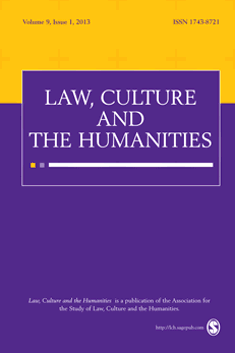
Law Culture and the Humanities
Unpacking the Cultural Dimensions of Legal FrameworksLaw Culture and the Humanities, published by SAGE Publications Ltd, serves as a pivotal forum for interdisciplinary dialogue at the intersection of law and the humanities. With an ISSN of 1743-8721 and an E-ISSN of 1743-9752, this esteemed journal has been contributing to scholarly discourse since its inception in 2005 and continues to do so until 2024. The journal carries a respectable impact factor showcased through its category rankings: Q3 in Arts and Humanities (miscellaneous), Q2 in Cultural Studies, and Q3 in Law. Its Scopus rankings reflect an impressive standing in the social sciences, particularly within Cultural Studies and Law, indicating that it is a fundamental resource for researchers and professionals aiming to explore the nuanced relationships between legal frameworks and cultural expressions. While not an Open Access journal, it offers substantial insights into contemporary debates, making it essential for academics and students engaged in the study of law's cultural dimensions.

CRITICA LETTERARIA
Advancing Critical Thought in the Heart of NaplesCRITICA LETTERARIA is an esteemed literary journal published by Paolo Loffredo Iniziative Editoriali SRL that has been contributing to discussions in the field of literature and literary theory since its inception in 2009. With an ISSN of 0390-0142 and an E-ISSN of 2035-2638, this journal is indexed in Scopus, ranking in the category of Arts and Humanities under Literature and Literary Theory. It is classified in the Q4 quartile, indicating its dedication to serving a niche yet vital discourse within the broader literary community. Although currently not open access, the journal offers a platform for scholars, researchers, and students to engage with diverse literary analyses and theoretical advancements. Located in the vibrant city of Naples, Italy, CRITICA LETTERARIA aims to foster academic dialogue and promote innovative approaches in literary studies, making it an important resource for anyone passionate about navigating the complexities of literary narratives and theory.

Contexto-Revista do Programa de Pos-Graduacao em Letras
Connecting Scholars Globally through Open AccessContexto-Revista do Programa de Pos-Graduacao em Letras is a distinguished open-access journal published by UNIV FEDERAL ESPIRITO SANTO since 2013, effectively contributing to the academic discourse in the field of Language and Literature studies. With its ISSN 2358-9566, this journal offers a platform for researchers, professionals, and students to disseminate and access high-quality scholarly articles that explore various themes in linguistics, literary analysis, and cultural studies. The journal facilitates intellectual exchange within the Brazilian and global academic communities, emphasizing the importance of open access to foster collaboration and innovation in the humanities. By publishing original research, book reviews, and theoretical discussions, Contexto aims to enhance the understanding of language as a vital component in shaping cultural narratives. Its commitment to accessibility ensures that valuable contributions to the field are readily available, serving a diverse audience eager to engage with contemporary issues in letters.
JOURNAL OF COMMONWEALTH LITERATURE
Navigating the Evolution of Literature and TheoryJOURNAL OF COMMONWEALTH LITERATURE, published by SAGE Publications Ltd, serves as a premier platform for scholarly discourse in the field of Literature and Literary Theory. Established in 1966, this esteemed journal has built a robust reputation, as evidenced by its impressive Q1 ranking in the 2023 category of Literature and Literary Theory and its placement in the impressive 91st percentile among its peers in the Scopus rankings. With an ISSN of 0021-9894 and an E-ISSN of 1741-6442, the journal provides valuable insights into the rich tapestry of Commonwealth literature, exploring diverse works and critical theories that shape our understanding of literature outside the conventional Western canon. While currently not designated as an Open Access journal, it continues to attract a global readership seeking to advance knowledge in this vital area of scholarship. Researchers, professionals, and students alike will find in its pages a rich resource for innovative ideas and critical discussions that reflect the evolving landscape of literary studies.
Partial Answers-Journal of Literature and the History of Ideas
Fostering Innovative Research in Cultural StudiesPartial Answers - Journal of Literature and the History of Ideas, published by the esteemed Johns Hopkins University Press, is a vital academic resource for scholars interested in the dynamic intersections of literature, philosophy, and cultural studies. With an established track record since its inception in 2003, this journal fosters rigorous dialogue and exploration across disciplines, offering a comprehensive platform for innovative research and critical thought. Highlighted by its 2023 Scopus rankings, it holds positions within the Q2 and Q3 quartiles, indicating a significant impact in its respective fields—specifically in Literature and Literary Theory, and Cultural Studies. Readers can expect cutting-edge articles that challenge conventional wisdom and probe the historical contexts of literary works. Although the journal is not Open Access, it remains committed to the dissemination of scholarly knowledge, making it a cornerstone for researchers, professionals, and students seeking to deepen their understanding of literature's role in shaping ideas. With its diverse contributions and thematic depth, Partial Answers is essential for anyone engaged in the nuanced study of literary narratives and philosophical inquiries.
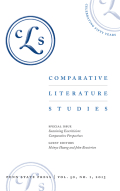
COMPARATIVE LITERATURE STUDIES
Navigating the Rich Tapestry of Global NarrativesComparative Literature Studies is a distinguished journal published by Penn State University Press, focusing on the diverse and evolving field of comparative literature. With an ISSN of 0010-4132 and an E-ISSN of 1528-4212, this quarterly journal has been a critical platform for scholarly dialogue and interdisciplinary research since its inception in 2000. The journal proudly ranks in the Q3 category for Cultural Studies and Q2 for Literature and Literary Theory (2023), showcasing its significant impact within these domains. Notably, it ranks #214/1106 in Literature and Literary Theory according to Scopus, placing it in the 80th percentile—highlighting its relevance and quality in the global academic landscape. Despite its traditional subscription model, the journal remains a crucial resource for researchers, professionals, and students keen on exploring the intersections of cultures, texts, and histories. By publishing cutting-edge research and critical essays, Comparative Literature Studies aims to expand the horizons of literary analysis and foster innovative scholarly exchanges.

MISSISSIPPI QUARTERLY
Illuminating Contemporary Challenges in Culture and LiteratureMISSISSIPPI QUARTERLY, published by Johns Hopkins University Press, is a distinguished journal that delves into the realms of Cultural Studies and Literature and Literary Theory. Since its inception, the journal has served as a vital platform for scholarly exchange and critical analysis, making significant contributions to understanding literary and cultural phenomena through varied interdisciplinary approaches. With an ISSN of 0026-637X and an e-ISSN of 2689-517X, it operates without Open Access, ensuring a selective dissemination of high-quality research. Despite being positioned in the Q4 quartile based on the 2023 ranking, it maintains a unique appeal for researchers, professionals, and students seeking to navigate the complexities of culture and literature. The journal has converged its publishing years to remain relevant amid evolving academic discourses, ensuring that it continues to address contemporary challenges and themes in literature. As an important academic resource, MISSISSIPPI QUARTERLY promises to stimulate discussion and provoke thought, inviting new voices to contribute to the ongoing dialogue in these critical fields.