Yearbook of Comparative Literature
Scope & Guideline
Advancing Understanding of Diverse Literary Landscapes
Introduction
Aims and Scopes
- Comparative Literary Analysis:
The journal emphasizes comparative studies that transcend national and linguistic boundaries, encouraging scholars to analyze texts in relation to one another across different cultures. - Interdisciplinary Approaches:
It promotes interdisciplinary research, integrating insights from fields such as linguistics, psychoanalysis, environmental studies, and cultural theory to enrich literary analysis. - Focus on Marginalized Voices:
A consistent focus on marginalized perspectives, including queer, trans, and postcolonial narratives, highlights the journal's commitment to exploring underrepresented voices in literature. - Engagement with Contemporary Issues:
The Yearbook addresses contemporary social and environmental issues, examining how literature reflects and critiques these challenges, particularly through themes of climate change, identity, and cultural dissidence. - Theoretical Innovation:
The journal encourages theoretical innovation by inviting critiques of established literary theories and proposing new frameworks for understanding literature.
Trending and Emerging
- Linguistic and Cultural Specificity:
There is an increasing emphasis on linguistic and cultural specificity, as seen in recent works that defend unique linguistic expressions and engage with the complexities of language in literature. - Environmental Critique:
Emerging themes related to environmental critique and ecological concerns are prominent, with a growing body of work examining literature's relationship with climate change and ecological degradation. - Affect and Emotion in Literature:
The exploration of affect and emotional responses within literary texts is gaining traction, indicating a shift towards understanding how literature impacts feelings and identities. - Queer and Trans Narratives:
There is a noticeable rise in papers focusing on queer and trans narratives, reflecting a broader cultural shift towards inclusivity and the exploration of diverse gender identities in literature. - Intersections of Race and Environment:
Recent publications are increasingly addressing the intersections of race and environmental issues, highlighting how literature can engage with and critique racialized experiences in ecological contexts.
Declining or Waning
- Traditional Canonical Texts:
There is a noticeable decline in the analysis of traditional canonical literary texts, as the journal shifts towards more contemporary and diverse works that challenge established literary norms. - Historical Literary Criticism:
The emphasis on historical literary criticism is waning, with fewer papers focusing on historical context alone and more on current sociocultural implications of literature. - Eurocentric Perspectives:
The journal appears to be moving away from Eurocentric literary perspectives, reflecting a broader trend towards inclusivity and global literary analysis. - Static Literary Forms:
There has been less focus on static or classical forms of literature, as the journal increasingly embraces dynamic, experimental, and hybrid literary forms. - Single Disciplinary Focus:
The decline of papers that focus solely on a single discipline suggests a growing preference for interdisciplinary approaches that encompass multiple perspectives.
Similar Journals
Journal of Postcolonial Writing
Exploring the Rich Tapestry of Postcolonial NarrativesJournal of Postcolonial Writing, published by ROUTLEDGE JOURNALS, TAYLOR & FRANCIS LTD, stands as a pivotal platform in the field of postcolonial studies and literary theory. Since its inception in 2005, this esteemed journal has cultivated a dedicated space for scholarly discourse, focusing on the complex interplay between literature, culture, and colonial histories. With an impressive Q1 ranking in the 2023 Literature and Literary Theory category and a notable Scopus rank of 97/1106, the journal occupies a vital place in the academic landscape, achieving a significant percentile of the 91st. Researchers and students alike will find the journal’s commitment to exploring diverse narratives and critical frameworks invaluable, making it an essential resource for those engaged in contemporary literary scholarship. Although not open access, readers can access high-quality research that contributes to meaningful conversations within the discipline, supporting the journal’s objective to foster interdisciplinary collaboration and innovation.

Literary Voice
Fostering Dialogue Through Diverse Literary PerspectivesLiterary Voice is a pioneering journal dedicated to the exploration and critique of literature and its multifaceted dimensions. Established in Punjab, India, and published by LITERARY VOICE, this journal aims to serve as a vital platform for scholars, researchers, and enthusiasts in the field of literary studies. With its ISSN 2277-4521 and E-ISSN 2583-8199, Literary Voice strives to foster intellectual discourse and encourage innovative scholarship through diverse thematic issues. While currently operating without an open access model, the journal provides a crucial space for the dissemination of original research and critical analysis that contribute to the enrichment of literary understanding. As an emerging publication in the humanities, Literary Voice invites submissions from across the globe, making it an essential resource for those looking to engage with contemporary literary debates and foster cross-cultural dialogues.
LIT-Literature Interpretation Theory
Exploring the Depths of Literary Theory.LIT-Literature Interpretation Theory is a premier academic journal that delves into the intricate relationships between literature and various interpretative theories, published by Routledge Journals, Taylor & Francis Ltd. With an ISSN of 1043-6928 and E-ISSN 1545-5866, this journal has established a notable reputation within the field, evidenced by its ranking in the 71st percentile among peers, and its placement in Q3 of the Literature and Literary Theory category for 2023. Since its inception in 1989 and continuing through 2024, LIT has aimed to provide a platform for the examination of literary texts through diverse theoretical lenses, catering not only to scholars and researchers but also to students and practitioners interested in literary discourse. Although it does not offer open access, the journal continues to be a vital resource for those seeking to enhance their understanding of literary theory within the arts and humanities. With robust insights and critical analyses, LIT contributes significantly to ongoing conversations in literature and promotes innovative interpretations that challenge conventional perspectives.

452 F-Revista de Teoria de la Literatura y Literatura Comparada
Exploring the nuances of theory and literature across cultures.452 F-Revista de Teoria de la Literatura y Literatura Comparada is a prestigious academic journal published by the Universitat de Barcelona, Faculty of Philology, dedicated to advancing the field of literature and literary theory. With an E-ISSN of 2013-3294, this Open Access journal has been freely accessible since 2009, ensuring widespread dissemination of knowledge across the global literary community. Recognized for its scholarly contributions, it attained a Q2 ranking in the Literature and Literary Theory category as of 2023, placing it in the top tier of publications in its field. The journal covers a broad spectrum of topics within literary theory and comparative literature, inviting submissions from emerging and established scholars alike. Based in Barcelona, Spain, the journal bridges cultural and academic dialogues, positioning itself as an essential resource for researchers, professionals, and students aiming to deepen their understanding of contemporary literary dynamics.
South Central Review
Exploring the Rich Tapestry of Southern CultureSouth Central Review, a distinguished academic journal published by Johns Hopkins University Press, serves as a vital platform for scholarly discourse in the fields of cultural studies, literature and literary theory, philosophy, and the visual and performing arts. With an ISSN of 0743-6831 and an E-ISSN of 1549-3377, this journal is dedicated to highlighting innovative research and critical analyses that explore the complexities of Southern culture and its broader implications. Although it operates without an open access option, the journal is recognized for its rigorous peer-review process and contributions to contemporary academic dialogue, holding Q3 and Q4 rankings across several disciplines as of 2023. The convergence of ideas and perspectives from diverse academic backgrounds positions the South Central Review as an essential resource for researchers, professionals, and students seeking to deepen their understanding of the cultural narratives shaping our world today.
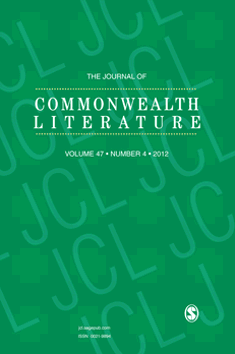
JOURNAL OF COMMONWEALTH LITERATURE
Connecting Cultures Through Literary ExplorationJOURNAL OF COMMONWEALTH LITERATURE, published by SAGE Publications Ltd, serves as a premier platform for scholarly discourse in the field of Literature and Literary Theory. Established in 1966, this esteemed journal has built a robust reputation, as evidenced by its impressive Q1 ranking in the 2023 category of Literature and Literary Theory and its placement in the impressive 91st percentile among its peers in the Scopus rankings. With an ISSN of 0021-9894 and an E-ISSN of 1741-6442, the journal provides valuable insights into the rich tapestry of Commonwealth literature, exploring diverse works and critical theories that shape our understanding of literature outside the conventional Western canon. While currently not designated as an Open Access journal, it continues to attract a global readership seeking to advance knowledge in this vital area of scholarship. Researchers, professionals, and students alike will find in its pages a rich resource for innovative ideas and critical discussions that reflect the evolving landscape of literary studies.

CHASQUI-REVISTA DE LITERATURA LATINOAMERICANA
Exploring the Rich Tapestry of Latin American NarrativesCHASQUI-REVISTA DE LITERATURA LATINOAMERICANA is an esteemed academic journal published by Arizona State University, dedicated to the exploration and dissemination of research in the fields of Literature and Literary Theory and Cultural Studies. With an ISSN of 0145-8973 and an E-ISSN of 2327-4247, the journal serves as a critical platform for scholars examining the complexities of Latin American literature from diverse perspectives. Notably ranked in the second quartile in its field as of 2023, CHASQUI reflects its commitment to quality and impactful scholarship. The journal operates within a two-year converged publication cycle, ensuring it remains at the forefront of contemporary discussions and innovations in its disciplines. Although there are no open access options, researchers and students alike will find valuable insights within its pages, bolstered by a robust academic community. Through its dedication to fostering literary scholarship, CHASQUI plays an integral role in advancing the understanding of Latin American narratives and cultural expressions.

Primerjalna Knjizevnost
Advancing Comparative Insights in LiteraturePrimerjalna Knjizevnost is a premier academic journal dedicated to the field of Comparative Literature, published by the Slovene Comparative Literature Association. Established in 1996 and transitioning to open access since 2015, this journal provides scholars, researchers, and students with a platform to explore and disseminate innovative thought and research in literary analysis and theory. With an impressive Q2 ranking in the Literature and Literary Theory category for 2023, and a respectable Scopus rank positioning it within the top 50 percentile in its field, Primerjalna Knjizevnost exemplifies the critical dialogue and cross-cultural exchange that define contemporary literary scholarship. The journal’s commitment to advancing the understanding of literature through diverse and interdisciplinary approaches makes it an essential resource for anyone invested in the complexities of literary studies.
NEOHELICON
Illuminating Literary Theory Through Rigorous ResearchNEOHELICON, published by Springer, is a prominent journal dedicated to the interdisciplinary studies within the field of Arts and Humanities, as well as Law and Social Sciences. Since its inception in 1973, the journal has served as a vital platform for scholars and researchers, showcasing original research, critical analyses, and scholarly debates that contribute significantly to literature and literary theory. With a current impact factor reflecting its influence in academia, NEOHELICON maintains an impressive ranking within Scopus, standing in the 66th percentile for Literature and Literary Theory and achieving Q3 classification across various academic categories in 2023. The journal, published in the Netherlands, operates without an open access option, positioning itself as a critical resource in the advancement of knowledge across these diverse fields. Its convergence of years from 2002 to present highlights a dedicated commitment to ongoing discourse, making NEOHELICON an essential resource for researchers, professionals, and students alike seeking to deepen their understanding of these dynamic disciplines.

CANADIAN LITERATURE
Showcasing Diverse Voices in Literary ScholarshipCanadian Literature is a distinguished journal published by the University of British Columbia, dedicated to exploring the rich landscape of Canadian literary studies. With its strong impact in the field, evidenced by its Scopus ranking of #197 out of 845 in the category of Arts and Humanities, specifically in Literature and Literary Theory, this journal serves as a pivotal platform for both emerging and established scholars. Covering a wide range of topics related to Canadian literature and culture, it aims to foster an interdisciplinary dialogue that reflects the diverse voices and narratives shaping the literary scene in Canada. Though the journal transitioned its coverage in Scopus after 2019, it continues to provide valuable insights and critical discourse in its publications. Researchers, students, and professionals looking to deepen their understanding of Canadian literature will find Canadian Literature an essential resource for contemporary scholarship.