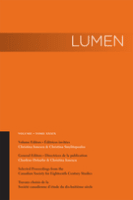
Lumen-Eighteenth-Century Studies-d Etude du Dix-Huitieme
Scope & Guideline
Connecting past and present through rigorous research.
Introduction
Aims and Scopes
- Eighteenth-Century Literature and Culture:
The journal publishes research on literary works and cultural practices from the eighteenth century, exploring how these texts reflect and shape contemporary societal norms and identities. - Translation Studies:
An important theme involves examining the role of translation in disseminating ideas and cultural practices across linguistic and national boundaries during the eighteenth century. - Social Dynamics and Identity:
The journal investigates concepts of identity, including race, gender, and national identity, particularly how these intersect with societal roles and performances in historical contexts. - Ethics and Morality:
Research often delves into ethical considerations and moral philosophy, exploring how these themes manifest in literature and societal behavior during the period. - Interdisciplinary Methodologies:
The journal encourages a blend of literary analysis with historical, philosophical, and cultural studies, promoting a comprehensive understanding of the eighteenth century.
Trending and Emerging
- Intersections of Race and Gender:
There is an increasing focus on how race and gender intersect within the context of the eighteenth century, reflecting broader societal discussions about identity and representation. - Adaptation Studies:
The rise of adaptation studies, particularly concerning how eighteenth-century texts are reinterpreted in modern contexts, signals a growing interest in the relevance of historical literature today. - Everyday Aesthetics:
Emerging research on everyday aesthetics in literature suggests a shift towards understanding how mundane experiences and representations influence broader cultural narratives. - Multispecies Perspectives:
Explorations of multispecies interactions and the ethical implications of human-animal relationships are gaining traction, indicating a novel approach to understanding humanity's place in the eighteenth century. - Visual Culture and Textuality:
The emphasis on visual culture, including the role of images in literary contexts, highlights a trend toward analyzing how visual representations interact with textual narratives in the period.
Declining or Waning
- Traditional Historical Narratives:
There is a noticeable decline in papers focusing solely on conventional historical narratives without critical or theoretical engagement, suggesting a shift toward more innovative and interdisciplinary approaches. - Static Gender Roles:
Research centered on fixed or binary notions of gender roles in literature is less prevalent, indicating a move towards more nuanced discussions of gender fluidity and intersectionality. - Singular National Perspectives:
Papers that focus exclusively on national literature without considering transnational influences or comparative analyses are becoming less common, reflecting an evolving understanding of cultural exchange.
Similar Journals

MIDWEST QUARTERLY-A JOURNAL OF CONTEMPORARY THOUGHT
Exploring the Frontiers of Contemporary ThoughtMIDWEST QUARTERLY-A JOURNAL OF CONTEMPORARY THOUGHT, published by Pittsburg State University, is a distinguished platform dedicated to exploring the interdisciplinary landscapes of contemporary thought within the arts and humanities. With an ISSN of 0026-3451, this journal has been contributing to academic dialogue since its inception in 1978, fostering critical engagement and innovative perspectives that reflect the evolving discourse in the field. Although it does not currently offer open access, the journal is indexed in various academic databases, achieving a respectable rank of #89 out of 147 in the arts and humanities category of Scopus, translating to a 39th percentile ranking. This highlights the journal's relevance and impact, making it an essential resource for researchers, professionals, and students alike who are seeking to deepen their understanding of contemporary topics and emerging trends. The journal is based in Pittsburg, Kansas, and continues to uphold its commitment to scholarly excellence.

REVUE D HISTOIRE MODERNE ET CONTEMPORAINE
Bridging Perspectives in Modern Historical ResearchREVUE D HISTOIRE MODERNE ET CONTEMPORAINE, published by the Société d'Histoire Moderne et Contemporaine, serves as a vital platform for scholars and enthusiasts in the field of history. With a focus on modern and contemporary historical discourse, this journal has been pivotal since its inception, aiming to promote research, analysis, and debate surrounding pivotal historical developments from the 1970s to the present day. While maintaining a Q4 ranking in History according to Scopus and a 49th percentile placement among arts and humanities journals, it continues to foster scholarly engagement across diverse topics within modern history. Although not an open-access publication, REVUE D HISTOIRE MODERNE ET CONTEMPORAINE offers researchers detailed insights that are crucial for understanding historical narratives and methodologies. Its location in the heart of Paris also symbolizes its commitment to accessing diverse historical perspectives. This journal invites contributions that expand the boundaries of contemporary historical study and enrich academic dialogue.
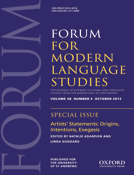
FORUM FOR MODERN LANGUAGE STUDIES
Exploring the Depths of Modern Linguistic ThoughtFORUM FOR MODERN LANGUAGE STUDIES is a prestigious academic journal published by Oxford University Press that has been serving the fields of literature and linguistics since its inception in 1965. This journal, with an ISSN of 0015-8518 and an E-ISSN of 1471-6860, plays a crucial role in advancing scholarly discourse on modern language studies, including literature and literary theory. With an impactful presence in both the linguistic and literary domains, it has been recognized in 2023 with a category ranking of Q2 in Literature and Literary Theory and Q3 in Linguistics and Language. It stands out in the competitive landscape, holding a notable position within Scopus rankings, including a 70th percentile ranking in Literature & Literary Theory. While the journal currently does not offer open access options, it remains a vital resource for researchers, educators, and students passionate about the transformative power of language and literature. Its commitment to quality research and robust academic discussion underscores its importance, making it a key platform for those aiming to contribute to modern language scholarship.
Nova Religio-Journal of Alternative and Emergent Religions
Advancing the Study of Emergent Religious MovementsNova Religio: Journal of Alternative and Emergent Religions, published by University of California Press, stands at the forefront of the exploration of contemporary religious movements, innovative spiritual practices, and the complexities of belief systems outside of mainstream religion. With an impressive Q1 ranking in the Religious Studies category and a position in the top 86th percentile within its field, this journal not only addresses the academic study of alternative religiosity but also fosters discussions on emergent phenomena that are reshaping spiritual landscapes globally. As a critical platform for researchers, professionals, and students alike, Nova Religio provides rigorous peer-reviewed articles and reviews, making significant contributions to our understanding of the dynamic interactions between religion, culture, and society. Although this journal does not offer Open Access options, it remains a crucial resource for anyone seeking to engage deeply with the evolving narratives within the realm of religious studies.
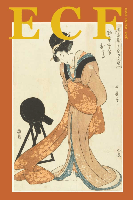
Eighteenth-Century Fiction
Exploring the Literary Innovations of the Eighteenth CenturyEighteenth-Century Fiction is a premier academic journal dedicated to advancing the study of literature from the eighteenth century, publishing innovative research that contributes to understanding the cultural and historical contexts of this dynamic period. Published by University of Toronto Press, Inc., this journal boasts an impressive Q1 categorization in the field of Literature and Literary Theory, reflecting its significant impact on discourse among scholars. Since its inception in 2002, the journal has provided a platform for interdisciplinary exploration and critical analysis, appealing to researchers, professionals, and students alike. With an ongoing commitment to quality and scholarly excellence, Eighteenth-Century Fiction serves as an essential resource for those seeking to delve into the literary innovations and societal transformations of the eighteenth century. Access to its rich collection of articles ensures that the academic community remains engaged with emerging trends and pivotal research in this vital area of study.
International Research in Childrens Literature
Transforming Understanding of Literature for Young AudiencesInternational Research in Children's Literature, published by Edinburgh University Press, is a leading journal in the field of children's literature, establishing a vital platform for scholarship since its inception in 2008. With an ISSN of 1755-6198 and an E-ISSN of 1755-6201, this journal is dedicated to advancing the understanding of children's literature across various cultural and literary contexts. Recognized in the Q2 category for Literature and Literary Theory, it boasts an impressive Scopus Rank of #115 out of 1106 in the arts and humanities, placing it in the 89th percentile among similar publications. The journal aims to foster interdisciplinary research and promote innovative perspectives that shape contemporary discourse surrounding children's literature. Although not an open-access publication, its contributions are accessible and pivotal for researchers, educators, and students who seek to explore the complexities of literature aimed at young audiences. With a commitment to fostering a richer understanding of children's texts, this journal is an invaluable resource for anyone invested in the literary and educational landscapes.
EXPLICATOR
Exploring the Intersection of Education and LiteratureEXPLICATOR is a distinguished academic journal dedicated to the fields of Education and Literature, published by Routledge Journals, Taylor & Francis Ltd. Established in 1975, this journal has carved out a niche for itself by providing a platform for critical essays that explore diverse aspects of literary works, educational theory, and practice. With an ISSN of 0014-4940 and an E-ISSN of 1939-926X, EXPLICATOR has earned its place in the academic community, reflected in its Q4 ranking in Education and Q3 in Literature and Literary Theory as of 2023. The journal has made significant contributions to the discourse in its domains, although it presents challenges given its current Scopus rankings, with percentile standings in the 24th and the 2nd for respective categories. By bridging theoretical perspectives with practical applications, EXPLICATOR invites researchers, educators, and students to engage with its offerings, fostering a rich exchange of ideas and advancing understanding within these vital disciplines. Although it does not currently offer an Open Access option, articles are accessible through institutional subscriptions, ensuring a broad dissemination of knowledge in the humanities and social sciences.

E-Spania-Revue Electronique d etudes Hispaniques Medievales
Exploring the Rich Tapestry of Medieval Hispanic StudiesE-Spania-Revue Electronique d'études Hispaniques Medievales, published by UNIV PARIS IV-PARIS-SORBONNE, is a prominent scholarly journal dedicated to the exploration of medieval Hispanic studies. With its Open Access format established since 2006, the journal facilitates the dissemination of research and critical discourse in the field, creating a vibrant platform for academics, researchers, and students alike. With an ISSN of 1951-6169, this journal aims to foster interdisciplinary dialogue surrounding the rich tapestry of medieval Spanish literature, history, and culture. Situated in the heart of Paris, this journal not only seeks to enhance knowledge production but also encourages collaboration among scholars globally, contributing to the ever-growing landscape of Hispanic studies. Through its commitment to accessibility and scholarly rigor, E-Spania remains an invaluable resource for those invested in understanding the complexities of the medieval Hispanic world.

Caplletra
Unveiling Insights into Language's IntricaciesCaplletra is a distinguished open-access journal dedicated to the field of linguistics and language studies, published by PUBL ABADIA MONTSERRAT since its inception. Based in Barcelona, Spain, this journal has been a vital resource for researchers, professionals, and students engaged in the intricate explorations of language and its applications since its transition to open access in 2005. Despite its current quartile ranking of Q4 within the Linguistics and Language category as of 2023, Caplletra continues to serve as an inclusive platform, fostering a dialogue that encourages a diverse range of scholarly contributions. Covering an expansive scope in the converged years from 2018 to 2024, it plays a crucial role in disseminating innovative research and insights. With its ISSN 0214-8188 and E-ISSN 2386-7159, Caplletra is committed to making academic work accessible to all, enhancing the landscape of linguistic scholarship and reflecting the evolving nature of language studies.

Rukopysna ta Knyzhkova Spadshchyna Ukrainy-Manuscript and Book Heritage of Ukraine
Advancing Knowledge of Ukraine's Book HeritageRukopysna ta Knyzhkova Spadshchyna Ukrainy-Manuscript and Book Heritage of Ukraine is a prestigious academic journal dedicated to the exploration and preservation of Ukraine's manuscript and book heritage. Published by the VERNADSKY NATIONAL LIBRARY OF UKRAINE, this open access journal has been providing invaluable insights since 2010, ensuring that scholarly work is readily available to all interested parties. With its commitment to the documentation and analysis of historical texts, it serves as a vital resource for researchers, librarians, and students engaged in the fields of History and Library and Information Sciences. The journal is indexed on Scopus, reflecting its growing relevance within the academic community, with a current ranking that positions it in the Q3 and Q4 quartiles respectively for 2023. As it converges into its future expansion from 2020 to 2024, Rukopysna ta Knyzhkova Spadshchyna remains a significant platform for fostering scholarly dialogue and advancing knowledge pertaining to Ukraine's rich literary and historical legacy.