Measurement-Interdisciplinary Research and Perspectives
Scope & Guideline
Unlocking the Power of Measurement in Education
Introduction
Aims and Scopes
- Measurement Theory and Methodology:
The journal explores various measurement theories, including classical test theory, item response theory, and generalizability theory, aiming to refine and innovate measurement methodologies. - Interdisciplinary Applications:
Research published in the journal spans multiple fields such as education, psychology, healthcare, and social sciences, promoting interdisciplinary approaches to measurement. - Quantitative Data Analysis:
It emphasizes the use of advanced statistical techniques and data analysis methods, including machine learning, Bayesian analysis, and Monte Carlo simulations, to enhance measurement precision. - Psychometric Evaluation:
The journal is dedicated to psychometric evaluations focusing on scale reliability, validity, and the assessment of measurement models, contributing to the field of psychological measurement. - Innovative Measurement Tools:
Research often includes the development and validation of new measurement instruments, scales, and assessment tools that address contemporary measurement challenges.
Trending and Emerging
- Machine Learning in Measurement:
There is a growing trend towards integrating machine learning techniques for data classification and prediction in measurement contexts, showcasing the relevance of artificial intelligence in enhancing measurement accuracy. - Cross-Cultural Measurement:
Emerging research is increasingly focusing on cross-cultural measurement issues, addressing the challenges of cultural differences in psychometric assessments and promoting global applicability of measurement tools. - Digital and Online Assessment Tools:
The rise of digital platforms for assessment and measurement, particularly in the context of online learning environments, indicates a shift towards innovative digital solutions for educational measurement. - Complex Data Modeling:
An increasing number of studies are utilizing complex data modeling approaches, such as structural equation modeling and network analysis, to better understand measurement relationships and outcomes. - Social Entrepreneurship and Measurement:
There is a notable increase in research examining the measurement of social entrepreneurship outcomes, reflecting a growing interest in assessing impact within the social sector.
Declining or Waning
- Traditional Measurement Techniques:
There has been a noticeable decline in papers focusing on traditional measurement techniques, as researchers increasingly gravitate towards more innovative and technology-driven approaches. - Basic Statistical Methods:
The frequency of publications centered on basic statistical analyses has waned, indicating a shift towards more complex and sophisticated analytical methods in measurement research. - Single-Domain Focus Studies:
Studies that concentrate solely on a single domain of measurement without interdisciplinary perspectives are becoming less common, as the journal encourages broader, cross-disciplinary research. - Qualitative Measurement Approaches:
Research employing qualitative measurement methods has diminished, possibly due to the journal's strong emphasis on quantitative and psychometric methodologies.
Similar Journals
Educational Measurement-Issues and Practice
Innovating Practices in Educational Measurement.Educational Measurement-Issues and Practice, published by WILEY, stands as a premier journal in the field of education, recognized for its commitment to advancing understanding of measurement issues and methodologies in educational contexts. Established in 1982, this journal spans over four decades of scholarly contributions, maintaining a remarkable Q1 status within the Education category as per the 2023 metrics, and ranking #407 out of 1543 in Scopus's Education domain, placing it in the top 73rd percentile. It features a range of articles that address critical issues concerning educational assessment practices, policy implications, and innovative measurement methodologies, aimed at professionals, researchers, and students dedicated to enhancing educational assessment frameworks. With its ongoing focus on contemporary challenges and developments in the field, Educational Measurement-Issues and Practice plays a crucial role in shaping effective educational policies and practices worldwide, making it an essential resource for anyone involved in educational research and measurement.
JOURNAL OF EDUCATIONAL MEASUREMENT
Empowering Educators through Rigorous AssessmentJOURNAL OF EDUCATIONAL MEASUREMENT, published by WILEY, stands as a pivotal resource in the fields of education and psychology, with a strong emphasis on the systematic evaluation of educational processes and instruments. With the ISSN 0022-0655 and E-ISSN 1745-3984, this journal has been contributing to the literature since 1964 and continues to thrive into 2024, reflecting its long-standing dedication to improving educational measurement practices. The journal holds impressive standings with 2023 category quartiles of Q1 in Education and Q2 in multiple psychology categories, demonstrating its significance in applied psychological research and educational development. Although it does not currently offer open access, its well-curated content appeals to researchers, professionals, and students seeking insights into measurement theories, practices, and innovations. With robust metrics, including a diverse range of Scopus ranks across various psychological disciplines, the JOURNAL OF EDUCATIONAL MEASUREMENT is indispensable for anyone looking to advance their knowledge and application of educational assessments and methodologies.
JOURNAL OF EDUCATIONAL AND BEHAVIORAL STATISTICS
Transforming Data into Knowledge for EducatorsJOURNAL OF EDUCATIONAL AND BEHAVIORAL STATISTICS, published by SAGE Publications Inc, stands as a pivotal resource in the domains of education and social sciences. With an impressive impact factor reflecting its influence, it is categorized in the esteemed Q1 quartile for both Education and Social Sciences (miscellaneous), positioning it among the top-tier journals in these fields. The journal, bearing the ISSN 1076-9986 and E-ISSN 1935-1054, prides itself on disseminating rigorous research and innovative methodologies applicable to educational and behavioral statistics. Since its inception in 1996, it has continually evolved, featuring cutting-edge studies that address contemporary challenges in educational assessment and statistical techniques. Researchers, educators, and students alike will find invaluable insights within its pages, making it an essential publication for those seeking to advance their understanding and application of statistical methods in education. The journal's commitment to excellence and relevance ensures it remains a cornerstone for scholarly discourse through 2024 and beyond.
Behavior Research Methods
Catalyzing discourse on effective research methods in psychology.Behavior Research Methods is a premier, peer-reviewed journal published by Springer that holds a significant position within the fields of psychology and behavioral science. With its ISSN 1554-351X and E-ISSN 1554-3528, this esteemed journal has been a vital resource for researchers and practitioners since its inception in 1968. By providing insightful research on innovative methodologies in behavioral studies, it has achieved remarkable recognition, consistently ranking in the Q1 category across various psychological disciplines including Developmental and Educational Psychology, Experimental and Cognitive Psychology, and Arts and Humanities. Its current Scopus rankings place it firmly within the top echelons of academic journals, with impressive percentiles in several categories. The journal's objective is to advance knowledge and foster discourse on effective research methods related to human behavior, making it an essential platform for sharing groundbreaking findings and innovative approaches. While it does not offer open access, it continues to serve as a key reference for those looking to enhance their understanding of methodological advancements in behavior research. The journal is available to scholars and institutions both in the United States and globally, affirming its role as a beacon of scholarly excellence in psychology.
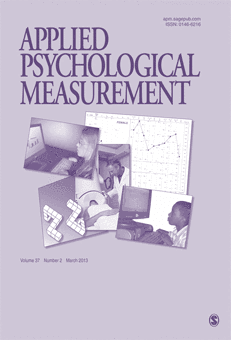
APPLIED PSYCHOLOGICAL MEASUREMENT
Bridging Theory and Practice in Psychological AssessmentApplied Psychological Measurement is a leading journal in the field of psychology and social sciences, published by SAGE Publications Inc. since its inception in 1977. With an impressive 2023 impact factor and consistently ranking in the Q1 quartile for both Psychology and Social Sciences categories, this journal plays a pivotal role in disseminating high-quality research that advances the understanding of psychological assessment and measurement methodologies. The journal embraces a diverse array of research contributions, ranging from empirical studies to theoretical discussions, covering critical topics that affect practitioners and researchers alike. With its comprehensive scope and rigorous peer-review process, Applied Psychological Measurement serves as an essential resource for researchers, professionals, and students aiming to deepen their knowledge and application of psychological measurement within various social contexts. The journal is based in the United States, ensuring a prominent platform for international discourse.
APPLIED MEASUREMENT IN EDUCATION
Transforming education through precise measurement.Applied Measurement in Education is a prestigious journal published by Routledge Journals, Taylor & Francis Ltd, dedicated to advancing the fields of education and developmental psychology. Established in 1988, the journal has played a critical role in disseminating research and theoretical perspectives related to assessment, measurement practices, and educational outcomes. With an impressive standing in the academic community, it is categorized in the Q2 quartile for Developmental and Educational Psychology and the Q1 quartile for Education as of 2023. It ranks #654 out of 1543 in Social Sciences - Education and #203 out of 360 in Psychology - Developmental and Educational Psychology. Though not an Open Access journal, it provides essential insights for educators and policymakers wishing to harness measurement tools for improved educational practice. With a focus on empirical research, theoretical frameworks, and practical applications, Applied Measurement in Education serves as a vital resource for researchers, professionals, and students dedicated to enhancing the effectiveness and fairness of educational assessments.
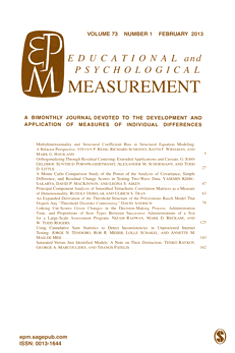
EDUCATIONAL AND PSYCHOLOGICAL MEASUREMENT
Connecting Theory and Practice in MeasurementEDUCATIONAL AND PSYCHOLOGICAL MEASUREMENT, published by SAGE Publications Inc, is a premier journal serving as a vital resource for researchers and practitioners in the fields of educational and psychological assessment. With a rich history dating back to 1941, this esteemed journal encompasses a wide-ranging scope, exploring the intricacies of measurement techniques and their implications within applied mathematics, psychology, and education. Notably categorized in Q1 quartiles across various fields, including Applied Mathematics and Educational Psychology, the journal ranks impressively in Scopus, reflecting its high impact and relevance—ranked #82/635 in Applied Mathematics and #232/1543 in Education. The journal’s commitment to advancing knowledge in educational measurement equips scholars with essential insights and methodologies, making it an essential tool for advancing scholarly inquiry and practice. With no open access limitations, EDUCATIONAL AND PSYCHOLOGICAL MEASUREMENT is dedicated to disseminating quality research that influences educational practices and psychological evaluation, thus reinforcing its esteemed position within academia.

International Journal of Assessment Tools in Education
Innovating Tools for Effective Educational EvaluationInternational Journal of Assessment Tools in Education is a pioneering scholarly publication dedicated to advancing the field of educational assessment through innovative tools and methodologies. Published by IZZET KARA and based out of the esteemed Pamukkale University in Turkey, this journal is committed to fostering academic discourse among researchers, educators, and policy makers. With an ISSN of 2148-7456, it aims to bridge the gap between assessment theory and practical application, ensuring that the latest insights in educational measurement can be readily accessed by professionals in the field. The journal promotes open access to its articles, enhancing visibility and facilitating the dissemination of knowledge. By publishing rigorous empirical studies, theoretical discussions, and practical reports, it plays an essential role in shaping best practices in educational assessment, making it an invaluable resource for anyone invested in improving educational outcomes.
EUROPEAN JOURNAL OF PSYCHOLOGICAL ASSESSMENT
Shaping the Future of Applied Psychology Through Rigorous AssessmentWelcome to the European Journal of Psychological Assessment, a prestigious publication in the field of applied psychology, published by Hogrefe Publishing Corp. With a strong emphasis on advancing the methods and practices of psychological assessment, this journal has established itself as a crucial resource for researchers, practitioners, and students alike. Since its inception in 1996, it has built a reputation for quality and innovation, reflected by its impressive Q1 ranking in the applied psychology category, signifying its critical role in shaping the future of the discipline. The journal's impactful contributions – ranked #62 out of 249 within its field and indexed in Scopus at the 75th percentile – make it an essential reading for anyone interested in the latest assessment techniques and research findings. Although not an open-access journal, it continues to reach audiences through institutional subscriptions and provides a wealth of knowledge aimed at enhancing psychological practice and research.
Journal of Measurement and Evaluation in Education and Psychology-EPOD
Exploring New Frontiers in Educational and Psychological Evaluation.Journal of Measurement and Evaluation in Education and Psychology-EPOD is a distinguished open-access journal published by the ASSOCIATION FOR MEASUREMENT & EVALUATION IN EDUCATION & PSYCHOLOGY since 2010, based in Ankara, Turkey. Focusing on the critical intersections of education and psychology, this journal aims to disseminate valuable research that enhances assessments and evaluation methodologies across diverse educational settings. With a commitment to advancing knowledge, it explores a broad range of topics pertaining to developmental and educational psychology, making it an essential resource for researchers, professionals, and students alike. Despite its recent challenges, highlighted by its Q4 categorization in both Developmental and Educational Psychology and Education, the journal continues to provide a platform for innovative ideas and discussions crucial to shaping future educational practices. Access the latest findings and contribute to the field through this vital scholarly outlet.