Methods and Objects of Chemical Analysis
metrics 2024
Unveiling New Methods for Analytical Excellence
Introduction
Methods and Objects of Chemical Analysis is a significant outlet in the field of Analytical Chemistry, published by the prestigious TARAS SHEVCHENKO NATIONAL UNIVERSITY OF KYIV in Ukraine. Since its inception in 2017, this journal has aimed to advance methodological and analytical understanding within the discipline, addressing contemporary issues and innovative techniques. With a Scopus rank of #133 out of 156 and a Q4 Category Quartile for 2023, it offers a platform for researchers and professionals to disseminate crucial findings and methodologies. While currently serving as a traditional journal, it is fostering an academic community focused on impactful research that enhances our understanding of chemical analysis techniques. The journal’s commitment to scholarly rigor and its relevance in a rapidly evolving field make it a valuable resource for students and seasoned researchers alike, seeking to remain at the forefront of analytical advancements.
Metrics 2024
 0.170.700.407
Metrics History
Rank 2024
Scopus
IF (Web Of Science)
JCI (Web Of Science)
Quartile History
Similar Journals
Analytical Science Advances
Advancing the Frontiers of Analytical ChemistryAnalytical Science Advances is a dynamic journal published by WILEY, dedicated to the ever-evolving field of analytical chemistry. With an ISSN of 2628-5452, this open-access platform aims to disseminate high-quality research and insightful reviews that push the boundaries of analytical methodologies and instrumentation. Since its inception in 2020, the journal has gained traction, securing a commendable Q2 ranking in 2023 within its category, highlighting its significance in the scientific community. Currently positioned at Rank #68 out of 156 in Scopus' analytical chemistry category, it boasts a 56th percentile ranking, reflecting its contributions to advancing analytical techniques. Researchers, professionals, and students will find this journal an invaluable resource for keeping abreast of the latest developments, emerging technologies, and innovative approaches in analytical science, ensuring the journal's relevancy and influence in shaping future discoveries.
ANALYTICAL AND BIOANALYTICAL CHEMISTRY
Connecting Researchers with Cutting-Edge DiscoveriesANALYTICAL AND BIOANALYTICAL CHEMISTRY, published by SPRINGER HEIDELBERG, is a leading international journal that serves as a vital platform for innovative research in the fields of analytical and bioanalytical chemistry. With an impressive impact factor and ranking in the Q2 category for both Analytical Chemistry and Biochemistry, the journal highlights key advancements and methodologies that drive the discipline forward. Established in 1996 and continuing vigorously into 2024, it has gained significant recognition with Scopus rankings placing it in the 83rd and 78th percentiles within its categories, underscoring its impact and relevance. The journal's commitment to open access facilitates widespread dissemination of critical scientific knowledge, making it an essential resource for researchers, professionals, and students dedicated to exploring the complexities of chemical analysis. With its base in Heidelberg, Germany, ANALYTICAL AND BIOANALYTICAL CHEMISTRY continues to inspire and influence the global research community.
Journal of Analytical Methods in Chemistry
Empowering researchers with open access to cutting-edge findings.The Journal of Analytical Methods in Chemistry, published by HINDAWI LTD, stands as a premier platform dedicated to the dissemination of research in the vibrant field of analytical chemistry. With an ISSN of 2090-8865 and an E-ISSN of 2090-8873, this Open Access journal has been committed to providing unrestricted access to quality research since 1978, thereby fostering greater collaboration and innovation among researchers, professionals, and students globally. The journal showcases rigorous research insights spanning diverse categories, earning impressive Scopus rankings including Q2 in Chemical Engineering and Q3 in Analytical Chemistry for 2023, positioning itself effectively among respected peers. Its interdisciplinary approach also covers significant contributions in the realms of instrumentation and computer science applications, thus addressing contemporary challenges and advancements in analytical methodologies. By bridging theoretical underpinnings with practical applications, the Journal of Analytical Methods in Chemistry aims to catalyze knowledge exchange while enhancing the global discourse in analytical science.
Analytical and Bioanalytical Chemistry Research
Empowering Global Knowledge in Chemistry.Analytical and Bioanalytical Chemistry Research is an esteemed open-access journal published by the Iranian Chemical Society, dedicated to the advancement of knowledge in the fields of analytical chemistry, biochemistry, and spectroscopy. Since its inception in 2014, this journal has provided a platform for researchers, professionals, and students to publish and access high-quality research articles that contribute to the understanding of chemical analysis and bioanalytical methods. With an ISSN of 2383-093X and an open-access model that promotes global dissemination of findings, it ensures that innovative research reaches a broad audience. The journal has consolidated its presence in the scientific community, currently ranked in quartile Q4 for analytical chemistry, biochemistry, and spectroscopy as of 2023. Its Scopus rankings, including a percentile of 34th in Analytical Chemistry, reflect its commitment to quality research and scholarly contribution. Situated in Tehran, Iran, the journal serves as a vital resource for academic discourse, offering insights into emerging trends and methodologies in analytical and bioanalytical chemistry.
Journal of Chemical Metrology
Exploring the Future of Analytical Chemistry and ToxicologyJournal of Chemical Metrology is a vital resource in the evolving fields of Analytical Chemistry, Electrochemistry, Spectroscopy, and Toxicology, published by ACG PUBLICATIONS in Turkey. With a focus on advancing the understanding and application of chemical metrology, this journal aims to bridge gaps in quantitative analysis, offering researchers and professionals a platform to disseminate groundbreaking studies and methodologies. Although it operates under a traditional access model, readers can benefit from its insights as the journal continues to gain recognition with its 2023 rankings placing it in the Q3 and Q4 categories across various scientific disciplines. From its inception in 2019 to its projected convergence in 2024, the journal has been instrumental in fostering collaboration and innovation in chemical sciences, making it an essential tool for students and researchers dedicated to enhancing analytical techniques and ensuring safety through effective toxicological assessments.
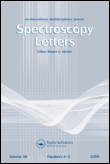
SPECTROSCOPY LETTERS
Bridging Theory and Application in Spectroscopic ScienceSPECTROSCOPY LETTERS, published by Taylor & Francis Inc, is a pivotal journal that plays a significant role in the fields of Analytical Chemistry, Atomic and Molecular Physics, and Optics. With an ISSN of 0038-7010 and E-ISSN of 1532-2289, it provides a platform for the dissemination of cutting-edge research and developments in spectroscopy and its wide-ranging applications. As of 2023, the journal is ranked in the third quartile (Q3) across its relevant categories, reflecting its importance in these scientific domains. The journal has a continuous publication history from 1968 to 2024, establishing a rich legacy in academic literature. Although it currently does not offer Open Access options, SPECTROSCOPY LETTERS remains a valuable resource for researchers, professionals, and students seeking to advance their knowledge and applications in spectroscopy. For those in the arena of physics and chemistry, this journal is essential for keeping abreast of the latest findings and methodologies in the field.
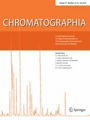
CHROMATOGRAPHIA
Illuminating the Path of Chemical InnovationCHROMATOGRAPHIA is a renowned scholarly journal published by Springer Heidelberg, specializing in the field of analytical chemistry, biochemistry, and organic chemistry since its inception in 1968. With its ISSN 0009-5893 and E-ISSN 1612-1112, the journal has maintained a robust profile, currently ranking in the Q3 and Q4 quartiles within significant Chemistry categories. Aimed at researchers, professionals, and students, CHROMATOGRAPHIA serves as a critical platform for disseminating innovative research, methodologies, and advancements related to chromatography and its applications in various scientific fields. While the journal is not open access, it offers significant visibility and scholarly contribution opportunities, making it an essential resource for those engaged in the vibrant intersection of chemistry and biochemistry.
Analytical Science and Technology
Empowering researchers to share transformative findings.Analytical Science and Technology is a prominent journal dedicated to advancing the fields of analytical chemistry and technology, published by the Korean Society for Analytical Science. Based in South Korea, this journal serves as a vital platform for researchers, professionals, and students committed to exploring innovative analytical techniques and methodologies. Although it is classified under Q4 in various subject categories, including Agronomy and Crop Science, Environmental Chemistry, and Pharmacology, the journal aims to provide critical insights and contributions to the scientific community. With ISSN 1225-0163 and E-ISSN 2288-8985, it spans a converged timeline from 2019 to 2024. Despite its current standings in Scopus rankings, the journal is dedicated to improving its visibility and impact through rigorous peer review and high-quality publications, fostering knowledge sharing within its diverse academic fields. Researchers looking for a reliable outlet for their findings are encouraged to consider this journal as it continues to strive for excellence in analytical science.
ATOMIC SPECTROSCOPY
Illuminating the Depths of Atomic Research.ATOMIC SPECTROSCOPY is a distinguished journal specializing in the field of spectroscopy and published by ATOMIC SPECTROSCOPY PRESS LTD. With ISSN 0195-5373 and e-ISSN 2708-521X, this journal has been a cornerstone in advancing the discipline since its inception, thriving in its relevant domain for over four decades, covering converged research years from 1980 to 1989 and from 1996 to 2024. Currently holding a Category Quartile of Q2 in Spectroscopy for 2023, ATOMIC SPECTROSCOPY ranks 34th among 76 in its field according to Scopus, placing it in the 55th percentile, thereby affirming its critical role as a resource for researchers, professionals, and students alike. This journal serves as a platform for disseminating innovative research, methodological advancements, and breakthroughs in atomic and molecular spectroscopy, fostering a comprehensive understanding that is essential for progress in analytical chemistry and related disciplines. While it operates under a non-open access model, the journal ensures broad reach and visibility within the academic community. For those passionate about spectroscopy, ATOMIC SPECTROSCOPY remains an invaluable resource for staying updated on the latest developments, contributing to its reputation as a leading journal in the field.
Brazilian Journal of Analytical Chemistry
Elevating Research Standards in Brazilian ChemistryBrazilian Journal of Analytical Chemistry, published by VISAO FOKKA COMMUNICATION AGENCY, serves as a vital platform for those engaged in the field of analytical chemistry, especially within the Latin American context. With an ISSN of 2179-3425 and an E-ISSN of 2179-3433, this journal aims to promote high-quality research and advancements in analytical methodologies, instrumentation, and applications spanning from 2010 to the present. Although it currently holds a Q4 rank in Analytical Chemistry by Scopus and is placed at the 24th percentile, its commitment to open access publishing provides invaluable opportunities for widespread dissemination of knowledge, catering to researchers, professionals, and students alike. The journal's editorial board comprises emerging and established experts aiming to bridge gaps in analytical chemistry research, particularly in a Brazilian and broader South American context. Situated in São Paulo, Brazil, the journal's role in fostering innovation and collaboration in analytical techniques makes it an essential resource for the academic community.