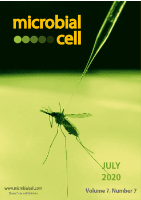
Microbial Cell
metrics 2024
Advancing the frontiers of microbial science.
Introduction
Microbial Cell is a distinguished open-access journal published by SHARED SCIENCE PUBLISHERS OG, focusing on the dynamic fields of microbiology, biochemistry, and molecular biology. Since its establishment in 2014, Microbial Cell has been at the forefront of disseminating cutting-edge research essential for advancing our understanding of microbial functions and interactions. With a commendable impact factor and ranking in the top quartiles (Q1 and Q2) across several categories, including Applied Microbiology and Biotechnology and Parasitology, this journal serves as an invaluable resource for researchers, professionals, and students alike. It features a comprehensive scope that encompasses the latest findings in genetics, cell biology, and virology, facilitating the academic community's access to high-quality peer-reviewed work. Microbial Cell not only contributes to advancing microbial sciences but also fosters an inclusive platform for knowledge sharing and collaboration in the scientific community.
Metrics 2024
 0.984.104.9039
Metrics History
Rank 2024
Scopus
IF (Web Of Science)
JCI (Web Of Science)
Quartile History
Similar Journals
WORLD JOURNAL OF MICROBIOLOGY & BIOTECHNOLOGY
Unveiling the Science of Microbes and Their ApplicationsWORLD JOURNAL OF MICROBIOLOGY & BIOTECHNOLOGY, published by Springer, serves as a pivotal forum for advancing the fields of microbiology and biotechnology since its inception in 1990. Located in the Netherlands, this esteemed journal has secured a prominent position in the academic landscape, recognized for its strong impact factor and prestigious Q2 category rankings across disciplines such as Applied Microbiology, Biotechnology, and Physiological Sciences. Researchers and professionals utilize this journal to disseminate innovative findings and explore emerging technologies that are transforming the scientific landscape. With a robust submission rate and high visibility among the academic community, the journal fosters interdisciplinary collaboration, encouraging discussions that bridge gaps between theory and practical applications. As it converges into 2024, the WORLD JOURNAL OF MICROBIOLOGY & BIOTECHNOLOGY continues to be a vital resource for scholars aiming to enhance our understanding of microbial processes and biotechnological advances.

MOLECULAR MICROBIOLOGY
Unveiling the Molecular Secrets of MicrobiologyMOLECULAR MICROBIOLOGY is a prestigious academic journal published by Wiley that has been at the forefront of research in the fields of microbiology and molecular biology since its inception in 1987. With an impressive Q1 rating in Microbiology and a Q2 rating in Molecular Biology for 2023, this journal serves as a vital platform for disseminating high-impact research that advances our understanding of microbial processes and interactions at the molecular level. The journal's ISSN is 0950-382X, and the E-ISSN is 1365-2958, making it easily accessible to a global audience of researchers, professionals, and students. Though not an Open Access journal, MOLECULAR MICROBIOLOGY remains committed to providing valuable insights and fostering knowledge exchange in the academic community. Situated in the United Kingdom and indexed in prominent databases like Scopus, the journal holds a strong standing, with current rankings reflecting its influential role in the academic landscape. Researchers in the field are invited to contribute and engage with cutting-edge discoveries that will shape the future of microbiological sciences.

mLife
Advancing microbial knowledge for a sustainable future.Welcome to mLife, an emerging journal at the forefront of microbiological research published by the esteemed WILEY in China. With its ISSN 2097-1699 and E-ISSN 2770-100X, mLife serves as a vital platform for scholars and practitioners aiming to advance their understanding of microbial sciences. With an impressive Q2 ranking in the Microbiology category and a Scopus rank of 143 out of 182, mLife is quickly establishing itself as a valuable source of cutting-edge research. The journal, covering a range of innovative topics from immunology to environmental microbiology, provides an engaging venue for disseminating high-quality research findings aimed at addressing real-world challenges. Authors and readers alike benefit from its accessibility features that encourage scholarly collaboration and information sharing. As we converge on the rich microbial landscapes from 2022 to 2024, mLife is committed to fostering a community dedicated to rigorous research and impactful discoveries.

TRENDS IN MICROBIOLOGY
Pioneering Reviews that Shape Microbiology's FutureTRENDS IN MICROBIOLOGY is a premier academic journal published by CELL PRESS, renowned for its high-impact research contributions in the fields of microbiology, infectious diseases, medical microbiology, and virology. With an impressive impact factor and a notable Scopus ranking—placing it in the top tiers of its categories, including a remarkable Q1 status in multiple disciplines—this journal is essential for researchers, professionals, and students aiming to stay at the forefront of innovative microbial research and ongoing advancements in pathogen biology. Since its inception in 1993, TRENDS IN MICROBIOLOGY has provided a platform for thought-provoking reviews and critical insights, fostering discussions that shape the future of the microbiological sciences. Based in the United Kingdom, TRENDS IN MICROBIOLOGY continues to lead the way in disseminating vital knowledge within the global scientific community.
APPLIED BIOCHEMISTRY AND MICROBIOLOGY
Innovating Research at the Intersection of Life Sciences.Applied Biochemistry and Microbiology is an esteemed journal published by Pleiades Publishing Inc, focusing on the intricate intersections of biochemistry and microbiology. Established in 1970, with a commitment to advancing scientific knowledge, this journal serves as a vital platform for disseminating innovative research findings in applied microbiology, biotechnology, and biochemistry. With its ISSN 0003-6838 and E-ISSN 1608-3024, the journal operates from its base in New York, USA. As a recognized publication in the field, Applied Biochemistry and Microbiology holds a Category Quartile ranking of Q3 in Applied Microbiology and Biotechnology and Q4 in Biochemistry, reflecting its significant contributions and relevance. Although currently not open access, the journal is indexed in Scopus, with respectable rankings that highlight its impact in the community, making it a pivotal resource for researchers and professionals dedicated to the realms of biochemistry and microbiology.
ARCHIVES OF MICROBIOLOGY
Elevating Research Standards in Microbial StudiesThe Archives of Microbiology, published by Springer, is a reputable journal in the field of microbiology, serving as a vital platform for the dissemination of groundbreaking research and critical reviews since its inception in 1974. With an ISSN of 0302-8933 and an E-ISSN of 1432-072X, this journal operates out of Germany and maintains a global reach, promoting high-quality scholarship across multiple disciplines, including biochemistry, genetics, and molecular biology, as evidenced by its Q2 ranking in Medicine (miscellaneous) and consistent Q3 placements in other categories in 2023. Although the journal does not offer open access options, its rigorous peer-review process ensures that published articles are of the highest standard, making it an essential resource for researchers, professionals, and students keen on advancing their understanding of microbial sciences. As the journal converges toward 2024, it remains committed to fostering innovative microbiological research and facilitating interdisciplinary dialogue within the scientific community.

Microorganisms
Championing high-quality research in microbiology.Microorganisms is a leading open-access journal published by MDPI based in Switzerland, catering specifically to the rapidly evolving fields of microbiology and virology. Since its inception in 2013, the journal aims to foster the dissemination of high-quality research through its comprehensive and interdisciplinary platform, with a particular focus on both fundamental and applied microbiological sciences. Contributing to its esteemed reputation, Microorganisms holds a commendable Q2 ranking in the categories of Microbiology and Virology, as well as in Medical Microbiology, highlighting its significance in the academic community. With a consistent impact, evidenced by its rankings in Scopus—such as rank #25 in Virology and #56 in Microbiology—the journal serves as an invaluable resource for researchers, professionals, and students looking to stay at the forefront of microbiological research. As an open-access journal, Microorganisms ensures that vital research findings are readily available to a global audience, promoting collaboration and innovation in the study of microbial life and its implications for health and disease.
RESEARCH IN MICROBIOLOGY
Exploring the intricate world of microbes and their impact.Research in Microbiology, published by Elsevier, is a prominent academic journal devoted to advancing the field of microbiology, encompassing a diverse array of topics including immunology, molecular biology, and biochemistry. Established in 1987, the journal has expanded its focus over the years, with a commendable impact factor reflecting its relevance and influence in the scientific community. Although it does not currently offer open access options, Research in Microbiology remains a crucial resource for researchers and professionals seeking to stay abreast of the latest findings and methodologies. The journal holds a respectable Q2 ranking in Medicine (miscellaneous) and a Q3 ranking in both Microbiology and Molecular Biology for 2023, highlighting its position within the scholarly landscape. With its base in France and accessible to a global audience, Research in Microbiology continues to foster scholarly exchange, making it an essential platform for the dissemination of impactful microbiological research.
CURRENT OPINION IN MICROBIOLOGY
Fostering critical discussions in infectious diseases.CURRENT OPINION IN MICROBIOLOGY is a prestigious academic journal published by CURRENT BIOLOGY LTD, dedicated to advancing the field of microbiology through timely and insightful reviews. With an ISSN of 1369-5274 and an e-ISSN of 1879-0364, this journal has established itself as a leading source of knowledge in various subfields, consistently achieving a Q1 ranking in Infectious Diseases and Microbiology for 2023. Operating from the United Kingdom, CURRENT OPINION IN MICROBIOLOGY serves a critical role for researchers, clinicians, and students alike by disseminating groundbreaking findings and fostering discussions that shape the future of microbiological research. The journal's rigorous selection process ensures that only high-quality articles are published, reflecting its strong impact factor and high percentile rankings across relevant Scopus categories. Although it does not follow an open-access model, its comprehensive scope and valuable contributions to the medical and scientific community underscore its importance as an essential resource for advancing our understanding of microbial sciences.
FEMS MICROBIOLOGY LETTERS
Exploring Microbial Innovations and InsightsFEMS Microbiology Letters, published by Oxford University Press, is a prestigious international journal dedicated to advancing the understanding of microbiology through concise and impactful research articles. With an ISSN of 0378-1097 and E-ISSN 1574-6968, this journal encompasses a wide range of topics within the fields of genetics, microbiology, and molecular biology, achieving a notable Q3 quartile ranking in these categories as of 2023. As an essential platform for researchers, professionals, and students, FEMS Microbiology Letters invites submissions that contribute valuable insights into microbial behaviors, genetic mechanisms, and innovative methodologies pivotal in the study of microbiology. Although it is not an open-access publication, the journal's rigorous editorial standards ensure high-quality content that is relevant and significant to its audience, furthering scholarly dialogue and collaboration in the vibrant field of microbiological research.