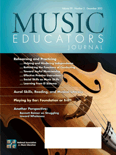
MUSIC EDUCATORS JOURNAL
metrics 2024
Advancing the Art of Music Education
Introduction
MUSIC EDUCATORS JOURNAL, published by SAGE PUBLICATIONS INC, serves as an essential resource for researchers, educators, and practitioners in the fields of music education and broader educational practices. With its ISSN 0027-4321 and E-ISSN 1945-0087, this prestigious journal has been integral in advancing the discourse surrounding music pedagogy since its inception. Operating without an open access model, it boasts impressive rankings, placing it in the Q1 category for Music and Q2 for Education according to 2023 quartiles, illustrating its significant contribution to these fields. The journal is recognized in Scopus with a rank of #34 out of 180 in Arts and Humanities - Music, further solidifying its reputation as a premier publication. Aimed at enlightening its readership through empirical research, innovative teaching practices, and critical examinations of music education reform, the MUSIC EDUCATORS JOURNAL is an invaluable platform for fostering dialogue and discovery, making it a must-read for all engaged in the music education landscape.
Metrics 2024
 0.410.70-24
Metrics History
Rank 2024
Scopus
IF (Web Of Science)
JCI (Web Of Science)
Quartile History
Similar Journals
BULLETIN OF THE COUNCIL FOR RESEARCH IN MUSIC EDUCATION
Transforming Research into Educational ExcellenceBULLETIN OF THE COUNCIL FOR RESEARCH IN MUSIC EDUCATION, published by UNIV ILLINOIS PRESS, is a premier scholarly journal dedicated to advancing the field of music education through rigorous research and critical discourse. With an ISSN of 0010-9894 and E-ISSN 2162-7223, this journal plays a significant role in disseminating innovative findings and educational practices, ranking in Q1 for Music and Q2 for Education as of 2023. The journal's esteemed position is further highlighted by its Scopus ranking, placing it in the 80th percentile among music-related publications. Covering a time span from 2002 to 2024, it serves as a vital resource for educators, researchers, and graduate students alike. Although the journal does not currently offer open access, its contributions remain crucial in shaping music education research and practice. The BULLETIN not only inspires scholarly inquiry but also enhances the discourse surrounding effective music education methodologies.

Malaysian Journal of Music
Exploring the Rhythms of Southeast AsiaThe Malaysian Journal of Music is a distinguished academic publication dedicated to the exploration and advancement of music and cultural studies within the Southeast Asian context. Published by UNIV PENDIDIKAN SULTAN IDRIS, FACULTY OF MUSIC & PERFORMING ARTS, this journal contributes significantly to the field by disseminating high-quality research and scholarship related to both traditional and contemporary music practices in Malaysia and beyond. Since its inception in 2018, the journal has earned a Q3 categorization in both Cultural Studies and Music, reflecting its commitment to fostering a comprehensive understanding of these interdisciplinary areas. As of now, it ranks 90th out of 180 in the domain of Arts and Humanities focused on Music, positioning it firmly within the academic discourse. The Malaysian Journal of Music serves as an invaluable resource for researchers, professionals, and students alike, providing insights into the rich tapestry of music, culture, and their societal impacts. The journal is dedicated to open access publishing, ensuring that knowledge is shared widely and freely, further solidifying its role as a cornerstone for music scholarship in Malaysia.
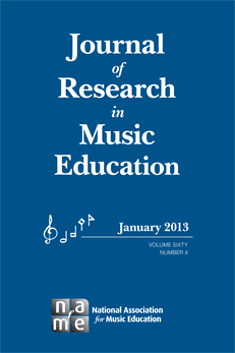
JOURNAL OF RESEARCH IN MUSIC EDUCATION
Connecting Research to Practice in Music EducationThe JOURNAL OF RESEARCH IN MUSIC EDUCATION, published by SAGE PUBLICATIONS INC, is a leading academic outlet in the field of music education, dedicated to advancing the study and understanding of music teaching and learning. With an impressive impact factor and classified in the Q1 category for both Education and Music, this journal plays a critical role in disseminating innovative research and insights that foster effective educational practices. Since its inception in 1953, it has maintained a rigorous peer-review process, contributing to its strong reputation within the academic community, as evidenced by its high rankings in Scopus. The journal's focus spans a wide range of topics, including pedagogical strategies, curriculum development, and the intersection of music and education policy, making it an essential resource for researchers, educators, and students alike. As it continues to evolve, users can explore a treasure trove of knowledge that supports the transformative power of music education in the 21st century.

In Education
Elevating educational discourse with diverse perspectives.In Education is a prestigious open-access journal published by the Faculty of Education at the University of Regina, dedicated to advancing research in the field of education. With its ISSN 1927-6117, the journal has been a vital platform for scholarly work since 2009, providing a significant avenue for educators, researchers, and practitioners to share innovative ideas and research findings. Committed to fostering a rich dialogue on educational practices and policies, In Education publishes a diverse range of articles that cover theoretical and empirical research, ensuring a comprehensive exploration of contemporary educational issues. By encouraging open access, the journal promotes widespread dissemination of knowledge, facilitating greater accessibility for students and professionals alike. As a contributor to the evolving landscape of educational research, In Education serves as an essential resource for those aiming to transform educational practices through informed, evidence-based insights.
Music Education Research
Advancing the Future of Music EducationMusic Education Research is a prestigious journal dedicated to advancing scholarship in the field of music education, published by Routledge Journals, Taylor & Francis Ltd. With a significant impact factor reflected in its Q1 ranking in Music and Q2 in Education for 2023, this journal is a critical resource for researchers, educators, and practitioners alike. It consistently ranks high in both the Arts and Humanities and Social Sciences categories, with an impressive position of Rank #8 in Music out of 180 journals, indicating its influence in shaping contemporary discourse. Aimed at fostering innovation and critical examination within music education, Music Education Research invites submissions that explore a broad spectrum of topics, encompassing pedagogical practices, policy implications, and curriculum development. Operating from the United Kingdom, the journal provides a vital platform for sharing cutting-edge research and is committed to improving music learning experiences across various educational contexts.
EDUCATIONAL FORUM
Empowering Educators with Rigorous Analysis and ResearchEDUCATIONAL FORUM, published by Routledge Journals, Taylor & Francis Ltd, is a premier academic journal that serves as a vital platform for innovative research and discourse in the field of education. With an ISSN of 0013-1725 and an E-ISSN of 1938-8098, this journal has been at the forefront of educational scholarship since its inception in 1936, continuing to disseminate critical insights through 2024. Recognized in the Q2 category of education in 2023, it holds a Scopus rank of 768 out of 1543 in the social sciences, placing it in the 50th percentile overall. Though it does not offer open access, the journal provides an essential resource for researchers, professionals, and students aiming to expand their understanding of current educational practices, policies, and innovations. By fostering an academic environment rich in rigorous analysis and thoughtful discussion, EDUCATIONAL FORUM plays an indispensable role in shaping the future of education.

Revista Electronica de LEEME
Exploring the Intersection of Art and Academia.Revista Electronica de LEEME, published by UNIV RIOJA, DEPT EXPRESION ARTISTICA, is a distinguished open-access journal that has been a vital resource in the fields of education and music since its inception in 1998. With a strong presence in Spain and an impressive Q1 ranking in Music and Q2 in Education as of 2023, the journal has established itself as a leading platform for high-quality research in the Arts and Humanities. The journal’s Scopus ranks demonstrate its scholarly impact, particularly its ranking of 21 out of 180 in Music, showcasing an 88th percentile standing, while it holds the 838 out of 1543 position in Education, reflecting its critical relevance in this domain. Covering a diverse array of topics related to artistic expression and pedagogical innovation, the Revista Electronica de LEEME aims to enrich the academic landscape by promoting open scholarship and accessible knowledge sharing. Researchers, professionals, and students are encouraged to engage with its comprehensive articles and findings, which are available free of charge, fostering a global dialogue among scholars dedicated to advancing education and musicology.
Journal of Historical Research in Music Education
Reviving Historical Perspectives in Music EducationThe Journal of Historical Research in Music Education, published by SAGE Publications Inc, stands as a vital resource dedicated to advancing the understanding of the intersection between music education and historical scholarship. With ISSN 1536-6006 and E-ISSN 2328-2525, this journal serves as a beacon for researchers, educators, and students interested in exploring the influences and developments in music education from a historical perspective. Although classified in the Q4 quartile across the fields of Education, History, and Music, and while it ranks lower in the Scopus rankings (e.g., #969 in History), the journal remains committed to shedding light on significant yet often overlooked historical contexts in music education. The journal's scope from 2015 to 2024 emphasizes contemporary interests and challenges faced in the field, encouraging the dissemination of innovative research. As an essential repository of knowledge, the journal invites submissions that critically engage with historical perspectives, ensuring that the narratives of music education continue to resonate within and beyond academic circles.

Opus
Empowering Global Voices in Music StudiesOpus is an esteemed open-access journal published by the Associação Nacional de Pesquisa e Pós-Graduação em Música in Brazil, focusing on the field of music studies. With an ISSN of 1517-7017, Opus has been dedicated to fostering innovative research since its inception and has embraced the open-access model since 2009, ensuring that its findings are readily accessible to scholars and enthusiasts globally. The journal has achieved a commendable Q2 ranking in Music as of 2023, showcasing its impact and relevance within the arts and humanities. Although currently ranked #130 out of 180 in Scopus in the music category, Opus maintains a commitment to enhancing the scholarly discourse in musicology through empirical studies, theoretical analyses, and interdisciplinary approaches. The journal's convergence over the years, from 2017 to 2024, reflects its dedication to evolving educational and research methodologies in music. Situated in the vibrant academic landscape of Campinas, SP, Brazil, Opus invites researchers, professionals, and students to contribute to its mission of exploring the multifaceted dimensions of music.
MUSICAE SCIENTIAE
Bridging Music and Psychology for Insightful DiscoveriesMUSICAE SCIENTIAE, published by SAGE Publications Ltd, is a prestigious interdisciplinary journal situated at the intersection of music and psychological studies. Established in 1997, this journal has garnered an impressive reputation, as evidenced by its 2023 Scopus rankings, where it ranks #2 in Music (Arts and Humanities) and #51 in Experimental and Cognitive Psychology. With a considerable impact factor and categorized in the Q1 and Q2 quartiles, it stands as a key resource for researchers, students, and professionals interested in the cognitive processes related to music engagement and its applications. Although it does not operate under an open access model, MUSICAE SCIENTIAE provides valuable insights and empirical studies that contribute to the ever-evolving understanding of music's impact on human behavior and cognition. By fostering a robust platform for scholarly dialogue, this journal continues to significantly influence research and practice within its fields.