
NEUROTOXICOLOGY
metrics 2024
Exploring the Intersection of Neuroscience and Toxicology
Introduction
NEUROTOXICOLOGY, published by Elsevier, stands at the forefront of research in the disciplines of neuroscience and toxicology, contributing significantly to the understanding of neurotoxic effects and their implications for health. With an impact factor positioned within the second quartile in both neuroscience and toxicology categories, this journal has established itself as a crucial platform for disseminating high-quality research findings and innovative methodologies. Since its inception in 1979 and continuing through 2024, NEUROTOXICOLOGY has provided valuable insights and evidence-based studies that facilitate advancements in the fields of pharmacology and neuroscience, making it a pivotal resource for researchers, professionals, and students alike. Although not an open-access publication, it offers extensive access options ensuring wide dissemination of knowledge. Located in the Netherlands, the journal’s continued commitment to excellence is evident through its high rankings in Scopus, reflecting its prominence and relevance in the scientific community.
Metrics 2024
 0.833.403.60133
Metrics History
Rank 2024
Scopus
IF (Web Of Science)
JCI (Web Of Science)
Quartile History
Similar Journals
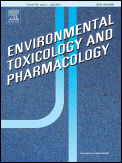
Environmental Toxicology and Pharmacology
Unveiling the complexities of toxicology and health.Environmental Toxicology and Pharmacology, published by Elsevier, is a leading journal dedicated to advancing our understanding of the effects of environmental pollutants on biological systems. With an ISSN of 1382-6689 and an E-ISSN of 1872-7077, this journal covers a wide range of studies related to toxicology, pharmacology, and environmental health. The journal is classified as Q2 in key categories such as Health, Toxicology and Mutagenesis and Medicine (miscellaneous), and sits impressively in Q1 for Toxicology, reflecting its strong impact in the field. As of 2023, it ranks #30 out of 133 in Toxicology and #40 out of 148 in Health, indicating its high relevance and contribution to research. While the journal is not currently open access, it remains a pivotal resource for researchers, professionals, and students seeking to explore the intricacies of environmental health effects. Its commitment to publishing high-quality peer-reviewed research positions it as a crucial platform for scientific dialogue and discovery.

JOURNAL OF APPLIED TOXICOLOGY
Advancing the Science of ToxicologyJOURNAL OF APPLIED TOXICOLOGY, published by Wiley, stands as a leading platform in the field of toxicology, focusing on the rigorous examination of chemical substances and their effects on biological systems. With an impressive Impact Factor, it ranks in the top quartile (Q2) for toxicology journals, reflecting its esteemed position within the scientific community. The journal, identifiable by its ISSN 0260-437X and E-ISSN 1099-1263, has been an invaluable resource since its inception in 1981, and it continues to serve as a conduit for innovative research and practical applications through 2024. Positioned at the forefront of the field, it garners recognition in the Scopus Rankings, where it ranks #31 out of 133 journals in the toxicology category, placing it in the 77th percentile—a testament to its contribution to the advancement of pharmacology and toxicological sciences. While not an open-access journal, it remains accessible to a wide audience of researchers, professionals, and students eager to explore cutting-edge findings in applied toxicology, making it a pivotal resource for enhancing knowledge and fostering collaboration in the field.
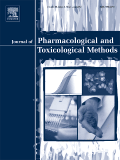
JOURNAL OF PHARMACOLOGICAL AND TOXICOLOGICAL METHODS
Advancing methodologies for safer pharmaceuticals.JOURNAL OF PHARMACOLOGICAL AND TOXICOLOGICAL METHODS, published by Elsevier Science Inc, serves as a vital resource within the fields of pharmacology and toxicology. Since its inception in 1992, this journal has focused on publishing innovative research, methodological advancements, and novel findings that enhance understanding in the pharmacological and toxicological sciences. With an impact factor reflecting its significant contribution albeit rated in the Q3 category for both pharmacology and toxicology, it ranks among the relevant scholarly platforms, catering to a community dedicated to advancing drug development and safety assessment. Although primarily subscription-based, it provides robust insights essential for researchers, professionals, and students engaged in pharmaceutical sciences. Through a commitment to high-quality scholarship, the journal aims to facilitate the exchange of knowledge and promote the application of cutting-edge methodologies in biological and chemical assessments.
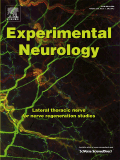
EXPERIMENTAL NEUROLOGY
Exploring Innovative Pathways in Developmental Neuroscience.EXPERIMENTAL NEUROLOGY is a premier academic journal published by Academic Press Inc, Elsevier Science, focusing on advancements in the fields of Developmental Neuroscience and Neurology. With an impressive Impact Factor and ranked in the Q1 quartile of both categories—positioning it among the top-tier journals—this publication has established itself as a vital resource for researchers, clinicians, and students alike. Since its inception in 1959, it has fostered the dissemination of cutting-edge research and innovative approaches to understanding neurological function and related disorders. While EXPERIMENTAL NEUROLOGY currently operates under a subscription access model, its rich archives and ongoing contributions to the field continue to inspire and inform the next generation of neurobiologists. The journal also boasts a high ranking in Scopus, placing fourth in Developmental Neuroscience and twentieth in Neurology, indicating its robust influence and scholarly significance. For those committed to advancing knowledge in these critical areas, EXPERIMENTAL NEUROLOGY is an indispensable platform for inquiry and discovery.
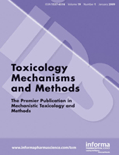
TOXICOLOGY MECHANISMS AND METHODS
Leading the charge in toxicology advancements globally.TOXICOLOGY MECHANISMS AND METHODS is a distinguished peer-reviewed journal dedicated to the advancement of toxicological research, published by Taylor & Francis Ltd. With its ISSN 1537-6516 and E-ISSN 1537-6524, this esteemed journal features critical studies and innovative methodologies in the field of toxicology, aligning with its mission to enhance understanding of biological mechanisms and risk assessment. The journal holds a commendable Q2 ranking in both the Health, Toxicology and Mutagenesis, and Toxicology categories, as well as strong positions in Scopus rankings, reflecting its influence with a 71st percentile rank in Toxicology and a 69th percentile rank in Environmental Health. Researchers, professionals, and students in the toxicology domain will find this journal to be an invaluable resource, offering open access options that foster widespread dissemination of its findings. Since its inception, encompassing converged years from 1991 to 1995 and from 2002 to 2024, the journal remains at the forefront of critical discourse and innovative research methods, making it a vital platform for advancing toxicological science globally.
NEUROTOXICITY RESEARCH
Decoding the Toxins That Affect Our Nervous SystemNEUROTOXICITY RESEARCH is a premier journal published by SPRINGER, focusing on the critical and evolving field of neurotoxicology. With an ISSN of 1029-8428 and an E-ISSN of 1476-3524, this journal serves as a vital platform for researchers, professionals, and students dedicated to understanding the impact of toxic substances on nervous system health. Established in 1999, NEUROTOXICITY RESEARCH has consistently contributed significant findings and discussions that influence both theoretical and applied neuroscience. The journal's impressive Q2 ranking in both Neuroscience (miscellaneous) and Toxicology categories, alongside its strong percentile rankings in Scopus, underscores its relevance and quality in the academic community. While this journal is not open access, it remains a critical resource for those seeking interdisciplinary insights into the mechanisms of neurotoxicity. The objective of NEUROTOXICITY RESEARCH is to elucidate the intricate interactions between environmental and chemical agents and their neurotoxic effects, guiding future research and policies aimed at safeguarding neurological health. Based in the United States at ONE NEW YORK PLAZA, SUITE 4600, NEW YORK, NY 10004, this journal is committed to advancing the understanding of neurotoxic mechanisms and fostering collaborative efforts within the scientific community.
COMPARATIVE BIOCHEMISTRY AND PHYSIOLOGY C-TOXICOLOGY & PHARMACOLOGY
Bridging Laboratory Discoveries with Real-World ApplicationsComparative Biochemistry and Physiology C-Toxicology & Pharmacology, published by Elsevier Science Inc, stands as a prominent resource in the fields of pharmacology, toxicology, and biochemical research. With its ISSN 1532-0456 and E-ISSN 1878-1659, this journal has carved out a significant niche, focusing on the comparative aspects of biochemical and physiological data across various species. Recognized for its impact in diverse fields, it boasts a Q1 ranking in Animal Science and Zoology, Aquatic Science, Health, Toxicology and Mutagenesis, alongside respectable standings in other related disciplines. Researchers and professionals can leverage this publication to access high-quality, peer-reviewed studies that advance the understanding of biochemical processes and their toxicological implications. The journal aims to bridge the gap between laboratory findings and real-world applications, fostering an environment for interdisciplinary collaboration. For academics seeking to enhance their knowledge or contribute to this impactful field, Comparative Biochemistry and Physiology C-Toxicology & Pharmacology serves as an invaluable platform.

TOXICOLOGY AND APPLIED PHARMACOLOGY
Unraveling the Complexities of Drug InteractionsTOXICOLOGY AND APPLIED PHARMACOLOGY, published by Academic Press, Inc. Elsevier Science, stands as a leading journal in the domains of toxicology and pharmacology, with its establishment dating back to 1959. With an impact factor reflecting its academic rigor and relevance, this journal is classified in the Q2 quartile for both pharmacology and toxicology categories, underscoring its significance in the scientific community. It ranks #34 out of 133 in Toxicology and #95 out of 313 in Pharmacology according to Scopus, placing it within the 74th and 69th percentiles, respectively. The journal aims to disseminate quality research that drives advancements in understanding the interactions of drugs and toxic substances within biological systems. Researchers and professionals are invited to contribute and engage with a broad spectrum of articles that cover mechanistic studies, risk assessment, and innovative therapeutic strategies. Although the journal does not offer open access, it continues to be a crucial resource for those who seek to navigate the complex interface of drugs and their toxicological implications.

FLUORIDE
Illuminating the science behind fluoride's impact.FLUORIDE is a distinguished international journal published by the International Society for Fluoride Research, dedicated to advancing knowledge in the interdisciplinary fields associated with fluoride research. Established in 1968, this open access journal primarily focuses on the biological, chemical, and environmental aspects of fluoride, providing a vital platform for researchers, professionals, and students alike to disseminate their findings. With an ISSN of 0015-4725 and an E-ISSN of 2253-4083, FLUORIDE embraces a wide scope of research, garnering recognition within quartiles across various categories including Dentistry, Environmental Health, and Toxicology, albeit positioned in Q4 in several fields according to 2023 Scopus rankings. The journal's commitment to enhancing public health insights through fluoride research makes it an essential resource for those looking to explore the impacts and applications of fluoride in diverse domains. As it converges its reach from 1973 to 2024, FLUORIDE continues to foster scholarly communication and provides open access to a growing repository of knowledge to aid in addressing pressing issues pertinent to human and environmental health.
CHEMICO-BIOLOGICAL INTERACTIONS
Fostering Breakthroughs in Toxicology and MedicineCHEMICO-BIOLOGICAL INTERACTIONS is a premier journal published by Elsevier Ireland Ltd, dedicated to advancing the field of chemical and biological interactions since its inception in 1969. With a robust focus on pharmacology and toxicology, the journal holds a prestigious Q1 ranking in both Medicine (miscellaneous) and Toxicology, reflecting its significance in disseminating influential research. As part of the Scopus database, it ranks #21 out of 133 journals in Toxicology, positioning it in the 84th percentile and ensuring high visibility for cutting-edge studies. This scholarly platform serves as a crucial resource for researchers, professionals, and students who seek reliable and innovative findings at the intersection of chemistry and biology. While currently not open access, CHEMICO-BIOLOGICAL INTERACTIONS provides a comprehensive collection of articles that contribute to the ongoing dialogue in toxin research and its implications on medicinal chemistry, thereby fostering advancements in public health and safety.