NEW TECHNOLOGY WORK AND EMPLOYMENT
Scope & Guideline
Illuminating the Impact of Technology on Work Practices
Introduction
Aims and Scopes
- Digital Transformation in Workspaces:
Examines how digital technologies, such as telecommuting tools and algorithmic management systems, are transforming traditional workspaces and employment structures. - Platform Economy and Gig Work:
Explores the dynamics of platform labor, gig economy, and the implications for workers' rights, agency, and collective action. - Social Justice and Work Inequalities:
Investigates issues of inequality, including gender, race, and class, in the context of new work paradigms and the impact of technology on marginalized groups. - Worker Agency and Resistance:
Focuses on the ways workers navigate, resist, and adapt to technological changes, emphasizing their agency in the face of algorithmic control and management practices. - Impact of Technology on HR Practices:
Analyzes how technology influences human resource management practices, including recruitment, performance management, and employee monitoring. - Collective Action and Union Responses:
Studies the role of trade unions and collective movements in the age of digitalization, including strategies for mobilizing workers in platform economies.
Trending and Emerging
- Algorithmic Management and Control:
There is an increasing examination of how algorithmic management systems influence worker experiences, control mechanisms, and labor relations in various sectors. - Reskilling and Lifelong Learning:
Research is trending towards understanding the narratives and practices surrounding reskilling and continuous learning as essential responses to technological change. - Mental Health and Well-being in Remote Work:
The impact of remote work on mental health and well-being is gaining attention, particularly in light of the COVID-19 pandemic and its long-term implications. - Gender and Precarity in New Work Forms:
Emerging discussions focus on how gender dynamics play out in gig work and platform economies, highlighting issues of precarity and inequality. - Digital Solidarity and Collective Action:
The rise of digital solidarity movements and the use of social media for collective action among gig workers is increasingly being explored, reflecting new forms of organization.
Declining or Waning
- Traditional Employment Models:
Research focusing on conventional employment models has decreased as the emphasis shifts towards gig work, remote work, and platform labor. - Automation as a Sole Focus:
The narrative around automation as a singular threat to jobs has waned, with more nuanced discussions emerging about the coexistence of technology and labor. - Generic Technology Critique:
Broad critiques of technology without specific contextual analysis are becoming less frequent, as studies increasingly focus on detailed case studies and specific sectors. - Static Views on Work-Life Balance:
Research exploring work-life balance from a static perspective has declined, with a more dynamic understanding of work-life integration taking precedence. - Overemphasis on Negative Outcomes of Telework:
The focus on the negative implications of telework is diminishing, as studies now also highlight positive aspects and adaptations that workers have made.
Similar Journals
Labour-England
Bridging Past and Present in Labor ResearchLabour-England is a renowned academic journal dedicated to the critical study of labor relations, population demographics, historical perspectives, and geographical and planning issues within the context of the United Kingdom. Published by WILEY, this journal has made a significant impact in its field, as evidenced by its various 2023 quartile rankings, including Q1 in History and Q2 in Demography. With an emphasis on interdisciplinary research, Labour-England serves as a vital resource for scholars and practitioners alike, delving into the complexities of industrial relations, organizational behavior, and human resource management. The journal's impressive convergence of research from 1987 to 2024 promises to provide historical insights alongside contemporary analyses, encouraging a deeper understanding of labor dynamics. Although not fully open access, it continues to be an essential platform for disseminating knowledge and fostering dialogue among researchers, professionals, and students engaged in these critical areas of study.

RELATIONS INDUSTRIELLES-INDUSTRIAL RELATIONS
Bridging Theory and Practice in Industrial RelationsRELATIONS INDUSTRIELLES-INDUSTRIAL RELATIONS, published in Canada, is a leading journal in the fields of industrial relations and organizational behavior. This esteemed journal, identifiable by its ISSN 0034-379X, provides a platform for scholarly research that critically examines the dynamics of workplace interactions and labor relations. With a focus on fostering academic discourse, it aims to engage researchers, practitioners, and students by presenting empirical studies, theoretical contributions, and comprehensive reviews related to human resource management, organizational strategy, and technology management. Although the journal is not open access, it maintains an important presence in academic circles, featuring articles that contribute to understanding the complexities of labor relations in a globalized context. As evidenced by its Scopus rankings, which place it in the lower percentiles across various categories, the journal continues to develop its scope and influence, aspiring for higher impact in the future. With active publication from its designated address at Université Laval, the journal is committed to advancing knowledge and facilitating communication within the realm of industrial relations.
Journal of Education and Work
Exploring the Nexus of Education and Employment.Journal of Education and Work is a prominent publication dedicated to the intersection of educational processes and workforce development, contributing significantly to the discourse on how education influences employment outcomes and organizational behavior. Published by ROUTLEDGE JOURNALS, TAYLOR & FRANCIS LTD, this journal features comprehensive research and insightful articles that span a variety of topics within the fields of education, public administration, and human resource management. With an impressive Q2 ranking in Education and notable placements in related fields as of 2023, it serves as a critical resource for academics, policymakers, and practitioners interested in bridging the gap between education and the labor market. Though it does not currently offer Open Access, the journal maintains a rigorous editorial process to ensure high-quality, peer-reviewed research that appeals to an international audience, enabling scholars and professionals alike to stay informed on the latest trends and findings in this dynamic field. As the journal converges its focus from 2005 to 2024, it continues to shape the future of education and work through innovative scholarship and practical implications.
Economic and Labour Relations Review
Uncovering the complexities of work and economic behavior.Economic and Labour Relations Review, published by Cambridge University Press, is an esteemed journal that has been dedicated to advancing the fields of economics and labour relations since its inception in 1990. With an ISSN of 1035-3046 and an E-ISSN of 1838-2673, this journal has positioned itself within the Q2 category in both Economics and Econometrics, as well as Organizational Behavior and Human Resource Management in 2023 rankings. It boasts impressive Scopus ranks, achieving a 72nd percentile in Economics and Econometrics and a 65th percentile in Organizational Behavior. The journal aims to facilitate high-quality scholarly discourse by providing a platform for research that explores the dynamic interplay between economic theories and labor market practices. Although it does not currently offer open access, it remains a crucial resource for academics, practitioners, and students who seek in-depth analyses and current trends within the discipline. With a commitment to publishing rigorous studies from a diverse range of perspectives, the Economic and Labour Relations Review is a vital reference for anyone researching the complexities of economic behavior in the workplace.
WORK AND OCCUPATIONS
Cultivating Critical Discourse on Employment DynamicsWORK AND OCCUPATIONS is a premier academic journal published by SAGE Publications Inc that focuses on the intricacies of work dynamics and labor relations within the fields of sociology, political science, and organizational behavior. Established in 1974, the journal has garnered a notable reputation for disseminating high-quality research and theoretical advancements in the study of employment, occupational sociology, and workforce management, making it an invaluable resource for researchers, practitioners, and students alike. Ranked in the Q1 category for both Organizational Behavior and Human Resource Management and Sociology and Political Science, it sits among the top echelon of academic journals in these disciplines. With a significant global readership and a commitment to fostering critical discourse around work-related phenomena, WORK AND OCCUPATIONS serves as a vital conduit for innovative ideas and methodologies, encouraging scholarly exchange and interdisciplinary collaboration. To access cutting-edge research and insights from leading scholars in the field, you can explore the journal's content without the hindrance of open access barriers.
Transfer-European Review of Labour and Research
Championing Interdisciplinary Approaches to Labor IssuesTransfer-European Review of Labour and Research is a premier academic journal dedicated to advancing the field of labor relations and organizational behavior, published by SAGE Publications Ltd in the United Kingdom. With an impressive Q1 ranking in both Industrial Relations and Organizational Behavior and Human Resource Management for 2023, this journal stands out as a vital resource for researchers, practitioners, and students alike. It provides a platform for innovative research and critical discussions on labor and employment issues, promoting interdisciplinary approaches that address contemporary challenges in the workforce. Although not an open-access journal, it offers substantial value through its rigorous peer-review process, which ensures the publication of high-quality, impactful articles. With an ISSN of 1024-2589 and E-ISSN of 1996-7284, Transfer aims to bridge the gap between theory and practice, making it essential reading for anyone engaged in the dynamics of labor management and organizational development.
INTERNATIONAL LABOUR REVIEW
Navigating the evolving landscape of human resources.INTERNATIONAL LABOUR REVIEW is a prestigious academic journal published by WILEY that serves as a key resource for scholars and professionals in the fields of labour economics, human resource management, and organizational behavior. With a history dating back to 1945, the journal has evolved to publish cutting-edge research and insights, maintaining its relevance in a rapidly changing employment landscape. Its impact is illustrated by its recognition within category quartiles, placing it in Q2 for Management of Technology and Innovation, Organizational Behavior and Human Resource Management, and Strategy and Management in 2023. Researchers and practitioners especially value its empirical and theoretical contributions, which are crucial for understanding the complexities of labor and employment relations. While the journal operates under a subscription model, it is accessible to a broad audience seeking to enhance their knowledge in vital areas of labor dynamics. If you are looking to engage with influential research that shapes organizational strategies and labor policies, the INTERNATIONAL LABOUR REVIEW is an essential addition to your academic resources.
INDUSTRIAL LAW JOURNAL
Empowering legal scholarship in the industrial sector.The Industrial Law Journal, published by Oxford University Press, is a premier academic journal dedicated to the evolving landscape of law as it pertains to industry and labor relations. With an ISSN of 0305-9332 and E-ISSN of 1464-3669, this journal has successfully maintained its reputation as a leading publication since its inception in 1972 and continues to be an invaluable resource for legal scholars and practitioners alike. The 2023 Scopus ranking places it in the prestigious Q1 category of law journals, with an impressive 74th percentile ranking in the realm of social sciences. While traditionally not an open access journal, the Industrial Law Journal serves as a critical platform for rigorous peer-reviewed research, facilitating discussions that bridge the gap between legal theory and practical application in the industrial sector. Researchers and legal professionals depend on its insightful analyses and comprehensive coverage of contemporary issues, making it an essential read for anyone looking to deepen their understanding of industrial law in the context of an ever-changing global landscape.
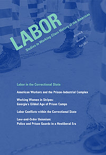
Labor-Studies in Working-Class History of the Americas
Advancing Understanding of Working-Class NarrativesLabor-Studies in Working-Class History of the Americas, published by DUKE UNIVERSITY PRESS, serves as a vital platform for interdisciplinary scholarship on the historical and contemporary experiences of working-class individuals throughout the Americas. With its ISSN 1547-6715 and E-ISSN 1558-1454, this journal aims to explore the intersection of labor movements, social justice, and economic structures, promoting a deeper understanding of the working class's critical role in shaping societal narratives. The journal has achieved notable recognition, with a 2023 impact factor that places it in the Q2 quartile for History, Q4 for Industrial Relations, and Q3 for Sociology and Political Science, reflecting its academic significance and reach. While it is not an open-access publication, the journal encourages a wide readership among researchers, professionals, and students interested in labor studies, social sciences, and history. Based in the United States, the journal's evolving scope is positioned within its converged timeline from 2019 to 2024, signaling its dedication to advancing knowledge in these crucial areas of study.
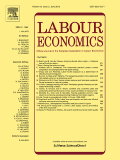
LABOUR ECONOMICS
Shaping the Future of Employment through Rigorous AnalysisLABOUR ECONOMICS is a premier academic journal published by ELSEVIER, focusing on critical aspects of the labor market, employment, and human resource management from a rigorous economic perspective. With an impressive Q1 ranking in both Economics and Econometrics, as well as Organizational Behavior and Human Resource Management, this journal is renowned for publishing high-quality research that provides valuable insights into labor dynamics and workforce issues. Featuring an ISSN of 0927-5371 and an E-ISSN of 1879-1034, the journal has been a cornerstone of scholarly discussion since 1993, maintaining a commitment to excellence in the field. With its impact factor reflecting its relevance and influence, LABOUR ECONOMICS serves as an essential resource for researchers, professionals, and students eager to explore the intricacies of labor economics. The journal invites submissions that foster innovative discussion and advance knowledge within this vital area of study, providing a platform for groundbreaking research aimed at informed policy making and improved labor practices.