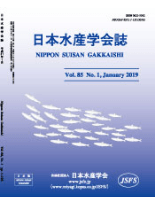
NIPPON SUISAN GAKKAISHI
metrics 2024
Fostering Excellence in Fisheries Research
Introduction
NIPPON SUISAN GAKKAISHI, published by the Japanese Society of Fisheries Science, is a prestigious journal with a long history dating back to its inaugural issue in 1932. This journal, which spans key contributions to the field of Aquatic Science, serves as a vital platform for the dissemination of important research findings related to fisheries and aquatic biology, fostering knowledge and innovation in Japan and beyond. Although it is not an open-access publication, its rigorous peer-review process ensures the quality and integrity of the articles published. The journal is currently listed in the Q4 category for Aquatic Science according to the 2023 metrics, placing it within a niche but significant corner of the research landscape. With an ISSN of 0021-5392 and E-ISSN of 1349-998X, it continues to provide essential insights that benefit researchers, professionals, and students alike, highlighting advancements and challenges within aquatic ecosystems over a converged year span that continues to evolve through to 2024.
Metrics 2024
 0.210.500.3027
Metrics History
Rank 2024
Scopus
IF (Web Of Science)
JCI (Web Of Science)
Quartile History
Similar Journals
NEW ZEALAND JOURNAL OF MARINE AND FRESHWATER RESEARCH
Unveiling the Secrets of New Zealand's WatersNEW ZEALAND JOURNAL OF MARINE AND FRESHWATER RESEARCH, published by Taylor & Francis Ltd, stands as a distinguished platform for the dissemination of innovative research in the realms of aquatic science and ecology. With an ISSN of 0028-8330 and E-ISSN 1175-8805, this journal has been curating significant scientific contributions since its inception in 1967, continuing through to 2024. Recognized in the Q2 category across multiple relevant fields—including Aquatic Science, Ecology, and Water Science—this journal ranks notably in Scopus, with a 74th percentile for Ecology, Evolution, Behavior and Systematics, highlighting its impact and relevance within the scientific community. Though not an open-access publication, its rigorous peer-reviewed articles offer insights that resonate with researchers, professionals, and students who are passionate about advancing our understanding of freshwater and marine ecosystems. By fostering a collaborative space for ecological and environmental inquiries, the NEW ZEALAND JOURNAL OF MARINE AND FRESHWATER RESEARCH is essential for those aiming to contribute to the vital conversations around biodiversity, conservation, and sustainable management of aquatic resources.

FISHERY BULLETIN
Connecting Scholars for Sustainable Fisheries SolutionsFISHERY BULLETIN, published by the NATL MARINE FISHERIES SERVICE SCIENTIFIC PUBL OFFICE, serves as a pivotal resource in the field of Aquatic Science, offering valuable insights into fisheries science and management since its inception in 1881. With an Open Access model, the journal ensures that researchers, professionals, and students can access cutting-edge research freely, fostering greater collaboration and innovation within the community. The journal boasts a substantial history of publication, encompassing articles from 1979 to 2024, and has achieved a respectable Q3 Quartile ranking in its category for 2023, highlighting its influence amid its peers. It currently ranks #161 out of 247 in the Scopus database for Agricultural and Biological Sciences, with a 35th percentile ranking, indicative of the quality and relevance of its contributions. The FISHERY BULLETIN stands out as an essential platform for disseminating significant findings and advancing knowledge relevant to sustainable fisheries and marine resource management, making it an indispensable tool for academic researchers and industry practitioners alike.
Marine Biology Research
Navigating the intersection of ecology and oceanography.Marine Biology Research is a premier journal published by Taylor & Francis, focusing on the dynamic field of marine biology and its intersecting realms of aquatic science, ecology, and oceanography. Since its inception in 2005, this journal has served as a crucial platform for researchers and professionals to disseminate their findings, with a vision extending to 2024 and beyond. The journal is recognized with a Q3 quartile ranking in both Aquatic Science and Ecology, Evolution, Behavior and Systematics, underscoring its growing influence in these fields as evidenced by its Scopus rankings. Located in the United Kingdom, Marine Biology Research aims to foster collaboration and innovation through open access options, facilitating knowledge exchange among the academic community. With a steady commitment to advancing marine sciences, this journal is an invaluable resource for those dedicated to understanding and preserving our ocean ecosystems.
TRANSACTIONS OF THE AMERICAN FISHERIES SOCIETY
Championing conservation through rigorous peer-reviewed research.TRANSACTIONS OF THE AMERICAN FISHERIES SOCIETY, published by Wiley, is a leading journal dedicated to the field of fisheries science and aquatic ecology, with a rich history dating back to its inception in 1872. As an esteemed publication within the realms of Aquatic Science and Ecology, Evolution, Behavior, and Systematics, it currently holds a Q2 quartile ranking, demonstrating its significance and influence in these disciplines. The journal is not open access, which enables a curated peer-review process while ensuring high-quality research dissemination. The journal serves as a vital platform for scholars and practitioners alike, providing essential insights into the management and conservation of aquatic resources. Its commitment to addressing contemporary challenges faced in fisheries and aquatic environments makes it indispensable for researchers, professionals, and students seeking to contribute to this dynamic field.

FISHERIES MANAGEMENT AND ECOLOGY
Innovating solutions for a sustainable aquatic future.Fisheries Management and Ecology, an esteemed journal published by Wiley, serves as a critical platform for researchers, practitioners, and policymakers in the fields of aquatic science and ecology. With an ISSN of 0969-997X and an E-ISSN of 1365-2400, this journal has been at the forefront of advancing knowledge and best practices in sustainable fisheries management since its inception in 1994. Hailing from the United Kingdom, it has steadily distinguished itself with a respectable impact factor and is currently ranked Q2 in both Aquatic Science and Ecology categories, evidencing its scholarly relevance. The journal not only covers a broad spectrum of topics related to fishery ecology and management, but also emphasizes the importance of interdisciplinary approaches to tackle the myriad challenges facing aquatic ecosystems today. It is indexed in reputable databases and boasts commendable Scopus rankings, making it a valuable resource for anyone invested in the sustainable use of aquatic resources. This commitment to accessibility and engagement, although not open access, ensures that critical research remains a cornerstone for ongoing discussions in the field.
Reviews in Fisheries Science & Aquaculture
Empowering scholars to shape the future of aquaculture.Reviews in Fisheries Science & Aquaculture is a leading peer-reviewed journal published by Taylor & Francis Inc, dedicated to advancing the understanding and sustainable management of aquatic ecosystems. With an impressive impact factor reflecting its high citation rates, this journal categorizes within Q1 in Aquatic Science, Q1 in Ecology, Evolution, Behavior and Systematics, and Q1 in Management, Monitoring, Policy and Law, making it an essential resource for researchers and professionals in these disciplines. Operating from the United Kingdom and accessible through open access options, the journal facilitates a wide dissemination of research findings, fostering innovation and collaboration among those committed to fishery science and aquaculture. As of 2023, it ranks remarkably within the 99th percentile across several Scopus categories, underscoring its pivotal role in shaping future research and policy. The journal has been converging insightful studies since its inception in 2014, and it continues to be an indispensable platform for scholars aiming to contribute to the critical dialogues surrounding aquatic resource management and conservation.

Marine Life Science & Technology
Fostering ecological preservation through cutting-edge research.Marine Life Science & Technology is a premier journal published by SPRINGERNATURE, dedicated to advancing research in the vibrant fields of Aquatic Science, Biotechnology, Ecology, Evolution, Behavior and Systematics, and Oceanography. Since its inception in 2019, the journal has rapidly gained recognition, achieving a distinguished Q1 quartile ranking across multiple categories as of 2023. With impressive Scopus ranks—including 10th in Aquatic Science and 7th in Oceanography—this journal serves as a vital platform for scholars, professionals, and students to disseminate original research, innovative technologies, and critical reviews related to marine ecosystems and biotechnological applications. Based in Germany, Marine Life Science & Technology fosters open collaboration and knowledge sharing, vital for addressing contemporary challenges in marine and aquatic environments, ultimately contributing to sustainable development and ecological preservation.

VIE ET MILIEU-LIFE AND ENVIRONMENT
Exploring the Depths of Ecology and Aquatic ScienceVIE ET MILIEU - LIFE AND ENVIRONMENT is a pivotal journal in the realms of aquatic science and ecology, serving as a vital platform for researchers and professionals interested in the interconnections between living organisms and their environments. Published by the esteemed OBSERVATOIRE OCEANOLOGIQUE BANYULS in France, this journal has been disseminating valuable research since its inception in 1980, with volumes covering various topics pertinent to environmental dynamics through to 2024. Despite its current classification in the Q4 quartile for both aquatic science and ecology, the journal offers a unique opportunity for scholars to contribute to niche areas often overlooked by more prominent publications. VIE ET MILIEU is committed to fostering a comprehensive understanding of ecological interactions and the conservation of aquatic ecosystems, making it an essential resource for those engaged in environmental science and biology. Researchers can access a wealth of knowledge that supports their work, encourages collaboration, and inspires innovative approaches to pressing ecological issues.
JOURNAL OF SEA RESEARCH
Advancing Marine Science for a Sustainable FutureJOURNAL OF SEA RESEARCH, published by Elsevier, is a premier academic journal dedicated to advancing knowledge in the fields of aquatic science, ecology, and oceanography. Since its inception in 1996, this journal has provided a vital platform for researchers and professionals to disseminate groundbreaking findings and promote fostering interdisciplinary discussions. With its impressive Q2 ranking in multiple categories, including Aquatic Science and Ecology, Evolution, Behavior and Systematics, it positions itself as a significant contributor to marine and environmental studies. The journal is accessible in both print (ISSN: 1385-1101) and online formats (E-ISSN: 1873-1414), ensuring wide reach and engagement within the scholarly community. Researchers and students alike will find the journal not only a reliable source of information but also a source of inspiration for future explorations. With a commitment to quality and a broad scope that spans fundamental to applied research, JOURNAL OF SEA RESEARCH remains an indispensable resource for understanding the complexities of marine environments and their relevance to our changing world.
FISH AND FISHERIES
Exploring the depths of fish biology and fisheries management.FISH AND FISHERIES is a premier academic journal published by Wiley, dedicated to advancing knowledge in the fields of aquatic science, ecology, and oceanography. With an impressive impact reflected in its 2023 categorization in the Q1 quartile across multiple disciplines—including Aquatic Science and Management, Monitoring, Policy and Law—it serves as an essential resource for researchers, professionals, and students alike. This journal includes rigorous, peer-reviewed articles that address the multifaceted aspects of fish biology, conservation, and sustainable fisheries management. The journal's Scopus rankings further validate its significance, with top positions in Earth and Planetary Sciences, and its commitment to fostering scientific dialogue in an era where the oceans and aquatic ecosystems face unprecedented challenges. Despite not being an Open Access journal, FISH AND FISHERIES remains a vital platform for innovative research that informs policy and drives stewardship of fish populations and their habitats.