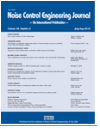
NOISE CONTROL ENGINEERING JOURNAL
Scope & Guideline
Shaping a Sounder World with Cutting-Edge Research
Introduction
Aims and Scopes
- Active Noise Control Systems:
Research on systems designed to actively reduce unwanted sound through various algorithms and methodologies, including advanced techniques such as deep learning and hybrid systems. - Acoustic Materials and Structures:
Investigation into the properties of materials and structures that absorb or block sound, including the development and testing of new acoustic materials like micro-perforated panels and Helmholtz resonators. - Environmental Noise Assessment:
Studies focused on measuring and mitigating noise pollution in various environments, including urban settings and industrial applications, with an emphasis on health impacts and regulatory compliance. - Noise Modeling and Simulation:
Mathematical and computational modeling techniques to predict noise behavior in different scenarios, including simulations of aircraft noise, railway noise, and industrial machinery. - Vibration Control:
Research on the relationship between vibration and noise, including methods for reducing vibration in mechanical systems to minimize sound generation. - Speech and Communication Enhancement:
Development of technologies aimed at improving speech intelligibility and privacy in noisy environments, including innovative systems for conferencing and speech jamming.
Trending and Emerging
- Deep Learning and AI in Noise Control:
The application of deep learning and artificial intelligence for noise control solutions is gaining traction, showcasing the potential for improved accuracy and efficiency in noise prediction and control systems. - Active Noise Control Innovations:
There is an increasing focus on hybrid and advanced active noise control systems, utilizing real-time data and feedback mechanisms to enhance performance in various applications, such as automotive and aerospace. - Sustainability in Noise Control Engineering:
Research is increasingly addressing the environmental impact of noise control solutions, emphasizing sustainable materials and practices in the design of noise barriers and acoustic treatments. - Acoustic Metamaterials:
The exploration of acoustic metamaterials is on the rise, with studies investigating their unique properties for sound manipulation and noise reduction, indicating a frontier in material science applications in acoustics. - Noise and Health Correlation Studies:
An emerging theme is the investigation of the health impacts of noise pollution, linking engineering solutions with public health outcomes, which is becoming a critical area of research in urban planning and transportation.
Declining or Waning
- Traditional Passive Noise Control Techniques:
There appears to be a waning interest in conventional passive noise control solutions, such as heavy soundproofing materials, as researchers shift towards more dynamic and smart noise control technologies. - Basic Acoustic Measurements:
Research that solely focuses on basic acoustic measurement techniques is becoming less prevalent, as the field moves towards more sophisticated analyses that incorporate machine learning and complex modeling. - General Noise Regulations and Policies:
Although noise regulations remain important, specific papers solely addressing regulatory frameworks without accompanying technical innovations are less common, indicating a trend towards integrating policy discussions with practical engineering solutions.
Similar Journals
AIAA JOURNAL
Exploring the Frontiers of Flight and Space TechnologyAIAA JOURNAL, published by the American Institute of Aeronautics and Astronautics, stands as a premier peer-reviewed platform for cutting-edge research in the field of aerospace engineering. With an esteemed Q1 classification in the Aerospace Engineering category and a notable rank within the top 20% of its field according to Scopus, this journal has become an essential resource for researchers, professionals, and students alike. Spanning over six decades of impactful scholarship from 1963 to 2024, the AIAA JOURNAL contributes significantly to the advancement of aerospace technologies and methodologies. While it does not offer open access, its rigorous editorial standards and impactful articles ensure that it remains a vital source for those seeking to stay at the forefront of aerospace innovation. Explore the rich tradition of excellence and stay informed on the latest discoveries that shape the world of flight and space exploration.

Noise Mapping
Innovating solutions for a quieter world.Noise Mapping is a distinguished, peer-reviewed journal published by DE GRUYTER POLAND SP Z O O, focusing on the interdisciplinary fields of acoustics, urban studies, and environmental science. Established as an Open Access platform since 2014, it aims to provide high-quality research that integrates noise mapping techniques, assessment methodologies, and policy implications to address pressing environmental challenges. With an impressive 2023 Q2 ranking in Acoustics and Ultrasonics, along with notable placements in Urban Studies and Management, Monitoring, Policy, and Law, the journal is recognized for its contribution to advancing knowledge and practice in these crucial areas. Its Scopus rankings underscore its influence, especially in Urban Studies (Rank #18/279) and Acoustics (Rank #4/44). By disseminating innovative research and promoting collaborative dialogue among scholars, professionals, and policy-makers, Noise Mapping is an essential resource for those looking to understand the intricate dynamics of noise pollution and urban environments.
AERONAUTICAL JOURNAL
Advancing aerospace knowledge since 1969.Aeronautical Journal, published by Cambridge University Press, is a premier scholarly journal dedicated to advancing the field of aerospace engineering. With a notable impact factor, this journal holds a strong position in the academic community, ranked #53 out of 153 in the Scopus category of Aerospace Engineering, placing it in the 65th percentile. The journal has been providing a platform for groundbreaking research since its inception in 1969, and continues to be a vital resource for researchers, professionals, and students involved in aeronautics. As a Q2 journal in the 2023 Aerospace Engineering category, it offers high-quality articles that cover a range of topics within the discipline, contributing to the ongoing discourse and innovation in aerospace technologies. Although not an open-access journal, it remains accessible to a vast readership through institutional subscriptions and partnerships. The Aeronautical Journal is a crucial publication for those seeking to stay at the forefront of aerospace research and development.

SAE International Journal of Passenger Vehicle Systems
Exploring the Future of Automotive EngineeringWelcome to the SAE International Journal of Passenger Vehicle Systems, a premier publication in the realm of automotive engineering. Published by SAE International, this journal serves as a critical platform for disseminating high-caliber research focused on the innovation and advancement of passenger vehicle systems. With an impact factor that reflects its growing influence, this open-access journal enhances visibility and accessibility, supporting a diverse readership that includes researchers, engineers, and automotive professionals. Covering a broad scope that incorporates safety, reliability, and mechanical engineering among others, the journal is categorized in the Q3 and Q4 quartiles for various engineering fields, indicating its significance and the potential for impactful contributions to ongoing discussions within the automotive sector. The Scopus rankings further underscore its commitment to quality, placing it within the mid-range of prominent publications. As a valued resource, the SAE International Journal of Passenger Vehicle Systems from 2022 to 2024 offers a vital forum for knowledge exchange, aimed at inspiring breakthroughs in automotive technology and enhancing passenger safety.

BUILDING ACOUSTICS
Exploring the Soundscape of ArchitectureBuilding Acoustics, published by SAGE Publications Inc, is a distinguished journal that serves as a critical resource in the fields of acoustics, building construction, and mechanical engineering. With an ISSN of 1351-010X and an E-ISSN of 2059-8025, this journal has maintained a strong reputation since its inception in 1997, featuring rigorous peer-reviewed research that provides valuable insights into the acoustic properties of buildings and environments. With a commendable Q2 ranking in its categories and a notable standing within the Scopus Ranks, this journal plays a pivotal role in advancing knowledge and practice in its field. Researchers, professionals, and students are invited to engage with cutting-edge studies that address crucial aspects of sound control, environmental noise, and sustainable architectural design. Although not an Open Access journal, Building Acoustics ensures accessibility through various institutional affiliations and library provisions, solidifying its position as an essential publication for those dedicated to enhancing the acoustic performance of built environments.
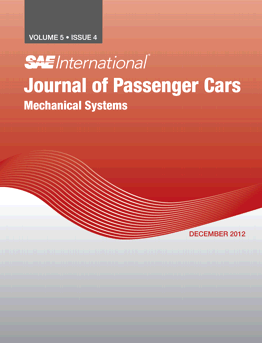
SAE International Journal of Passenger Cars-Mechanical Systems
Connecting Research and Application in Automotive EngineeringSAE International Journal of Passenger Cars-Mechanical Systems, published by SAE International, serves as a vital platform for researchers, engineers, and industry professionals focused on the dynamics of passenger vehicle mechanical systems. With an ISSN of 1946-3995 and E-ISSN of 1946-4002, this journal bridges academic research with practical applications in the automotive field. Although coverage in Scopus was discontinued after 2021, the journal has still contributed significantly to the realms of automotive engineering, safety, and mechanical engineering, evidenced by its Scopus rankings and percentiles across various categories, including a rank of #57 in Automotive Engineering. This multidisciplinary journal is key for those looking to advance their knowledge and explore innovative solutions in automotive mechanics, with an emphasis on enhancing vehicle performance, reliability, and safety. While current open access options are detailed further on their website, the journal continues to maintain a commitment to disseminating valuable insights that can shape future automotive technologies and practices.
International Journal of Sustainable Aviation
Innovating aviation with ecological responsibility.International Journal of Sustainable Aviation is a pioneering publication aimed at advancing the fields of aerospace and environmental engineering with a specific focus on sustainability practices in aviation. Published by INDERSCIENCE ENTERPRISES LTD, this journal addresses the critical challenges and innovations in sustainable aviation, emphasizing research that contributes to resource efficiency, environmental preservation, and technological advancements. Although ranked in the lower percentiles of various engineering categories, it serves as a crucial forum for researchers, professionals, and students interested in new methodologies and infrastructures that promote ecological responsibility within the aviation sector. With an ISSN of 2050-0467 and an e-ISSN of 2050-0475, the journal invites contributions that explore sustainable strategies and innovative practices in the aviation industry. Operating from its base in Geneva, Switzerland, the journal aims to bridge the gap between theoretical research and practical applications in the quest for a greener aviation future.
JOURNAL OF VIBRATION AND CONTROL
Elevating Engineering Standards through Vibrational ScienceJOURNAL OF VIBRATION AND CONTROL, published by SAGE PUBLICATIONS LTD, is a distinguished peer-reviewed journal that serves as a pivotal resource for researchers and professionals in the fields of aerospace, automotive, materials science, and mechanical engineering. Since its inception in 1995, this journal has been instrumental in disseminating cutting-edge findings on the dynamics of vibrations and control systems, addressing both theoretical developments and practical applications. With an impressive array of impact metrics—ranking in the top quartile (Q2) across various engineering categories—it ensures that high-quality research is accessible to its audience, fostering innovation and collaboration. Although currently not an open-access journal, it remains influential within its domain, indexing a breadth of topics that bridge fundamental science and engineering practices. Researchers and students interested in exploring the dynamics of materials and structures will find the JOURNAL OF VIBRATION AND CONTROL an invaluable tool for advancing their knowledge and contributing to ongoing discussions in the field.
Noise & Health
Decoding the relationship between soundscapes and health outcomes.Noise & Health is a prominent open-access journal dedicated to advancing the understanding of the intersection between noise exposure and health outcomes, published by Wolters Kluwer Medknow Publications. Since its establishment in 2002, the journal has provided a vital platform for researchers, professionals, and students in the fields of otorhinolaryngology, public health, and environmental health. With its current impact factor reflecting a Q3 category ranking in multiple relevant categories, Noise & Health features rigorous peer-reviewed research that examines the physiological and psychological effects of noise, as well as mitigation strategies. Based in Mumbai, India, the journal has embraced open access since 2007, ensuring that critical research is freely accessible to all stakeholders. The journal continues to be a key resource for those seeking to understand the health implications of noise pollution and is committed to fostering innovative research that informs public health policy and practice.
CIRCUITS SYSTEMS AND SIGNAL PROCESSING
Shaping the Future of Signal Processing with Cutting-Edge ResearchCIRCUITS, SYSTEMS AND SIGNAL PROCESSING, published by Springer Birkhauser, is a highly regarded journal in the fields of applied mathematics and signal processing, boasting an impact factor that reflects its robust academic contributions. Established in 1982, this journal aims to disseminate cutting-edge research that bridges the gap between theoretical advancements and practical applications in circuit design, systems theory, and signal processing. With a Thomason Scopus ranking of Q2 in Applied Mathematics and Q3 in Signal Processing, it stands out as a leading resource for researchers, professionals, and students seeking to enhance their knowledge and innovate within these disciplines. The journal provides insight into the latest trends and technologies, making it an essential reading for those engaged in the development of signal processing methodologies. Although it does not offer Open Access options, it remains a critical repository of knowledge with deep relevance in today's tech-driven landscape.