NUCLEAR FUSION
metrics 2024
Advancing the frontiers of fusion energy research.
Introduction
NUCLEAR FUSION is a prestigious academic journal published by IOP Publishing Ltd, dedicated to advancing the field of nuclear and high-energy physics. With a significant impact factor and recognized among the top-tier journals, it boasts a Q1 ranking in both Condensed Matter Physics and Nuclear and High Energy Physics as of 2023. This journal, which has been published continuously since 1969, serves as a vital platform for researchers, professionals, and students exploring the latest advancements in fusion energy, plasma physics, and the intricate phenomena associated with high-energy states of matter. By disseminating original research, comprehensive reviews, and interdisciplinary studies, NUCLEAR FUSION strives to foster innovation and collaboration in pursuit of sustainable energy solutions, contributing significantly to the scientific community’s understanding of nuclear fusion processes. While the publication offers access options that enhance its reach, its rigorous peer-review process ensures the highest quality of scholarly communication.
Metrics 2024
 1.303.503.40137
Metrics History
Rank 2024
Scopus
IF (Web Of Science)
JCI (Web Of Science)
Quartile History
Similar Journals
PLASMA PHYSICS REPORTS
Catalyzing Discoveries in Plasma Physics ApplicationsPLASMA PHYSICS REPORTS, published by PLEIADES PUBLISHING INC, is a distinguished journal that caters to the intricate and evolving field of plasma physics and its applications within condensed matter physics and astronomy. With an ISSN of 1063-780X and an E-ISSN of 1562-6938, the journal serves as a pivotal platform for researchers, professionals, and students to disseminate groundbreaking work and foster collaboration among experts in the field. The journal operates as a non-open access resource, contributing to its reputation for curating high-quality research findings. Over its converged years from 1996 to 2024, the journal has established itself within the Q3 category across both condensed matter physics and miscellaneous physics and astronomy in the 2023 quartiles. With current Scopus rankings placing it in the 42nd percentile for physics and astronomy and the 27th percentile for condensed matter physics, PLASMA PHYSICS REPORTS stands as a vital resource for advancing knowledge and innovation in plasma research.
FUSION SCIENCE AND TECHNOLOGY
Advancing sustainable energy through innovative fusion research.FUSION SCIENCE AND TECHNOLOGY is a leading peer-reviewed journal published by Taylor & Francis Inc., dedicated to the advancement of knowledge in the fields of nuclear science, engineering, and fusion technology. With an impact factor that reflects its growing significance, this journal provides a platform for innovative research that addresses the challenges and opportunities within Civil and Structural Engineering, Materials Science, Mechanical Engineering, and Nuclear Energy and Engineering. Its open access option facilitates wider dissemination of groundbreaking research, enhancing visibility and accessibility for researchers, professionals, and students alike. As a member of the Q2 and Q3 Quartiles across various categories—demonstrating its reputable standing among peers—the journal plays a crucial role in fostering collaboration and sharing the latest scientific discoveries in fusion and related technologies from 2001 until 2024. This makes it an essential resource for anyone engaged in the multidisciplinary aspects of fusion science, contributing to the development of sustainable energy solutions.
PHYSICAL REVIEW C
Unveiling the Mysteries of Subatomic InteractionsPHYSICAL REVIEW C is an esteemed journal published by the American Physical Society, dedicated to advancing knowledge in the fields of nuclear and high-energy physics. With a proud ISSN of 2469-9985 and an E-ISSN of 2469-9993, it has established itself as a leading journal, currently ranked in the Q1 category for its field in 2023, positioning itself in the top tier of scholarly publications. Based in the heart of the United States, at One Physics Ellipse, College Park, MD, PHYSICAL REVIEW C is known for its rigorous peer-review process and is a vital platform for researchers to share their pioneering findings. As part of a prestigious lineup backed by an impressive impact factor, this journal garners significant attention, reflected in its Scopus ranking as #18 out of 87 in the Nuclear and High Energy Physics category, placing it within the 79th percentile. While it currently does not offer open access options, it remains an essential resource for professionals and students seeking to deepen their understanding of nuclear interactions, reaction dynamics, and the fundamental principles governing subatomic particles. The convergence of innovative research from 2016 to 2024 makes it a timely reservoir for groundbreaking studies, thus reinforcing its importance in the scientific community.

CHINESE PHYSICS LETTERS
Innovative Insights in Physics and AstronomyChinese Physics Letters is a prestigious journal published by IOP Publishing Ltd, based in the United Kingdom. Since its inception in 1984, the journal has served as a vital platform for disseminating impactful research in the field of physics, achieving a noteworthy Q1 ranking in the category of Physics and Astronomy (miscellaneous) as of 2023. Renowned for its rapid publication process, this journal is dedicated to providing a forum for high-quality, concise articles that address innovative theoretical and experimental findings relevant to both the academic community and industry practitioners. With an impressive Scopus rank of #52 out of 243, placing it in the 78th percentile, Chinese Physics Letters continues to influence the global physics landscape. Researchers, professionals, and students alike find this journal indispensable for staying abreast of the latest developments and trends in physics.

Problems of Atomic Science and Technology
Pioneering Research in Atomic Phenomena.Problems of Atomic Science and Technology is a leading journal in the realm of nuclear physics and technology, published by the esteemed Kharkov Institute of Physics and Technology. With an ISSN of 1562-6016, this journal is dedicated to disseminating high-quality research and advancements in atomic sciences, contributing significantly to both academic and practical applications in the field. Although not an open access publication, it ensures rigorous peer review standards to maintain the integrity and relevance of cited works. The journal seeks to provide a vital platform for researchers, professionals, and students who are engaged in the exploration of atomic phenomena, nuclear engineering, and associated technologies. Published from Kharkov, Ukraine, the journal also serves as a bridge for international collaboration and innovation, making it indispensable for anyone looking to stay at the forefront of atomic science research.

PHYSICAL REVIEW LETTERS
Setting the Standard for Rigorous Physics ScholarshipPhysical Review Letters, published by the American Physical Society, is a premier journal in the field of Physics and Astronomy renowned for its rapid dissemination of high-impact research findings. With a distinguished history dating back to 1958 and an impressive ranking of #13 out of 243 in the general physics category, it stands proudly within the Q1 quartile, placing it in the top 6% of journals in its field. The journal focuses on brief reports of significant fundamental research across all areas of physics, making it an essential resource for researchers, professionals, and students seeking to stay at the forefront of developments in their field. Although Physical Review Letters does not offer open access options, its rigorous peer-review process ensures a high standard of quality and relevance in its published articles. With an unwavering commitment to advancing the understanding of physical science, this journal is indispensable for those looking to make a genuine impact in their research endeavors.
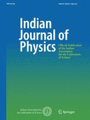
INDIAN JOURNAL OF PHYSICS
Elevating Physics Discourse Across BordersINDIAN JOURNAL OF PHYSICS, published by the Indian Association for Cultivation of Science, serves as a pivotal platform for researchers and scholars in the field of physics and astronomy. With its ISSN 0973-1458 and E-ISSN 0974-9845, this journal is committed to presenting innovative research and developments across diverse topics in physics, covering both theoretical and experimental studies. The journal has made its mark in the academic community, evidenced by its classification in the Q3 category within the Physics and Astronomy domain as of 2023, and ranks #100 out of 243 in the Scopus curated database, placing it in the 59th percentile. Spanning from 2005 to 2024, the INDIAN JOURNAL OF PHYSICS aims to foster knowledge exchange and stimulate discussions among physicists and scientific enthusiasts. Whether you are a researcher looking to publish your findings, a professional seeking updates in your field, or a student eager to explore varying aspects of physics, this journal is an invaluable resource contributing significantly to the understanding and advancement of physics in India and beyond.

ATOMIC DATA AND NUCLEAR DATA TABLES
Navigating the complexities of atomic and nuclear phenomena.ATOMIC DATA AND NUCLEAR DATA TABLES, published by Academic Press Inc Elsevier Science, is a leading journal in the fields of atomic and molecular physics, as well as nuclear and high energy physics. With an ISSN of 0092-640X and an E-ISSN of 1090-2090, this esteemed journal has been providing comprehensive data tables and significant research insights since its establishment in 1969. Spanning until 2024, it continues to serve as an invaluable resource for researchers and professionals aiming to deepen their understanding of atomic interactions and nuclear processes. Holding a commendable Q2 ranking in both relevant categories, it is recognized for its impact, reflected in Scopus rankings, where it ranks 25th out of 87 in Nuclear and High Energy Physics, and 87th out of 224 in Atomic and Molecular Physics. While it does not offer open access, the journal remains a crucial repository for high-quality data essential for scientific endeavors and advancements in these complex fields.
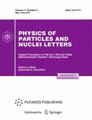
Physics of Particles and Nuclei Letters
Advancing the Frontiers of Particle and Nuclear PhysicsPhysics of Particles and Nuclei Letters, published by PLEIADES PUBLISHING INC, serves as a pivotal platform for the dissemination of cutting-edge research in the domains of particle and nuclear physics. With an ISSN of 1547-4771 and an E-ISSN of 1531-8567, this journal has been actively contributing to the scientific community since its inception in 2006 and continues to be influential, with a convergence period extending to 2024. While its open access options are limited, the journal is recognized for its rigorous peer-review process and commitment to quality, as reflected in its Scopus rankings across multiple categories, including a Q3 in Nuclear and High Energy Physics and Radiation in 2023. The journal is positioned to be a vital resource for researchers aiming to bridge theoretical understanding with practical applications in these highly specialized fields, fostering advances that resonate within atomic and molecular physics, radiology, and beyond. Its relevance continues to grow as the global scientific community seeks innovative solutions to complex problems in modern physics.
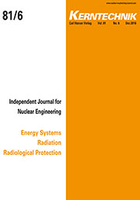
KERNTECHNIK
Empowering academics to shape the landscape of nuclear safety.KERNTECHNIK is a distinguished journal specializing in the fields of Materials Science, Nuclear and High Energy Physics, and Nuclear Energy and Engineering. Published by WALTER DE GRUYTER GMBH, this journal has continuously contributed to advancing knowledge and research in nuclear technologies and related safety measures since its inception in 1969. With an ISSN of 0932-3902 and an E-ISSN of 2195-8580, KERNTECHNIK serves as a vital platform for academics and professionals seeking to delve into both theoretical and practical aspects of nuclear science and technology. Though listed in the Q4 quartile across multiple categories in 2023, the journal's commitment to publishing rigorously peer-reviewed articles ensures that it remains a respected resource, facilitating academic discourse and innovation. It is particularly aligned for those conducting research or working in safety, risk, reliability, and quality within the nuclear sector, and its extensive historical archive allows for in-depth exploration of evolving technologies. Aimed at foster cooperation between researchers, policymakers, and industry experts globally, KERNTECHNIK continues to play an important role in shaping the future of nuclear science.