NURSING RESEARCH
Scope & Guideline
Transforming healthcare through innovative nursing research.
Introduction
Aims and Scopes
- Evidence-Based Nursing Practices:
The journal emphasizes research that contributes to evidence-based practices in nursing, aiming to enhance care delivery and patient outcomes. - Mental Health and Psychosocial Well-being:
This area includes studies on mental health conditions, coping mechanisms, and the psychosocial aspects of care, reflecting the growing recognition of mental health in nursing. - Innovative Interventions and Technologies:
Research focusing on the development and evaluation of novel interventions, including telehealth and virtual reality applications, showcases the journal's commitment to integrating technology in nursing. - Burnout and Work Environment:
Several studies address the impact of work environments on nurse burnout and job satisfaction, highlighting the importance of nurse well-being in providing quality patient care. - Chronic Disease Management:
The journal publishes research on managing chronic diseases, which is increasingly relevant given the aging population and rising prevalence of chronic conditions. - Cultural Competence and Diversity in Nursing:
The journal includes investigations into cultural competence and care delivery in diverse populations, reflecting the need for culturally sensitive nursing practices. - Patient-Centered Care:
Research on patient-centered approaches, including shared decision-making and personalized care plans, underscores the journal's focus on enhancing patient experiences. - Nursing Education and Professional Development:
The journal also covers topics related to nursing education, including curriculum development and training programs to prepare nurses for contemporary challenges.
Trending and Emerging
- Telehealth and Remote Care:
The COVID-19 pandemic has accelerated research into telehealth services, with studies exploring the effectiveness, feasibility, and user experiences of remote care solutions. - Mental Health and Resilience:
Research focusing on mental health, including resilience among nurses and patients, is on the rise, highlighting the importance of coping mechanisms in healthcare settings. - Interdisciplinary Approaches:
There is an increasing trend towards interdisciplinary research that incorporates insights from psychology, social work, and public health, emphasizing the collaborative nature of modern healthcare. - Innovative Technologies in Nursing Education:
Research into the use of innovative technologies, such as virtual reality and simulation-based learning, in nursing education is gaining traction, reflecting the need for updated training methodologies. - Health Disparities and Social Determinants of Health:
Emerging themes include investigations into health disparities and the impact of social determinants on health outcomes, which are increasingly relevant in a diverse and globalized society. - Workplace Well-being and Support Systems:
Research focusing on workplace well-being, including support systems for nurses to combat burnout and enhance job satisfaction, is becoming more prominent as the nursing profession faces increased pressures. - Patient Engagement and Empowerment:
Studies are increasingly emphasizing patient engagement and empowerment strategies, reflecting a shift towards more collaborative care models that prioritize patient voices and preferences.
Declining or Waning
- Traditional Physical Health Interventions:
Research focused solely on traditional physical health interventions, such as basic wound care or medication administration, seems to be decreasing as the field moves towards more holistic and technology-integrated approaches. - Generalized Quality of Life Studies:
There appears to be less emphasis on generalized studies of quality of life without specific contextual factors; the trend is shifting towards more nuanced explorations linked to specific diseases or interventions. - Basic Pain Management Techniques:
Studies that merely address basic pain management techniques without incorporating innovative or comprehensive strategies are becoming less common as the field evolves. - Non-Research-Based Commentary Pieces:
Fewer opinion pieces or commentaries that lack empirical research support are being published, indicating a shift towards more evidence-driven discussions. - Overly Broad Surveys on Nursing Practices:
Surveys that cover broad topics without focused hypotheses or specific outcomes are declining in favor of more targeted research that provides actionable insights.
Similar Journals

Nursing Practice Today
Empowering Nursing Excellence TodayNursing Practice Today is an esteemed journal published by Tehran University of Medical Sciences, focusing on the dynamic and essential field of nursing. Since its transition to Open Access in 2015, this journal has facilitated wider dissemination of knowledge, allowing researchers, professionals, and students alike to engage with pioneering studies and practical advancements in nursing care. With an impact factor that reflects its relevance within the academic community, it holds a Q3 ranking in the nursing (miscellaneous) category as of 2023, and ranks 77th out of 139 in general nursing according to Scopus, placing it within the 44th percentile for its field. Nursing Practice Today publishes high-quality research, reviews, and case studies that aim to elevate nursing practices and improve patient outcomes across a variety of healthcare settings. As a platform that champions the ongoing education and professional development of nursing specialists, this journal plays a pivotal role in shaping contemporary nursing practice and addressing emerging challenges in healthcare.
Canadian Journal of Nursing Research
Advancing nursing science through rigorous research.The Canadian Journal of Nursing Research is a leading academic publication in the field of nursing, dedicated to advancing the discipline through rigorous research and scholarly inquiry. Published by SAGE Publications Inc, this journal holds a commendable impact factor, reflecting its significant influence in nursing and broader medical fields, categorized as Q2 in both Nursing and Miscellaneous Medicine as of 2023. The journal, identified by its ISSN 0844-5621 and E-ISSN 1705-7051, has been a crucial platform for high-quality research since its inception in 1988, providing insights that drive evidence-based practice and policy development. Researchers, professionals, and students looking to remain at the forefront of nursing knowledge will find valuable studies and discussions within its pages, offering both theoretical perspectives and practical applications. While this journal does not currently offer open access, its content remains accessible through academic libraries and institutions, fostering a collaborative environment for advancing nursing science and improving patient care.
Journal of Pediatric Nursing-Nursing Care of Children & Families
Shaping the future of pediatric health, one study at a time.The Journal of Pediatric Nursing - Nursing Care of Children & Families, published by Elsevier Science Inc, is a leading academic journal that focuses on the essential practices and advancements in pediatric nursing. With an ISSN of 0882-5963, this prestigious journal has been at the forefront of pediatric healthcare literature since its inception in 1986, offering critical insights and research findings that address the needs of children and families. Recognized in 2023 with a Q1 ranking in Pediatrics and ranked 6th out of 25 in the Scopus Nursing and Pediatrics category, it reflects its significance and impact in these fields. The journal prioritizes high-quality research that enhances nursing care practices, advocates for child and family-centered approaches, and promotes evidence-based guidelines. While the journal currently does not have an open access model, it remains a vital resource for researchers, practitioners, and students dedicated to improving pediatric health outcomes. With a commitment to scholarly excellence, the Journal of Pediatric Nursing continues to contribute to the evolving landscape of nursing care for children globally.
International Journal of Nursing Knowledge
Connecting research and practice for impactful nursing.The International Journal of Nursing Knowledge, published by WILEY, stands as a leading platform for advancing nursing scholarship, offering critical insights in both fundamentals and innovative research within the nursing field. With an ISSN of 2047-3087 and an E-ISSN of 2047-3095, this journal has garnered an impressive reputation, frequently ranking in the Q1 and Q2 quartiles across pivotal areas such as Fundamentals and Skills, and Research and Theory, respectively. Notably, it holds a Scopus rank of #5 in Nursing Fundamentals and Skills and #8 in Nursing Research and Theory, reflecting its high impact and relevance in shaping nursing education and practice. Since its inception in 2012, the journal has been devoted to fostering scholarly communication and knowledge across the nursing discipline, complementing both research and practical know-how. The journal is also aligned with open access principles, ensuring that cutting-edge nursing knowledge is accessible to a broad audience. With a commitment to rigor and excellence, the International Journal of Nursing Knowledge serves as an essential resource for nursing professionals, researchers, and students alike, dedicated to enhancing patient care through evidence-based practice.
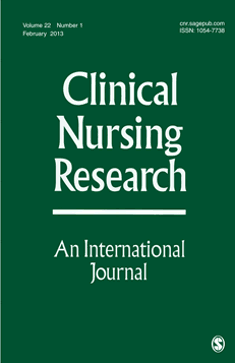
Clinical Nursing Research
Fostering innovation in nursing scholarship since 1992.Clinical Nursing Research is a premier academic journal dedicated to advancing the discipline of nursing through rigorous research and evidence-based practice. Published by SAGE Publications Inc, this journal has been a cornerstone in the field since its inception in 1992, with a commitment to providing high-quality research that informs clinical practice and nursing education. With an impressive Scopus ranking of #40 out of 139 in the general nursing category and a percentile rank of 71, it represents a significant contribution to the nursing literature. Although not an open-access journal, Clinical Nursing Research facilitates access through institutional subscriptions, ensuring that critical findings are disseminated widely. The journal’s objectives include fostering innovation and promoting best practices in nursing, making it an indispensable resource for researchers, practitioners, and students alike. As it continues to evolve through 2024 and beyond, Clinical Nursing Research remains at the forefront of nursing scholarship, addressing the complexities of healthcare in a rapidly changing world.

Nursing Reports
Elevating Nursing Practices Through Open AccessNursing Reports is a prominent open-access journal dedicated to disseminating scholarly research in the field of nursing and healthcare. Published by MDPI since 2020, the journal is based in Italy and features an ISSN of 2039-439X and an E-ISSN of 2039-4403. With rapid advancements in nursing practices and education, the journal serves as a vital platform for researchers, professionals, and students to share innovative findings and insights that enhance patient care and nursing methodologies. Recognized for its quality, the journal is ranked in the Q2 category in Nursing (Miscellaneous) for 2023, alongside a respectable position in the Scopus ranks, holding place #53 out of 139 in General Nursing, placing it in the 62nd percentile. The journal's commitment to fostering a collaborative research environment is underscored by its open-access model, allowing for unimpeded access to cutting-edge nursing research worldwide. As "Nursing Reports" continues to grow from its inception into its converged years spanning from 2014 to 2024, it plays a crucial role in the progression of the nursing profession and the overall healthcare landscape.

Revista de Pesquisa-Cuidado e Fundamental Online
Connecting researchers to enhance global healthcare practices.Revista de Pesquisa-Cuidado e Fundamental Online, published by the Universidade Federal do Estado do Rio de Janeiro, is a prominent journal dedicated to advancing knowledge and practice in the field of nursing and healthcare. With its Open Access model since 2009, this journal provides an invaluable platform for researchers, professionals, and students to share innovative findings and insights that address critical issues in patient care and nursing education. Though its specific impact factor is not listed, the journal's commitment to open access fosters greater visibility and accessibility of research, ensuring that vital information reaches a wide audience. The journal aims to enhance the quality of care and to support the ongoing development of nursing as a scientific discipline. Located in Rio de Janeiro, Brazil, the journal also reflects regional health paradigms while contributing to global discourse in healthcare research.
JOURNAL OF CLINICAL NURSING
Empowering practitioners with essential clinical knowledge.The JOURNAL OF CLINICAL NURSING, published by WILEY, stands as a prestigious platform within the realm of nursing and medical research in the United Kingdom. With an ISSN of 0962-1067 and an E-ISSN of 1365-2702, this journal has been a cornerstone of scholarly communication since its inception in 1992. Spanning a comprehensive scope of clinical nursing practices and innovations, it consistently ranks in the first quartile (Q1) according to the latest metrics in both the disciplines of nursing and general medicine. The journal holds a commendable Scopus ranking of 8th out of 139 journals in General Nursing, placing it within the 94th percentile, which underscores its importance and influence in the academic community. Although it does not currently offer Open Access options, the JOURNAL OF CLINICAL NURSING provides an invaluable resource for researchers, healthcare professionals, and students, aiming to enhance clinical practices and address contemporary challenges within the field of nursing.
International Journal of Nursing Practice
Advancing nursing excellence through innovative research.International Journal of Nursing Practice, published by WILEY, is a premier academic journal dedicated to the field of nursing, with a keen emphasis on innovative nursing practices and advancements in healthcare. Established in 1995, the journal has successfully bridged a vital gap in nursing research and practice, featuring rigorous peer-reviewed articles that cater to both academic and clinical audiences. Rated as a Q1 journal in Nursing (miscellaneous) for 2023, it ranks at an impressive #29 out of 139 in General Nursing on Scopus, placing it firmly within the top 21% of its category. The journal serves as an essential resource for nursing professionals, researchers, and students alike, fostering evidence-based practices and enriching the global discourse in nursing. With an increasing focus on interdisciplinary work, the International Journal of Nursing Practice aims to enhance the quality of care provided to patients and support the continuous education of healthcare providers. Stay updated with cutting-edge research and share your contributions to this dynamic field!
Asian Oncology Nursing
Advancing Oncology Nursing Knowledge for Future GenerationsAsian Oncology Nursing is a pivotal journal dedicated to advancing the field of oncology nursing across the Asian continent and beyond. Published by the esteemed Korean Oncology Nursing Society, this journal serves as a platform for researchers, clinicians, and educators to disseminate groundbreaking findings and innovative practices in cancer care and nursing. With an ISSN of 2287-2434 and E-ISSN 2093-7776, it is committed to enhancing the knowledge and skills of oncology nursing professionals, thereby improving patient outcomes. Although currently not operating as an open-access platform, the journal emphasizes the significance of bridging the research gap in oncology nursing, fostering collaboration among professionals in the field. Given the increasing importance of culturally competent care in oncology, Asian Oncology Nursing positions itself as an essential resource for those who strive to elevate standards of care and educate future generations of oncology nurses.