
Operators and Matrices
metrics 2024
Bridging Ideas and Methodologies in Advanced Mathematics
Introduction
Operators and Matrices is a distinguished academic journal dedicated to the fields of algebra, number theory, and analysis, published by ELEMENT. Operating from Croatia since its inception in 2009, this journal provides a vital platform for groundbreaking research, aiming to foster advancements in mathematics through the publication of high-quality articles. With an ISSN of 1846-3886, it has secured a respectable Q3 category ranking in both the Algebra and Number Theory and Analysis categories according to the latest metrics. Current Scopus rankings position it at #83/119 in Algebra and Number Theory and #153/193 in Analysis, indicating its growing influence in the academic community. Although it does not provide open access, the journal strives to promote a robust exchange of ideas and methodologies that illuminate complex mathematical concepts, thereby appealing to researchers, professionals, and students alike. By contributing to Operators and Matrices, scholars can place their work within a significant context, advancing their professional footprint in the mathematical landscape.
Metrics 2024
 0.350.600.6022
Metrics History
Rank 2024
Scopus
IF (Web Of Science)
JCI (Web Of Science)
Quartile History
Similar Journals
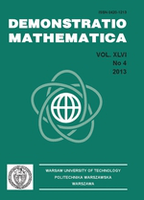
Demonstratio Mathematica
Championing Open Access in Mathematical ResearchDemonstratio Mathematica, published by DE GRUYTER POLAND SP Z O O, is an esteemed open-access journal in the field of mathematics, with an ISSN of 0420-1213 and E-ISSN 2391-4661. Established in 1996 and providing open access since 2009, it has become a vital platform for disseminating innovative research and advancements in various areas of mathematics. With a commendable Scopus ranking of 85/399 in General Mathematics and a 2023 Category Quartile of Q2, it stands at the forefront of the mathematical community, demonstrating a significant impact within the top 78th percentile. The journal aims to foster a deeper understanding and appreciation of mathematical concepts and their applications, catering to both seasoned researchers and emerging scholars. Located in Warsaw, Poland, Demonstratio Mathematica not only enriches the academic discourse but also strengthens collaborative efforts within the international mathematics community, making it an essential resource for those seeking to expand their knowledge and research output.

HOUSTON JOURNAL OF MATHEMATICS
Connecting Researchers in the Heart of HoustonHOUSTON JOURNAL OF MATHEMATICS, published by the University of Houston, serves as a valuable platform for disseminating significant findings in the field of mathematics, specifically within the realm of miscellaneous mathematics. Despite its current categorization in Q4 for 2023, the journal plays a crucial role in fostering academic discussion and exploration among researchers, professionals, and students alike. With its ISSN 0362-1588, the journal has been publishing original research since 1996, with a recent gap filled from 2022 to 2023, thereby continuing to contribute to the mathematical community. While it does not currently offer open access options, the journal's commitment to quality research maintains its relevance within the field and invites submissions that can elevate its standing. Located in the vibrant city of Houston, Texas, the journal not only emphasizes theoretical advancements but also encourages applied mathematical research that intersects with other disciplines, enhancing its significance and reach.
POTENTIAL ANALYSIS
Elevating Understanding in Potential TheoryPOTENTIAL ANALYSIS is a prestigious academic journal dedicated to the field of mathematical analysis, published by Springer. With the ISSN 0926-2601 and E-ISSN 1572-929X, this journal serves as a pivotal platform for scholars to disseminate cutting-edge research and advancements in potential theory, providing insights that bridge theoretical mathematics and applied analysis. Since its inception in 1992, POTENTIAL ANALYSIS has consistently maintained a high impact factor, boasting a Q1 rating in the 2023 category of Analysis, signifying its influence and reputation among its peers. It ranks 76 out of 193 in the Mathematics Analysis category in Scopus, placing it within the 60th percentile, which attests to the journal's commitment to quality and rigorous peer-review processes. While access to its articles is not open, it remains an essential resource for researchers, professionals, and students aiming to expand their understanding of potential theory and its applications in various fields. The journal's ongoing publication until 2024 promises a continual flow of innovative research, underpinning its role as an invaluable asset in the mathematical community.

Annales Fennici Mathematici
Empowering the Future of Mathematical ResearchAnnales Fennici Mathematici is a prestigious academic journal published by Suomalainen Tiedeakatemia based in Helsinki, Finland. With an ISSN of 2737-0690 and an E-ISSN of 2737-114X, this journal has quickly established itself as an essential resource in the field of mathematics since its inception in 2021. It boasts an impressive Q1 categorization in Mathematics (miscellaneous) for 2023, highlighting its impact among top-tier mathematical publications. Currently, it holds a Scopus rank of #135 out of 399 in General Mathematics, placing it in the 66th percentile among its peers, ensuring visibility and relevance for its published works. The journal is committed to providing a platform for innovative research and the dissemination of mathematical discoveries, making it an invaluable resource for researchers, professionals, and students looking to expand their knowledge and engage with contemporary mathematical challenges.
Analysis Mathematica
Exploring the depths of analytical thought.Analysis Mathematica is a distinguished academic journal dedicated to the field of mathematics, focusing specifically on the varied aspects of analysis. Published by Springer International Publishing AG and based in Hungary, this journal has been an essential platform for scholarly communication since its inception in 1975. With a broad scope that encompasses theoretical developments and applications in mathematical analysis, it serves as a conduit for innovative research and discourse among mathematicians and researchers alike. While it currently holds a Q3 ranking in both Analysis and Miscellaneous Mathematics categories as of 2023, contributing authors are encouraged to elevate its impact through substantial contributions. Although not currently an open-access journal, Analysis Mathematica remains accessible through various academic databases, making it an invaluable resource for professionals, students, and researchers striving for excellence in mathematical analysis.
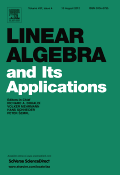
LINEAR ALGEBRA AND ITS APPLICATIONS
Elevating Mathematical Understanding Through Rigorous ScholarshipLINEAR ALGEBRA AND ITS APPLICATIONS, published by Elsevier Science Inc, is a prestigious journal that serves as a vital resource in the field of mathematics, specifically focusing on the areas of linear algebra and its myriad applications across various disciplines. Since its inception in 1968, this journal has established a solid reputation, achieving an impressive impact factor that places it in the Q1 category for Algebra and Number Theory as well as for Discrete Mathematics and Combinatorics in 2023, showcasing its significant contribution to these fields. The journal's rigorous peer-review process ensures that published works reflect the highest standards of scholarly research, further establishing it as a leading publication for mathematicians and researchers alike. Although it does not currently offer Open Access options, its wide-reaching audience can access invaluable findings and innovations within its pages. With a commitment to advancing knowledge and fostering innovation, LINEAR ALGEBRA AND ITS APPLICATIONS continues to be an essential platform for disseminating impactful research that shapes the future of mathematics.
Concrete Operators
Fostering Collaboration in the World of Concrete OperatorsConcrete Operators is an innovative academic journal published by DE GRUYTER POLAND SP Z O O, specializing in the fields of Analysis and Applied Mathematics. With an ISSN of 2299-3282, this open access journal has been dedicated to fostering scholarly communication since its inception in 2013. Concrete Operators aims to provide a platform for researchers, professionals, and students to explore and disseminate significant findings in mathematical analysis and its practical applications. Housed in Germany, with administrative offices located in Warsaw, Poland, the journal embraces a global audience. Notably, as of 2023, it holds a Q4 category ranking in the respective mathematical domains, reflecting its commitment to emerging research within the community. The journal's open access model enhances visibility and accessibility, encouraging collaboration and innovation among mathematicians. By bridging theoretical advances with practical implementations, Concrete Operators plays a vital role in the advancement of mathematical sciences.

Journal of Mathematical Inequalities
Innovating Insights in Mathematical InequalitiesJournal of Mathematical Inequalities, published by ELEMENT, is a distinguished journal dedicated to advancing the field of mathematical analysis through the exploration of inequalities. Based in Croatia, this journal has carved out a significant niche since its inception in 2011, with a strong focus on innovative research that spans various applications of inequalities in mathematics. As a testament to its academic rigor, it holds a ranking of Q3 in Analysis, and occupies the 52nd position out of 193 journals in the same category according to Scopus, placing it in the top 73rd percentile. Researchers and students alike will find valuable insights and contributions within its pages, making it an essential resource for anyone engaged in this dynamic and complex field. The journal remains committed to open dialogue and knowledge dissemination, enhancing the worldwide discussion on mathematical inequalities.

Journal of Mathematical Analysis
Advancing the Frontiers of Mathematical InquiryThe Journal of Mathematical Analysis, published by UNIV PRISHTINES in Serbia, offers a dedicated platform for the dissemination of innovative research in the fields of mathematical analysis and applied mathematics. With an ISSN of 2217-3412 and a convergence period from 2020 to 2024, this journal aims to foster significant advancements in both theoretical and practical aspects of mathematics. Categorized in the Q4 quartile for Analysis, Applied Mathematics, and miscellaneous Mathematics as of 2023, it serves as an essential resource for researchers and professionals alike, providing key insights into the evolving landscape of mathematical inquiry. Although it is an open access journal, facilitating global readership, its Scopus rankings reflect its emerging status, with rankings indicating a 51st percentile in Mathematics (miscellaneous) and 28th percentile in Applied Mathematics. This journal not only aims to contribute to academic discourse but also seeks to bridge gaps between mathematical theory and real-world applications, making it a vital resource for students and professionals engaged in the complexities of mathematical research.

ACTA SCIENTIARUM MATHEMATICARUM
Fostering Connections Between Theory and PracticeACTA SCIENTIARUM MATHEMATICARUM, published by SPRINGER BIRKHAUSER in Switzerland, is a distinguished journal focusing on the fields of mathematical analysis and applied mathematics. With an ISSN of 0001-6969 and an E-ISSN of 2064-8316, this journal serves as a critical platform for disseminating high-quality research that bridges theoretical and practical aspects of mathematics. Although currently categorized in the Q3 quartile for both Analysis and Applied Mathematics as of 2023, the journal strives to enhance its impact on the mathematical community by offering a perfect blend of rigorous research and innovative applications. Researchers, professionals, and students can benefit from the journal’s commitment to advancing knowledge in mathematics, despite the absence of open-access options. The mailing address for correspondences is 233 SPRING STREET, 6TH FLOOR, NEW YORK, NY 10013. As mathematics continues to evolve, ACTA SCIENTIARUM MATHEMATICARUM positions itself as a valuable resource for those looking to contribute to and stay informed about the latest developments in this vibrant field.