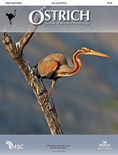
OSTRICH
metrics 2024
Elevating Ecological Understanding Since 1930
Introduction
OSTRICH, a distinguished journal published by Taylor & Francis Ltd, serves as a pivotal platform for disseminating research in the fields of ecology, evolution, behavior, and systematics. With an ISSN of 0030-6525 and an E-ISSN of 1727-947X, this journal has been contributing vital insights to the scientific community since its inception in 1930. Maintained in the UK, OSTRICH holds a respectable Q3 category ranking in the 2023 Ecology, Evolution, Behavior, and Systematics quartiles and ranks 408th out of 721 within its scientific domain according to Scopus, showcasing a competitive position within the 43rd percentile. OSTRICH is committed to publishing high-quality research that informs conservation efforts and biodiversity studies, making it an essential resource for researchers, professionals, and students interested in avian biology and related ecological fields. While not currently an open-access journal, OSTRICH offers varied access options through institutions and libraries, further widening its reach and impact within the scientific community. We invite academics and practitioners to explore its valuable articles that drive forward innovations in avian research.
Metrics 2024
 0.391.301.1030
Metrics History
Rank 2024
Scopus
IF (Web Of Science)
JCI (Web Of Science)
Quartile History
Similar Journals

ZOOLOGICHESKY ZHURNAL
Fostering a deeper understanding of life’s diversity and evolution.Zoologichesky Zhurnal, a prominent journal in the field of Ecology, Evolution, Behavior and Systematics, has been a vital publication since its inception in 1950. Published by MAIK Nauka-Interperiodica in the Russian Federation, this journal has established a notable reputation in disseminating scientific research and advancing knowledge in zoology. With its coverage spanning from 1950 to 2023, and a specific convergent focus during 1982-1983, this journal contributes significantly to the ecological and evolutionary sciences, even though it currently holds a Q4 classification in the 2023 category quartiles, indicating its niche positioning among peers. Researchers and students engaged in the study of biological sciences, particularly those interested in the dynamics of ecosystems, behavior of species, and evolutionary processes, will find valuable insights and original research articles within its pages. While access to this esteemed journal is not open, it remains an essential resource for those seeking to deepen their understanding of zoological sciences.

AMPHIBIAN & REPTILE CONSERVATION
Connecting Researchers for Global Conservation ImpactAMPHIBIAN & REPTILE CONSERVATION, published by the Amphibian Conservation Research Center & Lab, is a leading journal dedicated to the field of herpetology and environmental conservation. With an ISSN of 1083-446X and an E-ISSN of 1525-9153, this journal serves as a vital resource for researchers, conservationists, and students interested in the preservation of amphibian and reptile species. The journal has achieved remarkable rankings, categorized in the Q2 quartile for Animal Science and Zoology, Ecology, and Nature and Landscape Conservation as of 2023, reflecting its significant contribution to the scientific community. Over the converged years from 2016 to 2024, the journal has established itself as an integral platform for disseminating research findings, fostering collaboration, and enhancing the understanding of biodiversity and ecosystem dynamics. By embracing an open-access approach, AMPHIBIAN & REPTILE CONSERVATION ensures that critical research is readily available to a global audience, promoting informed conservation efforts and policy advocacy to safeguard these vital species amidst their declining populations.
BOTHALIA
Fostering innovation in plant science and systematics.BOTHALIA is a prominent open-access journal dedicated to advancing the fields of Ecology, Evolution, Behavior, and Systematics, as well as Plant Science. Published by the South African National Biodiversity Institute (SANBI), this journal has been disseminating valuable research since 1978 and has embraced open access since 2014 to enhance the visibility and accessibility of scientific knowledge. With an ISSN of 0006-8241 and E-ISSN of 2311-9284, BOTHALIA plays a pivotal role in promoting biodiversity research in South Africa and beyond. In the recent Scopus rankings, it has been positioned at Q4 in both relevant categories, highlighting its contributions within the broader scientific community, despite being in its growing phase amidst competitive rankings. The journal aims to publish high-quality articles that address critical issues in biodiversity and ecological sciences, making it an essential resource for researchers, professionals, and students committed to understanding and managing our planet's biological heritage.

BMC Zoology
Empowering researchers with cutting-edge insights.BMC Zoology, published by BMC, is a distinguished open-access journal that has been advancing the field of zoological research since its inception in 2016. With an impressive Q2 ranking in both Animal Science and Zoology categories as of 2023, the journal occupies a significant position in the academic landscape, engaging a global readership dedicated to the exploration of animal biology. Based in the United Kingdom, BMC Zoology prides itself on providing a platform for innovative research, fostering collaboration among scientists, and facilitating access to high-quality scholarly articles. Researchers and practitioners in zoology can benefit from its extensive repository of articles that span various areas including conservation, ecology, and evolutionary biology. As an essential resource for scholars and students alike, BMC Zoology commits to enhancing the dissemination of knowledge in the zoological sciences through its open-access model, ensuring widespread access to cutting-edge research findings.
AFRICAN JOURNAL OF HERPETOLOGY
Bridging Research and Conservation for African SpeciesThe AFRICAN JOURNAL OF HERPETOLOGY, published by TAYLOR & FRANCIS LTD, serves as a pivotal resource in the field of herpetology, encompassing the study of reptiles and amphibians. With an ISSN of 2156-4574 and an E-ISSN of 2153-3660, this journal offers a platform for researchers to disseminate their findings and advance knowledge in this dynamic area of biology. Recognized in 2023 with a category quartile ranking of Q2 in Animal Science and Zoology and Q3 in Ecology, Evolution, Behavior, and Systematics, the journal highlights impactful research to a global audience. By providing access to robust, peer-reviewed content, the journal contributes significantly to ongoing debates and discoveries, thus appealing to academics, professionals, and students alike. The journal's converged publication years, spanning from 1996 to 2000 and from 2002 to 2024, signify a long-standing commitment to the field, ensuring that emerging trends and critical issues in herpetology remain at the forefront. Engaging with this journal not only enhances your understanding of amphibian and reptile biology but also connects you to a community dedicated to the conservation and sustainable management of these vital species.

MALIMBUS
Exploring the wonders of West African birdlife.MALIMBUS is a peer-reviewed journal published by the West African Ornithological Society, focusing on the study of avian biology and conservation. It aims to disseminate important research findings that contribute to the understanding of bird species, their habitats, and the challenges they face across West Africa and beyond. Although currently not available in an open-access format, the journal is an invaluable resource for ornithologists, ecologists, and industry professionals keen on advancing their understanding of avian science. Those engaged in research on bird migration, breeding behaviors, and conservation strategies will find MALIMBUS to be a vital platform for sharing innovative ideas and fostering collaborations. With its commitment to quality and rigorous review processes, MALIMBUS is an essential reference for anyone dedicated to studying and preserving avian diversity.

ANNALES ZOOLOGICI FENNICI
Shaping the Future of Ecological StudiesANNALES ZOOLOGICI FENNICI, published by the Finnish Zoological Botanical Publishing Board, is a prominent scientific journal dedicated to advancing the fields of Animal Science, Zoology, Ecology, Evolution, Behavior, and Systematics. Based in Finland and serving an international audience, this journal has been an essential resource since its inception in 1974, offering valuable insights into biodiversity, conservation, and ecological dynamics. While it holds a respectable Q3 quartile ranking across several relevant categories in 2023, its impactful contributions to the scientific community continue to promote critical discussions and foster research collaborations. Although the journal is not currently open access, its robust indexing in Scopus and recognition within the academic community underscore its significance. As a researcher, professional, or student, engaging with the ANNALES ZOOLOGICI FENNICI not only enriches your knowledge but also aligns you with the forefront of zoological research and conservation studies.
ANIMAL BIOLOGY
Bridging Research and Ecological Awareness in Animal BiologyANIMAL BIOLOGY is a distinguished journal published by BRILL, focusing on the dynamic fields of Animal Science and Zoology, as well as Ecology, Evolution, Behavior, and Systematics. With an ISSN of 1570-7555 and an E-ISSN of 1570-7563, this quarterly journal serves as a pivotal platform for researchers and professionals seeking to contribute to the understanding of animal biology across diverse ecological contexts. The journal is recognized with a 2023 Scopus ranking of #234 out of 490 in the Animal Science and Zoology category, placing it within the 52nd percentile, alongside a rank of #409 out of 721 in Ecology, marking a solid contribution to the field. Although it currently holds a Q3 quartile in both categories, its commitment to quality research and novel insights continues to bolster its significance within the academic community. The open access option coupled with its publication history from 2003 to 2024 ensures a wide dissemination of knowledge, drawing in a global audience of researchers, professionals, and students eager to explore the intricacies of animal biology. By promoting high-quality discussions and innovative studies, ANIMAL BIOLOGY plays an essential role in advancing the understanding of life sciences and the evolution of biodiversity.
Biosystems Diversity
Connecting Scholars in the Quest for BiodiversityBiosystems Diversity is an esteemed open access journal published by the Oles Honchar Dnipro National University since 2009, based in Ukraine. Focusing on a wide array of topics within the fields of Ecology, Evolution, Behavior, and Systematics, the journal aims to foster the dissemination of cutting-edge research and innovative methodologies in understanding biodiversity and ecological interactions. With its ISSN 2519-8513 and E-ISSN 2520-2529, Biosystems Diversity has seen a consistent growth trajectory, earning a Q3 category for Ecology and a Q4 classification for Ecology, Evolution, Behavior and Systematics as of 2023, reflecting its dedication to high standards of scholarly excellence. The journal's rankings in Scopus solidify its relevance in the academic community, providing researchers and practitioners with vital insights into contemporary environmental challenges. As it converges towards its 2024 target, Biosystems Diversity continues to empower scientists, students, and professionals alike to explore new dimensions in the study of biological systems, offering crucial open access options for broader reach and engagement.
BIRD STUDY
Pioneering research in avian ecology and conservation.BIRD STUDY, an esteemed journal published by Taylor & Francis Ltd, stands at the forefront of avian research, contributing significantly to the fields of ecology, evolution, behavior, and conservation. With its ISSN 0006-3657 and E-ISSN 1944-6705, this journal has been a cornerstone of ornithological studies since its inception in 1954 and continues to provide a critical platform for the dissemination of knowledge through 2024 and beyond. It holds a respectable Q3 quartile ranking in both Ecology, Evolution, Behavior and Systematics and Nature and Landscape Conservation, reflecting its pivotal role in the academic community. While the journal is not open access, it continues to attract submissions from a diverse array of researchers and professionals eager to share their findings on the intricate and dynamic interactions of birds within their ecosystems. As the global focus on biodiversity and conservation intensifies, BIRD STUDY remains dedicated to fostering knowledge and encouraging evidence-based practices that aim to protect avian species and their habitats.