Probiotics and Antimicrobial Proteins
metrics 2024
Bridging Microbiology and Health for a Better Tomorrow
Introduction
Probiotics and Antimicrobial Proteins, published by SPRINGER, is a pivotal journal dedicated to the exploration and advancement of research in the fields of microbiology, molecular biology, and molecular medicine. With a strong impact reflected in its Q2 categorization for 2023 across multiple disciplines, this journal serves as an essential platform for disseminating innovative findings related to probiotics, antimicrobial peptides, and their implications in health and disease management. Spanning its converged years from 2009 to 2024, the journal provides impactful insights that cater to a broad audience including researchers, healthcare professionals, and students who are eager to explore the intersections of microbiological science and therapeutic applications. While currently offering subscription access, the relevance and quality of the published articles ensure that it remains an indispensable resource for those seeking to stay at the forefront of microbial research and its practical applications.
Metrics 2024
 0.914.405.0052
Metrics History
Rank 2024
Scopus
IF (Web Of Science)
JCI (Web Of Science)
Quartile History
Similar Journals

Journal of Future Foods
Advancing the frontiers of food innovation.Welcome to the Journal of Future Foods, a prominent peer-reviewed publication dedicated to advancing knowledge and innovation within the realms of Agricultural and Biological Sciences, Food Science, and Nutrition and Dietetics. Published by KEAI PUBLISHING LTD in China, this journal has rapidly achieved a distinguished reputation, reflected in its impressive Q1 category ranking for both Agricultural and Biological Sciences and Food Science, along with a strong standing in Nutrition and Dietetics. The journal, which spans the period from 2021 to 2025, is committed to fostering interdisciplinary research that addresses the challenges and opportunities presented by the future of food. With a focus on open access, the Journal of Future Foods aims to disseminate crucial findings and foster collaborative dialogue among researchers, professionals, and students alike. By submitting your work, you not only contribute to cutting-edge advancements in the field but also join a vibrant community engaged in redefining the future of food systems.
ARCHIVES OF MICROBIOLOGY
Elevating Research Standards in Microbial StudiesThe Archives of Microbiology, published by Springer, is a reputable journal in the field of microbiology, serving as a vital platform for the dissemination of groundbreaking research and critical reviews since its inception in 1974. With an ISSN of 0302-8933 and an E-ISSN of 1432-072X, this journal operates out of Germany and maintains a global reach, promoting high-quality scholarship across multiple disciplines, including biochemistry, genetics, and molecular biology, as evidenced by its Q2 ranking in Medicine (miscellaneous) and consistent Q3 placements in other categories in 2023. Although the journal does not offer open access options, its rigorous peer-review process ensures that published articles are of the highest standard, making it an essential resource for researchers, professionals, and students keen on advancing their understanding of microbial sciences. As the journal converges toward 2024, it remains committed to fostering innovative microbiological research and facilitating interdisciplinary dialogue within the scientific community.
Foods
Exploring the Science of Nutrition and Sustainability.Foods is a premier open access journal published by MDPI, based in Switzerland, that has been at the forefront of disseminating high-quality research in the fields of food science, health professions, and plant science since its establishment in 2012. With an impressive convergence of interdisciplinary studies spanning various aspects of food, nutrition, and microbiology, the journal aims to provide a comprehensive platform for researchers and professionals to share innovative ideas and findings. Maintained as a Q1 journal in multiple categories for 2023, including Food Science and Health Professions, Foods has garnered significant recognition within the academic community, reflected in its strong Scopus rankings and percentiles across various disciplines. The journal not only promotes open access to enhance the visibility and accessibility of research but also encourages the exploration of sustainable food systems and health-related issues, thus contributing to essential discussions in today's society. For those looking to advance their understanding and expertise in food-related sciences, Foods serves as an enduring resource for groundbreaking studies and critical insights.
Food Frontiers
Innovating Food Production for Tomorrow's NeedsFood Frontiers, an esteemed publication in the Food Science domain, is proudly published by WILEY. Launched as an Open Access journal in 2020, it aims to facilitate the dissemination of high-quality research that influences contemporary food science and technology. The journal, with an E-ISSN of 2643-8429, has rapidly ascended to a Category Quartile ranking of Q1 in the Food Science category as of 2023, and boasts an impressive Scopus rank of #31 out of 389 in Agricultural and Biological Sciences, placing it in the 92nd percentile. The journal's mission is to explore innovative approaches to food production, safety, and sustainability, making it an essential resource for researchers, industry professionals, and students eager to stay at the forefront of food science advancements. With a commitment to open accessibility, Food Frontiers fosters collaboration and knowledge sharing across the globe, addressing the critical challenges and trends in feeding the world sustainably.
JOURNAL OF BIOTECHNOLOGY
Connecting researchers to shape the future of biotechnology.JOURNAL OF BIOTECHNOLOGY, published by Elsevier, stands as a premier platform in the fields of Applied Microbiology, Biotechnology, Bioengineering, and Medicine. With an ISSN of 0168-1656 and an E-ISSN of 1873-4863, this journal has significantly contributed to the advancement of biotechnological research since its inception in 1984 and continues to be a vital resource until 2024. Notably ranked in the Q2 quartile across multiple categories, it excels with impressive Scopus rankings, placing within the top 20% in Applied Microbiology and Biotechnology. This underscores its impact on both the scientific community and the ongoing developments in biotechnological applications. The journal encourages submissions that promote innovative research and practical insights, fostering collaboration among researchers, professionals, and students alike. Although it does not currently offer Open Access options, the journal remains highly regarded for its rigorous peer-review process and commitment to excellence in biotechnological literature.
AMB Express
Fostering Collaboration in Applied Sciences and BeyondAMB Express is an esteemed open-access journal published by Springer, dedicated to the fields of Applied Microbiology and Biotechnology as well as Biophysics. Since its inception in 2011, the journal has played a pivotal role in disseminating cutting-edge research and advancements, particularly for the scientific community in Germany and beyond. With a notable impact factor and ranking in the top quartile of its categories, AMB Express is recognized for its contributions to the disciplines, ranking 29th in Biochemistry, Genetics and Molecular Biology and 37th in Applied Microbiology and Biotechnology, reflecting its commitment to high-quality scientific inquiry. Researchers, professionals, and students will find a wealth of knowledge within its pages, benefiting from a diverse array of articles that stimulate innovation and collaboration. As the journal continues its convergence from 2011 to 2024, it remains a vital source for anybody looking to stay at the forefront of microbiological and biotechnological studies.
JOURNAL OF FOOD BIOCHEMISTRY
Exploring the Molecular Foundations of FoodJOURNAL OF FOOD BIOCHEMISTRY, published by Wiley-Hindawi in the United Kingdom, is a premier peer-reviewed journal dedicated to advancing the scientific understanding of food biochemistry. With an extensive publication history spanning from 1977 to 2024, this journal aims to bridge the gap between food science and biochemistry, making significant contributions to the understanding of food structure and composition. The journal boasts impressive Scopus rankings, placing it within the top quartile in Food Science and Q2 in Biophysics and Pharmacology, affirming its influence in the field. Notably, it provides critical insights that are vital for researchers, professionals, and students aiming to explore the biochemical processes involved in food production and safety. Despite not being open access, the journal ensures wide distribution of high-quality research, fostering collaboration and innovation within the scientific community. The impact factor reflects its relevance and quality, further solidifying its status as a key resource for cutting-edge research in food biochemistry.
FOOD AND AGRICULTURAL IMMUNOLOGY
Pioneering Research for Resilient Food SystemsFOOD AND AGRICULTURAL IMMUNOLOGY, published by Taylor & Francis Ltd, is a distinguished journal dedicated to the intersection of immunology and agricultural sciences, providing valuable insights in areas such as food safety, plant health, and disease resistance since its inception in 1989. Operating as an Open Access journal since 2017, it offers researchers and professionals unrestricted access to groundbreaking studies and reviews that advance the understanding of immunological responses in agricultural contexts. With its current quartile rankings of Q2 in Agronomy and Crop Science and Q3 in Food Science, as well as Q4 in Immunology, the journal has established itself as a vital resource for those aiming to enhance the quality and safety of food production through innovative research. By leveraging its impressive Scopus rankings across various categories, the journal promotes interdisciplinary collaboration and knowledge dissemination pertinent to both scientists and policymakers engaged in the agricultural and food sectors.
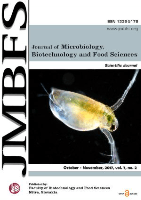
Journal of Microbiology Biotechnology and Food Sciences
Empowering scholars to tackle today's challenges in microbiology and food sciences.Journal of Microbiology Biotechnology and Food Sciences, published by SLOVAK UNIV AGRICULTURE NITRA, is a distinguished open-access journal dedicated to advancing scholarship in the interrelated fields of microbiology, biotechnology, and food sciences. With an ISSN of 1338-5178, this journal has been accessible to researchers worldwide since 2011, providing a platform for innovative studies that contribute to the understanding of microbial processes, biotechnological advancements, and food science applications. As reflected in its 2023 category quartiles, the journal holds notable positions in Biotechnology (Q3) and Food Science (Q3), and while it ranks in the lower quartiles for Microbiology (Q4) and Molecular Biology (Q4), it is committed to enhancing its impact within these domains. The journal encourages the submission of high-quality research articles, reviews, and short communications that address critical issues in these fields, making it an essential resource for academics, industry professionals, and students alike. Emphasizing both foundational research and practical applications, the Journal of Microbiology Biotechnology and Food Sciences stands as a vital contributor to the scientific discourse, fostering innovation and collaboration among researchers aiming to solve pressing challenges in food safety, biotechnology development, and microbial studies.

PHAGE-Therapy Applications and Research
Exploring Innovative Solutions Against Bacterial ResistancePHAGE-Therapy Applications and Research is a premier academic journal published by MARY ANN LIEBERT, INC, dedicated to advancing the field of phage therapy and its applications in combating bacterial infections. With a focus on applied microbiology, biotechnology, and virology, this journal meets the needs of researchers, clinicians, and students interested in innovative therapeutic strategies. Launched in 2020, the journal has quickly established itself with impressive rankings in the Scopus database, placing it in the first and second quartiles across various relevant categories, including Applied Microbiology and Biotechnology and Microbiology (medical), highlighting its significance in contemporary scientific discourse. Despite being a non-open access journal, PHAGE-Therapy Applications and Research provides a crucial platform for disseminating cutting-edge research and fostering collaboration among scholars in the United States and beyond. Its mission is to facilitate the rapid exchange of knowledge in the evolving landscape of bacteriophage applications to enhance our understanding and treatment of multidrug-resistant infections, making it an essential resource for anyone at the forefront of microbiological research and therapies.