
REVUE DES MUSEES DE FRANCE-REVUE DU LOUVRE
metrics 2024
Exploring the Intersection of Art and Heritage
Introduction
REVUE DES MUSEES DE FRANCE-REVUE DU LOUVRE, published by CONSEIL MUSEES NATIONAUX, serves as a vital resource in the fields of Conservation, Museology, and the Visual Arts. With its ISSN 1962-4271 and a dedicated focus on the interplay between historical artifacts and contemporary museum practices, the journal has established itself within the academic community despite its Q4 ranking in various categories as of 2023. The journal is particularly aimed at researchers, professionals, and students who are engaged in the study of museum practices and the preservation of cultural heritage, providing insights and discussions that are both scholarly and practical. Though the journal does not have open access options, it remains a pivotal outlet for innovative ideas and critical perspectives from the vibrant French museum landscape. The issues published since its convergence years from 2009 to 2016 and from 2018 to 2024 continue to foster rich dialogues around the evolving role of museums in society, making it an essential read for anyone invested in the future of cultural institutions.
Metrics 2024
 0.10--2
Metrics History
Rank 2024
Scopus
JCI (Web Of Science)
Quartile History
Similar Journals

JAHRBUCH DER BERLINER MUSEEN
Illuminating the Art of Museum PracticesJAHRBUCH DER BERLINER MUSEEN, published by GEBR MANN VERLAG, is a prestigious journal dedicated to the study and presentation of art, culture, and history as showcased in Berlin's museums. With a rich history dating back several years, this journal serves as a vital resource for researchers, professionals, and students interested in the multifaceted aspects of museum studies and cultural heritage. Although its coverage in Scopus was discontinued after 2010, it remains a significant platform for disseminating scholarly articles, exhibition reviews, and discussions surrounding museum practices and exhibitions in Germany. The journal not only contributes to academic discourse but also acts as a bridge between scholarly research and public engagement in cultural institutions. For those keen on exploring the intersection of art and scholarship within the German context, JAHRBUCH DER BERLINER MUSEEN represents an invaluable reference point.

Imafronte-Revista de Historia del Arte
Connecting Scholars to the World of Art HistoryImafronte-Revista de Historia del Arte is a premier scholarly journal published by the University of Murcia, dedicated to advancing the field of art history. With an ISSN of 0213-392X and an E-ISSN of 1989-4562, this open-access journal has been serving the academic community since 1985, ensuring that research is widely available and accessible. Nestled in the heart of Spain at the Campus de Espinardo in Murcia, Imafronte invites contributions that span a myriad of topics within art history, providing a rich platform for critical analysis and interdisciplinary dialogue. Its commitment to fostering scholarly communication and innovation makes it an essential resource for researchers, professionals, and students alike, eager to explore the nuances of artistic heritage and contemporary discourse in the arts.

Art-Sanat
Celebrating Innovation in Art Research and PreservationArt-Sanat is a distinguished open-access journal published by the Research Institute of Turkology at Istanbul University, focusing on various facets of art history, visual arts, and cultural heritage. Since its open-access launch in 2017, the journal has been dedicated to promoting scholarly communication and disseminating innovative research within the fields of Art History, Archaeology, and Conservation. With an impact factor that highlights its increasing prominence—ranking in the Q1 quartile for History and Visual Arts and Performing Arts—Art-Sanat provides a platform for researchers, professionals, and students to share high-quality studies. The journal's commitment to transparency and accessibility assures that its contributions are available to a global audience, fostering a community of inquiry in the rich and diverse artistic landscapes of Turkey and beyond. With a robust ranking in Scopus, it stands as a noteworthy resource that advances scholarly engagement and interdisciplinary dialogue in the arts and humanities.

ArcHistoR-Architecture History Restoration
Reviving Architectural Narratives Through RestorationArcHistoR-Architecture History Restoration is an esteemed open-access journal published by UNIV MEDITERRANEA REGGIO CALABRIA since 2014, focused on the multifaceted domains of architecture, history, and visual arts. This journal serves as a vital platform for the dissemination of research findings, innovative methodologies, and critical discussions surrounding the restoration and history of architectural practices, appealing to a diverse audience of researchers, professionals, and students in these fields. With a commitment to scholarly excellence, ArcHistoR has positioned itself within the academic community, reflected in its ranking in the 2023 category quartiles, where it secured Q4 in Architecture and Q3 in both History and Visual Arts and Performing Arts. The journal facilitates global collaboration and knowledge sharing in its areas of expertise, further underscoring its relevance and significance. Based in Italy, effective communication and cooperation in the restoration community can flourish through the journal's purview. For those dedicated to expanding their understanding and contributing to the discourse on architectural history and restoration, ArcHistoR is an invaluable resource.
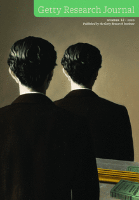
Getty Research Journal
Exploring the Intersection of Art and HistoryGetty Research Journal, published by University of Chicago Press, is an influential periodical in the fields of Conservation, History, Museology, and Visual Arts and Performing Arts. Established in the United States, this journal aims to foster scholarly discourse and advance research in the visual arts and cultural heritage, making it a vital resource for researchers, professionals, and students alike. While it holds a Q4 ranking across multiple disciplines in the 2023 category quartiles, indicating opportunities for growth and engagement, its unique focus on the interplay between art, history, and conservation provides a distinct platform for innovative ideas. The journal encompasses a diverse range of topics, encouraging interdisciplinary research that underscores the importance of the arts in society. As it converges years from 2015 to 2024, the Getty Research Journal serves not just as a publication, but as a dynamic forum for critical thought and exploration in the expansive realm of art and culture.

Zivot Umjetnosti
Cultivating scholarly voices in visual and performing arts.Zivot Umjetnosti, published by the INST POVIJEST UMJETNOSTI - INST ART HISTORY, is a notable Croatian journal that serves as a platform for scholarly discourse in the fields of visual arts, performing arts, and museology. With its inception in 2008, the journal has continued to provide a voice for researchers and practitioners alike, contributing significantly to ongoing conversations in the arts. Despite its current Q4 rank in both Visual Arts and Museology categories—placing it within the 21st and 17th percentiles, respectively—Zivot Umjetnosti is recognized for its commitment to advancing knowledge and fostering critical dialogue. The journal aims to bridge theoretical frameworks with practical applications, making it an invaluable resource for academics, curators, and students engaged in artistic research. While currently operating under traditional access options, Zivot Umjetnosti remains a fundamental publication for those wishing to explore and expand their understanding of the dynamic intersection of art and culture in Croatia and beyond.
Curator-The Museum Journal
Advancing conservation and museology for a sustainable future.Curator-The Museum Journal, published by WILEY, is a preeminent interdisciplinary journal dedicated to advancing the fields of conservation and museology. With its significant impact factor and prestigious rankings—Q1 in both conservation and museology, and Scopus ranks of 9th and 17th respectively—this journal serves as an essential resource for researchers, professionals, and students engaged in the study and practice of museum studies. Since its inception, the journal has facilitated insightful discourse and innovative research focused on the preservation, interpretation, and management of cultural heritage. As a reliable platform for scholarly communication, Curator fosters a deeper understanding of the evolving role of museums in contemporary society, addressing critical issues related to conservation practices and the ethical stewardship of collections. With access options that enhance the dissemination of knowledge, this journal is integral to the global academic community, driving forward the conversation on how museums can adapt and thrive in a changing world.
Ge-Conservacion
Advancing the Future of Cultural Heritage ConservationGe-Conservacion, published by GRUPO ESPANOL I I C, stands as a pivotal journal in the fields of Conservation, Museology, and Visual Arts and Performing Arts, facilitating an open-access platform since 2009. Based in Spain, this journal serves as a vital repository for innovative research and scholarly dialogue, significantly impacting the community with its Q1 and Q2 rankings across several categories in 2023. With an objective to advance multidisciplinary understanding and practices related to cultural heritage conservation, it attracts a diverse readership of researchers, professionals, and students eager to engage with contemporary issues and methodologies. The journal's commitment to accessibility enhances its reach and influence, making it an essential resource for anyone passionate about preserving the integrity and significance of our artistic and historical treasures.
Museum History Journal
Exploring the Evolution of Museums and Their Impact on SocietyMuseum History Journal, published by Routledge Journals, a leading name in scholarly publishing under Taylor & Francis Ltd, serves as an essential platform for advancing knowledge in the fields of conservation, history, and museology. With its ISSN 1936-9816 and E-ISSN 1936-9824, the journal has established its presence in the United Kingdom and offers valuable insights from 2008 to 2024. Currently listed in the Q3 quartile for Conservation, History, and Museology categories, it ranks 677th in History and maintains a commendable percentile of 61% within the Arts and Humanities. Aimed at researchers, professionals, and students, the Museum History Journal strives to promote interdisciplinary dialogue and critical examination of museum practices, historical narratives, and conservation techniques, thereby contributing significantly to the academic discourse surrounding museums and cultural heritage. Access to this journal is crucial for those seeking to deepen their understanding of the evolving role of museums in society.

Vestnik Sankt-Peterburgskogo Universiteta-Iskusstvovedenie
Fostering Dialogue in Conservation and Artistic ExpressionVestnik Sankt-Peterburgskogo Universiteta-Iskusstvovedenie, published by ST PETERSBURG UNIV PRESS, is a distinguished academic journal based in the Russian Federation, focusing on the interconnected disciplines of Conservation, History, Music, and Visual Arts and Performing Arts. With an ISSN of 2221-3007 and E-ISSN of 2542-2243, this journal plays a vital role in disseminating scholarly research and fostering dialogue across these fields. Despite being categorized in the third quartile (Q3) in 2023 across its respective disciplines, its significance lies in publishing emerging research and critical analyses that contribute to the academic discourse. The journal accepts submissions until the converged years spanning 2016 to 2024, making it a relevant platform for current academic inquiry. Although it currently does not offer open access, the journal provides robust insights for researchers, professionals, and students eager to explore the nuances of cultural heritage and artistic expression. As it continues to develop its impact within the arts and humanities, Vestnik Sankt-Peterburgskogo Universiteta-Iskusstvovedenie remains an essential resource for those passionate about understanding and preserving the rich tapestry of artistic endeavors.