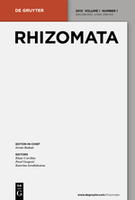
Rhizomata-A Journal for Ancient Philosophy and Science
Scope & Guideline
Connecting Historical Insights with Contemporary Discourse
Introduction
Aims and Scopes
- Exploration of Ancient Philosophical Texts:
The journal emphasizes detailed analyses of classical texts from philosophers such as Plato, Aristotle, and Heraclitus, examining their metaphysical, epistemological, and ethical dimensions. - Interdisciplinary Approaches:
It encourages interdisciplinary studies that connect philosophy with other fields, such as science, linguistics, and theology, reflecting the multifaceted nature of ancient thought. - Historical Contextualization:
The journal aims to situate philosophical ideas within their historical and cultural contexts, revealing how ancient philosophies have influenced subsequent thought and contemporary issues. - Critical Engagement with Philosophical Concepts:
There is a strong focus on critical analysis of core philosophical concepts such as being, substance, and knowledge, often through the lens of dialectical methods employed in ancient philosophical dialogues. - Reception Studies:
The journal also explores the reception of ancient philosophy in later traditions, including its impact on medieval and modern philosophical thought, highlighting its ongoing relevance.
Trending and Emerging
- Language and Being:
Recent publications have increasingly focused on the relationship between language and concepts of being, particularly in the works of Plato and other ancient philosophers, indicating a growing interest in linguistic analysis within metaphysical discussions. - Metaphysical Investigations:
There is a notable trend towards deeper metaphysical investigations, especially regarding the nature of substance and change, as seen in explorations of Heraclitus and Aristotle, suggesting a revitalized interest in foundational philosophical questions. - Intertextuality and Philosophical Dialogue:
Emerging themes also include intertextual studies that examine the dialogues between different philosophical traditions, such as the interactions between Platonic and Aristotelian thought, emphasizing the dialogic nature of ancient philosophy. - Ethics and Responsibility:
There has been an increase in discourse surrounding ethical considerations in ancient philosophy, particularly concerning freedom and responsibility, reflecting contemporary philosophical concerns and their roots in ancient thought. - Philosophy of Science:
An emerging focus on the philosophy of science as it relates to ancient theories and methodologies suggests a growing interest in how ancient philosophical frameworks can inform modern scientific debates.
Declining or Waning
- Skepticism and Relativism:
Themes related to skepticism, particularly Pyrrhonian skepticism and relativism as articulated by figures like Protagoras, have seen a decline in recent issues, indicating a potential shift away from these topics in favor of more constructive philosophical inquiries. - Stoic Philosophy:
Although Stoicism has been a recurring theme in earlier publications, the frequency of articles exploring Stoic thought, particularly in relation to ethics and attention, seems to have waned. - Epicureanism:
Discussions centered on Epicurean concepts, such as pleasure and ethics, have also diminished, suggesting a possible transition towards more Platonic and Aristotelian themes in contemporary discourse.
Similar Journals
PHILOSOPHICAL REVIEW
Elevating Scholarly ConversationsPHILOSOPHICAL REVIEW, published by DUKE UNIVERSITY PRESS, is a leading academic journal in the field of philosophy, recognized for its rigorous scholarship and impactful contributions to theoretical and applied philosophy. With an impressive Q1 ranking in the 2023 Scopus metrics, it places within the top percentile of philosophical journals, affirming its significance in the discourse. The journal, which has a rich publication history since its inception in 1970, focuses on a diverse range of philosophical topics, catering to a broad audience of researchers, practitioners, and scholars. Although it doesn't offer Open Access options, its articles remain highly sought after for their depth and quality. With a dedicated readership and a commitment to exploring fundamental philosophical questions, PHILOSOPHICAL REVIEW continues to shape contemporary philosophical thought and engage with pressing issues in various domains.

VERIFICHE
Exploring the Depths of Philosophical InquiryVERIFICHE, published by ASSOC TRENTINA SCI UMANE, is a distinguished academic journal hailing from Italy, focusing on the intricate field of Philosophy. With an ISSN of 0391-4186, this journal serves as a pivotal platform for scholars and thought leaders engaged in philosophical discourse, examining both theoretical and practical aspects of the discipline. Despite its classification in the Q4 category of the 2023 journal ranks, and a Scopus ranking of #602 out of 806 within the Arts and Humanities, it plays a significant role in contributing to philosophical knowledge and debate. The journal has matured over a significant timeframe, covering topics from 2014 to 2022, and is committed to fostering intellectual engagement among researchers, professionals, and students alike. Although currently not available as an open access journal, VERIFICHE remains an important resource for those seeking to explore the depth of philosophical inquiry and its applications in contemporary society.

Revue Roumaine de Philosophie
Contributing to the Rich Tapestry of Philosophical InquiryRevue Roumaine de Philosophie is a distinguished journal dedicated to advancing the field of philosophy, published by EDITURA ACAD ROMANE in Romania. With an ISSN of 1220-5400, this journal serves as a platform for diverse philosophical discourse, welcoming contributions from both emerging and established scholars. While it currently does not offer open access options, the journal has played a noteworthy role in the philosophical landscape, especially from its inception in 2013 until its discontinuation in Scopus coverage in 2020. The journal's categorization in the 2023 Q4 quartile for Philosophy, along with its rank of #425 out of 718 in Scopus' Arts and Humanities category, underscores its relevance within the academic community, despite not being at the forefront of the field. Located in Bucharest, Romania, the Revue Roumaine de Philosophie invites researchers, professionals, and students to engage with critical philosophical issues and fosters a vibrant intellectual exchange through its published works, ultimately contributing to the richness of philosophical inquiry.

Allgemeine Zeitschrift fur Philosophie
Exploring the depths of thought: Where tradition meets innovation.Allgemeine Zeitschrift für Philosophie is a distinguished academic journal published by FROMMANN-HOLZBOOG, based in Germany. With a commitment to advancing philosophical discourse, this journal fills a crucial niche within the field, offering critical insights and comprehensive analyses on contemporary and traditional philosophical issues. Recognized as a Q3 journal in the 2023 Philosophy category, it ranks within the lower percentile of the Scopus database, positioning it as an accessible entry point for emerging voices in the discipline. The journal reflects a wide range of philosophical thought and aims to foster a vibrant scholarly community, making it an indispensable resource for researchers, professionals, and students alike. While the journal does not currently offer open access options, it provides an essential repository of philosophical knowledge that contributes to the ongoing dialogue within the intellectual community.
Kritike-An Online Journal of Philosophy
Empowering Scholars to Share Transformative IdeasKritike-An Online Journal of Philosophy is a prominent open-access publication dedicated to the exploration and advancement of philosophical discourse. Published by University Santo Tomas, Faculty of Arts & Letters in the Philippines, this journal has been a valuable resource for philosophical scholarship since its inception in 2007, fostering accessibility and intellectual exchange across the globe. With an impact factor that reflects its growing reputation, and classified in the Q2 category of Philosophy as of 2023, Kritike serves as a platform for both established and emerging scholars. The journal’s ranking in the Scopus database, where it holds the 663rd position out of 806 in the Arts and Humanities – Philosophy category, underlines its commitment to contributing meaningful insights within the field. Ensuring open access since 2007 enhances its reach, making critical philosophical works readily available to researchers, professionals, and students alike. As the journal converges into a new era from 2018 to 2024, it continues to uphold its mission of facilitating rigorous scholarly dialogue and enriching the philosophical landscape.

Convivium
Empowering Scholars with Open Access KnowledgeConvivium is a distinguished open-access journal published by the Universitat de Barcelona, Facultat Filologia, specializing in the field of philosophy. Since its inception, the journal has committed to fostering scholarly dialogue by providing a platform for innovative and critical research. Operating under an open-access model since 2007, Convivium ensures that its articles, which span a range of contemporary philosophical topics, are freely accessible to a global audience, thereby promoting the dissemination of knowledge. Despite facing challenges indicated by its current Scopus rank in the 2nd percentile of the Arts and Humanities, and its Q3 quartile in 2023, Convivium continues to thrive as an important resource for researchers, professionals, and students engaged in philosophical inquiry. With published volumes converging from 2009 to 2014, 2017 to 2018, and 2021 to 2023, the journal is poised to contribute significantly to the ongoing discussions and developments in philosophy.

UNIVERSITAS-Monthly Review of Philosophy and Culture
Fostering Dialogue Between Philosophy and CultureUNIVERSITAS-Monthly Review of Philosophy and Culture is a distinguished journal dedicated to exploring the intricate interplay between philosophical thought and cultural phenomena. Published by UNIVERSITAS, this journal serves as a crucial platform for scholars, researchers, and students interested in the diverse dimensions of philosophy and its impact on contemporary culture. With its ISSN number 1015-8383, the journal curates a selection of rigorously peer-reviewed articles that contribute to the enrichment of critical discourse in philosophy and cultural studies. Although it does not currently offer Open Access, the journal maintains a commitment to quality and relevance in its publications. Based in Taipei, Taiwan, UNIVERSITAS-Monthly Review of Philosophy and Culture seeks to bridge theoretical frameworks with real-world cultural contexts, making it an invaluable resource for anyone aiming to deepen their understanding of these fields.
PHRONESIS-A JOURNAL FOR ANCIENT PHILOSOPHY
Exploring the Depths of Ancient WisdomPHRONESIS: A Journal for Ancient Philosophy, published by BRILL, stands as a premier academic forum dedicated to the exploration of ancient philosophical thought. With its ISSN 0031-8868 and E-ISSN 1568-5284, this journal not only enriches the field of history and philosophy but has also earned a distinguished reputation, reflected in its Q1 ranking in both History and Philosophy categories for 2023. The journal serves a vital role in disseminating scholarly articles that contribute to a deeper understanding of ancient philosophical discourses, impacting both historical studies and contemporary philosophical perspectives. Although not open access, its extensive convergence of issues since its inception in 1957 ensures a wealth of research available through institutional access. With a focus on fostering interdisciplinary dialogue, PHRONESIS offers invaluable insights for researchers, professionals, and students committed to the rich legacy of ancient philosophy.

Topicos-Revista de Filosofia
Connecting Minds Through Open Access Philosophical ScholarshipTopicos-Revista de Filosofia, published by UNIV PANAMERICANA, DEPT FILOSOFIA, stands as a significant academic platform within the field of philosophy, actively contributing to scholarly discourse since 2006 through its open access model. With an ISSN of 0188-6649 and an E-ISSN of 2007-8498, this journal is dedicated to fostering critical thought and philosophical inquiry in both regional and global contexts. Operating out of Mexico City, it provides a vital avenue for researchers, professionals, and students to engage with contemporary philosophical issues, reflected in its ranking of Q3 in the 2023 category for Philosophy and its position within the 33rd percentile among over 800 peer journals in the field according to Scopus. Topicos not only prioritizes accessibility to philosophical scholarship but also aims to propel academic discussions and elevate the standards of philosophical research. With coverage extending from 2013 to 2024, it invites contributions that bridge diverse philosophical traditions and innovative thought pathways, reinforcing its role as an influential resource for the philosophical community.

Filosofiya-Philosophy
Advancing Philosophical Discourse GloballyWelcome to Filosofiya-Philosophy, an esteemed academic journal dedicated to advancing the field of philosophical inquiry. Published by NATSIONALNO IZDATELSTVO AZ BUKI, this journal aims to foster scholarly exchange and promote critical discussions on various philosophical themes and issues, including but not limited to metaphysics, ethics, logic, and epistemology. With its commitment to rigorous research and thought-provoking analyses, Filosofiya-Philosophy seeks to engage researchers, professionals, and students alike, enriching the discourse surrounding philosophical studies. Although currently not an open-access journal, it provides valuable insights that are crucial for the continuous exploration of philosophical ideas. Based in Sofia, Bulgaria, it plays a vital role in the dissemination of philosophical knowledge, inviting submissions from around the globe to enhance its academic community and further its impact in the realm of philosophy.