
South African Journal of Libraries and Information Science
Scope & Guideline
Championing best practices in South African library science.
Introduction
Aims and Scopes
- Artificial Intelligence in Libraries:
The journal has a strong focus on the integration of artificial intelligence technologies in library services, exploring how these innovations can enhance information retrieval, data management, and user service delivery. - Digital Literacy and Education:
There is a consistent emphasis on digital literacy frameworks and educational approaches, particularly in relation to equipping librarians and users with essential skills for navigating the digital information environment. - Open Access and Scholarly Publishing:
The journal addresses issues surrounding open access publishing, including the promotion of open access repositories and the implications for research dissemination in the academic community. - Information Management and Services:
Research related to information management practices, including the use of ICTs in libraries, knowledge management, and the provision of information services, is a core area of focus. - Community Engagement and Indigenous Knowledge:
The journal also highlights the role of libraries in community engagement, particularly in the context of preserving indigenous knowledge and supporting local development.
Trending and Emerging
- Artificial Intelligence Applications:
A significant trend in the journal is the exploration of artificial intelligence applications in libraries, including its impact on service delivery and information management. - Digital Transformation in Libraries:
There is an emerging focus on the digital transformation of library services, including the adoption of new technologies and innovative service models to meet user demands. - Impact of COVID-19 on Library Services:
Research examining the adaptations and changes in library services due to the COVID-19 pandemic is increasingly prominent, highlighting resilience and responsiveness in the field. - User Experience and Engagement:
An increasing emphasis on user experience and engagement strategies reflects a shift towards understanding user needs and improving service delivery in library settings. - Sustainability and Knowledge Organization:
Emerging themes related to sustainability in knowledge organization practices are also gaining traction, indicating a growing awareness of environmental and social responsibilities within library services.
Declining or Waning
- Traditional Librarian Roles:
There is a noticeable decrease in research focusing on traditional librarian roles and responsibilities, as the field shifts towards technology-driven competencies and services. - Physical Library Spaces:
Studies centered on the importance and management of physical library spaces are becoming less frequent, indicating a move towards virtual and digital libraries in response to changing user needs. - Printed Materials and Resources:
Research examining the use and management of printed materials is declining, likely due to the increasing reliance on digital resources and online information access. - Public Library Services:
While still relevant, the frequency of studies specifically addressing public library services is diminishing, possibly overshadowed by the focus on academic and digital libraries. - Historical Library Practices:
There is a waning interest in historical perspectives of library practices, as contemporary issues like technology integration and digital literacy take precedence.
Similar Journals

DESIDOC Journal of Library & Information Technology
Elevating Standards in Library Technology ResearchDESIDOC Journal of Library & Information Technology, published by the Defence Scientific Information Documentation Centre, is a pivotal scholarly platform in the realm of Library and Information Sciences. The journal, indexed with ISSN 0974-0643 and E-ISSN 0976-4658, has established its reputation with a commendable Q3 category ranking in the latest Scopus quartiles and a notable rank of 113 out of 280 in its field, placing it in the 59th percentile. Engaging a global audience, it disseminates high-quality research insights aimed at advancing the practices and technologies within library and information management. Operating within a converged timeframe from 2012 to 2024, the journal is committed to fostering robust discussions surrounding contemporary issues in the field, making it an invaluable resource for researchers, professionals, and students alike. While currently not offering open access, its content is accessible through institutional subscriptions, reinforcing its significance in the academic community of India and beyond.
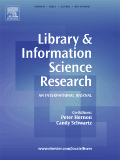
LIBRARY & INFORMATION SCIENCE RESEARCH
Pioneering research for a transformative library experience.LIBRARY & INFORMATION SCIENCE RESEARCH is a premier academic journal dedicated to advancing the field of library and information sciences. Published by Elsevier Science Inc, this journal has established its reputation for rigorous research and impactful scholarship since its inception in 1987. With an impressive Q1 ranking in Library and Information Sciences and a Q2 ranking in Information Systems for 2023, it reflects the growing importance of library sciences in an increasingly digital world. The journal serves as an essential platform for researchers, professionals, and students, offering insightful articles that address emerging trends and challenges in the realm of information dissemination and management. Although not an open-access journal, its contributions are widely recognized, as evidenced by its strong Scopus rankings, with a position of #53 out of 280 in Library and Information Sciences. If you are looking to deepen your understanding of the dynamic interplay between libraries, technology, and information systems, LIBRARY & INFORMATION SCIENCE RESEARCH is an indispensable resource in your academic journey.
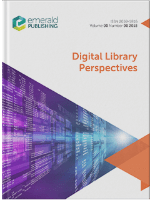
Digital Library Perspectives
Innovating Education through Digital PerspectivesDigital Library Perspectives, published by Emerald Group Publishing Ltd, is a pivotal journal in the dynamic fields of Education, Information Systems, and Library and Information Sciences. With an impressive Scopus ranking that places it in the Q1 category for Library and Information Sciences and Q2 for both Education and Information Systems, this journal has established itself as a significant resource for scholars and practitioners alike. The journal's ISSN is 2059-5816 and its E-ISSN is 2054-1694, facilitating broad accessibility to cutting-edge research and innovative practices within digital library environments. Published since 2016, it continues to offer a platform for the exploration of emerging trends, challenges, and technologies affecting digital libraries and information services. Researchers, professionals, and students will find that the journal not only highlights critical advancements but also fosters discussions around best practices and future directions in the industry. While it operates under a subscription model, it remains a crucial contributor to the scholarly dialogue in this essential sector.
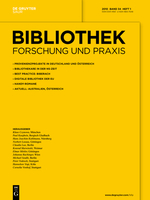
Bibliothek Forschung und Praxis
Elevating Scholarly Dialogue in Information ScienceBibliothek Forschung und Praxis is a distinguished journal in the field of library and information science, published by WALTER DE GRUYTER GMBH. With its ISSN 0341-4183 and E-ISSN 1865-7648, this journal provides a vital platform for researchers, professionals, and students to explore the latest developments, innovative practices, and theoretical advancements in library research. Situated in the academic hub of Berlin, Germany, the journal encourages submissions that address a wide array of topics pertinent to libraries, archives, and information services, aiming to foster dialogue and collaboration within the global academic community. Although it currently does not offer Open Access options, the journal ensures rigorous peer-review processes uphold the integrity and scholarly quality of published works. With a commitment to enhancing the field of library science, Bibliothek Forschung und Praxis plays a crucial role in shaping best practices and promoting deeper understanding among scholars and practitioners alike.

Biblios-Revista de Bibliotecologia y Ciencias de la Informacion
Empowering Knowledge through Open Access InnovationBiblios-Revista de Bibliotecologia y Ciencias de la Informacion, published by the University of Pittsburgh's Library System, stands as a pivotal contributor to the field of Library and Information Sciences. Holding an ISSN of 1562-4730, this peer-reviewed journal has been offering Open Access content since 2011, reinforcing its commitment to the democratization of knowledge. Despite its current classification in the Q4 quartile with a Scopus rank of 257 out of 280 in its category, the journal plays a crucial role in disseminating research that explores contemporary challenges and innovations within the library science landscape. It is particularly relevant for researchers, practitioners, and students invested in the future of information management and bibliographic studies. With coverage from 2014 to 2024, Biblios provides a platform for scholars to engage with critical discourse, share findings, and enhance the global library and information community.

Turkish Librarianship
Advancing Knowledge in Library ScienceTurkish Librarianship is a distinguished open-access journal published by the Turkish Librarians Association, dedicated to the scholarly examination of library and information science. Since its inception in 1987, the journal has played a vital role in promoting research, innovative practices, and knowledge sharing within the field. By providing a platform for academics, practitioners, and students, Turkish Librarianship facilitates discussions that intersect with current trends and challenges in librarianship both locally and globally. The journal draws attention to various aspects of information management, preservation practices, digital libraries, and the evolving role of librarians in a rapidly changing landscape. With an ISSN of 1300-0039 and an E-ISSN of 2147-9682, the journal aims to enrich the academic discourse and serve as a pivotal resource for those engaged in library sciences, ensuring accessibility through its open-access model. This commitment to free dissemination of knowledge not only enhances the journal’s visibility but also underscores its significance in fostering collaborative research and development in the area.

LIBRARY JOURNAL
Illuminating the Path of Library InnovationLIBRARY JOURNAL, published by REED BUSINESS INFORMATION, is a vital periodical in the field of Library and Information Sciences, providing a rich resource for researchers, professionals, and students alike. With a history spanning from 1945 to its recent issues, this journal captures the evolving landscape of library science, offering insightful articles that address current trends, practices, and challenges within the profession. Although not an open access journal, LIBRARY JOURNAL is highly regarded for its content, which reflects the challenges faced by libraries and the critical role they play in education and community services. Despite its Scopus ranking of 159 out of 210, the journal continues to contribute significantly to discussions around information management, bibliometrics, and digital libraries, making it an essential read for those invested in the ongoing development of library services and information literacy in the digital age.
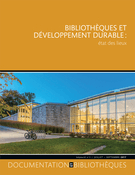
Documentation et Bibliotheques
Exploring the future of documentation and library services.Documentation et Bibliothèques is a pivotal academic journal published by the Association pour l'Avancement des Sciences et Techniques de la Documentation, based in Montreal, Canada. Focusing on the fields of library science and documentation, this journal serves as a crucial platform for disseminating research and practical insights that drive innovation in information management and library services. Although it does not follow an open access model, it boasts a dedicated readership among researchers, professionals, and students who seek high-quality content in the realm of information science. With its commitment to advancing theoretical and empirical studies, Documentation et Bibliothèques remains an essential resource for navigating the evolving landscape of documentation and library services. For those interested in exploring how strategic documentation practices can enhance knowledge dissemination, this journal provides a wealth of valuable resources and scholarly articles.

LIBRARY AND INFORMATION SCIENCE
Enriching understanding in the realm of library science.LIBRARY AND INFORMATION SCIENCE is a specialized academic journal dedicated to the advancement of knowledge and scholarship in the field of library and information sciences. Published by MITA SOC LIBRARY INFORMATION SCIENCE, this esteemed journal has been a crucial platform for scholarly communication since 1980, addressing the dynamic challenges and developments in the information landscape. Although it holds a Q4 category ranking in the Library and Information Sciences according to the 2023 Scopus Ranking, the journal serves a unique niche, providing insights and fostering discussions among a diverse audience of researchers, professionals, and students. With no Open Access options currently available, its valuable research contributions are accessible through institutional subscriptions and library access. The journal aims to disseminate innovative research, case studies, and theoretical explorations that enhance our understanding of information behavior, retrieval systems, library management, and emerging technologies, thus promoting an informed society in an increasingly digital world. Given its focused scope and enduring presence, LIBRARY AND INFORMATION SCIENCE continues to be an essential resource for anyone invested in the future of libraries and information services.
PORTAL-LIBRARIES AND THE ACADEMY
Innovating Scholarly Communication Through Library SciencePORTAL: Libraries and the Academy is an esteemed academic journal published by Johns Hopkins University Press, focusing on the intersection of library and information science, academic practice, and scholarly communication. With an ISSN of 1531-2542 and an E-ISSN of 1530-7131, this journal offers rigorous peer-reviewed research essential for librarians, researchers, and information professionals committed to enhancing academic libraries and fostering innovative practices in higher education. It holds a strong position in its field, ranking in the 61st percentile within Social Sciences and Library and Information Sciences, and categorized as Q2 in both Development and Library and Information Sciences for 2023. Though the journal is not Open Access, its content is invaluable for anyone interested in staying abreast of the latest trends and challenges in library services and academic environments. Since its inception in 2001, PORTAL has continuously contributed to the discourse on the evolving role of libraries in academia, making it a critical resource for those striving to bridge the gap between information access and higher education pedagogy.