SCIENCE AND ENGINEERING ETHICS
Scope & Guideline
Bridging Ethics and Innovation for a Responsible Future
Introduction
Aims and Scopes
- Ethics in Scientific Research:
The journal addresses ethical challenges faced in scientific research, including research integrity, misconduct, and the implications of various research practices. - Engineering Ethics:
It explores ethical dilemmas specific to engineering, including the responsibilities of engineers, ethical decision-making processes, and the role of ethics education in engineering curricula. - Technology and Society:
The impact of emerging technologies on societal values and ethical standards is a core focus, including discussions on AI, robotics, and their ethical implications in various sectors. - Interdisciplinary Perspectives:
The journal encourages interdisciplinary approaches to ethics, integrating insights from philosophy, sociology, and law to enrich the understanding of ethical issues in science and engineering. - Public Trust and Policy:
It examines how ethical practices in science and engineering influence public trust and inform policy-making, emphasizing the need for transparency and accountability. - Education and Training in Ethics:
The journal emphasizes the importance of ethics education, highlighting innovative approaches to teaching ethics within scientific and engineering disciplines.
Trending and Emerging
- AI Ethics and Responsibility:
As AI technologies proliferate, discussions around ethical AI, including accountability, bias, and decision-making frameworks, have surged, reflecting the urgency of responsible AI deployment. - Ethics in Data Science and Big Data:
The ethical implications of data use, including privacy concerns, data sharing, and algorithmic transparency, are becoming increasingly prominent, indicating a shift towards data-centric ethical discussions. - Environmental Ethics and Sustainability:
There is a growing focus on the ethical dimensions of environmental sustainability, particularly in relation to technology's role in addressing climate change and ecological impacts. - Global Perspectives on Ethics:
Emerging discussions surrounding global ethical standards and cross-cultural ethical considerations reflect a trend towards inclusivity and a recognition of diverse ethical frameworks. - Interdisciplinary Approaches to Ethics:
The integration of perspectives from various disciplines, such as sociology, psychology, and law, into ethical discussions is on the rise, enabling a more holistic understanding of ethical issues. - Ethics of Emerging Technologies:
There is an increasing interest in the ethical implications of new technologies, such as neurotechnology and robotics, particularly concerning human enhancement and autonomy.
Declining or Waning
- Traditional Research Ethics Frameworks:
There has been a noticeable decline in discussions centered solely on traditional research ethics frameworks, as newer, more dynamic approaches to ethics are increasingly favored. - Narrowly Defined Ethical Issues:
Papers focusing on narrowly defined ethical issues, like specific cases of misconduct without broader context, are becoming less frequent, as the journal shifts towards more comprehensive analyses. - Philosophical Theories in Isolation:
The exploration of philosophical theories in isolation is waning, with a greater emphasis now being placed on practical applications and interdisciplinary approaches. - Overemphasis on Regulatory Compliance:
There is a decline in works that primarily discuss regulatory compliance as the main ethical concern, as the journal increasingly promotes a proactive stance on ethical responsibility.
Similar Journals
ETHICS & BEHAVIOR
Navigating the Intersection of Ethics and PsychologyETHICS & BEHAVIOR is a leading academic journal published by Routledge Journals, Taylor & Francis Ltd that has been at the forefront of ethical and behavioral research since its inception in 1991. With an ISSN of 1050-8422 and an E-ISSN of 1532-7019, the journal is committed to exploring the complex interactions between morality, ethics, and human behavior in various social contexts. Recognized for its significant contribution to the field, ETHICS & BEHAVIOR holds a notable Q2 ranking in both general psychology and social psychology categories, with impressive Scopus rankings reflecting its academic impact and relevance. Although the journal is not open access, it remains an indispensable resource for researchers, professionals, and students seeking to understand the ethical dimensions of human behavior. Covering diverse topics from applied ethics to behavioral studies, ETHICS & BEHAVIOR serves as a platform for innovative ideas and rigorous empirical research, shaping the discourse in psychology and social sciences. Address: 2-4 Park Square, Milton Park, Abingdon OX14 4RN, Oxon, England.
International Journal of Technoethics
Pioneering research at the intersection of tech and ethics.International Journal of Technoethics, published by IGI Global, stands at the forefront of interdisciplinary research, bridging the fields of technology, ethics, and society. With an ISSN of 1947-3451 and an E-ISSN of 1947-346X, this celebrated journal focuses on the critical examination of ethical issues emerging from technological advancements, propelling discourse among researchers, professionals, and students alike. Since its inception in 2010, it has thrived in esteemed categories, boasting a Q2 ranking in both Engineering (miscellaneous) and Social Sciences (miscellaneous), with impressive Scopus rankings placing it in the top 12% and 27% within these fields respectively. With the aim of fostering a deeper understanding of technology's impact on society, the journal provides a platform for scholarly articles, case studies, and comprehensive reviews, contributing significantly to the global conversation on technoethics. Published from the United States, International Journal of Technoethics is pivotal for those seeking to navigate the complexities of innovation while maintaining a strong ethical foundation.
Linacre Quarterly
Illuminating the Philosophy Behind Health DecisionsLinacre Quarterly, published by SAGE Publications Inc, is a distinguished journal that serves as an interdisciplinary platform in the fields of Health Policy and Philosophy. With an ISSN of 0024-3639 and an E-ISSN of 2050-8549, this journal has been pivotal in providing insights into the intricate dynamics of health policy through a philosophical lens since its inception in 1945. Notably, it holds a respectable 2023 Scopus rank, placing it in the 68th percentile within the Arts and Humanities (Philosophy) category and the 21st percentile in Medicine (Health Policy). Though currently not offering Open Access options, Linacre Quarterly remains committed to advancing scholarly discussion and fostering innovation among researchers, professionals, and students alike. Located in the United Kingdom, this journal continues to uphold its reputation as a vital resource for those navigating the complexities of health-related ethical dilemmas and policy-making frameworks, thereby enhancing its visibility and relevance in academic discourse.

BUSINESS ETHICS QUARTERLY
Navigating the Ethical Landscape of BusinessBusiness Ethics Quarterly, published by Cambridge University Press, stands as a prestigious platform for scholarly discourse in the fields of business ethics, management, economics, and philosophy. Established in 1993, the journal has gained acclaim for its rigorous peer-reviewed articles, reflecting its Q1 status in multiple categories, including Business, Management and Accounting, Economics and Econometrics, and Philosophy. With an impressive Scopus ranking placing it in the 98th percentile for Philosophy and the 82nd for Economics, this journal is a critical resource for researchers, professionals, and students who seek to navigate the complex intersection of ethical considerations and business practices. Although not an Open Access journal, its esteemed contributions encapsulate contemporary ethical challenges and frameworks that drive thoughtful discussion and innovation within both academia and industry. Interested readers can explore the journal's contents at its headquarters in Cambridge, England, providing further enrichment in understanding essential business ethics concepts and applications.
Journal of Academic Ethics
Fostering Critical Discourse on Ethical PracticesThe Journal of Academic Ethics, published by Springer, is a premier scholarly outlet dedicated to the exploration and analysis of ethical considerations across various disciplines, including philosophy, education, sociology, and the broader arts and humanities. With an ISSN of 1570-1727 and E-ISSN of 1572-8544, this journal has established itself as a vital resource since its inception in 2005, continuing to provide insightful contributions through 2024. Recognized for its impactful research, it holds esteemed positions in multiple Scopus categories, including a Q1 ranking in both Arts and Humanities (Philosophy) and a Q2 ranking in Education and Sociology. This highlights the journal's significance in fostering ethical discourse among researchers and practitioners alike. Although it does not currently offer open access, the journal's robust academic framework ensures high-quality contributions that advance knowledge and promote critical discussions about ethical practices in academia and beyond. For anyone engaged in ethical inquiries, the Journal of Academic Ethics serves as an indispensable platform for innovative research and scholarly dialogue.
Journal of Bioethical Inquiry
Pioneering Discussions on Health Ethics and PolicyThe Journal of Bioethical Inquiry, published by Springer, is a prominent academic journal in the fields of bioethics, health policy, and social sciences. Established in 2004 and running through 2024, it is recognized for providing a critical platform for the exploration of ethical issues arising in the contexts of healthcare and policy making. With an ISSN of 1176-7529 and an E-ISSN of 1872-4353, this esteemed journal holds a Q2 quartile ranking in both Health Policy and Health (Social Science) categories, indicating its significant impact and contributions to the field. It boasts impressive Scopus rankings, with a standing of #70 out of 371 in Social Sciences _ Health (Social Science) and #68 out of 310 in Medicine _ Health Policy, representing its relevance and authority in these domains. Although it does not currently offer open access options, the Journal of Bioethical Inquiry remains a vital resource for researchers, practitioners, and students eager to engage with the complexities of bioethical challenges and to advance the discourse on health policies.
CAMBRIDGE QUARTERLY OF HEALTHCARE ETHICS
Engaging Scholars in Vital Ethical Conversations.CAMBRIDGE QUARTERLY OF HEALTHCARE ETHICS is a premier journal published by Cambridge University Press, focusing on significant issues at the intersection of healthcare, ethics, and policy. With an ISSN of 0963-1801 and an E-ISSN of 1469-2147, this journal serves as a vital platform for discourse among researchers, practitioners, and scholars in the health social sciences. Emphasizing vital ethical considerations in healthcare practices and policies, it ranks in the Q3 tier for Health Policy and Q2 for both Health (Social Science) and Issues, Ethics, and Legal Aspects according to the 2023 journal category quartiles. The journal, spanning its tenure from 1992 to 2024, features rigorous peer-reviewed articles that contribute to the advancement of ethical standards in healthcare. By addressing contemporary ethical dilemmas and promoting scholarly dialogue, CAMBRIDGE QUARTERLY OF HEALTHCARE ETHICS remains an essential resource for those committed to understanding the complexities and ethical implications inherent in health systems today.

Journal of Practical Ethics
Navigating the Intersection of Ethics and PracticeJournal of Practical Ethics is an esteemed open-access journal published by the Oxford Uehiro Centre for Practical Ethics, dedicated to enhancing the discourse surrounding ethical issues in various fields, including healthcare, technology, and social policy. Since its inception in 2013, the journal has fostered a robust academic platform for researchers, professionals, and students to explore and publish innovative ideas and solutions to real-world ethical dilemmas. The journal's commitment to making research freely accessible emphasizes its role in bridging the gap between academic inquiry and practical application, thereby encouraging a broader engagement with ethical considerations across disciplines. As the importance of ethical frameworks continues to grow in an increasingly complex world, the Journal of Practical Ethics stands as a vital resource for those seeking to influence policy and practice through rigorous ethical analysis.
Accountability in Research-Ethics Integrity and Policy
Championing Responsible Research Practices.Accountability in Research: Ethics Integrity and Policy is a distinguished journal published by Taylor & Francis Inc, focusing on the critical intersection of research integrity and ethical practices within various disciplines. Established in 1989, this journal serves as a vital platform for advancing the understanding of accountability frameworks in research, particularly contributing to the fields of education, library sciences, and miscellaneous medicine. With a robust impact reflected in its Q1 ranking in Library and Information Sciences and its significant placements in Education and Medicine (Q2), the journal is highly regarded among researchers and practitioners alike. The journal's objective is to promote scholarly discourse on ethical integrity in research practices, making it an essential resource for academics, professionals, and students who wish to foster responsible research environments. Although it does not operate under an open access model, the journal's comprehensive methodology and insightful articles ensure that it remains influential in shaping the future of research accountability and ethics.
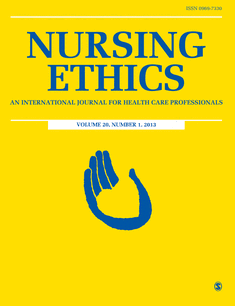
NURSING ETHICS
Elevating Ethical Discourse in NursingNURSING ETHICS, published by SAGE PUBLICATIONS LTD, is a premier international journal dedicated to the exploration and examination of ethical issues within the field of nursing. Since its inception in 1994, the journal has consistently provided a critical platform for scholars and practitioners to discuss ethical dilemmas and address complex legal aspects affecting nursing practice. With a remarkable Q1 ranking in the categories of Issues, Ethics, and Legal Aspects, it ranks in the top percentile, boasting a 92nd percentile position among its peers. Although currently not an Open Access journal, NURSING ETHICS plays a crucial role in fostering dialogue and advancing knowledge in the rapidly evolving landscape of nursing ethics, making it an invaluable resource for researchers, professionals, and students alike. The journal's commitment to high-quality research ensures that vital ethical considerations remain at the forefront of nursing education and practice, reinforcing its significance in a field that is continually impacted by ethical challenges.