
Symmetry-Culture and Science
Scope & Guideline
Bridging Cultures Through the Lens of Symmetry
Introduction
Aims and Scopes
- Interdisciplinary Research:
The journal emphasizes the convergence of various disciplines—mathematics, art, architecture, and cultural studies—highlighting how symmetry serves as a common thread that connects these fields. - Cultural and Historical Perspectives:
A significant aim of the journal is to explore the cultural implications of symmetry, examining its historical evolution and its application in cultural artifacts, architecture, and artistic expression. - Mathematical and Scientific Applications:
The journal publishes research that applies symmetry principles in scientific and mathematical contexts, including geometry, physics, and biology, showcasing its relevance in understanding complex phenomena. - Educational Approaches:
There is a consistent focus on educational methodologies that utilize symmetry to enhance learning in mathematics and science, promoting innovative teaching strategies that engage students. - Technological Integration:
The journal also addresses how modern technologies, such as visual and genetic technologies, can facilitate the exploration and application of symmetry in various scientific fields.
Trending and Emerging
- Neuroaesthetics and Visual Symmetry:
Recent publications emphasize the intersection of symmetry with neuroaesthetics, exploring how symmetrical patterns influence perception and emotional responses, pointing to a growing interest in the cognitive aspects of symmetry. - Environmental and Economic Asymmetry:
There is a rising focus on asymmetrical effects in environmental studies and economic research, particularly how these dynamics influence sustainability and resource management, reflecting current global challenges. - Dynamic Symmetry in Education:
Innovative educational practices that incorporate dynamic symmetry activities are gaining traction, showcasing the importance of engaging students through hands-on and visual learning methods. - Cultural Symmetry in Contemporary Art:
The journal is increasingly publishing works that investigate symmetry in contemporary art, reflecting a trend towards understanding how modern artists interpret and utilize symmetry in their creative processes. - Technological Advances in Symmetry Research:
Emerging themes highlight the role of technology in exploring symmetry, including genetic technologies and computational methods, indicating a shift towards integrating modern tools to deepen understanding of symmetry across disciplines.
Declining or Waning
- Traditional Architectural Symmetry:
Papers focusing on traditional architectural symmetry, while still relevant, have seen a decline as the journal shifts towards contemporary applications and innovative interpretations of symmetry in modern design. - Historical Analysis of Symmetry:
Research centered around historical perspectives of symmetry, particularly in ancient cultures, has become less frequent, suggesting a potential waning interest in purely historical analysis compared to contemporary applications. - Symmetry in Classical Music:
Although music remains a topic of interest, the specific focus on symmetry in classical compositions has shown a decrease, indicating a possible shift towards more modern or diverse musical interpretations. - Static Mathematical Symmetry:
Papers that address static or purely theoretical aspects of mathematical symmetry seem to be less common, as there is a growing trend towards dynamic and applied mathematical concepts. - Symmetry in Embroidery and Folk Art:
The exploration of symmetry in traditional crafts and folk art, such as embroidery, has diminished, possibly as researchers focus more on the broader implications of symmetry in contemporary art and design.
Similar Journals
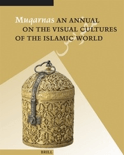
Muqarnas-An Annual on the Visual Cultures of the Islamic World
Fostering Dialogue on Visual Cultures Across TimeMuqarnas: An Annual on the Visual Cultures of the Islamic World, published by BRILL, stands as a seminal contribution to the academic discourse surrounding the visual cultures intrinsic to Islamic societies. With its ISSN 0732-2992 and E-ISSN 2211-8993, this prestigious journal, based in the Netherlands, has been a vital resource for scholars since its inception in 1985. Specializing in the intersection of Cultural Studies, History, and Visual Arts, Muqarnas is recognized as a Q1 journal in Visual Arts and Performing Arts and maintains strong positions in other academic categories, underscored by impressive Scopus rankings. Offering a deep exploration of visual traditions and practices, the journal fosters a broader understanding of Islamic art and architecture's historical contexts, contributing significantly to its field. With its rigorous peer-review process and commitment to scholarly excellence, Muqarnas invites researchers, professionals, and students to engage with the rich tapestry of Islamic visual culture, ensuring its relevance and importance for contemporary scholarship.
Journal of Mathematics and the Arts
Unveiling the Beauty in Mathematical ConceptsThe Journal of Mathematics and the Arts, published by Taylor & Francis Ltd, is a unique interdisciplinary journal that explores the rich intersection of mathematics and artistic expressions, providing a platform for researchers, professionals, and students alike. With an ISSN of 1751-3472 and an E-ISSN of 1751-3480, this journal has been an important resource since its inception in 2007 and continues to expand its reach through 2024. The journal is particularly noteworthy for its Q1 ranking in Visual Arts and Performing Arts among the 2023 category quartiles, reflecting its impact in this creative area, although it holds a Q4 ranking in Computer Graphics and Computer-Aided Design and Mathematics (miscellaneous), showcasing its broader mathematical exploration. While it currently does not offer open access options, its rigorous peer-review process ensures the publication of high-quality research that contributes to the academic discourse on the aesthetic dimensions of mathematical concepts. With a focus on fostering collaboration between the arts and sciences, this journal stands as a vital hub for innovative thought and practice, making it essential reading for those invested in the evolving dialogue between these dynamic fields.

RIHA Journal
Opening doors to interdisciplinary art discussions.RIHA Journal, an esteemed publication in the field of Visual Arts and Performing Arts, is published by the RIHA-INT ASSOC RESEARCH, INST HISTORY ART in Germany. Since its inception in 2010, this Open Access journal has aimed to foster scholarly discussion and dissemination of research within art history and related disciplines. With a commitment to providing a platform for innovative and interdisciplinary approaches, RIHA Journal is easily accessible to a global audience, encouraging researchers, professionals, and students alike to engage with cutting-edge scholarship. Despite its current position within the Q4 category and a Scopus rank of #402 out of 667, the journal's role is increasingly pivotal as it continues to expand its reach and impact within the academic community. Located at the Central Institute for Art History in Munich, Germany, RIHA Journal is dedicated to enriching the study of art history from 2010 to 2024 and beyond, paving the way for future explorations and discussions in the visual arts.
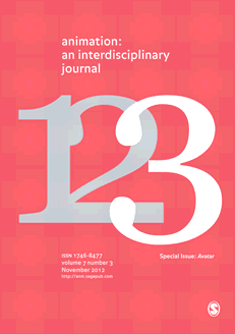
Animation-An Interdisciplinary Journal
Illuminating the Dynamic World of Animated ExpressionAnimation: An Interdisciplinary Journal is a distinguished publication that explores the dynamic intersections of animation within the spheres of visual arts and performing arts. Published by SAGE Publications Inc in the United Kingdom, this journal has established itself as a significant platform for scholarly discourse, boasting a 2023 Scopus ranking that places it in the 79th percentile among a competitive cohort of arts and humanities journals. With a Q2 ranking in both Visual Arts and Performing Arts, the journal publishes innovative research that spans theoretical frameworks, technical advances, and cultural impacts of animation, fostering interdisciplinary collaboration and dialogue. Researchers, professionals, and students alike will find Animation an invaluable resource for understanding the evolving role of animation in contemporary society. Its comprehensive approach ensures that every edition contributes to the ongoing narrative of animation as a critical art form, making it essential reading for anyone invested in the future of animated media.

Journal of Early Modern Studies-Romania
Exploring Romania's Role in the Early Modern European NarrativeThe Journal of Early Modern Studies-Romania serves as a vital platform for scholars and enthusiasts alike within the field of early modern studies. Published by ZETA BOOKS, this journal fosters a rich discourse on the cultural, political, and intellectual developments that shaped Romania and its connections to the broader European narrative during the early modern period. With an ISSN of 2285-6382 and an E-ISSN of 2286-0290, the journal is poised to contribute significantly to academic literature despite not currently being Open Access, facilitating access through academic institutions. The scope of the journal includes but is not limited to history, literature, art, and social studies, ensuring a multidisciplinary approach to early modern inquiry. Researchers, professionals, and students will find invaluable insights and innovative research avenues spotlighted in each issue, residing at the intersection of local and transnational early modern studies.
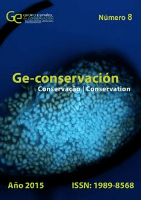
Ge-Conservacion
Uniting Disciplines for a Sustainable Cultural LegacyGe-Conservacion, published by GRUPO ESPANOL I I C, stands as a pivotal journal in the fields of Conservation, Museology, and Visual Arts and Performing Arts, facilitating an open-access platform since 2009. Based in Spain, this journal serves as a vital repository for innovative research and scholarly dialogue, significantly impacting the community with its Q1 and Q2 rankings across several categories in 2023. With an objective to advance multidisciplinary understanding and practices related to cultural heritage conservation, it attracts a diverse readership of researchers, professionals, and students eager to engage with contemporary issues and methodologies. The journal's commitment to accessibility enhances its reach and influence, making it an essential resource for anyone passionate about preserving the integrity and significance of our artistic and historical treasures.

Revista 180
Elevating Academic Discourse in the HumanitiesRevista 180 is a distinguished academic journal published by UNIV DIEGO PORTALES in Chile, focusing on the critical intersections of architecture, urban studies, and visual and performing arts. With its ISSN of 0718-2309, this journal has consistently contributed to advancing knowledge in its respective fields since its inception in 2005, and will continue to do so until 2024. Highlighting its prestige, Revista 180 holds notable rankings in the Scopus database—placing in the 77th percentile in Visual Arts and Performing Arts and Q1 category, along with respectable Q2 and Q3 rankings in Architecture and Urban Studies, respectively. The journal serves as a vital platform for researchers, professionals, and students, fostering scholarly dialogue and innovation. As it operates under a traditional subscription model, it continues to emphasize the importance of accessible, high-quality research. By publishing rigorous and impactful research, Revista 180 plays a crucial role in shaping academic discourse in the arts and humanities.

Ra-Revista de Arquitectura
Unlocking the potential of emerging voices in architecture.Ra-Revista de Arquitectura is an esteemed open-access journal published by UNIV NAVARRA, SERVICIO PUBLICACIONES in Spain, dedicated to the fields of architecture and the visual arts. With an ISSN of 1138-5596 and an E-ISSN of 2254-6332, this journal aims to foster a critical dialogue among scholars, practitioners, and students by offering original research, reviews, and case studies that challenge conventional architectural paradigms and inspire innovation. Since transitioning to an open-access model in 2012, Ra has expanded its reach, allowing free access to knowledge that resonates within both academic and professional communities. Although the journal is currently ranked in Q4 in its respective categories, it remains a vital platform for emerging voices and advancements in the architecture and visual arts disciplines. Researchers can find valuable insights that push the boundaries of both theory and practice. The journal is part of a vibrant academic tradition, contributing to a deeply reflective cultural heritage, and it invites contributors from diverse backgrounds to submit their works for consideration.
Notes and Records-The Royal Society Journal of the History of Science
Charting the Historical Landscape of ScienceNotes and Records - The Royal Society Journal of the History of Science is an esteemed scholarly journal published by the Royal Society in the United Kingdom, focusing on the historical aspects of science and its impact on modern scientific practices. With an ISSN of 0035-9149 and E-ISSN 1743-0178, this journal serves as a vital platform for researchers, professionals, and students who seek to explore the intricate connections between historical developments and contemporary scientific discourse. Recognized for its academic rigor, it holds a commendable position in the Q3 category of the History and Philosophy of Science field, ranking #56 out of 223 according to Scopus, and showcasing a 75th percentile ranking. Covering converged years from 1970 to 1973 and from 1975 to 2024, the journal publishes articles that contribute significantly to the understanding of the evolution of scientific thought. While it currently does not operate under an open access model, its esteemed content continues to engage a broad readership, fostering a deeper appreciation for the history behind scientific innovation and inquiry.

Sanat Tarihi Dergisi-Journal of Art History
Decoding the Language of Art Through TimeSanat Tarihi Dergisi-Journal of Art History is a distinguished academic journal dedicated to the exploration and analysis of art history, published by the reputable E.U. Printing and Publishing House in Turkiye. With an ISSN of 1300-5707 and an E-ISSN of 2636-8064, this openly accessible journal has been providing a platform for scholarly discourse since its transition to Open Access in 2016. Catering to a diverse audience of researchers, professionals, and students, the journal aims to disseminate original research articles, critical reviews, and theoretical discussions that contribute to the understanding of artistic movements and their cultural implications throughout history. By fostering interdisciplinary dialogue, Sanat Tarihi Dergisi plays a pivotal role in advancing the field of art history and encouraging the exchange of innovative ideas among scholars globally. Its dedication to enhancing accessibility to high-quality research makes it an invaluable resource for anyone engaged in the study of visual culture.