
TIJDSCHRIFT VOOR NEDERLANDSE TAAL-EN LETTERKUNDE
metrics 2024
Advancing Knowledge in Dutch Language and Literary Studies
Introduction
TIJDSCHRIFT VOOR NEDERLANDSE TAAL-EN LETTERKUNDE, published by Amsterdam University Press, is a prestigious academic journal that focuses on the fields of linguistics and literature, providing a platform for innovative research and critical discourse. With an ISSN of 0040-7550 and an E-ISSN of 2212-0521, it caters to a diverse readership, including scholars, researchers, and students, who are engaged in the study of Dutch language, literature, and cultural discourse. The journal holds a commendable impact factor and is categorized in the 2023 Q3 in Linguistics and Language and Q2 in Literature and Literary Theory, demonstrating its significant contribution to these academic fields. Its Scopus rankings further attest to its relevance, positioning it in the 70th percentile for Literature and Literary Theory and within the 41st percentile for Language and Linguistics. Operating from the Netherlands with an address at Nieuwe Prinsengracht 89, Amsterdam, the journal promotes open exchanges of ideas, fostering advancements in the understanding of Dutch linguistic and literary studies, while its various access options ensure that valuable research is available to a global audience. Whether you are a seasoned academic or a novice in the field, TIJDSCHRIFT VOOR NEDERLANDSE TAAL-EN LETTERKUNDE is indispensable for anyone looking to deepen their knowledge and engage with cutting-edge scholarly content.
Metrics 2024
 0.140.300.108
Metrics History
Rank 2024
Scopus
JCI (Web Of Science)
Quartile History
Similar Journals

British and American Studies
Connecting Scholars, Cultures, and IdeasBritish and American Studies, published by EDITURA UNIV VEST, is a pivotal open-access journal that fosters scholarly discourse in the fields of Cultural Studies, Linguistics, and Literature. Established with the aim of bridging gaps between British and American socio-cultural contexts, the journal provides a platform for researchers, professionals, and students to explore complex themes through critical analysis and innovative perspectives. With its ISSN 1224-3086 and E-ISSN 2457-7715, the journal has maintained an impressive impact factor, achieving ranking in Q2 and Q3 quartiles as of 2023 across multiple categories, positioning itself as a relevant voice in the academic community. As an open-access publication since 2015, it endeavors to ensure that research is available to a broad audience, thereby enhancing the dissemination of knowledge within the humanities. As it converges towards its future goals from 2018 to 2024, "British and American Studies" continues to invite transformative and enterprising contributions that challenge existing paradigms and fuel academic inquiry.

Boletim de Estudos Classicos
Fostering Innovation in Classics and EducationBoletim de Estudos Clássicos is a distinguished scholarly journal dedicated to the field of Classics and Education, published by COIMBRA UNIV PRESS. Since its transition to an open-access format in 2013, the journal has aimed to broaden the accessibility of high-quality research and critical discussions within these disciplines. Despite its current categorizations in the Q4 quartile for both Classics and Education, the Boletim has a unique opportunity to serve as a platform for emerging voices and innovative research, fostering growth in an otherwise underrepresented area. Based in Portugal, the journal invites contributions that encompass a wide range of topics, from ancient texts and historical analysis to educational methodologies and pedagogy. With an ISSN of 0872-2110 and an E-ISSN of 2183-7260, the journal actively seeks to attract researchers, professionals, and students dedicated to the exploration of classical studies. The journal's address is RUA DA ILHA, NO 1, COIMBRA 3000-214, PORTUGAL, where its contributors and editorial board strive to inspire a deeper understanding of classical heritage and its relevance to contemporary education.

POETICA-ZEITSCHRIFT FUR SPRACH-UND LITERATURWISSENSCHAFT
Illuminating Contemporary Debates in the Arts and HumanitiesPOETICA-ZEITSCHRIFT FUR SPRACH-UND LITERATURWISSENSCHAFT is a pivotal journal published by Brill, focusing on the fields of linguistics and literary studies. Founded in Germany, this esteemed publication showcases rigorous scholarly research, fostering a deeper understanding of language and literature. Although the journal does not currently operate as an open-access platform, it remains an essential resource for academics in these areas, featuring innovative studies that span from 2002, through selected years, to 2024. With a Q4 category in Linguistics and Language and a Q3 in Literature and Literary Theory as of 2023, POETICA ranks among the significant contributors to the arts and humanities discourse. It provides a vital forum for researchers and students to engage with contemporary debates and methodologies, ensuring its relevance and importance in the academic community.

AAA-ARBEITEN AUS ANGLISTIK UND AMERIKANISTIK
Enhancing Understanding of Linguistic and Literary PhenomenaAAA-ARBEITEN AUS ANGLISTIK UND AMERIKANISTIK, published by GUNTER NARR VERLAG, is a distinguished journal catering to the fields of Linguistics, Language, Literature, and Literary Theory. With its ISSN 0171-5410, this quarterly publication has been a vital resource for scholars since its inception in 2002 and is set to continue until 2024. Situated in Germany, it ranks in the Q3 category for Linguistics and Language and Q2 for Literature and Literary Theory as of 2023, indicating its significant contribution to these disciplines. Despite being non-open access, the journal is recognized for its scholarly rigor, boasting impressive Scopus ranks in both Arts and Humanities and Social Sciences, which underscores its relevance and impact. By fostering comprehensive discussions and analyses of English and American literature, as well as linguistic phenomena, AAA-ARBEITEN AUS ANGLISTIK UND AMERIKANISTIK serves as an essential platform for academics, professionals, and students aiming to deepen their understanding and research in these critical fields.

MODERNA SPRAK
Navigating Contemporary Issues in Linguistic ResearchMODERNA SPRAK, published by LMS-Modern Language Teachers Association, is a vital journal in the field of linguistics and language studies that has been contributing to academic discourse since its inception in 2002. With an ISSN of 2000-3560, this Swedish journal provides a platform for researchers, educators, and language enthusiasts to explore contemporary issues and advancements in linguistics. Despite its Q4 category ranking in the 2023 category quartiles, its focus on diverse linguistic perspectives and innovative methodologies ensures its continued relevance and importance. As of 2023, it holds notable ranks within Scopus, placing it within the lower percentile of its categories—yet this offers a unique opportunity for emerging scholars to contribute to its growth and visibility. While MODERNA SPRAK is not an open access journal, it serves as a rich resource for academic networking and knowledge sharing in the evolving landscape of language education and research. The journal's commitment to fostering scholarship within an inclusive framework makes it an essential read for those engaged in the language sciences across various educational contexts.

ACME-Annali della Facolta di Studi Umanistici dell Universita degli Studi di Milano
Illuminating the complexities of literature, philosophy, and history.ACME-Annali della Facoltà di Studi Umanistici dell'Università degli Studi di Milano is a distinguished open-access journal, published by UNIV STUDI MILANO, that has been providing a platform for scholarly discourse in the humanities since 2014. With its ISSN 0001-494X and E-ISSN 2282-0035, this journal is dedicated to fostering critical analysis and innovative thought in areas such as literature, philosophy, history, and cultural studies. Situated in the heart of Milano, Italy, and addressing a global audience, ACME aims to promote interdisciplinary dialogue and contribute to the advancement of humanistic inquiry. By facilitating free access to high-quality research, the journal underscores the importance of disseminating knowledge to enable broader academic engagement. With an emphasis on rigor and relevance, ACME is an essential resource for researchers, professionals, and students seeking to deepen their understanding of the humanities.

Archivum
Connecting Researchers with Open Access InsightsArchivum, published by UNIV OVIEDO in Spain, stands as a vital resource in the fields of Linguistics and Language as well as Literature and Literary Theory. With an impact factor reflective of its commitment to scholarly excellence, this journal has proudly maintained an Open Access model since 1951, ensuring that its rich repository of knowledge is freely available to researchers, professionals, and students alike. Covering a converged span from 2019 to 2023, Archivum has strategically positioned itself within the academic milieu, currently categorized in the Q4 for Linguistics and Language and Q3 for Literature and Literary Theory as of 2023. The journal is indexed in Scopus, with rankings that reflect its growing influence, such as #690 in Literature and Literary Theory and #887 in Language and Linguistics. Despite its challenges in visibility, Archivum remains essential for those seeking to engage with contemporary discussions and research within the humanities. Located in the heart of Asturias, it embodies the scholarly spirit of Spain, fostering a collaborative environment for innovation and inquiry in linguistic and literary studies.
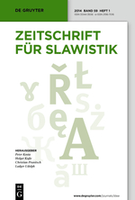
ZEITSCHRIFT FUR SLAWISTIK
Fostering Cross-Disciplinary Dialogue in Slavic ResearchZEITSCHRIFT FUR SLAWISTIK, published by WALTER DE GRUYTER GMBH, is a renowned journal focusing on Slavic studies, encompassing various fields such as cultural studies, linguistics, and literary theory. With its ISSN 0044-3506, this distinguished journal has been a significant contribution to the academic community since its inception in 1956, continuing to disseminate valuable research until 2024. While maintaining a strong reputation within several academic categories, ZEITSCHRIFT FUR SLAWISTIK holds a Q3 ranking in Cultural Studies and Linguistics and Language, and a Q2 ranking in Literature and Literary Theory as of 2023. This positioning underscores the journal’s impact, particularly as it caters to an audience of researchers, professionals, and students invested in the rich tapestry of Slavic culture and language. Access to this journal is not open; however, its comprehensive articles are crucial for anyone aiming to explore and deepen their understanding of Slavic linguistic and literary traditions. The journal's work is essential in fostering cross-disciplinary dialogue and advancing scholarship in these vital areas.
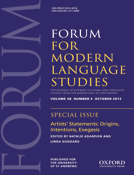
FORUM FOR MODERN LANGUAGE STUDIES
Fostering Scholarly Dialogue on Language and LiteratureFORUM FOR MODERN LANGUAGE STUDIES is a prestigious academic journal published by Oxford University Press that has been serving the fields of literature and linguistics since its inception in 1965. This journal, with an ISSN of 0015-8518 and an E-ISSN of 1471-6860, plays a crucial role in advancing scholarly discourse on modern language studies, including literature and literary theory. With an impactful presence in both the linguistic and literary domains, it has been recognized in 2023 with a category ranking of Q2 in Literature and Literary Theory and Q3 in Linguistics and Language. It stands out in the competitive landscape, holding a notable position within Scopus rankings, including a 70th percentile ranking in Literature & Literary Theory. While the journal currently does not offer open access options, it remains a vital resource for researchers, educators, and students passionate about the transformative power of language and literature. Its commitment to quality research and robust academic discussion underscores its importance, making it a key platform for those aiming to contribute to modern language scholarship.

Jordan Journal of Modern Languages & Literature
Advancing Scholarship in Modern Language StudiesJordan Journal of Modern Languages & Literature is a prestigious academic journal published by Yarmouk University, Deanship of Research & Graduate Studies. This journal serves as a vital platform for scholars and researchers in the fields of linguistics and literature, offering a well-rounded examination of modern languages and literary theory. With an impressive Q2 ranking in Linguistics and Language and a Q1 distinction in Literature and Literary Theory as of 2023, it consistently features high-quality research that contributes to the advancement of knowledge in these domains. The Scopus rankings further reflect its academic rigor, placing it in the 79th percentile for Literature and Literary Theory and maintaining significant influence in related fields, making it an essential resource for researchers, professionals, and students alike. Although it does not operate under an open-access model, the journal's commitment to publishing groundbreaking studies can significantly aid in the understanding and progression of modern linguistic and literary practices. The Jordan Journal of Modern Languages & Literature continues to be an influential voice in fostering scholarly dialogue and advancing research in the humanities.