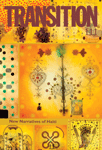
Transition
Scope & Guideline
Illuminating the Pathways of Transformation
Introduction
Aims and Scopes
- Cultural Narratives and Identity:
The journal emphasizes the exploration of cultural narratives that shape identities, particularly among marginalized communities. It seeks to understand how these narratives influence personal and collective experiences. - Migration and Diaspora Studies:
A significant focus is on the complexities of migration and diaspora, examining the lived experiences of individuals as they navigate displacement, belonging, and cultural exchange across borders. - Postcolonial and Decolonial Perspectives:
The journal critically engages with postcolonial and decolonial theories, analyzing the ongoing impacts of colonial histories and the ways in which societies can reclaim narratives and identities. - Environmental and Social Justice:
'Transition' addresses issues of environmental justice and social equity, particularly in relation to climate change, resource distribution, and the experiences of marginalized communities in these contexts. - Art and Aesthetics as Resistance:
The journal explores the role of art and aesthetics in resistance movements, focusing on how creative expressions can challenge dominant narratives and foster social change.
Trending and Emerging
- Climate Crisis and Environmental Activism:
There is a notable increase in discussions surrounding the climate crisis, particularly how it intersects with race, migration, and social justice. This trend underscores the urgency of addressing environmental issues through a lens of equity. - Decolonization and Anti-Racism:
Emerging themes of decolonization and anti-racism are prominent, reflecting a growing emphasis on dismantling systemic oppression and advocating for social change within both academic and activist circles. - Interdisciplinary Approaches to Identity:
Recent publications increasingly adopt interdisciplinary methods, combining literature, art, sociology, and politics to enrich discussions around identity, culture, and resistance. - Digital Narratives and New Media:
The integration of digital narratives and new media forms is rising, exploring how technology shapes cultural expressions and community engagements in the contemporary landscape. - Transnational Feminisms:
There is an emerging focus on transnational feminist perspectives, highlighting the varied experiences of women across different cultural contexts and their roles in social movements.
Declining or Waning
- Traditional Historical Analysis:
Papers that solely focus on traditional historical narratives without incorporating contemporary relevance or interdisciplinary approaches have become less common, suggesting a shift towards more dynamic and integrative analyses. - Generalized Ethnographic Studies:
Ethnographic studies that lack specificity or fail to connect with current socio-political issues are waning. There seems to be a move towards more nuanced and context-specific ethnographic work that engages with contemporary challenges. - Narrowly Defined National Contexts:
Research that limits itself to narrowly defined national contexts without considering transnational or global implications is decreasing. The journal now favors analyses that highlight interconnectedness and fluidity across borders.
Similar Journals

JOURNAL OF ETHNIC AND MIGRATION STUDIES
Charting New Paths in Ethnic and Migration ResearchJOURNAL OF ETHNIC AND MIGRATION STUDIES (ISSN: 1369-183X, E-ISSN: 1469-9451) is a leading peer-reviewed journal published by Routledge Journals, Taylor & Francis Ltd, based in the United Kingdom. With a significant impact factor and ranked Q1 in both Arts and Humanities (miscellaneous) and Demography as of 2023, this journal is pivotal for advancing research in ethnic and migration studies. It brings together interdisciplinary perspectives, focusing on the complexities of migration, integration, and the dynamics of cultural diversity across the globe. The journal's commitment to high-quality scholarship is reflected in its impressive Scopus rankings, placing it in the top percentile for both Demography and Arts and Humanities categories. Although not currently open access, it provides essential insights for researchers, policymakers, and practitioners dedicated to understanding the ever-evolving landscape of ethnic relations and migration issues. With contributions that span from theoretical frameworks to empirical studies, the journal aims to foster a deeper understanding of the social implications of migration, making it an invaluable resource for scholars and students alike.

Kritika Kultura
Connecting scholars to the vibrant world of cultural analysis.Kritika Kultura is an esteemed journal published by Ateneo de Manila University, dedicated to advancing the fields of cultural studies, literary criticism, and post-colonial theory. With its ISSN 2094-6937, this journal serves as a vital platform for scholars and practitioners interested in interdisciplinary research that analyzes the complexities of culture and literature within various socio-political contexts in the Philippines and beyond. Although currently not operating under an open-access model, Kritika Kultura is committed to fostering academic dialogue and disseminating significant research findings, making it an essential resource for researchers, professionals, and students alike. By showcasing innovative approaches and scholarly discourse, the journal contributes to the rich tapestry of Filipino and global academic thought, reinforcing its importance in contemporary scholarship.
AMERICAN LITERARY HISTORY
Navigating the Rich Landscape of American Literary StudiesAMERICAN LITERARY HISTORY, published by Oxford University Press Inc, is a leading peer-reviewed journal dedicated to advancing the understanding of American literature within the broader contexts of cultural studies and history. With an impressive impact factor reflecting its Q1 ranking in Cultural Studies, History, and Literature and Literary Theory, this journal serves as an essential resource for researchers, professionals, and students alike. Covering a wide range of topics, it seeks to illuminate the historical and cultural dynamics that shape literary production in the United States from 1989 to 2024. Although not an open access journal, AMERICAN LITERARY HISTORY remains a pivotal platform for scholarly discourse, encouraging rigorous scholarship and critical engagement with literary texts. The journal's strong Scopus rankings further emphasize its significance, ranked among the top journals in its field, making it an indispensable tool for anyone seeking to explore the rich tapestry of American literary heritage.
Citizenship Studies
Exploring the Depths of Citizenship and BelongingCitizenship Studies is a premier academic journal that focuses on the multidimensional analyses of citizenship, belonging, and social inclusion within the realms of Geography, Planning and Development and Political Science and International Relations. Published by ROUTLEDGE JOURNALS, TAYLOR & FRANCIS LTD, this esteemed journal has garnered a remarkable reputation, achieving Q1 ranking in both its categories and earning its place in the top 83rd percentile of Political Science and International Relations publications according to Scopus metrics. With its extensive publishing history from 1997 to 2024, the journal features rigorous research articles, theoretical developments, and critical reviews that catalyze discussions on current global citizenship issues. Although it does not currently offer Open Access, Citizenship Studies remains indispensable for researchers, practitioners, and students who seek to deepen their understanding of citizenship dynamics in a rapidly evolving world. The journal's insightful contributions are vital for developing policies that promote civic engagement and inclusivity in diverse societies.
International Journal of Maritime History
Connecting Cultures Through Maritime NarrativesThe International Journal of Maritime History is a distinguished academic publication dedicated to the exploration of maritime history, providing a platform for innovative research and scholarship in the field. Published by SAGE Publications Ltd, this journal aims to enhance our understanding of maritime activities and their impact on global historical narratives. With an ISSN of 0843-8714 and E-ISSN 2052-7756, the journal has established itself as a vital resource for historians, social scientists, and transportation scholars alike. Notably, it has achieved a respectable Q2 ranking in History and a Q4 ranking in Transportation, alongside being placed in the 57th percentile for History and 4th percentile for Transportation according to Scopus rankings. The journal spans converged years from 2001 to 2002 and 2011 to 2024, encouraging scholarly discourse on the intricate relationships between maritime practices, cultural exchange, and global developments. Accessibility options may vary, and contributors are invited to engage with historians and researchers in advancing maritime discourse. Commencing your journey into the depths of maritime studies begins here.
Inter-Asia Cultural Studies
Advancing Interdisciplinary Dialogue Across AsiaInter-Asia Cultural Studies is a premier scholarly journal published by Routledge Journals, Taylor & Francis Ltd, dedicated to advancing the field of Cultural Studies within an Asian context. With its Q1 ranking in Cultural Studies and an impressive Scopus rank placing it in the top 70th percentile among its peers, this journal has established itself as a leading platform for interdisciplinary research. Since its inception in 2005, Inter-Asia Cultural Studies has facilitated dialogue and scholarship that explores the complexities of cultural practices across Asia, offering critical analyses that resonate on a global scale. Although it does not operate under an Open Access model, its contributions are integral for researchers, professionals, and students seeking in-depth understanding and insights into the dynamic cultural landscapes of Asia. With a commitment to fostering innovative and impactful research, this journal continues to play a vital role in shaping contemporary discussions in the field.
African Diaspora
Connecting Cultures: A Deep Dive into African Diaspora StudiesAfrican Diaspora is a prominent academic journal published by BRILL that serves as a critical platform for interdisciplinary research in the fields of Cultural Studies, History, Linguistics, and Sociology. With its ISSN 1872-5457 and E-ISSN 1872-5465, the journal has established itself as a vital resource for scholars seeking to explore the complexities of African diaspora experiences and their manifold expressions across global contexts. Situated in the Netherlands, (Address: Plantijnstraat 2, P.O. Box 9000, 2300 PA Leiden), the journal operates within notable quartiles such as Q2 in Cultural Studies and History, which highlights its impact in academic circles. The journal is indexed in Scopus with impressive rankings, including an 88th percentile position in History, emphasizing its broad reach and rigorous scholarly standards. Researchers and graduate students alike are encouraged to contribute to this esteemed journal, which not only enriches academic discourse but also promotes a deeper understanding of the historical and contemporary implications of the African diaspora narrative.

Nodo
Exploring the intersection of society and environment through research.Nodo is a prominent open-access journal dedicated to advancing knowledge in the multidisciplinary fields of social and environmental studies. Founded and managed by UNIV ANTONIO NARINO, it has been making its scholarly content freely accessible since 2009, encouraging a broad spectrum of researchers, professionals, and students to engage with cutting-edge research. With an ISSN of 1909-3888 and an E-ISSN of 2346-092X, Nodo provides a platform for innovative thought, promoting interdisciplinary collaboration and discourse around critical societal issues. Located in Bogotá, Colombia, at CARRERA 3 ESTE NO 47 A-15, SEDE CIRCUNVALAR, Nodo aims to foster inclusive academic dialogue and is committed to the rigorous peer-review process that underscores the credibility and academic integrity of published works. As an essential resource, Nodo enhances the visibility of research pertinent to current global challenges, making it a significant asset for anyone invested in scholarly pursuits.
Cultural Sociology
Fostering Dialogue Across Cultural DisciplinesCultural Sociology is a leading academic journal published by SAGE Publications Ltd, aimed at advancing the field of cultural studies and social sciences. Established in 2007 and converging until 2024, this UK-based journal boasts a remarkable Q1 ranking in both Cultural Studies and Miscellaneous Social Sciences as of 2023, solidifying its reputation as a significant contributor to scholarly discourse. With a Scopus rank of #83 out of 1304 in its primary field, Cultural Sociology offers an important platform for researchers, professionals, and students to explore the intricate relationships between culture, society, and identity. Although it is not currently Open Access, this journal is dedicated to fostering interdisciplinary dialogue and rigorous research, making it an essential resource for those seeking to engage deeply with cultural phenomena and social dynamics.
AMERASIA JOURNAL
Advancing Interdisciplinary Dialogues in Cultural StudiesAMERASIA JOURNAL, published by Taylor & Francis Inc, serves as a vital platform for interdisciplinary discourse in the fields of Cultural Studies and History. With an ISSN of 0044-7471, this esteemed journal has established a presence since its inception in 1971, reflecting on the dynamic interplay of cultural narratives and historical contexts, particularly in the Asian American experience. Despite operating under a non-open access model, the journal boasts significant academic rigor, positioned within the Q3 quartile of its categories according to 2023 metrics. Aimed at researchers, professionals, and students engaged in exploring cultural dynamics, social history, and identity formation, AMERASIA JOURNAL features scholarly articles that respond to contemporary issues while informing both academic and public discourse. With its multidisciplinary focus and robust impact, it remains a noteworthy resource for those looking to enrich their understanding of the complex narratives that shape our world today.