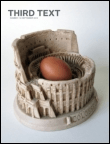
Third Text
Scope & Guideline
Unveiling the complexities of cultural dynamics.
Introduction
Aims and Scopes
- Postcolonial Studies and Decolonization:
The journal critically examines the effects of colonialism and ongoing colonial legacies in contemporary art practices, often highlighting the experiences and contributions of artists from formerly colonized nations. - Intersectionality and Identity Politics:
It explores the intersections of race, gender, sexuality, and class within artistic practices and representations, providing insights into how these identities shape and are shaped by art. - Art as a Political Tool:
'Third Text' investigates how art can function as a medium for political resistance and social change, often focusing on activist art movements and collective practices. - Global Perspectives on Contemporary Art:
The journal seeks to broaden the understanding of contemporary art by incorporating global perspectives, particularly from non-Western contexts, and analyzing how these perspectives challenge dominant narratives. - Theoretical Interrogation of Art Practices:
It encourages critical theoretical engagement with art, including discussions of aesthetics, representation, and the role of the viewer, often drawing from various philosophical and cultural theories.
Trending and Emerging
- Environmental and Ecological Art:
There is an increasing focus on how contemporary art engages with issues of climate change and ecological crises, reflecting a growing awareness of environmental concerns in artistic practices. - Indigenous and Decolonial Art Practices:
Emerging themes highlight the significance of indigenous voices and decolonial perspectives, as artists and scholars explore ways to reclaim narratives and challenge colonial histories. - Digital and Technological Art Interventions:
The integration of digital technologies and new media in art is gaining traction, with discussions surrounding how these mediums influence representation and interaction in contemporary art. - Collective and Collaborative Art Practices:
There is a notable trend towards papers that focus on collective art-making and community-based practices, reflecting a shift towards participatory art that fosters dialogue and engagement. - Critical Gender Studies and Queer Theory:
The journal increasingly addresses issues related to gender and sexuality, emphasizing queer perspectives and the politics of identity in contemporary art.
Declining or Waning
- Traditional Art Historical Narratives:
There is a noticeable decline in papers focusing solely on traditional art historical narratives, as the journal increasingly emphasizes contemporary issues and practices over historical analysis. - Eurocentric Perspectives:
The focus on Eurocentric art practices and critiques is waning, with a stronger emphasis on diverse and global viewpoints, indicating a shift away from Western-centric discourse. - Formal Aesthetics without Context:
Articles that solely address formal aesthetics, detached from political or social contexts, are less frequent, suggesting a move towards more integrated approaches that consider the broader implications of art.
Similar Journals

Cuadernos de Musica Artes Visuales y Artes Escenicas
Advancing Knowledge in Music and Visual ArtsCuadernos de Musica Artes Visuales y Artes Escenicas is an esteemed academic journal published by the PONTIFICIA UNIV JAVERIANA, FAC ARTES in Colombia. With a dedicated focus on the dynamic interplay between music, visual arts, and performing arts, this journal serves as a pivotal resource for researchers, professionals, and students engaged in these vibrant disciplines. The journal boasts impressive category quartiles, ranking Q2 in Linguistics and Language, Q2 in Music, and Q1 in Visual Arts and Performing Arts as of 2023, reflecting its growing influence and recognition in the academic community. With a commitment to open scholarly communication, Cuadernos fosters innovative research and critical dialogue among practitioners and scholars. The journal's international perspectives and comprehensive analyses help shape contemporary discourse, making it an essential platform for advancing knowledge in these fields. For contributors and readers alike, it represents a valuable opportunity to engage with emerging trends and influential works from across the globe.
ART HISTORY
Illuminating Artistic Practices Through Rigorous ResearchART HISTORY is a prestigious journal published by Wiley, focusing on the dynamic and diverse field of visual arts and performing arts since its inception in 1978. With an ISSN of 0141-6790 and an E-ISSN of 1467-8365, the journal has established itself as a significant resource for researchers, professionals, and students interested in exploring the complexities of art across various epochs and cultures. Currently ranked in the Q3 category within the Visual Arts and Performing Arts sector and positioned at #132 out of 667 in Scopus rankings—representing the top 80th percentile—ART HISTORY delivers insightful scholarship that contributes to the understanding and appreciation of art history. Although it does not offer open access, the journal remains committed to publishing high-quality, peer-reviewed articles that delve into critical artistic practices, theories, and aesthetics. The journal's location in the United Kingdom further enhances its international reach and influence, making it a vital platform for advancing discourse in the arts.

Quintana-Revista do Departamento de Historia da Arte
Celebrating the Fusion of Visual and Performing ArtsQuintana-Revista do Departamento de Historia da Arte, published by the Universidade de Santiago de Compostela, is a distinguished academic journal that focuses on the critical analysis and exploration of visual arts and performing arts. With its ISSN 1579-7414 and E-ISSN 2340-0005, this journal serves as a vital platform for researchers, professionals, and students interested in the depth of art history and cultural discourse. Operating under a Q4 category in the realm of Visual Arts and Performing Arts, the journal is committed to fostering scholarly dialogue and advancing knowledge in the field. Though it currently does not offer open access options, it remains an invaluable resource for those aiming to contribute to and understand the evolving landscape of art history. The journal covers converged years from 2011 to 2012 and 2014 to 2024, highlighting its ongoing relevance and adaptability to contemporary discussions. As it continues to enhance its visibility and impact within the 20th percentile of its category according to Scopus rankings, Quintana invites contributions that deepen our understanding of artistic expression and cultural heritage.
Journal of Contemporary Chinese Art
Unveiling the Dynamics of Contemporary Chinese CreativityThe Journal of Contemporary Chinese Art is a prestigious academic publication dedicated to advancing the discourse surrounding contemporary artworks and artistic practices in China. Published by INTELLECT LTD, this journal features insightful articles and research that catalyze discussions among scholars, practitioners, and students within the Visual Arts and Performing Arts fields. With an ISSN of 2051-7041 and an E-ISSN of 2051-705X, the journal operates without open access, yet remains a pivotal resource as reflected in its Q2 ranking in the 2023 category of Visual Arts and Performing Arts, positioning it within the 70th percentile on the Scopus Ranks. Covering a diverse range of topics from global influences on Chinese art to the socio-political dimensions of artistic expressions, the journal aims to foster a deeper understanding of contemporary cultural dynamics. Since its inception in 2019 and continuing through 2024, it has established itself as a critical platform for emerging voices and established experts alike, making it an essential read for anyone engaged in the study and appreciation of modern Chinese art.

ART IN AMERICA
Fostering Dialogue on Visual InnovationART IN AMERICA is a prominent journal dedicated to the exploration and critique of contemporary visual arts and practices within the United States and beyond. Published by BRANT PUBL, INC, the journal serves as an authoritative platform for scholars, artists, and enthusiasts alike, fostering vibrant dialogue and insightful analysis in the field of art. With an ISSN of 0004-3214 and a legacy dating back to 1979, ART IN AMERICA has established itself within the Q4 category of Visual Arts and Performing Arts according to the 2023 category quartiles. Although the journal currently does not offer Open Access options, it remains accessible to a diverse readership through its distribution across libraries and institutions. The journal's significance is underscored by its ability to spotlight emerging trends, critique canonical works, and promote diverse artistic voices amidst a constantly evolving cultural landscape. Researchers, professionals, and students will find ART IN AMERICA not only a valuable resource for scholarly discourse but also an essential guide to understanding the complexities and intricacies of the American art scene.
Journal of Science and Technology of the Arts
Illuminating the Synergy Between Art and Technology.The Journal of Science and Technology of the Arts, published by UNIV CATOLICA PORTUGUESA, is a pioneering open access journal dedicated to the interrelation of the arts and scientific advancements. Since its inception in 2009, it has served as a critical platform for disseminating innovative research across various disciplines, including Visual Arts, Performing Arts, Music, and Conservation. With its ISSN 1646-9798 and E-ISSN 2183-0088, the journal operates from Portugal, attracting a diverse international audience. Although it is currently ranked in Q4 for Arts and Humanities (miscellaneous) and Computer Science Applications, it has achieved notable Q3 rankings in Conservation, Music, and Visual Arts and Performing Arts as of 2023. The journal's impact is reflected in its Scopus rankings, which place it in the midst of its peers, showcasing its growing influence. Through its commitment to fostering interdisciplinary dialogue, the Journal of Science and Technology of the Arts is essential for researchers, professionals, and students interested in the innovative integration of arts and technology.

CONNAISSANCE DES ARTS
Advancing Critical Conversations in the ArtsCONNAISSANCE DES ARTS, published by SFPA-CONNAISSANCE ARTS, is a prominent French journal that has been enriching the landscape of Visual Arts and Performing Arts since its inception in 1969. With an ISSN of 0293-9274, this journal offers a platform for critical exploration and scholarly discourse, making notable contributions especially in the realms of art history, criticism, and contemporary artistic practices. Although the journal currently holds a Q4 quartile ranking in its category and ranks in the lower echelon of Scopus ranks (#638 out of 667), its focus on niche topics within the arts makes it a valuable resource for researchers and professionals who seek to engage with less mainstream topics that often go overlooked. The journal publishes insightful articles, reviews, and essays, contributing to the nurturing of artistry and culture in France and beyond. While it is not an open-access publication, the journal remains a significant entity for academics and practitioners keen on advancing their understanding of visual and performing arts. For further engagement with the journal, interested parties can reach out or submit inquiries to its address at 51 RUE VIVIENNE, 75095 PARIS CEDEX 02, FRANCE.
ZEITSCHRIFT FUR KUNSTGESCHICHTE
Exploring the Depths of Art HistoryZEITSCHRIFT FUR KUNSTGESCHICHTE is a prestigious journal dedicated to the study of art history, offering insightful analyses and discussions that enrich the understanding of visual arts and performing arts. Published by DEUTSCHER KUNSTVERLAG GMBH in Germany, this journal has established itself as a significant platform for researchers and professionals alike since its inception. With a print ISSN of 0044-2992 and an e-ISSN of 2569-1619, it spans a comprehensive range of topics in art history, reflecting both traditional and contemporary perspectives. Although categorized in the Q4 quartile for Visual Arts and Performing Arts, the journal contributes to a rich dialogue within its field, aiming to foster academic discourse and promote scholarly research. Its scope has evolved notably from converged years starting in 1975 and gathering strength from 2001 to 2024, and it is committed to serving as an essential resource for students, academics, and practitioners in the arts. While not offering open access, the journal maintains a rigorous peer-review process to ensure high-quality submissions that advance knowledge and stimulate critical thought.
Australian and New Zealand Journal of Art
Fostering Innovation in Visual and Performing ArtsThe Australian and New Zealand Journal of Art, published by Taylor & Francis Ltd, stands as a critical platform for scholarly discourse in the fields of art, visual arts, and performing arts, contributing to the ongoing dialogue regarding contemporary artistic practices and methodologies across Australia and New Zealand. With an ISSN of 1443-4318 and an E-ISSN of 2203-1871, this journal invites submissions that strive for innovation and insightful critique, aiming to foster a deeper appreciation and understanding of diverse artistic expressions. Despite its classification in the fourth quartile under the Arts and Humanities categories, it continues to attract attention within its niche, as evidenced by its Scopus rankings, indicating its vital role in the academic landscape. The journal is committed to bridging the gap between research and practice, providing access to a wealth of interdisciplinary knowledge for researchers, professionals, and students alike.
Afterall
Navigating the Complexities of Art and SocietyAfterall is a distinguished peer-reviewed journal published by University of Chicago Press, focusing on the fields of visual arts and performing arts. With an ISSN of 1465-4253 and an E-ISSN of 2156-4914, the journal serves as a vital platform for scholarly discourse, showcasing a diverse range of critical writings, interviews, and artistic projects that challenge and expand contemporary understandings of art. Although categorized in the fourth quartile for 2023, it provides valuable insights within the global landscape of art scholarship, contributing significantly to emerging dialogues about practice, meaning, and the role of the artist in society. The journal operates from its base in Chicago, United States, and aims to bridge theoretical scholarship and practical artistic endeavors through its engaging content and innovative approaches. As researchers, professionals, and students delve into the pages of Afterall, they will find a rich source of inspiration and inquiry that reflects the evolving nature of artistic expression and cultural commentary.