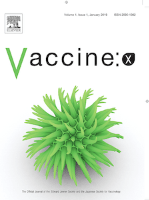
Vaccine: X
Scope & Guideline
Fostering knowledge and innovation in vaccine research.
Introduction
Aims and Scopes
- Vaccine Development and Technology:
Research related to the formulation, manufacturing processes, and technological advancements in vaccine production, including novel delivery systems and adjuvants. - Efficacy and Safety Studies:
Evaluations of vaccine effectiveness, safety profiles, and post-marketing surveillance to monitor adverse events and long-term immune responses. - Public Health and Epidemiology:
Studies assessing vaccination coverage, public health outcomes, and the epidemiological impact of vaccination programs in various demographics. - Vaccine Hesitancy and Acceptance:
Research focusing on factors influencing vaccine uptake, including sociocultural, psychological, and behavioral aspects of vaccine hesitancy. - Global Health and Equity:
Investigations into disparities in vaccine access and coverage in low- and middle-income countries, addressing the challenges and strategies to improve vaccination rates.
Trending and Emerging
- COVID-19 Vaccine Research:
A surge in studies related to COVID-19 vaccines, including their effectiveness, safety, and the impact of variants, has become a dominant theme in recent publications. - Vaccine Equity and Access:
Increasing emphasis on global vaccine equity, particularly in the context of low- and middle-income countries, highlighting barriers to access and strategies for improvement. - Innovative Vaccine Delivery Systems:
Research on advanced vaccine delivery techniques, such as intranasal and microneedle vaccinations, is gaining attention for their potential to improve immunization coverage. - Vaccine Hesitancy Interventions:
Growing interest in understanding and addressing vaccine hesitancy through targeted interventions and communication strategies, particularly in diverse populations. - Immunological Studies Post-Vaccination:
Emerging studies that focus on understanding the immune responses following vaccination, including long-term immunity and booster dose efficacy, are increasingly prevalent.
Declining or Waning
- Traditional Vaccination Methods:
Studies on conventional vaccination methods are becoming less prominent as research shifts toward innovative delivery systems and technologies. - Vaccination for Diseases with Declining Incidence:
Research on vaccination for diseases that have significantly declined in incidence due to successful public health interventions is waning, as focus moves towards emerging infectious diseases. - Single-Disease Focus Studies:
There is a decreasing trend in research that solely focuses on vaccines for single diseases, as there is a growing interest in multi-disease vaccination strategies.
Similar Journals

Eurosurveillance
Advancing global health through open access research.Eurosurveillance is a prestigious journal dedicated to the field of epidemiology, public health, and infectious diseases, published by the European Centre for Disease Prevention and Control since 1996. With an impressive Q1 ranking across various categories, including Epidemiology and Public Health, it consistently stands at the forefront of research dissemination, making it an invaluable resource for researchers, professionals, and students alike. The journal boasts an outstanding reputation, as evidenced by its Scopus rankings, where it ranks in the top 1% to 3% in multiple relevant categories. As an Open Access publication, Eurosurveillance ensures that vital findings are freely accessible to a global audience, fostering collaboration and innovation in the fight against infectious diseases. With a dedicated reach from 2001 to 2024, the journal addresses contemporary challenges in public health and virology, reinforcing its significance in shaping policies and research initiatives across the world.
JOURNAL OF INFECTIOUS DISEASES
Transforming Research into Real-World SolutionsThe JOURNAL OF INFECTIOUS DISEASES, published by OXFORD UNIV PRESS INC, is a leading peer-reviewed journal dedicated to advancing the understanding of infectious diseases through high-quality research. With an impressive impact factor reflecting its prominence in the field—ranking in the Q1 category for both Immunology and Allergy and Infectious Diseases—this journal serves as a pivotal platform for researchers, healthcare professionals, and students alike. Its extensive history, spanning over a century since its inception in 1904, highlights its established authority and commitment to the field. Based in the United Kingdom, the journal covers essential topics from clinical management to epidemiological trends, providing vital insights that inform practice and policy. Although the journal is not open access, it remains accessible to a wide audience, ensuring that critical research continues to drive innovation and best practices in infectious disease management.
MICROBIOLOGY AND IMMUNOLOGY
Advancing Knowledge in Microbiology and ImmunologyMICROBIOLOGY AND IMMUNOLOGY, an esteemed journal published by WILEY, serves as a vital resource for researchers and professionals in the fields of microbiology, immunology, and virology. With its ISSN 0385-5600 and E-ISSN 1348-0421, this journal has been a cornerstone in scientific literature since its inception in 1977, bridging decades of research and innovation through its comprehensive coverage of emerging trends and discoveries. Although this journal operates without open access, it maintains a commendable presence in academic circles, reflected in its 2023 Quartile rankings of Q3 across the categories of Immunology, Microbiology, and Virology. As part of an important discourse in these disciplines, MICROBIOLOGY AND IMMUNOLOGY ensures its scholarly contributions are relevant to both seasoned researchers and emerging scholars. Positioned in a competitive journal landscape, with Scopus ranks indicating a median percentile across its fields, it remains committed to advancing knowledge through peer-reviewed articles, thereby supporting the continuous evolution of its focus areas. The journal's current scope encompasses topics critical for understanding pathogen-host interactions and the immune response, making it a crucial publication for any academic library or individual scholar dedicated to the biological sciences.
BIOLOGICALS
Advancing the frontiers of biological research.BIOLOGICALS, published by Academic Press Ltd - Elsevier Science Ltd, is a prestigious journal dedicated to advancing the fields of applied microbiology, biotechnology, immunology, and pharmacology. With an ISSN of 1045-1056 and E-ISSN of 1095-8320, this journal has established itself as a vital resource for researchers and practitioners, offering rigorous peer-reviewed content that spans converging disciplines from 1990 to 2024. With a commendable presence in the field, it ranks in the Q3 category across multiple domains, including applied microbiology and biotechnology, highlighting its contribution to critical advancements and knowledge dissemination. The journal's rankings reflect its relevance, with notable placements in Scopus Ranks, ensuring it remains an important platform for innovative research and discussion. Although it does not currently offer Open Access, the journal’s comprehensive review process guarantees the quality of published work, making it essential reading for professionals, academics, and students seeking to stay informed about the latest developments in biology and life sciences.

EPIDEMIOLOGIE MIKROBIOLOGIE IMUNOLOGIE
Exploring the Frontiers of Microbial and Immune ResearchEPIDEMIOLOGIE MIKROBIOLOGIE IMUNOLOGIE is a prominent scholarly journal published by CESKA LEKARSKA SPOLECNOST J EV PURKYNE in the Czech Republic. With an ISSN of 1210-7913, this journal has been at the forefront of research since its inception in 1994, showcasing a rich repository of studies bridging the domains of epidemiology, microbiology, immunology, and infectious diseases, and reflecting advancements over three decades. Although it currently falls within the Q4 category in multiple fields including Epidemiology and Microbiology, the journal serves an essential role in disseminating knowledge and fostering discussions around public health challenges. The contributions made through its pages are vital for researchers, healthcare professionals, and students aiming to enhance their understanding of complex biomedical issues. While it does not offer open access, the journal remains a critical resource in its niches, inviting readers to engage with the latest findings and methodologies reshaping the landscape of health science.

AIMS Allergy and Immunology
Advancing the Frontiers of Allergy and ImmunologyAIMS Allergy and Immunology is a prestigious open access journal dedicated to advancing knowledge in the fields of allergy and immunology. Published by the American Institute of Mathematical Sciences (AIMS), this journal provides a vibrant platform for researchers, practitioners, and scholars to share groundbreaking findings and insights. Recognized for its commitment to disseminating high-quality research since its inception in 2017, AIMS Allergy and Immunology contributes significantly to the understanding of complex immunological mechanisms and allergic responses, thus playing a pivotal role in enhancing clinical practices and therapeutic strategies. With its ISSN 2575-615X, the journal aims to facilitate a robust exchange of ideas and promote collaboration within the scientific community. Researchers and practitioners are encouraged to access the latest studies and reviews, which are all freely available online, ensuring that vital information reaches a global audience without barriers. Together, we can tackle the challenges posed by allergies and immune disorders through rigorous scientific inquiry and innovation.
Tropical Diseases Travel Medicine and Vaccines
Empowering professionals with cutting-edge insights on tropical diseases.Tropical Diseases Travel Medicine and Vaccines, published by SPRINGERNATURE, stands at the forefront of research in the fields of infectious diseases and public health, with an impressive impact factor that signifies its relevance and influence. Since its inception in 2015, this peer-reviewed journal has maintained an open access policy, ensuring that cutting-edge research on tropical diseases and travel medicine is readily available to researchers, professionals, and students worldwide. The journal currently ranks in the Q2 Quartile for both Infectious Diseases and Public Health, Environmental and Occupational Health, reflecting its substantial contribution to these critical areas of study. With a strong Scopus rank of #176 in Public Health and #138 in Infectious Diseases, it serves as a vital platform for innovative studies that advance understanding and response strategies related to tropical diseases. For its vast audience, Tropical Diseases Travel Medicine and Vaccines not only acts as a bridge connecting researchers with practical applications but also nurtures academic discourse essential for future advancements in global health.
Influenza and Other Respiratory Viruses
Transforming understanding of respiratory infections.Influenza and Other Respiratory Viruses, published by WILEY, serves as a prominent peer-reviewed platform for the dissemination of research contributing to the understanding and management of respiratory viral infections. With an impressive impact factor and established as an Open Access journal since 2014, it ensures maximum visibility and accessibility of pivotal research findings in the realm of Epidemiology, Infectious Diseases, Public Health, and Pulmonary and Respiratory Medicine. Registered under the ISSN 1750-2640 and E-ISSN 1750-2659, the journal boasts Q1 rankings in four critical categories as of 2023, underscoring its significance within the scientific community. Researchers, professionals, and students can benefit from the convergence of knowledge that this journal facilitates from 2007 to 2024, fostering advancements in understanding viral pathogens and innovative treatment strategies that are increasingly vital to public health efforts globally.
Clinical and Experimental Vaccine Research
Innovating vaccine strategies for global health.Clinical and Experimental Vaccine Research, an esteemed journal published by the Korean Vaccine Society, serves as a vital platform for disseminating groundbreaking research in the fields of Immunology, Infectious Diseases, and Public Health. Since its inception in 2012, this open-access journal has been committed to advancing knowledge and fostering collaboration among professionals dedicated to vaccine development and evaluation. With an impactful presence and a Q3 ranking in several categories on the Scopus index, it reflects a robust commitment to quality, evidenced by its placement within the 41st to 59th percentiles across multiple disciplines related to medicine and health. Situated in Seoul, South Korea, at the Department of Pediatrics, Yonsei University Severance Children's Hospital, the journal not only provides a crucial resource for researchers and practitioners but also enhances the global discourse on vaccination strategies and public health interventions. By contributing to the ongoing dialogue in vaccine research, this journal plays an essential role in shaping future health policies and practices.
SEMINARS IN IMMUNOLOGY
Exploring the Depths of Immune ScienceSEMINARS IN IMMUNOLOGY, published by Academic Press Ltd - Elsevier Science Ltd, stands as a leading journal in the field of immunology and allergy, with an impressive impact factor that reflects its significant contribution to advancing research and discourse within these vital areas of medical science. Established in 1989, this esteemed journal has garnered a reputation for disseminating high-quality, peer-reviewed articles that span a broad spectrum of immunological topics, making it an essential resource for researchers, healthcare professionals, and students alike. Currently ranked Q1 in both Immunology and Allergy categories, SEMINARS IN IMMUNOLOGY ranks 39th among 233 journals in Immunology and Allergy and 43rd among 236 in Immunology and Microbiology according to Scopus, placing it in the 83rd and 81st percentiles respectively. This underscores its pivotal role in shaping the future of immunological research and clinical practices. While the journal operates under a subscription model with no open access option, it remains committed to providing comprehensive insights and fostering scholarly collaboration within the global immunology community.