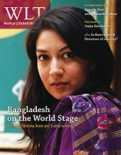
WORLD LITERATURE TODAY
Scope & Guideline
Fostering Dialogue in the Realm of Global Literature
Introduction
Aims and Scopes
- Global Literary Discourse:
The journal focuses on literature from various cultures, aiming to create a dialogue between global literary traditions and contemporary issues. - Literary Translations:
A significant emphasis is placed on the art of translation, highlighting the nuances and challenges of conveying literary works across languages. - Cultural Critique:
The journal explores the role of literature in addressing social and political themes, providing critical analyses of contemporary issues through a literary lens. - Interviews and Conversations:
Featuring dialogues with authors, poets, and critics, the journal offers insights into the creative processes and thoughts of influential literary figures. - Innovative Literary Forms:
WORLD LITERATURE TODAY encourages exploration of various literary forms, including poetry, essays, and experimental narratives, thus broadening the scope of literary expression.
Trending and Emerging
- Diversity and Inclusion in Literature:
There is a growing focus on literature that reflects diverse cultural backgrounds, identities, and experiences, promoting inclusivity in literary discussions. - Eco-Literature and Climate Change:
Emerging themes around environmental literature and the climate crisis are increasingly prevalent, as authors explore the intersections of literature and ecological awareness. - Postcolonial Narratives:
The journal is highlighting postcolonial voices and narratives that challenge dominant historical perspectives, focusing on the aftermath of colonialism and its ongoing impact. - Digital and Multimedia Literature:
Emerging trends in digital literature and multimedia storytelling are gaining attention, reflecting changes in how literature is consumed and experienced in the digital age. - Mental Health and Well-Being:
There is an increasing exploration of themes related to mental health, resilience, and well-being in literature, addressing the complexities of human experience in contemporary society.
Declining or Waning
- Traditional Literary Criticism:
There has been a noticeable decline in the focus on traditional literary criticism, with more emphasis placed on contemporary and innovative approaches to literature. - Eurocentric Perspectives:
The journal has gradually moved away from Eurocentric literary narratives, increasingly prioritizing voices and stories from non-Western cultures. - Historical Literary Analysis:
Themes centered around historical literary analysis have waned, as the journal now emphasizes current and emerging literary trends over historical contexts.
Similar Journals

REVISTA DE LITERATURA
Advancing literary scholarship for a global audience.REVISTA DE LITERATURA, published by the Consejo Superior de Investigaciones Científicas (CSIC) in Spain, stands as a beacon of scholarly excellence in the field of Literature and Literary Theory. With an impressive Q1 ranking in its category for 2023, the journal has established a reputable position within the academic community, reflected in its Scopus rank of #427 out of 1106, placing it in the top 61st percentile. Operating under an Open Access model since 2001, it ensures that cutting-edge research on literary texts, theories, and critical practices is freely accessible to all, fostering scholarly dialogue and enhancing the global discourse on literature. The journal’s continuous commitment to advancing literary scholarship from 1996 to 2024 highlights its role in addressing contemporary literary challenges while celebrating diverse voices and ideas. Researchers, professionals, and students alike are encouraged to engage with this vital resource, which not only showcases innovative research but also contributes significantly to the richness of literary studies.

AMERICAN POETRY REVIEW
Celebrating the Art of WordsAMERICAN POETRY REVIEW, published by Old City Publishing Inc, is a prominent journal dedicated to the exploration and celebration of poetry within the broader field of literature and literary theory. With an ISSN of 0360-3709 and an E-ISSN of 2162-4984, this journal serves as a critical platform for both emerging and established voices in poetry, showcasing a diverse array of poetic forms and critical essays that enrich the discourse surrounding this vital art form. Despite its Q4 ranking in the 2023 Literature and Literary Theory category, the AMERICAN POETRY REVIEW plays a crucial role in democratizing literary criticism and fostering collaboration among poets, scholars, and enthusiasts. The journal not only emphasizes the innovative potential of poetry but also provides insights into its cultural significance, aligning with the ongoing academic trends towards inclusive and interdisciplinary approaches in literature studies. Although it does not offer open access options, the publication continues to engage a dedicated audience from its headquarters in Philadelphia, PA, striving to elevate the visibility of contemporary poetry and its practitioners.

CHICAGO REVIEW
Unveiling the Rich Tapestry of Modern WritingCHICAGO REVIEW is a prestigious literary journal published in the United States, with a mission to explore the rich tapestry of contemporary literature and literary theory. With its ISSN 0009-3696 and E-ISSN 2327-5804, the journal serves as a vital platform for emerging voices and established authors alike, showcasing a diverse array of literary forms, including poetry, prose, and critical essays. Published by the CHICAGO REVIEW, the journal stands as an influential publication in the field, particularly noted for its contributions to the understanding of literature's role in society. Despite being categorized in the fourth quartile (Q4) for 2023 in Literature and Literary Theory, its commitment to quality and innovation makes it a significant resource for researchers, professionals, and students seeking to deepen their engagement with literary studies. The journal has maintained a continuous presence from 2002 to 2022, promising a comprehensive archive of thought-provoking content for its readers.

TWENTIETH CENTURY LITERATURE
Advancing Scholarship in Modern Literary MovementsTWENTIETH CENTURY LITERATURE is a renowned journal published by Hofstra University Press, dedicated to the exploration and analysis of literature and literary theory from the twentieth century. With a focus on both established and emerging voices in the field, this journal serves as an essential resource for researchers, professionals, and students who seek to deepen their understanding of significant literary movements and trends. The journal holds an impressive Q2 category ranking in Literature and Literary Theory as of 2023, showcasing its impact and relevance in the academic community. Though not an open access journal, it provides valuable insights and scholarly discussions that contribute to ongoing debates in literature studies. Covering a converged period from 2002 to 2014 and continuing from 2016 to 2024, TWENTIETH CENTURY LITERATURE positions itself as a pivotal platform for thought-provoking literature critique and scholarly inquiry, making it an indispensable addition to any academic library or personal collection.
LIT-Literature Interpretation Theory
Advancing Critical Thought in Literature.LIT-Literature Interpretation Theory is a premier academic journal that delves into the intricate relationships between literature and various interpretative theories, published by Routledge Journals, Taylor & Francis Ltd. With an ISSN of 1043-6928 and E-ISSN 1545-5866, this journal has established a notable reputation within the field, evidenced by its ranking in the 71st percentile among peers, and its placement in Q3 of the Literature and Literary Theory category for 2023. Since its inception in 1989 and continuing through 2024, LIT has aimed to provide a platform for the examination of literary texts through diverse theoretical lenses, catering not only to scholars and researchers but also to students and practitioners interested in literary discourse. Although it does not offer open access, the journal continues to be a vital resource for those seeking to enhance their understanding of literary theory within the arts and humanities. With robust insights and critical analyses, LIT contributes significantly to ongoing conversations in literature and promotes innovative interpretations that challenge conventional perspectives.

RAMUS-CRITICAL STUDIES IN GREEK AND ROMAN LITERATURE
Bridging Ancient Wisdom with Contemporary InsightRAMUS: Critical Studies in Greek and Roman Literature, published by Cambridge University Press, stands as a premier journal dedicated to the exploration and analysis of classical literary texts. Established in 2002, this journal has garnered recognition in its field, achieving a Q1 category ranking in both Classics and Literature and Literary Theory for 2023, which reflects its commitment to scholarly excellence. With an impressive Scopus ranking, where it places in the 76th percentile for Literature and Literary Theory and the 70th percentile for Classics, RAMUS is a critical resource for researchers, professionals, and students engaged in the study of ancient texts and their lasting impact on contemporary literature. Although currently not an open-access journal, it offers a wealth of peer-reviewed articles, reviews, and critical essays that enrich understanding and foster discussions in the realms of Greek and Roman literary traditions. This journal not only serves as an academic platform but also contributes to the ongoing dialogue on the relevance of classical literature in today's cultural and literary discourse.
Castilla-Estudios de Literatura
Connecting Scholars Through Open Access Literature.Castilla-Estudios de Literatura is an esteemed academic journal published by EDICIONES UNIV VALLADOLID, dedicated to the exploration and analysis of literature and literary theory. With an ISSN of 1989-7383 and an E-ISSN of 1989-7383, this journal has provided Open Access content since 2009, ensuring wide accessibility to its scholarly materials. Hailing from Spain, specifically based at JUAN MAMBRILLA 14, VALLADOLID 47003, SPAIN, it has become a notable platform for researchers and scholars, achieving a respectable Q3 ranking in the 2023 category of Literature and Literary Theory, along with a Scopus rank of #637 out of 1106 in the Arts and Humanities. Covering a converging period from 2013 to 2024, this journal embraces a diverse range of literary analysis, aiming to foster critical discourse among academics, professionals, and students globally. Its commitment to high-quality research and open dissemination makes it an invaluable resource for those engaged in the literary field.

452 F-Revista de Teoria de la Literatura y Literatura Comparada
Unlocking the potential of literary theory and comparative analysis.452 F-Revista de Teoria de la Literatura y Literatura Comparada is a prestigious academic journal published by the Universitat de Barcelona, Faculty of Philology, dedicated to advancing the field of literature and literary theory. With an E-ISSN of 2013-3294, this Open Access journal has been freely accessible since 2009, ensuring widespread dissemination of knowledge across the global literary community. Recognized for its scholarly contributions, it attained a Q2 ranking in the Literature and Literary Theory category as of 2023, placing it in the top tier of publications in its field. The journal covers a broad spectrum of topics within literary theory and comparative literature, inviting submissions from emerging and established scholars alike. Based in Barcelona, Spain, the journal bridges cultural and academic dialogues, positioning itself as an essential resource for researchers, professionals, and students aiming to deepen their understanding of contemporary literary dynamics.
ROMANCE QUARTERLY
Celebrating the Art of Love Through Academic InquiryROMANCE QUARTERLY is an esteemed journal published by Routledge Journals, Taylor & Francis Ltd, focusing on critical discussions and innovative research in the fields of Cultural Studies and Literature and Literary Theory. With its inception in 1986, this journal has diligently documented the evolving landscape of romance literature, making significant contributions through interdisciplinary approaches that resonate across literature and cultural scholarship. Holding a commendable position in academic rankings, it is classified in the second quartile for Literature and Literary Theory, and in the third quartile for Cultural Studies as of 2023, highlighting its relevance and impact within these domains. While it operates under a traditional access model, the required scholarly discourse and access to contemporary studies make it a crucial resource for researchers, educators, and students alike. ROMANCE QUARTERLY serves not merely as a platform for publishing but as a vibrant hub for the exploration and analysis of romance narratives, offering invaluable insights into their impact on cultural and societal constructs, surely a must-read for anyone passionate about these subjects.

GEORGIA REVIEW
Fostering a Community of Literary Innovators.Georgia Review is a distinguished literary journal published by the University of Georgia, renowned for its commitment to showcasing a diverse array of creative writing, including poetry, fiction, and essays. With its ISSN number 0016-8386, the journal has fostered a vibrant community of writers and scholars since its inception, offering a platform for emerging and established voices alike. Although the journal's coverage in Scopus was discontinued in 2012, its influence within the literary field remains significant, bolstered by a rich tradition of insightful commentary and cultural critique reflective of contemporary issues. Access to the journal is available through traditional subscription models, making it a valuable resource for researchers, students, and literary enthusiasts aiming to explore the intersections of literature and society. The Georgia Review stands out for its rigorous editorial standards and its role in advancing the appreciation of the literary arts, cementing its importance within the landscape of American literary journals.