
Acoustical Science and Technology
Scope & Guideline
Exploring the Frontiers of Sound and Innovation
Introduction
Aims and Scopes
- Acoustic Measurement and Analysis:
Research on various methodologies for measuring and analyzing sound, including innovations in acoustic measurement techniques and computational models. - Auditory Perception and Cognition:
Studies exploring how humans perceive sound, including the effects of reverberation, noise, and contextual factors on auditory processing. - Sound Propagation and Environmental Acoustics:
Investigations into how sound travels through different mediums and environments, including urban noise modeling and sound absorption characteristics. - Musical Acoustics and Instrumentation:
Research focused on the acoustical properties of musical instruments, including sound production, vibrational analysis, and psychoacoustics. - Speech and Communication Acoustics:
Studies addressing the acoustic properties of speech, voice recognition, and communication in various contexts, including the impact of technology on speech intelligibility. - Innovative Acoustic Technologies:
Development and application of new technologies in acoustics, including sound synthesis, noise control measures, and advanced auditory devices.
Trending and Emerging
- Machine Learning in Acoustics:
The integration of machine learning techniques for sound analysis, speech recognition, and emotion detection is rapidly gaining importance, reflecting broader trends in data science. - Acoustic Metasurfaces and Advanced Materials:
Research into innovative materials for sound absorption and manipulation, such as acoustic metasurfaces, is becoming increasingly prominent, indicating a shift towards material science applications. - Environmental Noise Control and Urban Acoustics:
As urban environments grow, studies focusing on noise control strategies and the impact of road traffic noise are trending, addressing public health and environmental concerns. - Applications in Virtual and Augmented Reality:
The exploration of sound in immersive environments is emerging, with research on how sound design affects experiences in virtual and augmented reality settings. - Neuroscience of Auditory Processing:
There is a growing interest in understanding the neural mechanisms behind auditory perception, particularly in relation to complex sound environments and speech comprehension.
Declining or Waning
- Traditional Reverberation Studies:
Although reverberation remains a critical area, the specific traditional studies on reverberation time and its measurement have decreased as more sophisticated modeling techniques emerge. - Basic Acoustic Properties of Conventional Instruments:
Research focusing solely on the basic acoustic properties of traditional instruments has waned, with a shift towards more complex analyses involving performance and interaction with acoustics. - Purely Theoretical Acoustic Models:
There appears to be a decline in publications centered on purely theoretical models without experimental validation, as the field increasingly values empirical data and practical applications. - General Psychoacoustic Studies:
While psychoacoustics remains an important area, studies that do not incorporate modern technological advancements or specific applications have seen reduced attention.
Similar Journals
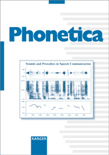
PHONETICA
Advancing Phonetic Research, Shaping Acoustic FuturesPHONETICA, published by De Gruyter Mouton, is a premier journal specializing in the interdisciplinary study of phonetics, phonology, and their applications in linguistics and acoustic sciences. With an impressive scope covering critical aspects of acoustics and language, PHONETICA has established itself as a leading platform for innovative research since its inception in 1957, continuing through to 2024. The journal boasts a significant impact, reflected in its esteemed Q1 ranking in both Acoustics and Ultrasonics and Linguistics and Language categories as of 2023, positioning it in the top quartile of scholarly journals in its field. PHONETICA's rigorous publication standards attract a diverse array of researchers and professionals, eager to disseminate their findings in an engaging and scholarly environment. Although not open access, the journal remains a vital resource for those seeking to deepen their understanding and contribute to the evolving dialogue in phonetic research.
Organised Sound
Unveiling New Dimensions in Sound and CompositionOrganised Sound, published by Cambridge University Press, stands as a pivotal journal in the fields of Music and Computer Science Applications, reflecting its commitment to advancing interdisciplinary research related to sound and music technologies. Established in 1996, this biannual journal encourages the exploration of new forms of composition, performance, and listening practices using contemporary technological advancements. With an impressive Q1 ranking in Music and a notable place within the top 79th percentile of its category according to Scopus, Organised Sound provides a unique platform for researchers, practitioners, and artists to share innovative ideas and collaborate across disciplines. The journal's rigorous peer-review process ensures high-quality contributions that are informed by the latest theoretical and practical developments. Although currently not an open-access journal, it remains highly regarded for its scholarly depth and relevance in today’s rapidly evolving soundscape.

JOURNAL OF SOUND AND VIBRATION
Connecting theory and application in acoustics research.The JOURNAL OF SOUND AND VIBRATION, published by Academic Press Ltd - Elsevier Science Ltd, stands as a pivotal platform in the fields of Acoustics and Ultrasonics, Mechanical Engineering, and Mechanics of Materials. Since its inception in 1964, the journal has served as a beacon for researchers and practitioners looking to share and advance their knowledge on sound and vibration phenomena. With an impressive Q1 ranking in multiple categories and a Scopus ranking placing it in the top 10% of significant journals in related fields, it offers a high-impact venue for disseminating innovative research. The journal's well-rounded scope intersects fundamental and applied science, ensuring it remains relevant to a diverse audience, including students and professionals aiming to deepen their understanding of dynamic mechanical systems. Although primarily subscription-based, the journal's commitment to academic excellence makes it a valuable resource for all involved in the study and application of sound and vibration research, contributing significantly to advancements across engineering and physics disciplines.

APPLIED ACOUSTICS
Exploring innovative applications of acoustics.Applied Acoustics is a prestigious peer-reviewed journal published by Elsevier Science Ltd, dedicated to advancing the field of acoustics and ultrasonics. With an impressive impact factor that places it in the Q1 category for the 2023 Acoustics and Ultrasonics rankings and a strong Scopus rank of #7 out of 44 in its field, this journal serves as an essential resource for researchers, professionals, and students. Covering a broad range of topics related to practical applications of sound in various industries, Applied Acoustics offers insights into innovative technologies and methods that push the boundaries of acoustic research. The journal spans from its inception in 1968 to its continuation through 2025, promising a wealth of historical and contemporary studies. While not currently an open-access publication, it remains a pivotal platform for disseminating high-quality research findings and fostering collaboration within the global acoustics community.

STYLE
Championing High-Quality Scholarship in the HumanitiesSTYLE, published by Penn State University Press, is a premier journal dedicated to advancing the fields of Literature and Literary Theory. With its impactful presence in the academic landscape, it holds a prestigious Q1 category rank in its field as of 2023, and it is currently positioned 44th among 1,106 journals in Arts and Humanities Literature and Literary Theory, reflecting a remarkable 96th percentile ranking in Scopus. Although not an Open Access journal, STYLE is committed to enriching scholarship from 2002 through 2024, providing a vital platform for researchers, professionals, and students to explore and disseminate cutting-edge literary research and theoretical innovations. By encouraging critical dialogues and interdisciplinary approaches, STYLE plays an essential role in shaping contemporary literary studies and remains a trusted source for high-quality scholarship in the humanities.

Acoustics
Discovering Sound: Pioneering Research in AcousticsAcoustics is a dynamic, peer-reviewed open access journal published by MDPI, dedicated to advancing the field of acoustics since its inception in 2019. With an E-ISSN of 2624-599X, this journal serves as a pivotal platform for researchers, professionals, and students engaged in the study of sound, its generation, transmission, and reception, as well as its applications across various domains, such as engineering, environmental science, and health. Based in Switzerland, Acoustics has quickly established its reputation, achieving a commendable Q2 ranking in the Acoustics and Ultrasonics category, as well as a noteworthy 16th position out of 44 in Scopus ranking, placing it in the 64th percentile among its peers. The journal aims to provide a comprehensive understanding of acoustic phenomena through interdisciplinary collaborations and innovative research, while ensuring immediate and free access to all published articles. For those vested in the ever-evolving landscape of acoustics, this journal represents a crucial resource for the latest developments and findings in the field.

International Journal of Acoustics and Vibration
Bridging Theory and Application in Acoustics and VibrationInternational Journal of Acoustics and Vibration is a leading peer-reviewed journal published by the International Institute of Acoustics & Vibration, focusing on the diverse fields of acoustics and vibration. With an ISSN of 1027-5851, this journal has been a pivotal resource since its establishment in 2000, examining both fundamental and applied aspects of sound and vibration phenomena that are critical for advancements in engineering and related sciences. Although it does not offer open-access options, it adheres to rigorous standards of academic excellence, as evidenced by its Q3 category rankings in Acoustics and Ultrasonics and Mechanical Engineering, according to the 2023 assessments. The journal's scope encompasses innovative research, theoretical studies, and practical applications, making it essential reading for researchers, professionals, and students aiming to stay updated with the latest developments in these disciplines. With the growing relevance of acoustics and vibration in numerous industries, the International Journal of Acoustics and Vibration serves as a vital platform for disseminating knowledge and fostering collaboration among scholars and practitioners alike.
JASA Express Letters
Bridging disciplines with impactful studies in music and arts.JASA Express Letters is a distinguished open-access journal published by AIP Publishing, dedicated to fostering rapid dissemination of high-quality research in the field of acoustics and related areas of music and arts. With an E-ISSN of 2691-1191, this journal strives to provide a platform for innovative and impactful studies, showcasing research that bridges disciplines and advances our understanding of acoustic phenomena. Since transitioning to open access in 2021, the journal has gained a reputation for swift publication, accommodating the needs of researchers eager to share their findings with a global audience. Notably, JASA Express Letters ranks in the top quartile for music and arts-related disciplines, standing at Rank #25/180 and Rank #174/552 respectively, reflecting its significance and influence within the academic community. This journal serves not only as a valuable resource for scholars and practitioners but also aims to inspire new directions in both theoretical and applied research, enhancing collaborative efforts in the vibrant fields of acoustics and the arts.
ACTA ACUSTICA
Elevating Acoustic Research: Your Open Access ResourceACTA ACUSTICA, published by EDP SCIENCES S A, is an esteemed open access journal dedicated to advancing the fields of Acoustics and Ultrasonics, Computer Science Applications, Electrical and Electronic Engineering, as well as Speech and Hearing. Since its transition to open access in 2020, this journal has provided a platform for high-quality research that is freely accessible to scholars, practitioners, and students alike. With a respectable categorization in Q3 across multiple disciplines as of 2023, it reflects the ongoing commitment to disseminating relevant findings and innovations within these fields. Researchers interested in meaninful contributions to acoustic science will find ACTA ACUSTICA to be an invaluable resource that encourages collaboration and knowledge sharing, thereby fostering advancements that resonate across academia and industry. The journal aims to publish results that enhance understanding of sound phenomena and their applications, positioning itself as a pivotal channel for academic discourse.
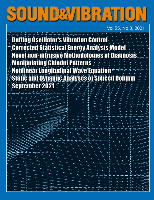
SOUND AND VIBRATION
Unraveling the Complexities of Sound and VibrationSOUND AND VIBRATION, published by TECH SCIENCE PRESS, is a pivotal journal in the fields of Acoustics and Ultrasonics, Mechanical Engineering, and Safety, Risk, Reliability, and Quality. With an ISSN of 1541-0161, this journal has been a reliable source of innovative research and developments from its inception in 1976 through to 2024. Although it currently ranks in the Q4 category on Scopus, it serves as a vital platform for the dissemination of studies focusing on sound and vibration phenomena, contributing to the understanding and advancement of engineering principles. Researchers and professionals are encouraged to utilize this journal to gain insights into critical acoustic applications and mechanical dynamics. While SOUND AND VIBRATION does not operate under an Open Access model, it remains a valuable asset for anyone committed to exploring the various ramifications of sound and vibration in engineering and applied sciences.