
Advances in Agriculture
Scope & Guideline
Empowering Agriculture Through Innovative Research
Introduction
Aims and Scopes
- Crop Science and Agronomy:
Research in this area examines the performance of various crop varieties, their growth conditions, and the impact of different agronomic practices such as irrigation, fertilization, and pest management. - Animal Science and Livestock Production:
This scope encompasses studies related to livestock health, breeding, management practices, and the socio-economic implications of animal husbandry, aiming to improve productivity and sustainability. - Food Security and Nutrition:
The journal addresses determinants of food security and strategies for coping with food scarcity, emphasizing the importance of sustainable agricultural practices to ensure food availability. - Soil and Water Management:
Research articles explore effective soil management practices and water conservation techniques to enhance agricultural productivity and sustainability, particularly in water-scarce regions. - Community-Based Agricultural Development:
This area focuses on participatory approaches and the socio-economic impacts of agricultural innovations at the community level, aiming to empower local farmers and improve livelihoods. - Climate Change and Agriculture:
The journal addresses the impacts of climate change on agricultural systems and explores adaptive strategies to mitigate its effects on crop and livestock production.
Trending and Emerging
- Sustainable Agriculture Practices:
There is a growing emphasis on research that promotes sustainable agricultural practices, such as organic farming, agroecology, and the use of bio-based inputs to enhance soil health and crop productivity. - Climate-Smart Agriculture:
Research focusing on climate-smart practices is gaining momentum, highlighting the need for adaptation strategies that address climate variability and its impacts on food production. - Precision Agriculture Technologies:
The adoption of precision agriculture technologies, including the use of sensors and data analytics for optimizing resource use and improving yield, is emerging as a significant area of research. - Agricultural Policy and Market Analysis:
Studies analyzing agricultural policies, market dynamics, and their impact on smallholder farmers are increasingly relevant, addressing the socio-economic aspects of agricultural development. - Biotechnology and Genetic Improvement:
Research in biotechnology, including genetic engineering and molecular breeding techniques, is on the rise, focusing on developing resilient crop varieties and improving livestock genetics.
Declining or Waning
- Traditional Agricultural Practices:
Research focused on traditional farming methods and practices has decreased, possibly due to the increasing emphasis on modern techniques and technologies that enhance productivity and sustainability. - Basic Theoretical Studies:
There appears to be a decline in theoretical research without practical applications, as the journal increasingly favors studies that demonstrate direct impact on agricultural practices and outcomes. - Pesticide and Chemical Fertilizer Use:
The focus on studies solely related to chemical inputs (pesticides and fertilizers) has waned, reflecting a shift towards integrated pest management and organic farming practices.
Similar Journals

Journal of Tekirdag Agriculture Faculty-Tekirdag Ziraat Fakultesi Dergisi
Exploring the intersection of agriculture and sustainability.The Journal of Tekirdag Agriculture Faculty-Tekirdag Ziraat Fakultesi Dergisi, published by UNIV NAMIK KEMAL, represents a significant platform dedicated to the dissemination of research in the fields of agricultural and biological sciences. With an ISSN of 1302-7050 and E-ISSN 2146-5894, this journal aims to advance knowledge and innovation within its scope, which encompasses a diverse array of agricultural topics and environmental pollution. Notably, it has achieved a Q3 category ranking in Agricultural and Biological Sciences and a Q4 category ranking in Pollution for 2023, reflecting its growing influence in the academic community. Operating from Turkey, the journal publishes articles that seek to address contemporary challenges in agriculture and environmental science, thus fostering collaborations among researchers, professionals, and students worldwide. Researchers can benefit from the journal’s focus on applied sciences, providing insights and solutions pertinent to real-world issues. Engage with cutting-edge studies and contribute to this evolving field by exploring the transformative research featured within.

Agrarforschung Schweiz
Cultivating a community of researchers dedicated to sustainable practices.Agrarforschung Schweiz is a premier journal dedicated to advancing the fields of agronomy, animal science, food science, and environmental studies. Published by AGRARFORSCHUNG in Switzerland, this journal serves as a vital platform for the dissemination of research findings that address contemporary challenges in agriculture and food systems. With an emphasis on open access, researchers and practitioners are encouraged to share their work, fostering a collaborative environment for knowledge exchange. Although currently listed in Q4 of several agricultural categories, the journal is poised for growth and aims to enhance its impact within the academic community. It features a wide range of topics from innovative agricultural practices to sustainability and pollution management, catering to a diverse audience of researchers, students, and industry professionals. Given the rich agricultural heritage of Switzerland, Agrarforschung Schweiz aspires to contribute meaningfully to global discussions and advancements in agricultural sciences through rigorous peer-reviewed research and insights.
AGRICULTURAL RESEARCH
Fostering collaboration in agronomy and food science.AGRICULTURAL RESEARCH is a distinguished academic journal published by SPRINGER INDIA, focusing on the dynamic fields of Agronomy, Crop Science, and Food Science. With an ISSN of 2249-720X and E-ISSN of 2249-7218, this journal has established itself as a valuable resource for researchers, professionals, and students dedicated to advancing agricultural knowledge and practices. The journal is recognized in the 2023 Scopus Rankings, achieving commendable quartile positions, including Q2 in Agronomy and Crop Science and Plant Science, as well as Q3 in Food Science, indicating its influential presence in the academic community. AGRICULTURAL RESEARCH aims to disseminate cutting-edge research findings, innovative methodologies, and comprehensive reviews, fostering collaboration and discussion among scholars in Switzerland and beyond. Through its commitment to scholarly excellence, this journal is pivotal in addressing contemporary challenges in agriculture, ensuring sustainability, and enhancing food security for the future.
JARQ-JAPAN AGRICULTURAL RESEARCH QUARTERLY
Nurturing Ideas for Global Food SecurityJARQ - Japan Agricultural Research Quarterly serves as a pivotal platform in the field of agricultural sciences, published by the esteemed Japan International Research Center for Agricultural Sciences. Established in 1973, this journal has a rich history and plays a critical role in disseminating significant research findings relevant to agronomy, crop science, animal science, ecology, and biotechnology. Despite its ranking in the lower quartiles, with impressive coverage from 1973 to 2024, it continues to attract contributions that enhance agricultural strategies and practices in Japan and beyond. The journal facilitates discussions that are essential for fostering innovation in agricultural methodologies and environmental sustainability. Accessible to a diverse audience, including researchers, academics, and practitioners, JARQ emphasizes the importance of advancing agricultural research and its implications for food security and ecological balance.
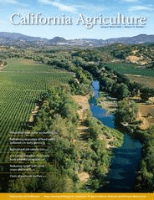
CALIFORNIA AGRICULTURE
Harvesting Research for a Greener TomorrowCALIFORNIA AGRICULTURE is a prestigious open-access journal published by the University of California, Oakland, Division of Agriculture & Natural Resources, that has been a vital platform for agricultural research since 1946. With an ISSN of 0008-0845 and an E-ISSN of 2160-8091, the journal serves as a key resource in the fields of Agronomy and Crop Science, Forestry, and Plant Science. It holds an impactful position within its category quartiles, achieving Q3 in Agronomy and Crop Science and Q2 in Forestry as of 2023. The journal's rankings also highlight its relevance in the academic community, with it being in the 59th percentile for Forestry and the 50th percentile in both Plant Science and Agronomy. Researchers, professionals, and students benefit from its rich archive of knowledge, covering significant advances in agricultural practices and sustainability within the United States and beyond. With its commitment to disseminating free and accessible information, CALIFORNIA AGRICULTURE plays a crucial role in advancing dialogue and collaboration in the agricultural sciences.

AGROCIENCIA
Driving progress in agronomy and environmental science.AGROCIENCIA, published by COLEGIO POSTGRADUADOS, is a key journal in the fields of agronomy, animal science, and environmental science in Mexico. With an ISSN of 1405-3195 and an E-ISSN of 2521-9766, this journal has been a crucial platform for disseminating research findings since its inception in 2000. Operating from Montecillo, Estado Mexico, it provides an outlet for scholars and practitioners to share innovations and insights that directly impact agricultural practices and environmental sustainability. Despite its current categorization in the Q4 quartile across multiple disciplines, AGROCIENCIA strives to elevate the quality and reach of research, fostering a collaborative approach to tackle pressing issues within the agricultural sciences. Access options are primarily through institutional subscriptions, allowing for a diverse audience of researchers, professionals, and students to engage with the latest studies aimed at advancing knowledge in the agricultural sector. As the journal converges towards its 2024 milestone, it remains dedicated to enhancing scientific inquiry and promoting effective solutions within its discipline.

Agricultural Science and Practice
Connecting researchers to enhance agricultural methodologies.Agricultural Science and Practice is a pivotal journal dedicated to advancing knowledge and research in the field of agricultural sciences. Published by the NATIONAL ACADEMY OF AGRARIAN SCIENCES OF UKRAINE, this journal serves as a vital resource for researchers, professionals, and students engaged in agriculture, agronomy, and related disciplines. The journal aims to disseminate high-quality, peer-reviewed articles that address contemporary issues, innovative practices, and advancements in agricultural methodologies. While currently specified as non-open access, the journal endeavors to contribute significantly to the global agricultural knowledge pool while fostering a collaborative research environment. With its base in Kyiv, Ukraine, Agricultural Science and Practice plays an essential role in highlighting regional agricultural challenges and solutions, thereby attracting a diverse readership that aspires to enhance food security and sustainable farming practices worldwide.
ANNALS OF AGRICULTURAL SCIENCES
Exploring Innovations that Cultivate Tomorrow's SolutionsANNALS OF AGRICULTURAL SCIENCES, published by Elsevier, stands as a leading open access journal dedicated to the multifaceted field of agricultural sciences. Since its inception in 2011, this journal has served as a pivotal platform for the dissemination of high-quality research, covering areas such as agronomy, animal science, horticulture, food science, plant science, and soil science. With an impressive Q1 ranking across multiple disciplines and notable positions in Scopus Ranks—including #6 in Animal Science and Zoology and #3 in Horticulture—this journal is recognized globally for its significant contribution to advancing agricultural innovations. The journal caters to a diverse audience of researchers, professionals, and students, providing them with open access to cutting-edge studies that address critical issues in agricultural productivity and sustainability. Its commitment to high-impact research ensures that articles contribute meaningfully to the scientific community, fostering advancements in agricultural practices and policies.
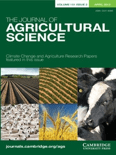
JOURNAL OF AGRICULTURAL SCIENCE
Cultivating Knowledge for a Sustainable FutureJOURNAL OF AGRICULTURAL SCIENCE, published by Cambridge University Press, stands as a pivotal resource in the field of agricultural research. With a rich history dating back to 1905, this esteemed journal has consistently delivered cutting-edge scholarly articles that address pressing issues in agronomy, crop science, animal science, and genetics. Currently holding a Q2 ranking in Agronomy and Crop Science and Animal Science and Zoology, and a Q3 in Genetics, it reflects a robust impact within the academic community, contributing to innovative practices and technologies in agriculture. Indexed in Scopus, its authors benefit from broad visibility, supported by a strong readership among researchers, professionals, and students alike. While the journal does not currently offer open access, its rigorous peer-review process ensures that published works meet the highest scholarly standards, fostering a rich environment for knowledge exchange and advancement in agricultural science.
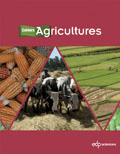
CAHIERS AGRICULTURES
Connecting researchers to shape agricultural practices.CAHIERS AGRICULTURES is a distinguished open-access journal published by EDP Sciences S A, focusing on the vital fields of Agronomy and Crop Science, Animal Science and Zoology, as well as Management, Monitoring, Policy, and Law. With an ISSN of 1166-7699 and an E-ISSN of 1777-5949, this journal has notably maintained a strong presence in the academic landscape since its establishment, covering a wide range of topics pertinent to agricultural sciences. Based in France, CAHIERS AGRICULTURES fosters collaboration and knowledge sharing among researchers and practitioners through its open-access model, which has been in effect since 2014. The journal is recognized for its rigorous peer-review process, reflected in its competitive Scopus rankings, which place it in the Q2 quartile for both Agronomy and Crop Science, and Animal Science and Zoology. Researchers and scholars are encouraged to contribute cutting-edge findings that may influence agricultural practices and policy development. With a vision to advance sustainable agricultural practices, CAHIERS AGRICULTURES stands as a critical resource for advancing scientific knowledge and informing stakeholders in the agricultural sector.