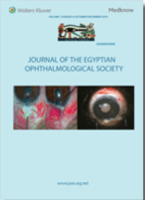
Journal of the Egyptian Ophthalmological Society
Scope & Guideline
Transforming eye care with impactful research insights.
Introduction
Aims and Scopes
- Clinical Ophthalmology and Surgical Techniques:
The journal covers a wide array of clinical practices and surgical interventions in ophthalmology, focusing on innovative techniques and their outcomes. - Ocular Imaging and Diagnostics:
It highlights advancements in diagnostic technologies, particularly optical coherence tomography (OCT) and its applications in assessing various ocular conditions. - Pathophysiology and Disease Management:
The journal explores the underlying mechanisms of ocular diseases, including diabetic retinopathy, glaucoma, and keratoconus, along with their management strategies. - Pediatric Ophthalmology:
Research related to eye health in children, encompassing conditions like amblyopia and strabismus, is a significant focus area. - Public Health and Epidemiology:
The journal addresses broader public health issues related to eye health, including prevalence studies and the impact of systemic diseases on ocular health. - Innovative Treatments and Therapies:
There is a consistent focus on novel therapeutic approaches, including the use of biologics like platelet-rich plasma and the evaluation of new pharmacological agents.
Trending and Emerging
- Post-Pandemic Ocular Health:
There is an increasing focus on the impact of COVID-19 on ocular health, including studies on complications arising post-infection and the effects of pandemic-related changes in healthcare delivery. - Advanced Imaging Techniques:
Research utilizing advanced imaging modalities, particularly optical coherence tomography and its applications in diagnosing and managing ocular conditions, is gaining momentum. - Multimodal Treatment Approaches:
A trend towards exploring combination therapies, such as the use of antivascular endothelial growth factor (anti-VEGF) agents alongside surgical interventions, is emerging. - Dry Eye Disease Management:
The publication of studies related to innovative treatments for dry eye disease, including the use of platelet-rich plasma and new formulations, is increasingly prominent. - Diabetic Eye Disease Research:
Given the rise in diabetes prevalence, there is a growing emphasis on diabetic retinopathy and its management, with studies focusing on both surgical and pharmacological interventions.
Declining or Waning
- Traditional Eye Treatments:
Research focusing on traditional eye medicine practices has decreased, possibly due to increased emphasis on evidence-based and modern ophthalmic treatments. - Basic Science Research:
There appears to be a waning interest in basic science studies related to ophthalmology, as more emphasis is placed on clinical applications and outcomes. - General Ophthalmology Surveys:
Surveys and studies that broadly assess general ophthalmology practices without a specific focus are becoming less common, likely due to a shift towards more targeted research. - Aging and Age-Related Conditions:
While still relevant, the volume of research specifically targeting age-related ocular conditions has seen a relative decline, possibly due to a saturation of existing literature.
Similar Journals

EYE
Transforming Understanding in Ophthalmology and BeyondEYE is a prestigious peer-reviewed journal published by SpringerNature that serves as a cornerstone in the fields of Ophthalmology, Arts and Humanities, and Neuroscience. Since its inception in 1987, this influential journal has consistently maintained a Q1 Quartile ranking across multiple categories, showcasing its commitment to advancing knowledge and research in its disciplines. With a notable impact factor and a robust Scopus ranking—19th in Ophthalmology and 8th in Sensory Systems—EYE is vital for researchers, clinicians, and students alike, providing a platform for groundbreaking studies and critical reviews. While the journal operates under a subscription model, it ensures broad access to high-quality research, facilitating the dissemination of knowledge that shapes the future of eye health and sensory systems. With an address at Campus, 4 Crinan St, London N1 9XW, England, EYE continues to be a leading light in the understanding and advancement of visual health and sensory sciences.

Journal of Ophthalmology
Advancing Visionary Research in Eye CareThe Journal of Ophthalmology, published by HINDAWI LTD, is an esteemed open-access journal that has been disseminating significant research in the field of ophthalmology since 2009. With an ISSN of 2090-004X and an E-ISSN of 2090-0058, this journal facilitates global access to cutting-edge studies, making it an essential resource for researchers, clinicians, and students alike. Ranked in the Q2 category of ophthalmology for 2023, the journal holds a commendable position with a Scopus rank of #37 out of 137 in its field, placing it in the 73rd percentile. The journal encompasses a variety of topics such as clinical advancements, surgical techniques, and innovative technologies in eye care, aiming to advance scientific knowledge and clinical practice in ophthalmology. By providing a platform for both novel research and comprehensive reviews, the Journal of Ophthalmology is instrumental in fostering collaboration and scholarly communication within the global eye health community, and its commitment to open access ensures that impactful research reaches a wide audience without barriers.

EUROPEAN JOURNAL OF OPHTHALMOLOGY
Illuminating Pathways in Ocular ScienceThe EUROPEAN JOURNAL OF OPHTHALMOLOGY, published by SAGE PUBLICATIONS LTD, is a leading international journal in the field of ophthalmology, dedicated to advancing the understanding and treatment of ocular diseases and disorders. With an ISSN of 1120-6721 and an E-ISSN of 1724-6016, the journal aims to provide a platform for innovative research, critical reviews, and comprehensive studies that span the diverse aspects of the discipline. As part of its commitment to disseminating high-quality research, the journal is indexed in Scopus, achieving an impressive rank of #47 out of 137 in the Medicine - Ophthalmology category, indicating its strong impact within the academic community. With a current impact factor that places it in the Q2 quartile for both Medicine (miscellaneous) and Ophthalmology as of 2023, it offers researchers and practitioners access to important findings and developments in eye health. The journal's converged years from 1991 to 2024 exemplify its longstanding commitment to the field, making it an essential resource for anyone looking to stay at the forefront of ophthalmological research.

GRAEFES ARCHIVE FOR CLINICAL AND EXPERIMENTAL OPHTHALMOLOGY
Fostering Excellence in Ophthalmic ResearchGRAEFES ARCHIVE FOR CLINICAL AND EXPERIMENTAL OPHTHALMOLOGY, published by Springer, has established itself as a premier journal in the field of ophthalmology since its inception in 1870. With an ISSN of 0721-832X and an E-ISSN of 1435-702X, this esteemed journal enjoys a notable impact in the research community, ranking Q1 in Ophthalmology and Q1 in Sensory Systems, as per the latest 2023 journal category quartiles. GRAEFES Archive is dedicated to advancing our understanding of ocular health through both clinical and experimental studies, making it an essential resource for researchers, practitioners, and students alike. Its comprehensive scope covers various aspects of ophthalmic science, reflecting its long-standing commitment to quality and excellence. Although it currently operates on a subscription basis, the journal's significant Scopus rankings—24th out of 137 in Ophthalmology—underscore its relevance and influence within the scientific community. Situated in Germany, with its address in the United States, this international journal continues to shape the discourse on vision science and therapeutic innovation.

Nepalese Journal of Ophthalmology
Fostering Global Collaboration for Vision ExcellenceNepalese Journal of Ophthalmology, established by the NEPAL OPHTHALMIC SOC, is a premier Open Access journal dedicated to advancing the field of ophthalmology. With its ISSN 2072-6805 and E-ISSN 2091-0320, the journal provides an important platform for sharing innovative research and clinical findings in eye health. Since its inception in 2009, the journal has aimed to disseminate high-quality research that addresses contemporary challenges in ophthalmic practices, thus supporting improved patient care and outcomes within Nepal and beyond. The journal has achieved notable recognition, evidenced by its Scopus rank of #267 out of 915 in the field of General Medicine, placing it within the 70th percentile. Researchers, professionals, and students will find valuable information in its comprehensive articles, which cater to a multidisciplinary audience interested in the latest developments in ophthalmology. Emphasizing accessibility, the journal ensures that all published content is freely available, fostering collaboration and knowledge sharing in the global medical community.
Taiwan Journal of Ophthalmology
Pioneering discussions in the realm of eye health.Taiwan Journal of Ophthalmology is a premier open-access publication dedicated to advancing the field of ophthalmology. Published by Wolters Kluwer Medknow Publications, this journal has been a vital resource for researchers, practitioners, and students since its inception in 2012. With an ISSN of 2211-5056 and an E-ISSN of 2211-5072, it provides a platform for sharing innovative research, clinical findings, and reviews pertinent to eye health and vision science. The journal is indexed in Scopus and currently holds a Q3 quartile ranking within the ophthalmology category, reflecting its commitment to quality and relevance in the medical community. Located in Mumbai, India, Taiwans Journal of Ophthalmology aims to foster discussions and disseminate knowledge that promotes better understanding and treatment of ocular diseases, ensuring that the latest advancements reach a global audience. By embracing open-access policies, the journal underscores its dedication to making valuable insights readily available to all interested parties, thus contributing significantly to the discourse in ophthalmic research.
AMERICAN JOURNAL OF OPHTHALMOLOGY
Pioneering Insights in Visual ScienceAmerican Journal of Ophthalmology, published by Elsevier Science Inc, stands as a premier outlet for significant advancements in the field of ophthalmology. Established in 1918, this journal has a long-standing tradition of disseminating high-quality research, which is reflected in its impressive Scopus ranking, positioned at #8 out of 137 in the ophthalmology category, placing it in the 94th percentile. With its 2023 designation as Q1 in Ophthalmology, it serves as a critical platform for researchers, practitioners, and students who seek to stay at the forefront of ocular health and visual science. Although the journal does not currently offer open access options, it provides an array of access formats, ensuring that valuable research is available to a broad audience dedicated to the exploration and understanding of eye diseases and treatments. As it continues to evolve towards 2024, the American Journal of Ophthalmology remains essential for anyone engaged in ophthalmic research and clinical practice.
Open Ophthalmology Journal
Connecting knowledge and collaboration in ophthalmology.The Open Ophthalmology Journal, published by Bentham Science Publishers Ltd, is a vital resource in the field of ophthalmology, dedicated to advancing knowledge through open-access research. With an ISSN of 1874-3641, it offers a platform for the dissemination of innovative studies from 2011 to 2024, focusing on the latest developments in eye care and vision science. Despite being categorized in the lower quartile (Q4) according to the 2023 rankings, and holding a position in the Scopus Ricks at 113 out of 137 in the ophthalmology domain, the journal serves as a valuable outlet for emerging scholars and seasoned researchers alike to share their findings. The journal's commitment to accessibility ensures that its content is available to a broad audience, promoting collaboration and knowledge exchange. Located in the Netherlands, The Open Ophthalmology Journal aspires to become a cornerstone for those passionate about understanding and improving ocular health through rigorous scientific inquiry.
SURVEY OF OPHTHALMOLOGY
Transforming Insights into Clinical PracticeSURVEY OF OPHTHALMOLOGY is a premier journal published by Elsevier Science Inc, dedicated to advancing knowledge in the field of ophthalmology. With an impact factor reflective of its high-quality research—ranking 7th out of 137 in the Scopus category for medicine and ophthalmology, this journal maintains a prestigious Q1 categorization in its field for 2023. Since its inception in 1956, the journal has provided comprehensive reviews and original articles covering various aspects of ophthalmic research and clinical practice, supporting the ongoing education of researchers, professionals, and students alike. While open access options are not available, the journal remains an essential resource for the latest developments, discoveries, and expert insights that shape the future of eye health. Based in the United States, at STE 800, 230 Park Ave, New York, NY 10169, the journal continues a legacy of excellence in ophthalmology until 2024 and beyond, making it a pivotal element of scholarly discourse in this vital medical discipline.

BMC Ophthalmology
Pioneering Discoveries in Eye Health and TreatmentBMC Ophthalmology is a premier open access journal dedicated to advancing the field of ophthalmology through the publication of high-quality, peer-reviewed research. Published by BMC in the United Kingdom, this journal has been a vital resource since its inception in 2001 and continuously contributes to the global dialogue in vision science. With an impact factor reflecting its growing influence, BMC Ophthalmology is ranked among the top quartiles (Q2) in both general medicine and ophthalmology, emphasizing its significance in medical research. The journal encourages submissions that explore innovative diagnostics, treatment approaches, and understandings of various ocular diseases, thereby appealing to researchers, clinicians, and students alike. As an open access platform, it ensures that cutting-edge research is not only published but also readily accessible to a worldwide audience, promoting further study and collaboration in this essential area of medicine.