
Bayesian Analysis
Scope & Guideline
Empowering Data Science through Bayesian Insights.
Introduction
Aims and Scopes
- Bayesian Inference Methods:
The journal emphasizes a wide range of Bayesian inference techniques, including but not limited to hierarchical models, nonparametric methods, and Bayesian learning algorithms that enhance model performance and robustness. - Application of Bayesian Methods:
Research published often explores the application of Bayesian methods across various fields such as epidemiology, bioinformatics, and econometrics, demonstrating the versatility and effectiveness of Bayesian approaches in real-world problems. - Computational Techniques:
The journal features studies that develop and refine computational techniques for Bayesian analysis, such as Markov Chain Monte Carlo (MCMC) methods, variational inference, and approximate Bayesian computation, crucial for handling complex models. - Model Selection and Evaluation:
A significant focus on model selection criteria, robustness checks, and the evaluation of Bayesian models is evident, showcasing the importance of sound statistical practices in Bayesian analysis. - Theoretical Developments:
The journal also publishes theoretical contributions that advance the understanding of Bayesian methods, including discussions on priors, posterior distributions, and asymptotic properties.
Trending and Emerging
- High-Dimensional Bayesian Models:
There is a significant uptick in research focusing on high-dimensional Bayesian models, reflecting the growing need to analyze complex datasets that arise in fields like genomics and finance. - Bayesian Nonparametrics:
The trend towards Bayesian nonparametric methods is evident, showcasing the flexibility these approaches offer in modeling data without strict parametric assumptions. - Integration of Machine Learning Techniques:
The intersection of Bayesian analysis and machine learning is increasingly prominent, with many papers exploring Bayesian deep learning, Gaussian processes, and advanced neural network models. - Spatial and Temporal Modeling:
Emerging themes include the application of Bayesian methods to spatial and temporal data analysis, particularly in fields such as environmental science and epidemiology, which require sophisticated modeling techniques. - Robustness and Sensitivity Analysis:
There is a growing interest in robustness and sensitivity analysis within Bayesian frameworks, indicating a shift towards understanding how model assumptions impact inference and decision-making.
Declining or Waning
- Traditional Bayesian Testing:
There appears to be a declining focus on traditional Bayesian hypothesis testing methods, as newer frameworks and models that incorporate more complex data structures gain traction. - Simplistic Bayesian Models:
Research involving simplistic or overly general Bayesian models is becoming less common, as the emphasis shifts towards more sophisticated models that account for specific complexities in data. - Classic Bayesian Analysis Techniques:
Classic techniques in Bayesian analysis, such as basic conjugate priors and simple linear models, are being overshadowed by more advanced methodologies that address high-dimensional data and intricate structures.
Similar Journals

BERNOULLI
Advancing the Frontiers of Statistical KnowledgeBERNOULLI is a prestigious peer-reviewed journal dedicated to the field of Statistics and Probability, published by the renowned International Statistical Institute. Since its inception in 1995, this journal has established itself as a vital resource for researchers and professionals, achieving a remarkable impact factor and consistently ranking in the top quartile (Q1) of its category as of 2023. With a strong presence in the Scopus database, where it ranks #64 among 278 journals in Mathematics, it places in the 76th percentile, underscoring its significance in the academic landscape. Although not an open-access journal, its contributions are pivotal for advancing statistical theory and its applications across various disciplines. As Berounlli continues to evolve until 2024, it remains committed to disseminating high-quality research that fosters innovation and supports the global analytics community. The journal’s scope encompasses a wide range of topics in statistics, including but not limited to theoretical statistics, applied statistics, and data analysis, making it an essential read for anyone engaged in statistical research.
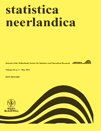
STATISTICA NEERLANDICA
Elevating research standards in statistical theory and application.STATISTICA NEERLANDICA is a prestigious peer-reviewed journal published by Wiley, focusing on the fields of statistics and probability. Established in 1946 and addressing key issues in statistical theory and its applications, the journal has significantly contributed to the development of modern statistical practices. With an impressive Q2 categorization in both Statistics and Probability, as well as Statistics, Probability, and Uncertainty, STATISTICA NEERLANDICA stands out within its field, ranking in the 62nd percentile among its peers in mathematics, specifically in statistics and probability. Researchers, professionals, and students can benefit from its rigorous scholarship and innovative methodologies, aiding in the advancement of statistical science. Although the journal does not operate under an open access model, it maintains a commitment to disseminating high-quality research, making it a vital resource for those engaged in statistical inquiry.

BIOMETRICS
Elevating Standards in Agricultural and Biological SciencesBIOMETRICS, published by WILEY, stands as a prestigious journal that has made substantial contributions across diverse fields, including Agricultural and Biological Sciences, Applied Mathematics, and Biochemistry. With an impressive track record from its inception in 1946 and continuing through to 2024, this journal is recognized for its rigorous peer-reviewed research and high-impact findings, evidenced by its Q1 ranking in various categories such as Medicine and Statistics. Researchers and professionals alike will find a wealth of knowledge within its pages, making it an essential resource for anyone involved in these dynamic and evolving disciplines. While BIOMETRICS does not offer open access, its reputation for delivering high-quality research ensures its continued importance in advancing the scientific ecosystem. For those seeking to stay ahead in their fields, engaging with the latest studies published in this journal is indispensable.
ANNALS OF STATISTICS
Empowering Researchers with Cutting-Edge Statistical InsightsANNALS OF STATISTICS, published by the Institute of Mathematical Statistics (IMS), stands as a premier journal in the field of statistical science, particularly recognized for its rigorous peer-reviewed articles and innovative contributions. With an impressive impact factor and categorized in the Q1 quartile for both Statistics and Probability, as well as Statistics, Probability, and Uncertainty, this journal is a vital resource for researchers, professionals, and students alike. Covering a comprehensive array of statistical theories and methodologies from 1996 to 2024, it aims to foster the advancement of mathematical statistics while addressing contemporary challenges in data analysis and interpretation. The journal, operating without an Open Access model, remains a key platform for disseminating high-quality research, evident from its commendable Scopus rankings of Rank #9 out of 278 in Statistics and Probability and Rank #9 out of 168 in Decision Sciences. Located in Cleveland, Ohio, the ANNALS OF STATISTICS is not just a journal but a beacon of knowledge that continues to influence statistical practices globally.
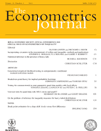
Econometrics Journal
Exploring New Frontiers in Economic MethodologiesEconometrics Journal, published by Oxford University Press, stands as a premier outlet for original research in the fields of Economics and Econometrics, boasting a commendable 2023 Q1 ranking within its category and an impressive 69th percentile rank in Scopus. Since its inception in 2006, the journal has consistently provided a platform for innovative methodologies and applications that contribute to the advancement of econometric theory and practice. With a focus on high-quality, peer-reviewed articles, the journal serves as a vital resource for researchers, professionals, and students alike, facilitating the dissemination of cutting-edge insights that push the boundaries of knowledge in economic analysis. Although it operates under a traditional subscription model, the journal's commitment to excellence and relevance in modern economic discourse positions it as an essential reference for those seeking to navigate the complexities of econometric research.

JOURNAL OF MULTIVARIATE ANALYSIS
Elevating Standards in Multivariate ResearchJournal of Multivariate Analysis, published by Elsevier Inc, stands as a pivotal resource in the disciplines of Numerical Analysis and Statistics. With a history of scholarly contribution since 1971, this journal has maintained a reputation for excellence, evidenced by its Q2 ranking in critical categories as of 2023. The journal covers a wide array of topics within multivariate statistical methods and their applications, making it an essential publication for researchers, professionals, and students seeking to deepen their understanding and application of sophisticated analytical techniques. Although not open-access, the journal provides valuable insights into the ever-evolving fields of statistics and probability, enabling readers to access and contribute to cutting-edge research up to the year 2024. By addressing significant theoretical and practical challenges in statistical analysis, Journal of Multivariate Analysis fosters a community of intellectual rigor and innovation.
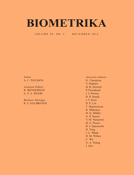
BIOMETRIKA
Pioneering Insights in Probability and Applied MathematicsBIOMETRIKA, published by the esteemed Oxford University Press, stands as a pivotal journal in the fields of statistics, probability, and applied mathematics since its inception in 1908. With ISSN number 0006-3444 and E-ISSN 1464-3510, this journal maintains an impressive reputation, consistently achieving Q1 rankings across multiple categories including Agricultural and Biological Sciences, Applied Mathematics, and Statistics. Addressed to a global audience from its base in Oxford, United Kingdom, BIOMETRIKA serves as an essential platform for disseminating rigorous research aimed at advancing statistical methodologies and their applications. While the journal does not offer Open Access options, it is recognized for its high-impact output, holding significant positions in Scopus rankings - specifically attaining a 94th percentile rank in General Mathematics and a 91st percentile in Statistics and Probability. Scholars, professionals, and students alike will find in BIOMETRIKA a wealth of knowledge that bridges theory and practice within the vast domain of statistical science, making it indispensable for ongoing research and education in the field.
CANADIAN JOURNAL OF STATISTICS-REVUE CANADIENNE DE STATISTIQUE
Empowering Researchers with Rigorous InsightsCanadian Journal of Statistics - Revue Canadienne de Statistique is a prestigious publication in the field of statistics, managed by Wiley. Since its inception in 1973, this journal has served as an essential resource for researchers, practitioners, and students, offering insights into a diverse range of statistical methodologies and applications. With its impact reflected in its 2023 categorization as Q2 in Statistics and Probability and Q3 in Statistics, Probability and Uncertainty, the journal stands out among its peers, exemplifying rigorous standards in empirical research. The journal's ISSN is 0319-5724 and its E-ISSN is 1708-945X, providing a robust platform for the dissemination of knowledge in the field. While it does not offer open access, the journal remains highly regarded and well-cited, contributing significantly to the advancement of statistical theory and practice. As it continues to publish cutting-edge research through to 2024, the Canadian Journal of Statistics is a must-read for anyone seeking to stay informed on the latest trends and developments in statistics.
Statistical Inference for Stochastic Processes
Advancing statistical methods for a dynamic world.Statistical Inference for Stochastic Processes is a premier academic journal published by SPRINGER, dedicated to advancing the field of statistical methods in stochastic processes. With an ISSN of 1387-0874 and an E-ISSN of 1572-9311, this journal provides a platform for rigorous research and innovative methodologies from 2005 through to 2024. It is positioned in the Q3 category for Statistics and Probability, ranking #194 out of 278 within the Scopus Mathematics domain, reflecting its significance among academic peers despite its relatively junior status in citation metrics. As a resource for researchers, professionals, and students alike, this journal aims to publish high-quality, peer-reviewed articles that contribute to the understanding and application of stochastic processes, making it an essential part of the statistical sciences landscape. While not offering open access, subscribers and institutions will find a wealth of knowledge and insights that are pivotal for both theoretical and practical advancements in statistics.
Electronic Journal of Statistics
Transforming Data into KnowledgeElectronic Journal of Statistics, published by INST MATHEMATICAL STATISTICS-IMS, is a premier open-access platform dedicated to the field of statistics and probability, with a remarkable track record since its inception in 2007. With an ISSN of 1935-7524, this journal has quickly established itself as a leading resource within the top Q1 category in both Statistics and Probability, as well as Statistics, Probability and Uncertainty, highlighting its significance and impact in the academic community. The journal’s commitment to disseminating high-quality research allows researchers, professionals, and students to access valuable findings and methodologies that contribute to the advancement of statistical sciences. With its convergence set to continue until 2024, the Electronic Journal of Statistics remains a vital source for scholars looking to enrich their knowledge and engage with cutting-edge statistical theories and applications.