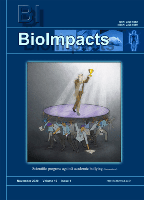
BioImpacts
Scope & Guideline
Fostering interdisciplinary collaboration for impactful research.
Introduction
Aims and Scopes
- Innovative Therapies and Drug Development:
The journal emphasizes the development of novel therapeutic strategies, including the use of nanotechnology, stem cells, and immunotherapy, to enhance treatment efficacy for various conditions. - Computational Biology and Bioinformatics:
With a strong focus on computational approaches, BioImpacts publishes research involving molecular docking, bioinformatics analyses, and in silico modeling to facilitate drug discovery and understand complex biological systems. - Regenerative Medicine and Tissue Engineering:
The journal covers advancements in regenerative medicine, including the use of biomaterials, scaffolds, and stem cell technologies to repair or replace damaged tissues. - Cancer Research and Treatment:
BioImpacts has a consistent focus on cancer biology, exploring novel therapeutic targets, mechanisms of resistance, and innovative treatment modalities to improve outcomes for cancer patients. - Microbiology and Infectious Diseases:
The journal addresses the role of microorganisms in health and disease, including studies on antimicrobial agents, vaccine development, and the impact of infections on chronic diseases. - Neuroscience and Neurodegeneration:
Research on neurodegenerative diseases and neurobiology is a significant area of interest, with studies focusing on the mechanisms of disease progression and potential therapeutic interventions.
Trending and Emerging
- Nanotechnology in Medicine:
Recent articles increasingly focus on the application of nanotechnology for drug delivery and diagnostic purposes, highlighting its potential to revolutionize treatment modalities across various diseases. - Artificial Intelligence and Machine Learning:
The integration of AI and machine learning techniques in biomedical research has gained momentum, with studies focusing on automated diagnostics, predictive modeling, and personalized treatment plans. - Immunotherapy and Cancer Vaccines:
There is a growing emphasis on immunotherapeutic strategies, including the development of novel cancer vaccines and immune-modulating therapies, reflecting the latest advancements in cancer treatment. - Psychiatric and Neurological Disorders:
Research targeting psychiatric conditions and neurodegenerative diseases is becoming more prominent, with an increasing number of studies exploring innovative treatments and underlying mechanisms. - Microbiome Research and Its Therapeutic Implications:
The exploration of the human microbiome and its impact on health and disease has emerged as a significant theme, underscoring its relevance in therapeutic interventions and personalized medicine.
Declining or Waning
- Traditional Pharmacology Approaches:
There has been a noticeable decrease in studies focused solely on traditional pharmacology, as the journal increasingly prioritizes innovative drug delivery systems and personalized medicine approaches. - Basic Laboratory Techniques without Advanced Applications:
Research papers that primarily detail basic laboratory techniques without clear applications in clinical settings or innovative approaches appear to be less frequent, indicating a shift towards studies with direct translational impact. - Epidemiological Studies Unrelated to Novel Findings:
Epidemiological studies that do not introduce new insights or applications in disease management or prevention have become less prevalent in the journal, suggesting a preference for research that directly contributes to therapeutic advancements.
Similar Journals
Recent Patents on Anti-Cancer Drug Discovery
Exploring Breakthroughs in Oncology and Drug DevelopmentRecent Patents on Anti-Cancer Drug Discovery, published by Bentham Science Publishers Ltd, is an esteemed peer-reviewed journal specializing in the innovative intersection of pharmaceutical science and oncology. With an ISSN of 1574-8928 and an E-ISSN of 2212-3970, this journal aims to provide a comprehensive platform for the dissemination of recent developments in anti-cancer drug discovery, addressing critical issues and breakthroughs that influence cancer research and treatment. The journal spans from 2006 to 2024 and is indexed in several prestigious databases, showcasing its relevance with a Q3 ranking in key categories such as Cancer Research and Drug Discovery as of 2023. Its status of being open access reflects a commitment to making valuable scientific findings widely available, promoting collaboration and advancement in the field. With a dedicated focus on advancing knowledge in cancer therapeutics, the journal serves as a vital resource for researchers, healthcare professionals, and students aiming to contribute to the fight against cancer.

INDIAN JOURNAL OF BIOCHEMISTRY & BIOPHYSICS
Pioneering research for a healthier tomorrow.INDIAN JOURNAL OF BIOCHEMISTRY & BIOPHYSICS is a well-regarded academic journal that serves as a vital platform for researchers in the fields of biochemistry and biophysics. Published by the NATL INST SCIENCE COMMUNICATION-NISCAIR since its inception in 1972, this Open Access journal has committed itself to disseminating high-quality research and advancements in these dynamic fields, allowing readers worldwide to access vital findings since 2009. The journal maintains a robust presence in the academic landscape, achieving noteworthy rankings in 2023, placing it in the Q4 category for Biochemistry and Q3 for both Biophysics and miscellaneous Medicine, alongside its respectable Scopus rankings. With an emphasis on original research articles, reviews, and educational contributions, the INDIAN JOURNAL OF BIOCHEMISTRY & BIOPHYSICS plays an essential role in fostering scientific dialogue and collaboration among professionals and students alike. For scholars seeking to stay at the forefront of biochemistry and biophysics research, this journal is an indispensable resource that fosters knowledge exchange and elevates the field on both a national and international scale.
Current Cancer Therapy Reviews
Illuminating pathways in cancer therapy advancements.Current Cancer Therapy Reviews, an esteemed journal published by Bentham Science Publishers Ltd, serves as a critical resource in the fields of cancer research, molecular medicine, and oncology. With an ISSN of 1573-3947 and an E-ISSN of 1875-6301, this journal provides a platform for the rapid dissemination of reviews that articulate the latest advancements and therapeutic strategies in cancer treatment. Although it currently holds a Q4 classification in its respective categories, the journal's commitment to quality scholarship is evident in its engagement with an expansive range of topics impacting cancer care. Operating from the United Arab Emirates since its inception in 2006, it is an essential tool for researchers, clinicians, and students aiming to stay abreast of the evolving landscape of cancer therapy. The journal emphasizes open access to knowledge, fostering a collaborative environment for innovative research. For those looking to deepen their understanding of contemporary cancer therapies, Current Cancer Therapy Reviews is a valuable addition to their academic resources.

Cell Journal
Unlocking the Secrets of Life at the Cellular LevelCell Journal is a leading interdisciplinary publication in the fields of Cell Biology, Developmental Biology, Molecular Biology, and Reproductive Medicine, published by ROYAN INST since its inception as an open-access journal in 2007. With an ISSN of 2228-5806 for print and 2228-5814 for electronic editions, it provides a vital platform for researchers and professionals to disseminate innovative findings and insights that shape our understanding of cellular processes and reproductive sciences. The journal boasts an impressive Scopus ranking, achieving a Q3 position in both Molecular Biology and Reproductive Medicine, highlighting its significance in the academic community. Situated in Tehran, Iran, Cell Journal encourages global collaboration through its accessible content, making cutting-edge research available to a diverse audience. As it converges from 2011 to 2024, the journal continues to emphasize the importance of thorough scientific inquiry, fostering advancements that drive both theoretical frameworks and practical applications in cell science.

BIOCELL
Fostering Excellence in Cell ResearchBIOCELL is a distinguished peer-reviewed journal dedicated to the field of Cell Biology, published by TECH SCIENCE PRESS. Since its inception in 1995, the journal has been at the forefront of disseminating innovative research, with converged publication years extending from 1995 to 2013 and from 2015 to 2024. Although it currently holds a Q4 ranking in the Cell Biology category according to the 2023 category quartiles, BIOCELL aims to foster advancements by providing a platform for researchers, professionals, and students to share their findings in biochemistry, genetics, and molecular biology. The journal is available in both print (ISSN: 0327-9545) and digital formats (E-ISSN: 1667-5746) and seeks to attract contributions that enhance scholarly dialogue and understandings of cellular mechanisms and innovations. With a commitment to quality research and critical discourse, BIOCELL plays an important role in nurturing the scientific community within Argentina and beyond, offering vital insights that contribute to the advancement of the life sciences.

MedComm is a distinguished Open Access journal published by Wiley, located in the United States. Since its inception in 2020, it has rapidly established itself as a leading platform for cutting-edge research in the fields of Biochemistry, Cell Biology, Drug Discovery, Genetics, Immunology and Allergy, and Oncology, achieving a prestigious Q1 category ranking across multiple disciplines in 2023. MedComm is committed to providing a rigorous and transparent peer-review process, ensuring the publication of high-quality articles that advance the frontiers of medical science. With its remarkable Scopus ranking, the journal serves as an invaluable resource for researchers, professionals, and students looking to stay abreast of important developments in the life sciences. The open access model facilitates widespread dissemination of scholarly work, fostering collaboration and innovation within the global scientific community. Researchers interested in submitting their work or exploring the latest findings are encouraged to engage with this pivotal journal during the converged years from 2020 to 2024.

International Journal of Molecular and Cellular Medicine
Fostering Collaboration in Cutting-edge Molecular ResearchInternational Journal of Molecular and Cellular Medicine, published by the CELLULAR & MOLECULAR BIOLOGY RESEARCH CENTER in Iran, is a leading platform dedicated to advancing research in various domains of molecular and cellular sciences. With an ISSN of 2251-9637 and E-ISSN 2251-9645, this journal features a rigorous peer-review process that ensures the publication of high-quality, impactful research. Spanning from 2016 to 2024, it is categorized in the third quartile (Q3) in Biochemistry, Cell Biology, Genetics, and Molecular Biology, and second quartile (Q2) in Biotechnology, underlining its significance in the scientific community. Although currently non-open access, it maintains credible visibility through Scopus rankings, reflecting its importance in fields such as Biochemistry, Molecular Medicine, and Genetics, where it holds respectable ranks and percentiles. This journal aims to foster collaboration and knowledge dissemination among researchers, professionals, and students in the pursuit of enhancing understanding and innovation in molecular and cellular medicine.

BRAZILIAN JOURNAL OF MEDICAL AND BIOLOGICAL RESEARCH
Catalyzing Progress in Medical and Biological FieldsThe BRAZILIAN JOURNAL OF MEDICAL AND BIOLOGICAL RESEARCH, published by the ASSOC BRAS DIVULG CIENTIFICA, serves as a vital platform for the dissemination of cutting-edge research in the fields of medicine and biological sciences. With an ISSN of 0100-879X and E-ISSN 1414-431X, this Open Access journal has been championing free access to vital scientific knowledge since 1997. It is indexed in Scopus with notable rankings across various disciplines, including a rank of #131 in General Medicine (79th percentile) and #20 in Pharmacology, Toxicology, and Pharmaceutics (75th percentile). Covering a broad scope of topics, the journal primarily focuses on areas such as biochemistry, biophysics, immunology, neuroscience, and physiology, with a commendable categorization of Q2 and Q3 quartiles for several relevant fields in 2023. Through its commitment to high-quality research and robust peer review processes, the journal not only consolidates its reputation within the academic community but also significantly contributes to the enhancement of scientific knowledge and innovation in Brazil and beyond. Researchers, professionals, and students will find an invaluable resource in this journal, which is pivotal for those looking to stay abreast of the latest developments in medical and biological research.
CURRENT DRUG TARGETS
Showcasing Breakthroughs in Molecular MedicineCURRENT DRUG TARGETS is a leading peer-reviewed journal dedicated to advancements in the fields of Clinical Biochemistry, Drug Discovery, Molecular Medicine, and Pharmacology. Published by Bentham Science Publishers Ltd, this esteemed journal has solidified its position in the academic community with a 2023 Q2 ranking in several categories, highlighting its influence and relevance in drug research and development. With an ISSN of 1389-4501 and E-ISSN 1873-5592, CURRENT DRUG TARGETS facilitates the dissemination of high-quality articles that explore novel therapeutic strategies and drug design principles. Catered to researchers, professionals, and students, the journal has a commitment to advancing knowledge while addressing contemporary challenges in pharmacological sciences. As it converges from 2000 to 2024, CURRENT DRUG TARGETS remains a vital resource in understanding the complexities of drug action and interaction, making it indispensable for anyone pursuing cutting-edge research in related disciplines.

Frontiers in Bioscience-Landmark
Exploring the Depths of Molecular InnovationFrontiers in Bioscience-Landmark is a prestigious journal published by IMR PRESS that focuses on a diverse array of topics within the fields of biochemistry, genetics, molecular biology, immunology, and microbiology. With the ISSN 2768-6701 and E-ISSN 2768-6698, this journal has carved a significant niche since its inception in 1996, making its mark in contributions to the scientific community all the way through to 2024. Having achieved a respectable Q2 cohort rank in multiple categories, including biochemistry and immunology, it stands out for its impactful research, evidenced by its current Scopus rankings which highlight it as a vital resource for ongoing studies and advancements in the biosciences. Despite not being open access, the journal ensures that readers have access to high-quality research articles that are peer-reviewed and designed to foster academic discourse. The importance of Frontiers in Bioscience-Landmark lies in its commitment to disseminating innovative findings that can significantly enhance our understanding of biological sciences, making it an essential read for researchers, professionals, and students alike.