
Chemistry-Switzerland
metrics 2024
Your Gateway to High-Quality Chemistry Research
Introduction
Chemistry-Switzerland is an esteemed, fully Open Access journal published by MDPI, dedicated to advancing research in a broad spectrum of chemistry disciplines. Launched in 2019, the journal has established itself within the academic community, particularly as it spans critical areas such as inorganic and organic chemistry, as well as electrochemistry. Recognized for its contributions, it has achieved notable rankings, including Q2 status in Chemistry (miscellaneous) and Inorganic Chemistry, and Q3 standing in Electrochemistry and Organic Chemistry for 2023. With a commitment to disseminating high-quality research, Chemistry-Switzerland serves as an invaluable resource for researchers, professionals, and students aiming to share their discoveries with a global audience. Located in Basel, Switzerland, this journal facilitates seamless access to cutting-edge research, fostering innovation and collaboration within the vibrant field of chemistry. With this dynamic platform, the journal aims to continue its trajectory of growth and impact, inspiring the next generation of chemists.
Metrics 2024
 -2.402.40-
Metrics History
Rank 2024
IF (Web Of Science)
JCI (Web Of Science)
Quartile History
Similar Journals
REVUE ROUMAINE DE CHIMIE
Empowering Researchers to Transform Chemical KnowledgeREVUE ROUMAINE DE CHIMIE is a distinguished academic journal in the field of chemistry, published by EDITURA ACAD ROMANE in Romania. With an ISSN of 0035-3930, this journal has been a valuable platform for disseminating original research and insights in the diverse realm of chemistry since its inception. The journal currently operates under a competitive tier, categorized in Q4 for miscellaneous chemistry fields, as reflected in its Scopus ranking of #348 out of 408, placing it within the 14th percentile. Aiming to foster scientific discourse and innovation, the REVUE ROUMAINE DE CHIMIE provides a repository of knowledge that is crucial for researchers, professionals, and students eager to advance their understanding and contribute to the global chemistry community. By bridging local and international research initiatives, this journal plays an essential role in enhancing the visibility of Romanian scientific contributions on the world stage.
Bulletin of the University of Karaganda-Chemistry
Advancing Chemistry Knowledge for Tomorrow's InnovatorsBulletin of the University of Karaganda-Chemistry is an esteemed academic journal published by KARAGANDA STATE UNIVERSITY, focusing on the field of chemistry and related disciplines. With an ISSN of 2518-718X and an E-ISSN of 2663-4872, this journal aims to disseminate high-quality research articles, reviews, and scholarly discussions that contribute to the advancement of knowledge in chemistry. Although it has experienced a transition in its coverage from 2021 to 2022, the journal remains a significant platform for researchers and students alike, promoting open access to its valuable content. Despite its current Scopus rank of #379/407 in the general chemistry category, the Bulletin of the University of Karaganda-Chemistry serves as a vital resource for the academic community in Kazakhstan and beyond, fostering collaboration and innovation in various chemical research domains. Researchers, professionals, and students are encouraged to engage with the journal as it continues to evolve and contribute to significant scientific discussions.
CHEMISTRY-A EUROPEAN JOURNAL
Catalyzing Progress in the Scientific CommunityCHEMISTRY-A EUROPEAN JOURNAL is a premier academic journal published by WILEY-V C H VERLAG GMBH, specializing in the diverse fields of chemistry and catalysis, with a distinguished focus on organic chemistry. Since its inception in 1995, the journal has established itself as an authoritative resource for researchers and professionals, currently classified in Q1 in Chemistry (miscellaneous) and Organic Chemistry, reflecting its high-quality contributions to the scientific community. With an impressive impact factor and robust Scopus rankings—#33 in Organic Chemistry and #26 in Catalysis—this journal serves as a vital platform for disseminating innovative research findings and critical advancements in chemical sciences. Although not an open-access journal, it provides valuable access options for institutions, ensuring wide reach and engagement within the scientific community. As it converges into 2024, CHEMISTRY-A EUROPEAN JOURNAL remains a key resource for anyone dedicated to advancing the frontiers of chemistry research.
ISRAEL JOURNAL OF CHEMISTRY
Fostering Excellence in Chemical ScholarshipIsrael Journal of Chemistry is a leading international journal published by Wiley-VCH Verlag GmbH, dedicated to advancing the field of chemistry through high-quality research publications. With an impressive Q1 ranking in the Chemistry (Miscellaneous) category of the 2023 Scopus rankings and a solid percentile standing of 73rd, this journal plays a vital role in disseminating significant findings to a global audience. Established in 1963, it has maintained a legacy of excellence in chemistry until 2024, covering a wide range of topics including organic, inorganic, physical, and analytical chemistry. While not offering open access, the journal remains a crucial resource for researchers, professionals, and students seeking to enhance their knowledge and contribute to the field. With its rigorous peer-review process and commitment to scientific integrity, the Israel Journal of Chemistry continues to be a beacon of innovation and scholarship in the ever-evolving landscape of chemical research.
JOURNAL OF THE INDIAN CHEMICAL SOCIETY
Fostering Innovation in Diverse Chemical DisciplinesJournal of the Indian Chemical Society, published by Elsevier, stands as a cornerstone in the field of chemistry, particularly representing the rich chemical research emanating from India.
With a significant history dating back to its establishment, this journal encompasses diverse disciplines including Drug Discovery, Electrochemistry, Inorganic Chemistry, Organic Chemistry, and Physical and Theoretical Chemistry, reflecting the evolving landscape of chemical sciences.
Despite being positioned in the Q3 category across multiple quarters, the journal demonstrates promising rankings in various chemistries, highlighting its commitment to advancing the knowledge and application of chemical sciences. While currently not available as an open access journal, the Journal of the Indian Chemical Society is dedicated to providing a platform for high-quality research that fosters innovation and collaboration among researchers, professionals, and students worldwide.
With its continuous publication from 1973 to the present, it serves as an essential repository for cutting-edge findings and developments in chemistry, striving to connect academia with industry and practice.
NEW JOURNAL OF CHEMISTRY
Pioneering Insights in Chemistry and CatalysisNEW JOURNAL OF CHEMISTRY, published by the prestigious Royal Society of Chemistry, serves as a vital platform for the dissemination of research in the dynamic fields of chemistry, catalysis, and materials science. With an impressive ISSN of 1144-0546, this journal boasts a rich history, having been established in 1996, and is set to continue its impactful publication through 2024. The journal is recognized in several categories, achieving a Q2 ranking in both chemistry and materials chemistry, and a Q3 rank in catalysis, reflecting its significance within these disciplines. Researchers will find it particularly noteworthy that the journal holds an esteemed position in the Scopus rankings, with a 65th percentile standing in general chemistry. Though it currently operates on a subscription model, its commitment to advancing the frontiers of chemistry makes it an essential resource for academics, professionals, and students seeking to keep abreast of the latest advancements and innovative methodologies in their fields.
TETRAHEDRON
Connecting researchers with cutting-edge methodologies.TETRAHEDRON, published by Pergamon-Elsevier Science Ltd, is a leading peer-reviewed journal that has been pivotal in advancing the fields of Biochemistry, Drug Discovery, and Organic Chemistry since its inception in 1957. With an ISSN of 0040-4020 and an E-ISSN of 1464-5416, this journal provides a platform for the dissemination of cutting-edge research and innovative methodologies that contribute significantly to the scientific community. Recognized for its rigorous editorial standards, TETRAHEDRON has been categorized in the Q3 quartile for 2023 across its relevant fields, reflecting its solid impact within the scientific sphere. Despite the current absence of Open Access options, the journal continues to engage a diverse readership, offering invaluable insights and advancements that fuel both academic and industrial applications. With an ongoing commitment to excellence, TETRAHEDRON remains an essential resource for researchers, professionals, and students aiming to stay at the forefront of chemistry and biochemistry research.
CHEMICAL REVIEWS
Illuminating the Pathways of Chemical Innovation.Chemical Reviews, published by the American Chemical Society, is a leading journal in the field of chemistry, renowned for its comprehensive and authoritative reviews on a wide range of chemical topics. With its ISSN 0009-2665 and E-ISSN 1520-6890, this prestigious journal has maintained a remarkable trajectory since its inception in 1924, continuously contributing to advancements in the chemical sciences. As a Q1 journal in the Chemistry (miscellaneous) category, it stands at the forefront of research, boasting an impressive Scopus rank of #1 out of 408 in the field of General Chemistry, positioning it within the top 1% of the field. Chemical Reviews offers invaluable insights and serves as a critical resource for researchers, professionals, and students alike, facilitating knowledge exchange and fostering innovation in chemistry. While currently not open access, it remains a vital component of the scientific community, gathering an extensive readership base eager for the latest developments, methodologies, and theoretical frameworks in this dynamic discipline.
Inorganic and Nano-Metal Chemistry
Exploring the Frontiers of Inorganic and Nano-Metal Innovations.Inorganic and Nano-Metal Chemistry is a premier journal published by Taylor & Francis Inc, focusing on innovative research and advancements in the fields of inorganic chemistry and nano-metal applications. With an increasing impact in the academic community, this journal has established itself within the Q3 category of both Inorganic Chemistry and Physical and Theoretical Chemistry as of 2023, reflecting its global recognition and influence. The journal is accessible as an Open Access publication, ensuring that research findings are freely available to a broad audience, promoting transparency and collaboration in scientific exploration. Based in the United Kingdom, Inorganic and Nano-Metal Chemistry aims to disseminate high-quality peer-reviewed articles that not only highlight fundamental studies but also push the boundaries of technological applications in areas such as catalysis, materials science, and nanotechnology. Researchers, professionals, and students will find this journal an invaluable resource for the latest developments and interdisciplinary insights in the ever-evolving landscape of inorganic and nano-metal chemistry.
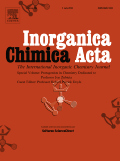
INORGANICA CHIMICA ACTA
Exploring Innovations in Materials and Theoretical ChemistryINORGANICA CHIMICA ACTA is a distinguished journal published by Elsevier Science SA, focusing on the dynamic fields of inorganic chemistry, materials chemistry, and physical and theoretical chemistry. Established in 1967, the journal continues to contribute to the scientific community with a commitment to high-quality research and innovation, boasting a 2023 Scopus ranking that places it at the forefront of its category, including a notable rank of #25 out of 79 in Inorganic Chemistry. Researchers can access a wealth of knowledge through its assemblage of influential articles; though it does not offer open access, the journal remains a key resource in the Netherlands and beyond. With an impact factor reflective of its rigorous editorial standards and engagement, INORGANICA CHIMICA ACTA is essential for scholars and professionals seeking to deepen their understanding and advance their research in these interconnected scientific domains.