ChemistrySelect
Scope & Guideline
Connecting Innovators in Chemistry
Introduction
Aims and Scopes
- Synthetic Chemistry:
The journal frequently publishes research on new synthetic methodologies, including one-pot reactions, multicomponent syntheses, and green chemistry approaches, focusing on efficiency and sustainability. - Catalysis:
Catalytic processes, especially those involving transition metals, are a core area of focus. This includes homogeneous and heterogeneous catalysis, with applications in organic transformations and environmental remediation. - Nanomaterials and Nanotechnology:
There is a consistent emphasis on the synthesis, characterization, and application of nanomaterials, particularly in areas such as catalysis, drug delivery, and environmental sensing. - Materials Chemistry:
Research on novel materials, including polymers, composites, and metal-organic frameworks (MOFs), is prevalent, highlighting their applications in energy storage, sensing, and biomedical fields. - Computational Chemistry:
The journal showcases numerous studies employing computational techniques, including molecular docking, DFT calculations, and molecular dynamics simulations, to understand and predict chemical behavior and interactions. - Biochemistry and Medicinal Chemistry:
There is a significant focus on the design and synthesis of bioactive compounds, with studies investigating their pharmacological properties and mechanisms of action, particularly in cancer and infectious diseases.
Trending and Emerging
- Green and Sustainable Chemistry:
There is a growing emphasis on environmentally friendly synthesis methods, including the use of deep eutectic solvents and biocatalysts, highlighting the importance of sustainability in chemical processes. - Photocatalysis and Photoelectrochemistry:
Research related to photocatalytic processes, particularly for environmental remediation and energy applications, is increasingly prominent, indicating a focus on harnessing solar energy for chemical transformations. - Biopolymer Applications:
The use of biopolymers in various applications, including drug delivery systems and as green materials, is on the rise, reflecting an interest in sustainable materials and biomedical innovations. - Artificial Intelligence and Machine Learning in Chemistry:
The integration of AI and machine learning techniques in chemical research, particularly for drug discovery and materials design, is becoming more common, indicating a trend towards computationally driven research. - Electrocatalysis for Energy Conversion:
Electrocatalytic processes, especially those involving the conversion of CO2 and hydrogen evolution, are gaining momentum as researchers aim to develop efficient energy storage and conversion technologies.
Declining or Waning
- Traditional Organic Synthesis:
There has been a noticeable decline in the publication of studies focused solely on traditional organic synthesis methods without novel applications or improvements, as the field shifts towards more innovative and efficient approaches. - Inorganic Chemistry:
Research specifically centered on classical inorganic compounds and their reactions has decreased, as more attention is being directed towards interdisciplinary applications that combine inorganic chemistry with materials science. - Analytical Chemistry:
Papers focusing exclusively on conventional analytical methods, without integration into broader chemical investigations or applications, appear to be waning, suggesting a shift towards more holistic approaches in analytical research.
Similar Journals
RUSSIAN CHEMICAL REVIEWS
Elevating Chemical Understanding GloballyRUSSIAN CHEMICAL REVIEWS, published by the esteemed ND Zelinsky Institute of Organic Chemistry, RAS, stands as a prominent platform for disseminating high-quality research in the diverse field of chemistry. With an ISSN of 0036-021X and an E-ISSN of 1468-4837, this journal has earned its place in the Q1 quartile of Chemistry (miscellaneous) for 2023, reflecting its outstanding impact and rigorous peer-review process. The journal encompasses a wide array of topics within chemistry, providing critical reviews that advance understanding and foster collaboration among researchers, professionals, and students globally. With its consistent publication since 1970, RUSSIAN CHEMICAL REVIEWS not only serves as a valuable resource for the latest advancements in the field but also plays a crucial role in shaping future research directions. The journal is based in the Russian Federation, with its office located at 47 Leninsky Pr, Moscow 119991, RUSSIA. As an essential reference for those in the chemical sciences, it provides an ideal avenue for authors looking to publish impactful reviews that contribute to the broader scientific community.
JOURNAL OF THE CHINESE CHEMICAL SOCIETY
Illuminating the Path of Chemical InnovationJOURNAL OF THE CHINESE CHEMICAL SOCIETY, published by WILEY-V C H VERLAG GMBH, is a vital resource in the field of chemistry, focusing on a broad array of topics pertinent to general chemistry and its advancing sub-disciplines. Established in 1954 and running through 2024, this journal serves as a significant platform for the dissemination of high-quality research, showcasing innovative findings and developments within the chemical sciences. With its Q3 category ranking and positioning at Rank #203 in General Chemistry per Scopus, it reflects the journal's commitment to research excellence and impact. While not an open-access publication, it ensures accessibility to a global audience, making it an essential tool for researchers, professionals, and students alike seeking to stay informed and engaged in the evolving landscape of chemistry.
Chem
Exploring the Depths of Biochemistry and BeyondChem, published by CELL PRESS, is a renowned academic journal that has rapidly established itself as a leading platform for cutting-edge research in diverse areas such as biochemistry, chemical engineering, materials chemistry, and environmental chemistry. Released under the ISSN 2451-9294, this esteemed journal has achieved an impressive Q1 category ranking across multiple disciplines in 2023, highlighting its significant impact and prominence within the academic community. With a strong focus on innovative studies and interdisciplinary approaches, Chem fosters a vibrant dialogue among researchers, professionals, and students, making it an indispensable resource for those seeking to advance their knowledge and contribute to the evolving field of chemistry. As an open access journal, it aims to democratize knowledge, ensuring that critical research is accessible to a global audience. With its headquarters based in Cambridge, MA, it continues to lead the charge in the dissemination of pivotal findings that shape our understanding of chemical sciences.

Organics is a peer-reviewed journal dedicated to the advancement of research in the field of organic chemistry, published by MDPI, a renowned leader in open access publication. Since its inception in 2020, the journal has embraced an open access model, ensuring that cutting-edge research is freely available to researchers, professionals, and students worldwide. With a current impact factor reflecting its relevance in the community, Organics aims to provide a platform for high-quality research, reviews, and insights that foster innovation and collaboration in the organic chemistry domain. The journal's scope encompasses a broad range of topics within organic chemistry, making it an essential resource for those involved in various research endeavors. As it converges from 2020 to 2024, Organics is set to build on its solid foundation and enhance its scholarly contributions by attracting significant research contributions that align with the latest scientific developments. Based in Basel, Switzerland, the journal's commitment to quality and accessibility resonates strongly with today's research landscape, making it a pivotal asset for anyone invested in the future of organic chemistry.
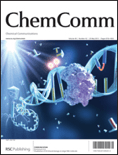
CHEMICAL COMMUNICATIONS
Unveiling the complexities of chemical interactions.Chemical Communications, published by the esteemed Royal Society of Chemistry, is a prominent journal within the field of chemical science, focusing on the dissemination of cutting-edge research in a variety of sub-disciplines including catalysis, materials chemistry, and electronic materials. Operating without an open access model, this journal provides critical insights from contributors around the globe, enhancing our understanding of complex chemical interactions and innovative applications. Ranked in the top quartile for several categories such as Ceramics and Composites, and Metals and Alloys, Chemical Communications boasts impressive Scopus rankings, securing strong positions across multiple fields and showcasing its influence within the scientific community. The journal is committed to advancing knowledge and fostering collaboration among researchers, professionals, and students, making it an invaluable resource for those looking to stay abreast of the latest advancements in chemistry and materials science. With a publication history dating back to 1965 and continuing into 2024, its rich archive serves as a vital repository of chemical research and development.
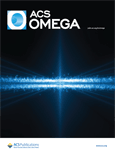
ACS Omega
Catalyzing Collaboration for Global Scientific Progress.ACS Omega is a prominent open-access journal published by the American Chemical Society that has been serving the global research community since its inception in 2016. With ISSN 2470-1343, it focuses on a wide array of topics within the realm of Chemistry and Chemical Engineering, making it a crucial platform for researchers and practitioners aiming to disseminate significant findings across these disciplines. The journal maintains an impressive standing, ranking in the Q2 quartile for both Chemical Engineering and Chemistry categories, highlighting its impact and relevance in contemporary research. Additionally, with its Scopus ranks placing it within the top 24% and 27% of General Chemistry and General Chemical Engineering respectively, ACS Omega continues to foster innovation and facilitate collaboration among scientists. As an Open Access journal, it ensures that research outputs are freely available to all, enhancing the accessibility and visibility of contributors’ work, thus playing a critical role in advancing scientific knowledge globally from its headquarters in Washington, D.C.
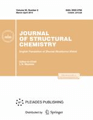
JOURNAL OF STRUCTURAL CHEMISTRY
Pioneering Research in Theoretical and Physical ChemistryThe JOURNAL OF STRUCTURAL CHEMISTRY, published by PLEIADES PUBLISHING INC, is a premier resource in the fields of Inorganic Chemistry, Materials Chemistry, and Physical and Theoretical Chemistry. Established in 1960, this journal has been providing a platform for groundbreaking research, facilitating the advancement of knowledge and innovation up to the year 2024. With an ISSN of 0022-4766 and an E-ISSN of 1573-8779, this journal strives to maintain high academic standards, as evidenced by its quartile rankings in 2023, where it ranks Q4 across various chemistry categories. While it currently does not offer open access, the journal's insightful articles are crucial for professionals and students seeking to enhance their understanding and expertise in structural chemistry. Subscribers can expect a comprehensive collection of peer-reviewed research, empirical findings, and theoretical discussions that contribute significantly to the scientific community. With its strong historical foundation and ongoing commitment to quality, the JOURNAL OF STRUCTURAL CHEMISTRY continues to be an essential resource for those passionate about the complexities of structural chemistry.
Inorganic and Nano-Metal Chemistry
Pioneering Research in Inorganic Chemistry for a Sustainable Future.Inorganic and Nano-Metal Chemistry is a premier journal published by Taylor & Francis Inc, focusing on innovative research and advancements in the fields of inorganic chemistry and nano-metal applications. With an increasing impact in the academic community, this journal has established itself within the Q3 category of both Inorganic Chemistry and Physical and Theoretical Chemistry as of 2023, reflecting its global recognition and influence. The journal is accessible as an Open Access publication, ensuring that research findings are freely available to a broad audience, promoting transparency and collaboration in scientific exploration. Based in the United Kingdom, Inorganic and Nano-Metal Chemistry aims to disseminate high-quality peer-reviewed articles that not only highlight fundamental studies but also push the boundaries of technological applications in areas such as catalysis, materials science, and nanotechnology. Researchers, professionals, and students will find this journal an invaluable resource for the latest developments and interdisciplinary insights in the ever-evolving landscape of inorganic and nano-metal chemistry.
TETRAHEDRON
Exploring the molecular universe since 1957.TETRAHEDRON, published by Pergamon-Elsevier Science Ltd, is a leading peer-reviewed journal that has been pivotal in advancing the fields of Biochemistry, Drug Discovery, and Organic Chemistry since its inception in 1957. With an ISSN of 0040-4020 and an E-ISSN of 1464-5416, this journal provides a platform for the dissemination of cutting-edge research and innovative methodologies that contribute significantly to the scientific community. Recognized for its rigorous editorial standards, TETRAHEDRON has been categorized in the Q3 quartile for 2023 across its relevant fields, reflecting its solid impact within the scientific sphere. Despite the current absence of Open Access options, the journal continues to engage a diverse readership, offering invaluable insights and advancements that fuel both academic and industrial applications. With an ongoing commitment to excellence, TETRAHEDRON remains an essential resource for researchers, professionals, and students aiming to stay at the forefront of chemistry and biochemistry research.

Frontiers in Chemistry
Exploring Diverse Dimensions of Chemical Science.Frontiers in Chemistry is an esteemed and innovative Open Access journal published by FRONTIERS MEDIA SA, based in Lausanne, Switzerland. Since its inception in 2013, the journal has established itself as a leading platform for the dissemination of high-quality research across a broad spectrum of chemistry disciplines, achieving a notable Q1 classification in the miscellaneous chemistry category as of 2023. With an impressive Scopus rank, placing it at 72nd out of 408 in General Chemistry and falling within the 82nd percentile, Frontiers in Chemistry is committed to publishing significant findings that contribute to the advancement of the field. The journal's Open Access model ensures that research is freely accessible to all, fostering a greater exchange of knowledge and collaboration among researchers, professionals, and students globally. It covers a range of topics, from organic and inorganic chemistry to materials science and biochemistry, making it an essential resource for anyone seeking to stay at the forefront of chemical research.