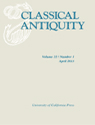
CLASSICAL ANTIQUITY
metrics 2024
Unveiling the Legacy of Classical Civilizations
Introduction
CLASSICAL ANTIQUITY, published by the University of California Press, is a premier journal dedicated to the rigorous exploration of ancient history, literature, and culture. With an impressive impact factor and ranked #10 out of 170 in the category of Classics within Scopus, this journal stands in the top 94th percentile, signaling its vital role in advancing scholarly conversations in the field. Since its inception in 1982, CLASSICAL ANTIQUITY has fostered in-depth research and critical analysis, making it a cornerstone for scholars, professionals, and students alike. Though it operates on a subscription basis, the journal aims to disseminate comprehensive studies that bridge contemporary perspectives with classical heritage. With a Q1 ranking in the Classics category, it serves as an essential resource for anyone seeking to deepen their understanding of ancient civilizations and their lasting impacts on modern society.
Metrics 2024
 0.280.901.1037
Metrics History
Rank 2024
Scopus
JCI (Web Of Science)
Quartile History
Similar Journals
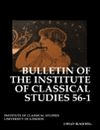
BULLETIN OF THE INSTITUTE OF CLASSICAL STUDIES
Illuminating the Nuances of History and LanguageBULLETIN OF THE INSTITUTE OF CLASSICAL STUDIES, published by Oxford University Press, serves as a vital platform for the dissemination of research in the fields of Classics, Archaeology, History, and Linguistics. Established in 1954 and continuing to present day, this journal emphasizes scholarly contributions that delve into the nuances of ancient civilizations while fostering interdisciplinary dialogue. With an impact factor reflective of its performance in the Q4 quartiles across various fields, it provides a unique fusion of traditional and contemporary inquiries that challenge existing paradigms. This esteemed journal also stands out for its comprehensive coverage, appealing to a diverse audience comprising researchers, professionals, and students aiming to enrich their understanding of classical studies. Although it currently does not offer open-access options, the BULLETIN remains committed to advancing knowledge and scholarship in an increasingly complex academic landscape, prioritizing the dissemination of rigorous research that contributes to the humanities.

Exemplaria Classica
Illuminating the Enduring Legacy of the ClassicsExemplaria Classica, published by Universidad de Huelva's Servicio de Publicaciones, is a prominent academic journal dedicated to the fields of Classics and Literature and Literary Theory. Established in 2011, this journal serves as a vital resource for scholars, educators, and students interested in the rich tapestry of classical literature and its enduring influence on contemporary thought. With an ISSN of 1699-3225 and an E-ISSN of 2173-6839, it has firmly established itself in the academic community, although it currently holds a Q4 ranking in both its categories. The journal is ranked #712 out of 1106 in Literature and Literary Theory and #129 out of 170 in Classics as per Scopus rankings, reflecting its emerging status in these fields. Despite its open access designation being currently unclear, Exemplaria Classica is essential for advancing discussions and research in classical studies and has covered a diverse range of topics over its publishing years, making it an important addition to any academic library.

ACME-Annali della Facolta di Studi Umanistici dell Universita degli Studi di Milano
Exploring the depths of humanistic inquiry.ACME-Annali della Facoltà di Studi Umanistici dell'Università degli Studi di Milano is a distinguished open-access journal, published by UNIV STUDI MILANO, that has been providing a platform for scholarly discourse in the humanities since 2014. With its ISSN 0001-494X and E-ISSN 2282-0035, this journal is dedicated to fostering critical analysis and innovative thought in areas such as literature, philosophy, history, and cultural studies. Situated in the heart of Milano, Italy, and addressing a global audience, ACME aims to promote interdisciplinary dialogue and contribute to the advancement of humanistic inquiry. By facilitating free access to high-quality research, the journal underscores the importance of disseminating knowledge to enable broader academic engagement. With an emphasis on rigor and relevance, ACME is an essential resource for researchers, professionals, and students seeking to deepen their understanding of the humanities.

Synthesis-La Plata
Fostering innovative research in Arts and Social Sciences.Synthesis-La Plata is an esteemed academic journal published by UNIV NAC LA PLATA, FAC HUMANIDADES & CIENCIAS EDUC, focusing on the fields of Arts, Humanities, and Social Sciences, with a particular emphasis on Literature, Literary Theory, and Linguistics. Since its inception in 2009, this Open Access journal has been dedicated to providing a platform for scholarly discourse and innovative research, allowing unrestricted access to a multitude of international studies. Although it experienced a hiatus in its Scopus coverage between 2012 and 2014, the journal continues to foster critical analysis and promotes interdisciplinary approaches within its domains. With an ISSN of 0328-1205 and an E-ISSN of 1851-779X, Synthesis-La Plata aims to reach a diverse readership, including researchers, educators, and students who seek to deepen their understanding of literary and linguistic dynamics. Despite its recent Scopus rankings indicating low percentiles, the journal remains a significant resource for scholarly inquiry in the humanities."

Auster
Fostering innovation through open-access scholarship.Auster is a prominent open-access journal dedicated to advancing interdisciplinary research within the fields of Humanities and Educational Sciences. Published by the esteemed Universidad Nacional de La Plata, specifically by the Faculty of Humanities and Educational Sciences, this journal has been a cornerstone for scholarly discourse since its establishment in 1996. With an ISSN of 1514-0121 and an E-ISSN of 2346-8890, Auster ensures wide accessibility to innovative research and critical analyses. Its commitment to open access fosters an inclusive academic environment, allowing researchers, students, and professionals in Argentina and beyond to engage with high-quality content that stimulates new ideas and interdisciplinary collaboration. The journal strives to publish timely, relevant articles that explore contemporary challenges in humanities and education, thereby positioning itself as an essential resource for anyone invested in these dynamic fields.
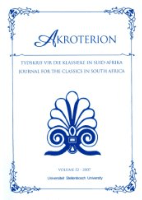
Akroterion-Journal for the Classics in South Africa
Empowering Research in the Classics for AllAkroterion: Journal for the Classics in South Africa is a premier open-access journal dedicated to advancing the study of classical antiquity within the context of South Africa and beyond. Founded in 1990 and published by SUNJOURNALS, this journal serves as a vital platform for the dissemination of scholarly articles, reviews, and critical perspectives that delve into the rich tapestry of classical literature, history, and culture. Based in Stellenbosch, South Africa, it provides international accessibility for researchers and scholars alike, enhancing the global discourse on classical studies. Despite its classification in the Q4 quartile of Classics and the 17th percentile of Scopus rankings, Akroterion remains committed to fostering innovative research and nurturing emerging voices in the field. By offering an open-access model, it ensures that valuable academic contributions reach a wider audience, empowering enthusiasts and professionals to explore the timeless relevance of classical studies today.
MNEMOSYNE
Nurturing a legacy of excellence in humanities research.MNEMOSYNE is a prestigious academic journal published by BRILL, specializing in the fields of Archeology, Classics, History, Linguistics and Language, and Literature and Literary Theory. With a remarkable history dating back to its inception in 1948, this journal continues to be a crucial resource for scholars and researchers, spanning its publication years that extend to 2024. The journal boasts high rankings in multiple categories according to Scopus, including Q1 status in Classics and History, reflecting its impact and relevance in the academic community. Although it is not an Open Access journal, its selection of peer-reviewed articles ensures rigorous scholarship that contributes to ongoing discussions and discoveries in the humanities. By providing a platform for innovative research and critical discourse, MNEMOSYNE plays an integral role in advancing the understanding of cultural and historical contexts, making it an essential read for both seasoned academics and emerging scholars alike.
Classical Receptions Journal
Unpacking the Timeless Relevance of Classical TextsClassical Receptions Journal, published by Oxford University Press, is a leading scholarly periodical that engages with the intersection of classical studies and contemporary culture. With its ISSN 1759-5134 and E-ISSN 1759-5142, the journal has established itself as a notable platform for innovative research that examines how classical texts, themes, and ideas continue to resonate in modern contexts. With a scope that includes the realms of Arts and Humanities, Classics, and Cultural Studies, this journal is ranked in the Q2 category for Classics and Q3 for both Arts and Humanities and Cultural Studies, demonstrating its significant impact in the field. Researchers and students will find a wealth of peer-reviewed articles that not only explore historical reception but also inspire new conversations and methodologies. The journal's commitment to publishing quality scholarship makes it an essential resource for anyone interested in the ongoing relevance of classical antiquity in today’s world, from its home base in the United Kingdom at Great Clarendon St, Oxford.
Cambridge Classical Journal
Elevating Classical Studies Through Rigorous ResearchThe Cambridge Classical Journal, published by Cambridge University Press, is a prestigious academic journal that has been a cornerstone of classical scholarship since its inception in 1884. With a focus on advancing knowledge in the fields of Classics, Linguistics, and Literature and Literary Theory, the journal operates with an annual publication cycle, showcasing cutting-edge research that contributes significantly to these disciplines. With a commendable impact factor and ranking in the top quartile (Q1) for Classics and Q2 for Literature and Literary Theory as of 2023, it remains an essential resource for scholars, students, and professionals alike. The journal's commitment to excellence is evident in its rigorous peer-review process and its role in fostering scholarly dialogue on classical texts and their linguistic and cultural implications. While the Cambridge Classical Journal is not an open-access publication, it is invaluable for anyone seeking to deepen their understanding of the classical world and its enduring influence on contemporary thought.
Symbolae Osloenses
Illuminating the Rich Tapestry of ClassicsSymbolae Osloenses, published by TAYLOR & FRANCIS LTD, is a distinguished journal in the field of Classics, with a rich history dating back to its inception in 1922. This UK-based journal has continuously contributed to the scholarly discourse surrounding ancient cultures, languages, and literature, making it a crucial resource for researchers, educators, and students alike. Though it operates under a subscription model, its impact on the academic community is underscored by its recent inclusion in the 2023 Scopus rankings, where it holds a respectable position in the 65th percentile among its peers. With decades of published research spanning from 1924 to 2023, Symbolae Osloenses remains committed to fostering robust academic dialogue and advancing knowledge in the Classics, catering to a diverse readership seeking to explore the nuances of classical studies.