CRITICISM-A QUARTERLY FOR LITERATURE AND THE ARTS
Scope & Guideline
Illuminating the Intersection of Art and Critique
Introduction
Aims and Scopes
- Interdisciplinary Critical Theory:
The journal explores a wide range of critical theories, integrating perspectives from sociology, feminism, race studies, and queer theory to analyze literary and artistic works. - Cultural and Historical Contextualization:
It emphasizes the importance of situating texts within their historical and cultural contexts, allowing for deeper understanding of their meanings and implications. - Focus on Marginalized Voices:
CRITICISM often highlights works and perspectives from marginalized communities, including women, people of color, and LGBTQ+ individuals, contributing to a more inclusive literary canon. - Experimental and Innovative Methodologies:
The journal encourages experimental approaches to bibliography and textual analysis, seeking to redefine traditional methodologies in literary studies. - Activism and Social Justice:
A significant aim is to connect literary criticism with activism, addressing issues of social justice, race, class, and identity in both historical and contemporary contexts.
Trending and Emerging
- Intersectionality and Social Justice:
There is a growing trend of articles that explore intersectionality, particularly how race, gender, and sexuality intersect in literary and artistic expressions, reflecting a commitment to social justice and advocacy. - Activist Bibliography and Textual Practices:
Emerging themes include activist bibliography, which seeks to challenge traditional bibliographic methods and promote community engagement through critical textual practices. - Queer and Disability Studies:
The journal has increasingly featured works that engage with queer theory and disability studies, examining the complexities of identity and representation in literature and the arts. - Digital Humanities and New Media:
There is a noticeable increase in the exploration of digital humanities, including how digital platforms influence literary production and dissemination, highlighting the relevance of technology in contemporary literary studies. - Environmental and Ecocritical Approaches:
Recent publications reflect an emerging interest in ecocriticism and anthropocene poetics, addressing environmental issues and their representation in literature, thus linking literary studies with global ecological concerns.
Declining or Waning
- Traditional Literary Canon:
There is a noticeable decrease in articles focused solely on canonical texts and authors, as the journal increasingly prioritizes marginalized voices and contemporary issues over established literary works. - Historical Literary Studies:
The focus on purely historical analyses, particularly those that do not engage with contemporary relevance or theoretical frameworks, seems to be waning in favor of more dynamic and interdisciplinary approaches. - Formalism and Close Reading:
Formalist approaches, which concentrate on textual analysis without considering socio-political contexts, are less frequently represented, as the journal moves towards critical frameworks that embrace broader cultural implications.
Similar Journals

CANADIAN LITERATURE
Advancing Critical Discourse in Canadian Literary StudiesCanadian Literature is a distinguished journal published by the University of British Columbia, dedicated to exploring the rich landscape of Canadian literary studies. With its strong impact in the field, evidenced by its Scopus ranking of #197 out of 845 in the category of Arts and Humanities, specifically in Literature and Literary Theory, this journal serves as a pivotal platform for both emerging and established scholars. Covering a wide range of topics related to Canadian literature and culture, it aims to foster an interdisciplinary dialogue that reflects the diverse voices and narratives shaping the literary scene in Canada. Though the journal transitioned its coverage in Scopus after 2019, it continues to provide valuable insights and critical discourse in its publications. Researchers, students, and professionals looking to deepen their understanding of Canadian literature will find Canadian Literature an essential resource for contemporary scholarship.
Partial Answers-Journal of Literature and the History of Ideas
Navigating the Complexities of Ideas and TextsPartial Answers - Journal of Literature and the History of Ideas, published by the esteemed Johns Hopkins University Press, is a vital academic resource for scholars interested in the dynamic intersections of literature, philosophy, and cultural studies. With an established track record since its inception in 2003, this journal fosters rigorous dialogue and exploration across disciplines, offering a comprehensive platform for innovative research and critical thought. Highlighted by its 2023 Scopus rankings, it holds positions within the Q2 and Q3 quartiles, indicating a significant impact in its respective fields—specifically in Literature and Literary Theory, and Cultural Studies. Readers can expect cutting-edge articles that challenge conventional wisdom and probe the historical contexts of literary works. Although the journal is not Open Access, it remains committed to the dissemination of scholarly knowledge, making it a cornerstone for researchers, professionals, and students seeking to deepen their understanding of literature's role in shaping ideas. With its diverse contributions and thematic depth, Partial Answers is essential for anyone engaged in the nuanced study of literary narratives and philosophical inquiries.
REVIEW-LITERATURE AND ARTS OF THE AMERICAS
Advancing Conversations on Literature and the Arts.REVIEW-LITERATURE AND ARTS OF THE AMERICAS, published by Routledge Journals, Taylor & Francis Ltd, serves as a vital platform for the exploration of literary and artistic expressions across the Americas. With an ISSN of 0890-5762 and an E-ISSN of 1743-0666, this journal has been dedicated to fostering scholarly discussion since its inception in 1968, addressing interdisciplinary themes that span literature, visual arts, and performing arts. Despite its current Q4 rankings in both Literature and Literary Theory as well as Visual Arts and Performing Arts, the journal remains committed to elevating critical discourse and offering a nurturing environment for emerging voices in the field. Access to the journal is through subscription, highlighting its focused audience of researchers, professionals, and students who seek to deepen their understanding of the cultural dynamics of the Americas. By engaging with diverse scholarly perspectives, REVIEW-LITERATURE AND ARTS OF THE AMERICAS aims to contribute to the ongoing dialogue about the significance of art and literature in societal contexts, making it an important resource for anyone interested in this rich and vibrant area of study.
ORBIS LITTERARUM
Cultivating a Legacy of Literary ExcellenceORBIS LITTERARUM, published by Wiley, is a prestigious journal in the field of Literature and Literary Theory, aiming to foster in-depth scholarly discussions and critical analyses of literary works and their theoretical underpinnings. With its ISSN 0105-7510 and E-ISSN 1600-0730, the journal presents a rich legacy that spans several decades, having converged its publishing efforts from 1943 to 1950 and from 1954 to the present day, thus ensuring a continuity of discourse in the literary field. Recognized for its high quality, ORBIS LITTERARUM is ranked in the Q2 quartile of literature disciplines as per the 2023 metrics, placing it within the top 26% of its category and earning a favorable position in the Scopus Rankings with a percentile of 74 in the arts and humanities. Researchers, professionals, and students alike are encouraged to contribute to this esteemed journal to engage with contemporary literary debates and to influence future scholarship in literature, enhancing understanding of texts across cultures and epochs.

LIBERTE
Cultivating Scholarly Dialogue in Literature and BeyondLIBERTE is a distinguished academic journal that serves as a platform for critical thinking and scholarly discourse across various fields including Literature and Literary Theory, Philosophy, Sociology and Political Science, and Visual Arts and Performing Arts. Established in Canada and published by LIBERTE, this journal aims to foster intellectual exchange and explore the nuances of cultural and social narratives. Although it currently falls in the Q4 quartile across its categories, it is dedicated to advancing the conversation in the arts and humanities, providing a rich resource for researchers, educators, and students alike. With an ISSN of 0024-2020 and an active publication cycle running from 2002 to 2024, LIBERTE welcomes contributions that challenge prevailing ideologies and reflect innovative perspectives. While the journal is not open access, its value in promoting academic inquiry within its communities cannot be overstated.

Estudios de Literatura Colombiana
Engaging with Innovative Methodologies in Colombian LiteratureEstudios de Literatura Colombiana, published by UNIV ANTIOQUIA, INST FILOSOFIA, is a prominent academic journal dedicated to the exploration and analysis of Colombian literary studies. With its Open Access policy established in 1997, the journal ensures wide accessibility for researchers, students, and professionals interested in the rich tapestry of Colombian literature and its contextual significance within the global literary landscape. Positioned within the arts and humanities, the journal has achieved commendable rankings, particularly in Literature and Literary Theory, where it boasts a Q1 categorization as of 2023. Its converging years from 2017 to 2024 reflect a vibrant ongoing discourse, inviting contributions that engage with innovative methodologies and critical perspectives. With an ISSN of 0123-4412, this journal serves as a vital outlet for scholarly dialogue, fostering a deeper understanding of not just the literature itself, but also the sociocultural factors influencing literary production in Colombia. Scholars are encouraged to contribute to this essential resource, enriching the field with their insights and research.
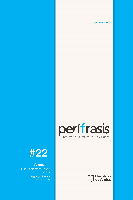
Perifrasis-Revista de Literatura Teoria y Critica
Illuminating the complexities of narrative and society.Perifrasis-Revista de Literatura Teoria y Critica is a distinguished open-access journal published by UNIV ANDES in Colombia, dedicated to advancing the fields of literature, literary theory, and criticism. With an ISSN of 2145-8987 and an E-ISSN of 2145-9045, this journal has been a significant platform for scholarly discourse since its inception in 2010, embracing an open-access model that enhances accessibility and dissemination of research findings. Strategically positioned in the Q2 category for Literature and Literary Theory, Perifrasis boasts a commendable Scopus ranking, reflecting its commitment to high-quality scholarship. The journal encompasses a wide range of topics within the humanities, including cultural studies and gender studies, and aims to foster critical engagement and innovative thinking among researchers, students, and professionals alike. As the journal continues to evolve through its converged years from 2019 to 2024, it remains a vital resource for those exploring the dynamic intersections of literature, society, and identity.

COLOQUIO-LETRAS
Illuminating Innovative Ideas in LiteratureCOLOQUIO-LETRAS is a distinguished literary journal published by the Fundação Calouste Gulbenkian in Portugal, dedicated to the exploration and analysis of innovative and critical perspectives in literature and literary theory. With an ISSN of 0010-1451, this journal occupies a notable position in the academic landscape, as evidenced by its Q4 ranking in the 2023 category of Literature and Literary Theory, and a Scopus rank of 1051/1106, placing it within the 5th percentile. Despite being a relatively niche publication, COLOQUIO-LETRAS plays a critical role in fostering scholarly dialogue and advancing theoretical frameworks within the field. The journal publishes articles, essays, and reviews that contribute to the rich tapestry of literary discourse, making it a valuable resource for researchers, educators, and students alike. Given its commitment to reflecting the complexities of literature from various cultural and theoretical dimensions, COLOQUIO-LETRAS is poised to inspire and inform its readership through its convergence of ideas from 2009 to 2017 and continuing through 2019 to 2024.

PAMIETNIK LITERACKI
Navigating the Landscape of Literary StudiesPAMIETNIK LITERACKI is a distinguished peer-reviewed journal dedicated to advancing the fields of Literature and Literary Theory, published by WYDAWNICTWO PAN, INST BADAN LITERACKICH PAN in Poland. With an ISSN of 0031-0514 and E-ISSN of 0031-0514, this journal has been operating under an Open Access model since 2012, ensuring wide accessibility and dissemination of scholarly work. The journal has undergone a journey through various categories, currently positioned in the Q4 quartile according to the 2023 category rankings in Literature and Literary Theory, with a Scopus rank of #1009/1106 placing it in the 8th percentile. PAMIETNIK LITERACKI serves as a critical platform for scholars, providing a venue for innovative research, discussions, and reviews that shape the literary discourse in Poland and beyond. For those passionate about literary studies, this journal represents a vital resource for both established researchers and emerging voices in the field.
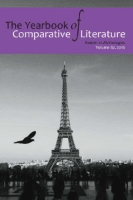
Yearbook of Comparative Literature
Connecting Literary Threads Across Epochs and ContextsThe Yearbook of Comparative Literature, published by University of Toronto Press Inc., stands as a vital resource for scholars within the interdisciplinary field of comparative literature. With a focus on fostering rigorous academic discourse, this journal delves into the dynamic interplay of literary traditions, cultural contexts, and critical theories across diverse languages and epochs. Though it has discontinued its coverage in Scopus since 2012, the Yearbook continues to be an important platform for innovative research and interpretation, appealing to a broad range of researchers, professionals, and students alike. By bridging gaps between cultures and highlighting neglected voices in literature, the Yearbook of Comparative Literature holds significant relevance in enhancing our understanding of global literary landscapes.