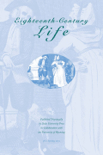
EIGHTEENTH-CENTURY LIFE
Scope & Guideline
Advancing Interdisciplinary Insights into the 1700s
Introduction
Aims and Scopes
- Interdisciplinary Exploration of Eighteenth-Century Literature:
The journal emphasizes a blend of literary studies with history, philosophy, and cultural theory, encouraging scholars to draw connections between various disciplines and the rich tapestry of the eighteenth-century intellectual landscape. - Focus on Marginalized Voices and Perspectives:
A significant aim is to highlight works and themes that represent underrepresented voices, including women, colonized subjects, and minority groups, thereby enriching the understanding of the period's cultural dynamics. - Engagement with Enlightenment Ideals and Critiques:
The journal consistently engages with Enlightenment themes, exploring both the ideals of reason and progress as well as critiques of these concepts, particularly in relation to issues like colonialism, gender, and class. - Analysis of Material Culture and Social Practices:
Research often includes examinations of material culture, such as the role of books, manuscripts, and art in shaping social practices and identities during the eighteenth century. - Historical Contextualization of Literary Works:
EIGHTEENTH-CENTURY LIFE places a strong emphasis on situating literary texts within their historical contexts, allowing for a deeper understanding of the socio-political and cultural influences that informed their creation.
Trending and Emerging
- Intersections of Race and Literature:
There is a growing focus on the intersections of race and literature, particularly in examining how colonialism and slavery influenced literary production and representation during the period. - Eco-Criticism and Environmental Perspectives:
Emerging themes in eco-criticism reflect a newfound interest in how literature from the eighteenth century engages with nature, environmental issues, and the implications of human interaction with the natural world. - Queer Theory and Gender Fluidity:
Research exploring queer theory and gender fluidity is gaining traction, with scholars investigating how these themes manifest in literature and social practices of the time, challenging conventional understandings of identity. - Material Culture and Textuality:
There is an increasing emphasis on material culture and the physicality of texts, examining how the production, distribution, and consumption of literary works shaped cultural practices and identities. - The Role of Emotion in Eighteenth-Century Literature:
Scholarly interest in the role of emotion, sentiment, and affect in literature is on the rise, focusing on how these elements influence narrative structure and character development.
Declining or Waning
- Traditional Canonical Texts:
There appears to be a waning interest in strictly canonical texts of the eighteenth century, as newer research tends to favor lesser-known works and marginalized authors, suggesting a shift toward inclusivity in literary studies. - Focus on Purely Historical Narratives:
Research that solely recounts historical events without engaging in literary analysis or cultural critique is becoming less prevalent, indicating a preference for studies that intertwine literature with broader cultural contexts. - Conventional Gender Roles:
Themes that reinforce traditional gender roles and expectations are appearing less frequently, as contemporary scholarship increasingly challenges these norms and seeks to explore more complex gender dynamics. - Static Interpretations of Enlightenment Thought:
Interpretations of Enlightenment thought that do not consider its critiques and contradictions are declining, reflecting a broader trend toward nuanced discussions that recognize the limitations and failures of Enlightenment ideals.
Similar Journals
South Central Review
Navigating the Complexities of Southern NarrativesSouth Central Review, a distinguished academic journal published by Johns Hopkins University Press, serves as a vital platform for scholarly discourse in the fields of cultural studies, literature and literary theory, philosophy, and the visual and performing arts. With an ISSN of 0743-6831 and an E-ISSN of 1549-3377, this journal is dedicated to highlighting innovative research and critical analyses that explore the complexities of Southern culture and its broader implications. Although it operates without an open access option, the journal is recognized for its rigorous peer-review process and contributions to contemporary academic dialogue, holding Q3 and Q4 rankings across several disciplines as of 2023. The convergence of ideas and perspectives from diverse academic backgrounds positions the South Central Review as an essential resource for researchers, professionals, and students seeking to deepen their understanding of the cultural narratives shaping our world today.
Renaissance Studies
Bridging History and Modernity through Renaissance StudiesRenaissance Studies, published by Wiley, stands as a vital academic platform within the disciplines of Cultural Studies, History, Literature and Literary Theory, Religious Studies, and Visual Arts and Performing Arts. With an impressive history of publication spanning from 1987 to 2024, this journal is recognized in 2023 metrics as a Q2 journal in four categories and Q1 in Literature and Literary Theory, reflecting its substantial impact in promoting interdisciplinary dialogue and research. The journal's robust Scopus rankings further underscore its relevance, including a position in the 83rd percentile in Literature and Literary Theory. Although not an open-access journal, it provides readers and contributors with access to curated, high-quality scholarship that explores the complexities of the Renaissance and its enduring influence on contemporary thought and culture. Researchers, professionals, and students alike will find Renaissance Studies invaluable in fostering discussions that bridge historical context with modern inquiry.

Quintana-Revista do Departamento de Historia da Arte
Celebrating the Fusion of Visual and Performing ArtsQuintana-Revista do Departamento de Historia da Arte, published by the Universidade de Santiago de Compostela, is a distinguished academic journal that focuses on the critical analysis and exploration of visual arts and performing arts. With its ISSN 1579-7414 and E-ISSN 2340-0005, this journal serves as a vital platform for researchers, professionals, and students interested in the depth of art history and cultural discourse. Operating under a Q4 category in the realm of Visual Arts and Performing Arts, the journal is committed to fostering scholarly dialogue and advancing knowledge in the field. Though it currently does not offer open access options, it remains an invaluable resource for those aiming to contribute to and understand the evolving landscape of art history. The journal covers converged years from 2011 to 2012 and 2014 to 2024, highlighting its ongoing relevance and adaptability to contemporary discussions. As it continues to enhance its visibility and impact within the 20th percentile of its category according to Scopus rankings, Quintana invites contributions that deepen our understanding of artistic expression and cultural heritage.
Journal of Victorian Culture
Celebrating the Vibrancy of Victorian Cultural StudiesThe Journal of Victorian Culture, published by Oxford University Press, is an esteemed academic journal that explores the multifaceted cultural landscape of the Victorian era. With a publication history spanning from 1996 to 2024, this journal serves as a critical platform for scholars and practitioners in the fields of Cultural Studies, History, Literature and Literary Theory, and Visual Arts and Performing Arts. It currently holds notable rankings, including Q3 in Cultural Studies and History, and Q2 in Literature, making it a prominent resource in these disciplines. Targeted at an audience that includes dedicated researchers, professionals, and students, the journal promotes interdisciplinary exploration and innovation, encouraging contributors to engage deeply with Victorian themes and their influence on contemporary culture. For those interested in cutting-edge discussions and insights, the Journal of Victorian Culture provides access to rich, scholarly content that is indispensable for understanding the era's impact on modern artistic and social paradigms.
ZEITSCHRIFT FUR KUNSTGESCHICHTE
Bridging Tradition and Innovation in Art StudiesZEITSCHRIFT FUR KUNSTGESCHICHTE is a prestigious journal dedicated to the study of art history, offering insightful analyses and discussions that enrich the understanding of visual arts and performing arts. Published by DEUTSCHER KUNSTVERLAG GMBH in Germany, this journal has established itself as a significant platform for researchers and professionals alike since its inception. With a print ISSN of 0044-2992 and an e-ISSN of 2569-1619, it spans a comprehensive range of topics in art history, reflecting both traditional and contemporary perspectives. Although categorized in the Q4 quartile for Visual Arts and Performing Arts, the journal contributes to a rich dialogue within its field, aiming to foster academic discourse and promote scholarly research. Its scope has evolved notably from converged years starting in 1975 and gathering strength from 2001 to 2024, and it is committed to serving as an essential resource for students, academics, and practitioners in the arts. While not offering open access, the journal maintains a rigorous peer-review process to ensure high-quality submissions that advance knowledge and stimulate critical thought.

Nineteenth-Century Art Worldwide
Unveiling the Legacy of 19th Century CreativityNineteenth-Century Art Worldwide is a premier open-access journal dedicated to the exploration and critical analysis of art from the nineteenth century, published by the Association of Historians of Nineteenth-Century Art. Since its inception in 2002, this journal has provided a platform for innovative research that spans various methodologies and perspectives within the field of art history. With an impact factor that reflects its growing influence, the journal has maintained a steady role in advancing scholarship related to both visual and performing arts, evidenced by its rankings within the Scopus database. It currently holds a Q3 status in Visual Arts and Performing Arts and Q4 in Arts and Humanities, underscoring its relevance among contemporary academic discourse. The journal is hosted in the United States, specifically at Seton Hall University, and aims to foster scholarly dialogue while enhancing accessibility to important research. By engaging with the cultural and artistic practices of the nineteenth century, Nineteenth-Century Art Worldwide serves as an invaluable resource for researchers, professionals, and students alike, ensuring that the legacy of this pivotal period in art history remains vibrant and well-documented.
Journal for Eighteenth-Century Studies
Bridging Disciplines through Eighteenth-Century ScholarshipThe Journal for Eighteenth-Century Studies, published by WILEY, serves as a pivotal platform for scholars in the intersecting fields of cultural studies, history, literature, and the visual and performing arts. With an ISSN of 1754-0194 and an E-ISSN of 1754-0208, this journal reflects a rich tradition of academic discourse dating back to its inception in the 1970s, with converged years indicating its long-standing relevance within the academic community through to 2024. Categorized in the Q3 Quartile across several disciplines in 2023, it holds commendable Scopus rankings, notably being in the 74th percentile for Literature and Literary Theory. Despite not being an Open Access journal, its impact factor and scholarly contributions make it a valuable resource for researchers, professionals, and students committed to exploring the complexities of the eighteenth century. The journal aims not only to disseminate research but also to foster interdisciplinary dialogue, making it an essential read for anyone passionate about this transformative period in history.

CAHIERS VICTORIENS & EDOUARDIENS
Exploring the Depths of Victorian and Edwardian Literature.CAHIERS VICTORIENS & EDOUARDIENS, published by Université de Montpellier, is a prominent open-access journal dedicated to the exploration and analysis of Victorian and Edwardian literature and culture. Since its establishment, the journal has become an invaluable resource for scholars, researchers, and students interested in the rich tapestry of this influential period in literary history. With its roots tracing back to 1990 and covering significant contributions from 2002 to 2024, it showcases a diverse range of articles and critical essays that delve into the cultural, social, and literary contexts of the 19th and early 20th centuries. Although ranked in the lower quartiles of cultural studies and literature, the journal provides significant insights and contributes to ongoing academic discussions. Its commitment to open access since 2011 ensures that its research is freely available, fostering a global conversation among academia. Located in the heart of France, CAHIERS VICTORIENS & EDOUARDIENS invites you to engage with and contribute to the ongoing scholarly discourse on Victorian and Edwardian studies.
THEATRE HISTORY STUDIES
Engaging Minds with the Art of Theatre HistoryTHEATRE HISTORY STUDIES, published by University of Alabama Press, serves as an essential platform for scholarly discourse and research in the fields of Cultural Studies and Visual Arts and Performing Arts. With an ISSN of 0733-2033, this journal offers critical insights into the evolution of theatre and performance, positioning itself as a valuable resource for researchers and practitioners alike. Despite its niche focus, it holds a commendable ranking in Scopus, reflecting its cultural significance and academic rigor—ranked #356 out of 667 in Visual Arts and Performing Arts and #911 out of 1304 in Cultural Studies. The journal has published continuously from 2002 to 2012, and again in 2014 to 2019, as well as from 2021 to 2023, consistently fostering a rich dialogue around artistic practices and historical contexts. Although not open access, its articles are pivotal for advancing knowledge and inspiring new perspectives in the interplay of theatre, culture, and society. For those dedicated to understanding the intricate tapestry of performance studies, THEATRE HISTORY STUDIES is a must-read.

Taida Journal of Art History
Illuminating the intersections of culture and creativity.Taida Journal of Art History, published by NATIONAL TAIWAN UNIVERSITY, GRADUATE INSTITUTE OF ART, is a pioneering academic journal dedicated to the exploration and critique of art history, particularly within the unique cultural context of Taiwan. Since its inception in 2018, the journal has become an important platform for scholarly discourse, offering insights into the evolution of visual arts and performing arts, alongside comprehensive studies in history. With an ISSN of 1023-2095, it currently ranks within the Q4 category in Arts and Humanities (Miscellaneous) and the Q3 category in History and Visual Arts and Performing Arts, indicating its growing influence in these fields. Researchers, professionals, and students alike can benefit from its rigorous peer-reviewed articles that bridge theoretical frameworks with practical applications, making it an essential resource for those engaged in the arts and humanities. This commitment to fostering academic excellence is reflected in its Scopus rankings, where it stands at Rank #338/667 in Visual Arts and Performing Arts and Rank #1027/1760 in History. Engage with the Taida Journal of Art History to gain deeper insights into the evolving narratives of artistic expression.