ECOLOGY OF FOOD AND NUTRITION
Scope & Guideline
Cultivating Knowledge for Sustainable Nutrition Practices
Introduction
Aims and Scopes
- Food Security and Nutrition:
The journal focuses on the interconnectedness of food security and nutrition, exploring how access to food affects dietary choices and health outcomes across different populations. - Cultural and Socioeconomic Influences:
Research often examines how cultural beliefs, socioeconomic status, and community dynamics influence food practices, dietary habits, and nutritional education. - Public Health Interventions:
There is a strong emphasis on evaluating public health initiatives and policies aimed at improving food access, nutrition education, and health outcomes, particularly in underserved communities. - Child and Maternal Nutrition:
The journal frequently publishes studies addressing the nutritional needs of vulnerable populations, especially children and pregnant or postpartum women, focusing on interventions that can enhance their health. - Ecological and Environmental Factors:
Research is also directed towards understanding the impact of environmental and ecological factors on food systems, nutrition, and health, including the effects of climate change.
Trending and Emerging
- Impact of COVID-19 on Food Systems:
There is an increasing focus on how the COVID-19 pandemic has affected food security, access, and nutrition, particularly in vulnerable populations, as researchers seek to understand and mitigate these impacts. - Intersectionality of Food Insecurity:
Emerging studies are examining the intersectionality of food insecurity with other social determinants such as job security, healthcare access, and mental health, highlighting the complex challenges faced by marginalized communities. - Sustainable Diets and Climate Change:
Research is increasingly addressing the need for sustainable dietary practices in the context of climate change, focusing on how ecological factors influence food choices and nutrition. - Digital Food Environments:
The rise of online grocery shopping and digital food environments is a growing area of research, exploring how technology affects food access and dietary habits, particularly among low-income populations. - Childhood Obesity and Nutrition Education:
There is a notable trend towards investigating childhood obesity prevention strategies and the effectiveness of nutrition education programs aimed at improving dietary habits among school-aged children.
Declining or Waning
- Traditional Dietary Practices:
While still relevant, studies focused solely on traditional dietary practices without integrating modern nutritional science or public health implications have decreased, as the journal seeks a more holistic approach to food and nutrition. - Single-Dimensional Nutritional Studies:
Research that examines isolated nutritional components (e.g., single vitamins or minerals) without considering broader dietary patterns or environmental influences has become less common, as the journal encourages more comprehensive analyses. - Food Sovereignty Narratives:
Although food sovereignty remains an important topic, the specific focus on narratives around food sovereignty without empirical evaluation has declined, as there is a growing emphasis on actionable solutions to food insecurity.
Similar Journals
Global Food Security-Agriculture Policy Economics and Environment
Advancing global food security through innovative research.Global Food Security - Agriculture Policy Economics and Environment is a leading interdisciplinary journal published by Elsevier that addresses critical issues in food security through the lens of agriculture, economics, and environmental sustainability. With an impressive impact factor and a distinguished placement in the Q1 quartile across multiple categories including Ecology, Food Science, and Safety Research for 2023, this journal is a vital resource for researchers and practitioners aiming to address modern challenges in global food systems. Covering essential topics from agricultural policy to ecological implications, the journal provides a platform for innovative research and policy discussions that foster the advancement of food security on a global scale. Notably, it is indexed in Scopus, where it ranks in the top percentiles across its relevant categories, reflecting its significance in the field. The journal is accessible to a wide audience, making it an indispensable source of knowledge for professionals and students aiming to tackle the complex interplay between food production and environmental stewardship.

BMC Nutrition
Advancing the Science of Nutrition for a Healthier TomorrowBMC Nutrition, published by BMC in the United Kingdom, is a premier open-access journal dedicated to disseminating high-quality research in the fields of nutrition, dietetics, public health, and associated medical disciplines. With its E-ISSN 2055-0928, the journal has been providing a platform for innovative studies since its inception in 2014, ensuring wide accessibility for researchers and practitioners alike. Reflecting its growing impact in academia, BMC Nutrition has achieved notable rankings within various categories, including Q2 in Medicine (miscellaneous) and Public Health, as well as Q3 in Nutrition and Dietetics, demonstrating its relevance and connection to key health sectors. The journal's diverse scope encompasses critical issues related to dietary practices, nutritional guidelines, and the impacts of nutrition on health outcomes, making it an essential resource for those engaged in nutritional research and policy-making. With a commitment to advancing the science of nutrition and fostering collaborations across disciplines, BMC Nutrition remains dedicated to enhancing the understanding of diet-related issues globally.

Revista Chilena de Nutricion
Pioneering Research in Nutrition and DieteticsRevista Chilena de Nutrición is a pivotal academic journal dedicated to the fields of nutrition and dietetics, published by the SOC CHILENA NUTRICION, BROMATOLOGIA & TOXICOLOGIA. With its long-standing history, from its inception in 1981 to its contemporary contributions, the journal serves as a crucial platform for the dissemination of research, insights, and advancements within the nutritional sciences. Although currently not listed as Open Access, its articles are accessible to a diverse audience, including researchers, healthcare professionals, and students, all keen on enhancing their understanding of nutrition science. The journal is ranked in the Q3 category in Food Science and Q4 in Nutrition and Dietetics for 2023, indicating its growing reputation and respectable position in the scholarly community. With Scopus rankings of #281 in Food Science and #106 in Nutrition and Dietetics, the Revista Chilena de Nutrición remains essential for those wishing to remain at the forefront of evidence-based nutritional research and practice.

ARCHIVOS LATINOAMERICANOS DE NUTRICION
Fostering Open Access to Vital Nutritional ResearchARCHIVOS LATINOAMERICANOS DE NUTRICION, published by ARCHIVOS LATINOAMERICANOS NUTRICION, stands as a vital resource for professionals and researchers in the fields of nutrition and dietetics. Since its inception in 1971, this journal has dedicated itself to fostering the dissemination of knowledge across Latin America, with an emphasis on nutrition-related studies that cater to the unique dietary challenges of the region. The journal transitioned to an Open Access model in 2020, ensuring that valuable research remains widely accessible to scholars and practitioners alike. Although it currently holds a Q4 ranking in both Medicine (miscellaneous) and Nutrition and Dietetics, researchers will find a growing platform for sharing innovative findings that may impact public health strategies. With a commitment to advancing nutritional science and its practical applications, ARCHIVOS LATINOAMERICANOS DE NUTRICION invites contributions that align with its vision of promoting healthy eating practices across diverse populations.
FOOD AND NUTRITION BULLETIN
Exploring Innovations in Nutrition ResearchFOOD AND NUTRITION BULLETIN, published by SAGE Publications Inc, is an influential academic journal dedicated to advancing research in the fields of food science, nutrition, and dietetics. With an established history since 1982, this periodical has become a vital resource for researchers, practitioners, and students seeking to understand the complexities of food and nutrition within various contexts. Holding a commendable impact factor and categorized within the prestigious Q2 and Q1 quartiles across multiple relevant fields, it boasts significant rankings in Scopus, including the 73rd percentile in Geography, Planning and Development. The journal fosters scholarly discourse and innovation by disseminating the latest findings, reviews, and theoretical discussions aimed at improving public health and nutrition policy. By focusing on evidence-based research and interdisciplinary perspectives, the FOOD AND NUTRITION BULLETIN plays a crucial role in shaping future research and practice in the ever-evolving landscape of food and nutrition.
South African Journal of Clinical Nutrition
Nourishing the dialogue on nutrition and wellness.South African Journal of Clinical Nutrition is a premier academic journal, published by Taylor & Francis Ltd, dedicated to the field of clinical nutrition and its impact on health and wellness. With an ISSN of 1607-0658 and an E-ISSN of 2221-1268, this journal has embraced an Open Access model since 2016, providing unrestricted access to current research and developments in nutrition-related sciences. Originating from the United Kingdom, this journal serves as a vital resource for researchers, professionals, and students, featuring a diverse range of studies that reflect contemporary issues in human nutrition and dietetics. Recognized for its contribution to the field, the journal holds a Q3 ranking in both Medicine (miscellaneous) and Nutrition and Dietetics, signifying a credible platform for disseminating innovative nutritional research. The journal's comprehensive scope ensures that it fosters interdisciplinary dialogue and supports advancements in nutritional science from 2001 to 2024, making it an essential reading for anyone committed to enhancing the understanding of nutrition's role in public health.
Nutrition & Metabolism
Fostering Innovation in Nutritional and Metabolic ResearchNutrition & Metabolism, published by BMC, is a leading open-access journal that has been pivotal in advancing research within the domains of nutrition, metabolic science, and endocrinology since its inception in 2004. With an impressive impact in its field, this journal boasts classification in the Q1 category in both Nutrition and Dietetics and Medicine (miscellaneous), as well as Q2 in Endocrinology, Diabetes and Metabolism for 2023. It ranks in the top percentiles of its Scopus categories, highlighting its significance to the scholarly community, with notable placements such as rank 22 out of 140 in Nutrition and Dietetics. The journal's commitment to open access ensures that groundbreaking research is readily available to researchers, practitioners, and students alike, fostering collaboration and innovation across disciplines. Based in the United Kingdom, Nutrition & Metabolism continues to shape the future of nutritional science and metabolic studies, inviting submissions that address pivotal questions and drive the field forward.
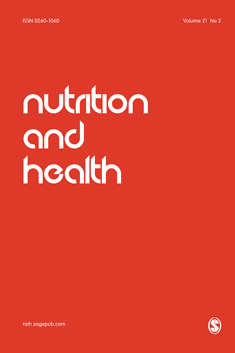
NUTRITION AND HEALTH
Exploring the Vital Link Between Diet and Well-beingNUTRITION AND HEALTH is a distinguished academic journal dedicated to advancing our understanding of the complex interplay between nutrition and health outcomes. Published by SAGE Publications Inc in the United Kingdom, this journal aims to provide a platform for rigorous research, innovative methodologies, and insightful reviews in the fields of nutrition and dietetics. With its ISSN 0260-1060 and E-ISSN 2047-945X, NUTRITION AND HEALTH has established itself as a critical resource for researchers and practitioners alike, boasting a 2023 Scopus ranking that places it in the Q3 quartile across multiple relevant categories, including Medicine and Nutrition and Dietetics. By facilitating open discourse on key issues such as dietary interventions, public health nutrition, and evidence-based practices, the journal significantly contributes to shaping health policies and improving nutritional guidelines. Although not an open-access journal, it remains a vital tool for those dedicated to enhancing human health through nutritional science. As we move into 2024, NUTRITION AND HEALTH continues to embrace multidisciplinary approaches, welcoming submissions that reflect the latest trends and findings in nutrition research.
Nutrition Journal
Unlocking the Secrets of Nutrition and Health.Nutrition Journal is a prestigious open-access publication from BMC, dedicated to advancing the field of nutrition and dietetics since its inception in 2002. With an impressive impact factor and a notable Scopus ranking, it ranks in the top quartile (Q1) in both Medicine (miscellaneous) and Nutrition and Dietetics, highlighting its significant contribution to health sciences. Based in the United Kingdom, the journal covers a broad spectrum of topics, making it an essential resource for researchers, healthcare professionals, and students interested in nutrition's role in health and disease prevention. The journal not only facilitates the dissemination of groundbreaking research but also prioritizes accessibility, allowing global audiences to engage with vital findings that shape dietary practices and public health policies. With a commitment to interdisciplinary collaboration, Nutrition Journal fosters an environment where innovative ideas and evidence-based solutions can flourish, making it a cornerstone reference in the field.
INTERNATIONAL JOURNAL OF FOOD SCIENCES AND NUTRITION
Exploring the forefront of food quality and safety.International Journal of Food Sciences and Nutrition, published by Taylor & Francis Ltd, is a premier, peer-reviewed journal that has established itself as a leading platform for the dissemination of cutting-edge research in the field of food science and nutrition. With an impressive Q1 categorization and an academic rank of #59/389 in Scopus’s Agricultural and Biological Sciences category, this journal is recognized for its significant impact, facilitating critical discussions and advancements related to food quality, safety, and nutritional health. Its historical significance, covering research from as early as 1947 to the present day, underscores the journal's long-standing commitment to scientific rigor and innovation. Researchers and professionals benefit from this journal's comprehensive and diverse range of studies, contributing to informed practices and developments in the food industry and public health. Although the journal is not open access, it provides various access options, ensuring that high-quality research is available to academics and practitioners alike. Stay connected with current trends and breakthroughs in food sciences and nutrition through this highly respected publication.