EXPERT REVIEWS IN MOLECULAR MEDICINE
Scope & Guideline
Advancing the Frontiers of Molecular Medicine
Introduction
Aims and Scopes
- Cancer Biology and Therapeutics:
The journal extensively covers molecular mechanisms of cancer, including tumor biology, therapeutic strategies, and resistance mechanisms, providing a platform for advancements in cancer treatment. - Immunology and Immunotherapy:
Research articles often explore the immune system's role in disease processes, particularly cancer and infections, highlighting novel immunotherapeutic approaches and immune modulation. - Genomics and Epigenetics:
The journal emphasizes the impact of genetic and epigenetic modifications on disease progression and treatment responses, contributing to the understanding of personalized medicine. - Neurology and Neurodegeneration:
A significant focus is placed on molecular pathways involved in neurological disorders, exploring potential biomarkers and therapeutic targets for conditions like Alzheimer's and Parkinson's diseases. - Metabolism and Disease:
The journal examines the intersection of metabolism and various diseases, providing insights into how metabolic alterations contribute to disease pathology and treatment outcomes. - Innovative Therapeutic Approaches:
Contributions often discuss cutting-edge therapies, including gene therapy, targeted treatments, and the use of bioactive compounds, reflecting the journal's commitment to advancing medical science.
Trending and Emerging
- Precision Medicine and Personalized Therapies:
There is a growing focus on tailoring treatments based on individual genetic and epigenetic profiles, emphasizing the importance of personalized approaches in oncology and other fields. - Role of Non-Coding RNAs:
Research on non-coding RNAs, particularly microRNAs and long non-coding RNAs, has surged, highlighting their regulatory roles in cancer and other diseases, and their potential as therapeutic targets. - Immunotherapy Advances:
The journal is increasingly featuring articles on novel immunotherapeutic strategies, including CAR T-cell therapies and immune checkpoint inhibitors, underscoring the importance of immune modulation in cancer treatment. - Microbiome and Disease Interactions:
Emerging studies are focusing on the interplay between the microbiome and various diseases, particularly cancer, suggesting that microbial health could influence disease outcomes and treatment responses. - Metabolomics in Disease Research:
There is a trend towards incorporating metabolomic analyses to understand disease mechanisms, identify biomarkers, and develop therapeutic strategies, reflecting a holistic approach to disease management.
Declining or Waning
- Traditional Pharmacology:
There has been a noticeable decrease in articles solely focused on classical pharmacological approaches, as the journal increasingly emphasizes molecular mechanisms and innovative therapies. - Basic Cellular Biology:
Research centered on fundamental cellular processes without direct clinical implications seems to be waning, as the journal prioritizes studies with translational significance. - General Review Articles:
The frequency of broad, general review articles has declined in favor of more specialized, in-depth analyses that address specific molecular pathways or therapeutic strategies.
Similar Journals

Advances in Cancer Biology-Metastasis
Fostering Collaboration for Cancer Breakthroughs.Advances in Cancer Biology-Metastasis is an emerging journal published by Elsevier, aimed at advancing our understanding of the complexities of cancer biology, with a specific focus on the mechanisms and pathways related to metastasis. With an E-ISSN of 2667-3940, this journal offers a platform for researchers, professionals, and students in the fields of Cancer Research and Cell Biology to disseminate innovative findings and discuss novel therapeutic approaches. Though currently classified in the Q4 quartile across both Cancer Research and Cell Biology categories, the journal aspires to enhance its impact through rigorous peer review and high-quality publication. Positioned to cover the years from 2021 to 2024, it seeks to bridge gaps in foundational knowledge and promote collaborative research efforts that could pivot the current understanding of cancer metastasis. Researchers are encouraged to take advantage of this platform to advocate for advancements in cancer biology, making significant contributions that can influence both academic and clinical practices.

Genes & Diseases
Exploring the molecular pathways of health and illness.Genes & Diseases, published by KEAI PUBLISHING LTD, is a premier open-access journal dedicated to advancing the fields of genetics, biochemistry, and molecular biology. Established in 2014 and headquartered in Beijing, China, this journal has quickly risen to prominence, securing a place in the prestigious Q1 quartile in Biochemistry and Genetics (clinical), as well as Q2 in Cell Biology and Q1 in Molecular Biology as of 2023. With a commitment to disseminating cutting-edge research, Genes & Diseases serves as a critical platform for researchers, professionals, and students alike, ensuring that high-quality scientific work is openly accessible to the global community. The journal's exceptional impact is underscored by its selective Scopus rankings, which reflect its influence and relevance in key scientific domains, making it an essential resource for those exploring the intersections of genetics and disease pathology.
Molecular Oncology
Unlocking Innovations in Molecular Medicine.Molecular Oncology, published by WILEY, is a premier open-access journal that has been at the forefront of cancer research since its inception in 2007. With an impressive impact factor reflective of its outstanding contribution to the field, it holds a prestigious position in the Q1 category across multiple disciplines, including Cancer Research, Genetics, and Molecular Medicine. This journal is essential for researchers and professionals seeking to publish high-quality findings in a rapidly evolving area of study, underscored by its significant Scopus rankings that place it within the top percentiles of Oncology and Molecular Biology. As an open-access journal since 2017, it ensures that vital research is readily available to a global audience, thereby facilitating collaboration and knowledge dissemination among academic and clinical communities. With its commitment to innovative and impactful research, Molecular Oncology continues to be a critical resource for advancing our understanding of cancer biology and treatment.

CELLULAR AND MOLECULAR BIOLOGY
Exploring the Intricacies of Cellular MechanismsCellular and Molecular Biology is a prominent academic journal published by C M B ASSOC, specializing in the dynamic fields of cellular and molecular biology. Established in 1977, this journal has consistently aimed to disseminate groundbreaking research that contributes to our understanding of biochemical processes, cell dynamics, and molecular mechanisms governing life. With its ISSN 0145-5680 and E-ISSN 1165-158X, the journal plays a vital role in the exchange of innovative ideas, evidenced by its coverage of research from 1977 to 2024. Although currently categorized in the Q4 quartile for major disciplines such as Biochemistry and Cell Biology, it is dedicated to fostering the development of the field by welcoming submissions that challenge the conventional understanding and lead to novel insights. Researchers and academics looking to contribute to or stay updated in the rapidly evolving landscape of molecular biology will find this journal a valuable resource for connecting with a global community of scientists.

MUTATION RESEARCH-FUNDAMENTAL AND MOLECULAR MECHANISMS OF MUTAGENESIS
Illuminating the Pathways of Genetic ChangeMUTATION RESEARCH - FUNDAMENTAL AND MOLECULAR MECHANISMS OF MUTAGENESIS is a premier peer-reviewed journal published by Elsevier, dedicated to advancing the understanding of mutagenesis and its broader implications in genetics, health, and molecular biology. With an impressive converged publication history from 1964 to 2024, this journal provides a vital platform for the dissemination of high-quality research findings, contributing significantly to the field's knowledge base. Indexed in Scopus, it holds a Category Quartile ranking of Q3 in Genetics and Q2 in Health, Toxicology, and Mutagenesis, further underscoring its relevance and stature. Access options are available, catering to a diverse audience of researchers, professionals, and students eager to stay informed on the latest developments in mutagenesis research. By bridging experimental studies and theoretical frameworks, the journal plays a crucial role in exploring the fundamental mechanisms underlying genetic mutations and their effects on human health and the environment.
MOLECULAR ASPECTS OF MEDICINE
Transforming Insights into Molecular Health SolutionsMOLECULAR ASPECTS OF MEDICINE is a premier journal published by Elsevier, focusing on groundbreaking research in the fields of biochemistry, molecular biology, and medicine. With an impressive impact factor and ranking within the top quartile across multiple categories, including Q1 in Biochemistry, Clinical Biochemistry, and Molecular Medicine, it serves as an essential platform for sharing innovative findings that advance our understanding of molecular mechanisms in health and disease. The journal, which has been in publication since 1976, provides a diverse range of articles, addressing both fundamental and applied aspects of molecular medicine, thus appealing to a broad audience of researchers, professionals, and students. While MOLECULAR ASPECTS OF MEDICINE does not currently offer Open Access options, it remains a vital resource for accessing high-quality, peer-reviewed scholarly works that significantly contribute to the advancement of biomedical research.
BIOCHIMICA ET BIOPHYSICA ACTA-MOLECULAR BASIS OF DISEASE
Unraveling the Molecular Mysteries of DiseaseBIOCHIMICA ET BIOPHYSICA ACTA-MOLECULAR BASIS OF DISEASE, published by Elsevier, is a pivotal journal in the fields of Molecular Biology and Molecular Medicine, recognized for its high impact factor and robust ranking within Scopus categories, holding prestigious quartiles in Q1 for both disciplines as of 2023. With ISSN 0925-4439 and E-ISSN 1879-260X, this journal fosters cutting-edge research from 1990 to 2025, addressing the critical molecular mechanisms underlying human diseases. Its wide-ranging scope includes original research articles, reviews, and advanced theoretical insights, serving as an essential resource for researchers, clinicians, and students alike. The journal is based in the Netherlands, at RADARWEG 29, 1043 NX AMSTERDAM, and while it does not currently offer an open-access option, it continues to maintain a strong presence in the scientific community, enhancing our understanding of molecular processes in health and disease.
Molecular & Cellular Oncology
Advancing cancer research through molecular insights.Molecular & Cellular Oncology, published by Taylor & Francis Inc, is a vital academic journal dedicated to the exploration of cancer biology through the lens of molecular and cellular mechanisms. Since its inception in 2014, the journal has played a crucial role in disseminating innovative research findings that address the fundamental aspects of cancer research and molecular medicine. With its current ranking in Scopus placing it in the Q3 quartile for both Cancer Research and Molecular Medicine, the journal provides a platform for groundbreaking studies that push the boundaries of our understanding of oncogenesis and therapeutic interventions. Although the journal operates under a subscription model, its dedication to high-quality peer-reviewed research makes it an essential resource for researchers, professionals, and students aiming to contribute to or stay updated in the rapidly evolving field of oncology. As we approach the culmination of its converged years in 2024, Molecular & Cellular Oncology aims to continue fostering collaborations and insights that advance cancer research on a global scale.

GENE
Pioneering Insights in Genetics Since 1976GENE, an esteemed journal published by Elsevier, serves as a vital resource for researchers and professionals in the fields of genetics and medicine. With an ISSN of 0378-1119 and an E-ISSN of 1879-0038, this scholarly journal has been at the forefront of genetic research since its inception in 1976 and is set to continue until 2025. Situated in the Netherlands, GENE is recognized for its significant contributions, reflected in its Q2 ranking in both Genetics and Miscellaneous Medicine categories for 2023. This positioning within the Scopus rankings demonstrates its impact and relevance in a competitive field, where it holds the rank of #129 out of 347 in Genetics, placing it within the 62nd percentile. Although it does not offer open access options, GENE provides invaluable insight into contemporary genetic research, thereby fostering academic discussions and advancements. Researchers, professionals, and students alike will find GENE an essential platform for disseminating knowledge and exploring innovative developments in genetics and associated sciences.
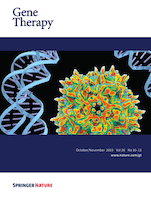
GENE THERAPY
Unleashing the Future of Molecular MedicineGENE THERAPY, published by SpringerNature, is a prestigious academic journal at the forefront of research in the fields of genetics, molecular biology, and molecular medicine. Since its inception in 1994, this journal has evolved into a vital resource for scholars, practitioners, and students, providing cutting-edge insights into gene therapy techniques and innovations. With an impressive impact factor reflecting its significant influence— ranking in the Q1 quartile across multiple categories in 2023—GENE THERAPY offers rigorous peer-reviewed articles that address both basic and applied aspects of gene therapy. The journal is recognized for its role in promoting advancements in therapeutic strategies, thus enhancing understanding of genetic disorders and treatment efficacy. Researchers will find this journal invaluable for publishing their findings, staying updated on the latest breakthroughs, and fostering interdisciplinary collaborations. Engage with the latest in gene therapy by accessing this influential platform, and contribute to a field that holds the potential to transform healthcare outcomes worldwide.