
GREEK ROMAN AND BYZANTINE STUDIES
metrics 2024
Exploring the Depths of Ancient Civilizations
Introduction
GREEK ROMAN AND BYZANTINE STUDIES, published by DUKE UNIVERSITY, is a leading journal dedicated to the exploration of ancient Greek and Roman civilizations as well as Byzantine history. With its ISSN 0017-3916 and E-ISSN 2159-3159, this prestigious journal has established itself as a vital platform for interdisciplinary research, boasting an impact factor worthy of recognition in the academic community. Since its transition to Open Access in 2004, GREEK ROMAN AND BYZANTINE STUDIES has enhanced the accessibility of scholarly work, fostering a collaborative environment for researchers, students, and professionals alike. Ranked in the Q2 category in Classics and History, and Q3 in Cultural Studies, this journal continues to be an essential resource for those investigating the philosophical, historical, and cultural dimensions of ancient societies. With a focus on innovative research and critical scholarship, GREEK ROMAN AND BYZANTINE STUDIES stands as a cornerstone for advancing knowledge and understanding within these influential fields.
Metrics 2024
 0.130.20-22
Metrics History
Rank 2024
Scopus
JCI (Web Of Science)
Quartile History
Similar Journals

Cuadernos de Filologia Clasica-Estudios Griegos e Indoeuropeos
Advancing the Study of Classics and LinguisticsCuadernos de Filologia Clasica-Estudios Griegos e Indoeuropeos, published by Universidad Complutense de Madrid, serves as a vital platform in the fields of Classics and Linguistics. With an ISSN of 1131-9070 and an E-ISSN of 1988-2637, this journal showcases rigorous academic research that spans both Greek studies and Indo-European linguistics. Recognized within the Q1 quartile in Classics and the Q2 quartile in Linguistics and Language, it highlights its standing among peers in these disciplines, particularly reflecting its commitment to advancing scholarly conversation. Though currently lacking in Open Access options, its emphasis on quality content ensures it maintains an intellectual influence, as evidenced by its ranking of #112 in Classics and efforts to engage researchers and students alike. The journal's coverage from 2011 to 2024 positions it as a rich historical resource, while its address in Madrid places it at the heart of European classical studies. By offering insights into the fundamental aspects of language, literature, and ancient cultures, Cuadernos de Filologia Clasica remains a critical resource for those seeking to deepen their understanding of the classical world and its enduring linguistic legacies.
Early Science and Medicine
Revealing the Intersections of Knowledge and HealingEarly Science and Medicine is a renowned academic journal published by BRILL, dedicated to exploring the intersections between historical and medical studies. With a distinguished history since its inception in 1996, the journal caters to an interdisciplinary audience, encompassing vital aspects of History, History and Philosophy of Science, and Medicine. It enjoys commendable rankings, being in the Q2 quartile in History, among others, reflecting its significant contribution to these fields. The journal's editorial commitments aim to advance scholarly discussions on the development of medical practices, theories, and their historical contexts, making it an essential resource for researchers, professionals, and students alike. Although currently not open access, Early Science and Medicine offers comprehensive analyses and rich content that engage with and enrich our understanding of the complex relationship between science and medicine throughout history. For more information, you can find the journal at its esteemed address in Leiden, Netherlands.
GREECE & ROME
Illuminating the Classics for Modern MindsGREECE & ROME, published by Cambridge University Press, is a prestigious journal dedicated to the study of classical antiquity and its enduring influence on contemporary culture. This journal, indexed with ISSN 0017-3835 and E-ISSN 1477-4550, offers a platform for scholarly articles that delve into various aspects of Greek and Roman societies, literature, art, and history. With a rich history that spans from 1931 to 2024, it has consistently maintained an important position in the academic community, achieving a Q2 ranking in Classics and a Q3 ranking in Arts and Humanities as of 2023. Highlighted by a Scopus ranking of #74 out of 170 in Classics, the journal appeals to a diverse audience, including researchers, professionals, and students aspiring to deepen their understanding of the classical world. Although it does not offer open access, GREECE & ROME is committed to the dissemination of critical research and thought-provoking discourse, making significant contributions to the fields and encouraging intellectual exchange across disciplines.

Konstantinove Listy-Constantines Letters
Fostering scholarly discourse across diverse academic landscapes.Konstantinove Listy - Constantines Letters is a premier academic journal published by the Constantine Philosopher University in Nitra, Slovakia. With a focus on the interdisciplinary exploration of historical, philosophical, and religious studies, this journal has established itself as a significant platform for scholarly discourse since its inception in 2015. The journal's impressive rankings—Q1 in History and Religious Studies, along with Q2 in Philosophy—demonstrate its commitment to high-quality research, concurrent with its strong performance in Scopus rankings, placing it in the 80th percentile for both Religious Studies and History disciplines. As an integral part of the academic landscape, Konstantinove Listy invites researchers, professionals, and students alike to contribute to its mission of advancing knowledge and understanding in these vital fields. While the journal operates under traditional publishing, it is recognized for its accessibility and contribution to fostering a vibrant scholarly community.
CLASSICAL JOURNAL
Bridging the Past with Contemporary UnderstandingCLASSICAL JOURNAL, published by the esteemed Johns Hopkins University Press, stands as a premier academic platform dedicated to the exploration and analysis of classical studies, focusing on ancient Greek and Roman literature, history, and culture. With an impressive impact factor and categorized in the Q1 quartile for Classics in 2023, the journal provides high-quality, peer-reviewed articles that contribute significantly to our understanding of classical antiquity. Researchers and students from around the globe turn to CLASSICAL JOURNAL for groundbreaking insights, as it consistently ranks in the top tier of its field, occupying rank #52 in the Scopus listings within the Arts and Humanities sector, placing it in the 69th percentile. While the journal maintains a traditional subscription model, its rich content and scholarly relevance make it an essential resource for anyone engaged in the study of the classical world, enhancing the academic discourse surrounding this timeless and influential area of study.
BYZANTINE AND MODERN GREEK STUDIES
Bridging Byzantine Legacy with Modern IdentityBYZANTINE AND MODERN GREEK STUDIES, published by Cambridge University Press, is a premier journal dedicated to the exploration of Byzantine and modern Greek history, literature, culture, and linguistics. With an ISSN of 0307-0131 and an E-ISSN of 1749-625X, the journal has established itself as a significant contribution to the field since its inception in 1975, with converged publication years extending to 2024. It currently holds a commendable ranking in various categories, including Q2 in Cultural Studies and History, as well as Q1 in Literature and Literary Theory, reflecting its academic rigor and impact. Researchers and scholars can access a wealth of knowledge that highlights the intricate connections between Byzantine heritage and modern Greek identity, all while benefiting from the journal's high visibility in indexes such as Scopus, which ranks it favorably within the top percentiles of related fields. The journal's commitment to fostering interdisciplinary dialogue makes it an invaluable resource for those seeking to deepen their understanding and appreciation of Greece's historical and cultural narrative.
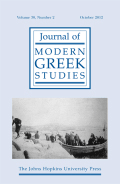
JOURNAL OF MODERN GREEK STUDIES
Advancing Interdisciplinary Insights into Greece's Rich HeritageJOURNAL OF MODERN GREEK STUDIES, published by Johns Hopkins University Press, is an esteemed academic journal dedicated to the exploration and analysis of contemporary Greek culture, history, and society. With its ISSN 0738-1727 and E-ISSN 1086-3265, this journal significantly contributes to the fields of Cultural Studies, History, Sociology, and Political Science, consistently ranking within the upper quartiles in 2023. As a vital resource for researchers, professionals, and students, the journal provides a platform for interdisciplinary scholarship and critical discourse, enhancing our understanding of modern Greece from various perspectives. Readers can access a range of scholarly articles and reviews that delve into the complexities of Greek identity and its historical narratives. With converged years from 2002 to 2024, the JOURNAL OF MODERN GREEK STUDIES remains a pivotal reference point for those interested in Greek studies, underlining its importance and relevance within both national and international academic circles.

Palaeohispanica-Revista sobre Lenguas y Culturas de la Hispania Antigua
Fostering Insight into Iberia's Linguistic and Cultural EvolutionPalaeohispanica-Revista sobre Lenguas y Culturas de la Hispania Antigua is a distinguished academic journal dedicated to the study of ancient Spanish languages and cultures. Published by the INST FERNANDO CATOLICO in Spain, this journal serves as an essential platform for scholars and researchers exploring the rich historical and linguistic heritage of Iberia. With a specific focus on the intersections of archaeology, history, linguistics, and cultural studies, Palaeohispanica has garnered substantial recognition, reflecting its commitment to high-quality research as evidenced by its rankings in prominent Scopus categories, reaching the 80th percentile in History and the 69th in Archaeology. While the journal operates without an Open Access option, it continues to contribute significantly to the academic discourse surrounding ancient Hispania from 2019 to 2023, ensuring that vital research is accessible to a discerning audience. As a Q3 and Q2 ranked publication in various relevant categories, it is an invaluable resource for professionals, researchers, and students eager to delve into the complexities of ancient languages and cultures.
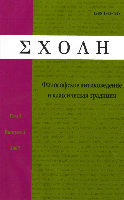
Schole-Filosofskoe Antikovedenie i Klassicheskaya Traditsiya-Schole-Ancient Philosophy and the Classical Tradition
Connecting Past Insights with Present PerspectivesSchole-Filosofskoe Antikovedenie i Klassicheskaya Traditsiya-Schole-Ancient Philosophy and the Classical Tradition is a peer-reviewed academic journal published by NOVOSIBIRSK STATE UNIV, specializing in the fields of Classics and Philosophy. Since its establishment, and particularly with its transition to Open Access in 2007, this journal has become a significant platform for scholarly discourse on ancient philosophical thought and its enduring influence on the classical tradition. The journal's commitment to high academic standards is evidenced by its impressive category quartiles, ranking Q1 in Classics and Q2 in Philosophy as of 2023. With a Scopus rank of #70/170 in Classics and #462/806 in Philosophy, Schole serves as an essential resource for researchers, professionals, and students interested in the intersections of ancient thought and contemporary philosophical inquiry. The journal is based in the Russian Federation and is dedicated to fostering a global dialogue on subjects that shape our understanding of ancient and classical ideas.

RAMUS-CRITICAL STUDIES IN GREEK AND ROMAN LITERATURE
Unraveling the Threads of Classical LiteratureRAMUS: Critical Studies in Greek and Roman Literature, published by Cambridge University Press, stands as a premier journal dedicated to the exploration and analysis of classical literary texts. Established in 2002, this journal has garnered recognition in its field, achieving a Q1 category ranking in both Classics and Literature and Literary Theory for 2023, which reflects its commitment to scholarly excellence. With an impressive Scopus ranking, where it places in the 76th percentile for Literature and Literary Theory and the 70th percentile for Classics, RAMUS is a critical resource for researchers, professionals, and students engaged in the study of ancient texts and their lasting impact on contemporary literature. Although currently not an open-access journal, it offers a wealth of peer-reviewed articles, reviews, and critical essays that enrich understanding and foster discussions in the realms of Greek and Roman literary traditions. This journal not only serves as an academic platform but also contributes to the ongoing dialogue on the relevance of classical literature in today's cultural and literary discourse.