
GRUPPENPSYCHOTHERAPIE UND GRUPPENDYNAMIK
Scope & Guideline
Cultivating Knowledge for Group Therapy Excellence
Introduction
Aims and Scopes
- Group Psychotherapy Techniques:
The journal explores various methodologies and techniques in group psychotherapy, focusing on how these approaches can be adapted to meet the needs of diverse populations, including children, adolescents, and adults. - Psychoanalytic and Psychodynamic Perspectives:
It consistently emphasizes psychoanalytic and psychodynamic theories as they pertain to group dynamics, providing a platform for discussing their implications in clinical practice. - Application in Organizational Settings:
The journal highlights the relevance of group psychotherapy in organizational contexts, discussing how therapeutic principles can be integrated into workplace environments to enhance cooperation and personal development. - Crisis and Trauma Response:
A core area of focus includes the role of group therapy in addressing crises and trauma, particularly in the context of recent global events, which has led to a growing need for collective therapeutic approaches. - Historical and Theoretical Analysis:
The journal includes discussions on the historical development of group analysis theories and their evolution, providing a rich context for contemporary practices. - Educational and Training Frameworks:
It also addresses educational aspects, focusing on the training and professional development of group psychotherapists, ensuring that practitioners are well-equipped to handle complex group dynamics.
Trending and Emerging
- Integration of Technology in Therapy:
A significant trend is the integration of technology in group therapy, especially in response to the COVID-19 pandemic. This includes online group sessions and the implications of virtual environments for therapeutic work. - Focus on Trauma-Informed Care:
There is an emerging emphasis on trauma-informed care within group therapy, reflecting a societal recognition of the long-lasting impacts of trauma and the importance of addressing these issues in therapeutic settings. - Interdisciplinary Approaches:
The journal increasingly features interdisciplinary approaches, combining insights from psychology, sociology, and organizational studies to enrich the understanding of group dynamics. - Cultural and Societal Contexts:
Recent publications show a growing interest in the influence of cultural and societal contexts on group therapy, acknowledging how global events and cultural differences shape therapeutic practices. - Research on Group Processes:
There is a rising trend in empirical research focused on group processes, including studies on group dynamics, transference phenomena, and the efficacy of various therapeutic interventions in group settings.
Declining or Waning
- Traditional Psychoanalytic Methods:
There is a noticeable decrease in the discussion of more traditional psychoanalytic methods within group therapy, as contemporary articles tend to favor integrative and innovative approaches that resonate more with current therapeutic practices. - Historical Case Studies:
Less emphasis is placed on historical case studies and retrospective analyses, suggesting a shift towards more immediate and practical applications of group therapy rather than theoretical explorations of past practices. - Group Dynamics in Non-clinical Settings:
The focus on group dynamics outside clinical settings, such as community or non-therapeutic groups, has diminished, indicating a growing concentration on clinical applications in therapeutic contexts. - Non-psychodynamic Approaches:
There is a waning interest in non-psychodynamic approaches to group therapy, as the journal increasingly highlights psychodynamic frameworks, potentially sidelining other valuable methodologies.
Similar Journals
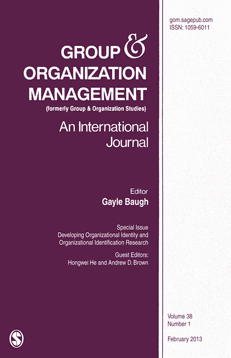
GROUP & ORGANIZATION MANAGEMENT
Enhancing Understanding of Group ProcessesGROUP & ORGANIZATION MANAGEMENT, published by SAGE Publications Inc., stands as a premier interdisciplinary journal focusing on the dynamics of groups and organizations within the fields of applied psychology, organizational behavior, and human resource management. With a distinguished Q1 ranking across multiple categories—specifically, Applied Psychology, Arts and Humanities, and Organizational Behavior and Human Resource Management—this journal is acclaimed for its rigorous peer-reviewed research and impactful contributions. The journal aims to promote scholarly dialogue and practical advancements that enhance understanding of group processes and organizational phenomena. With its long-standing history—from its inception in 1976 to the present—and a notable Scopus Rank that places it within the top tiers of its category, GROUP & ORGANIZATION MANAGEMENT is essential reading for researchers, practitioners, and students who are keen on exploring innovative theories and applications within this critical field.
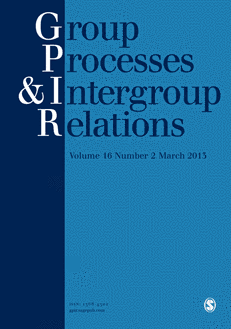
GROUP PROCESSES & INTERGROUP RELATIONS
Advancing the understanding of social dynamics.GROUP PROCESSES & INTERGROUP RELATIONS, published by SAGE Publications Ltd, stands as a pivotal journal in the realm of social sciences, particularly within the fields of social psychology, communication, and cultural studies. With an impressive impact factor reflecting its esteemed position, this journal is categorized in the Q1 quartile across multiple disciplines, highlighting its significant influence and reach within academia. Since its inception in 1998, the journal has dedicated itself to advancing the understanding of group dynamics and intergroup interactions, offering a platform for innovative research and critical discourse. Its coverage extends to theoretical and empirical studies that illuminate the complexities of social behavior, making it a vital resource for researchers, professionals, and students alike. Although it does not provide open access, the journal’s thorough analyses and contributions enrich academic libraries and enhance scholarly pursuit. Embrace the opportunity to engage with cutting-edge insights from one of the most revered journals in social sciences.
Psychoanalytic Psychotherapy
Transforming Clinical Practice through Psychoanalytic ResearchPsychoanalytic Psychotherapy is a distinguished journal published by Routledge Journals, Taylor & Francis Ltd, focusing on the intersection of psychoanalysis and psychotherapy. Established in the United Kingdom and spanning its influential discourse since 1985, the journal has become an essential resource for researchers, clinicians, and students in the fields of Clinical Psychology and Psychiatry and Mental Health. With an impact factor reflecting its critical role in contemporary mental health discussions, Psychoanalytic Psychotherapy is indexed in Scopus and proudly holds a Q3 ranking in both Clinical Psychology and Psychiatry categories. The journal aims to publish cutting-edge research, theoretical advancements, and clinical applications, fostering a deeper understanding of psychoanalytic principles in therapeutic settings. Although it does not offer Open Access, the journal remains crucial for professionals seeking to explore the latest insights and empirical findings in psychoanalytic therapy.
FORUM DER PSYCHOANALYSE
Illuminating the Pathways of Clinical PsychologyFORUM DER PSYCHOANALYSE, published by SPRINGER, is a distinguished German journal dedicated to the fields of Clinical Psychology and Psychiatry and Mental Health. With an ISSN of 0178-7667 and an E-ISSN of 1437-0751, this journal plays a crucial role in the dissemination of contemporary psychoanalytic theory and practice. Recognized with a Q3 ranking in both Clinical Psychology and Psychiatry and Mental Health for 2023, it serves as a vital resource for researchers and practitioners seeking to explore the intersection of psychoanalytic thought with current clinical practices and mental health paradigms. Since its inception in 1987, FORUM DER PSYCHOANALYSE has provided a platform for rigorous peer-reviewed articles, detailed case studies, and theoretical explorations, fostering a vibrant community of psychoanalysts and mental health professionals. As an essential publication for those engaged in psychoanalytic research and clinical applications, it upholds high scholarly standards while contributing to the ongoing discourse in mental health and psychoanalysis.
GROUP DECISION AND NEGOTIATION
Unraveling the Complexities of Collective ChoicesGROUP DECISION AND NEGOTIATION, published by Springer, is a leading academic journal that fosters the exploration of the dynamics inherent in group decision-making and negotiation processes. With an ISSN of 0926-2644 and an E-ISSN of 1572-9907, this journal, based in the Netherlands, has significantly contributed to its field since its inception in 1992 and will continue to do so through 2024. Renowned for its rigorous peer-reviewed content, GROUP DECISION AND NEGOTIATION holds prestigious quartile rankings across various categories, including Q1 in Arts and Humanities and Social Sciences, and Q2 in Decision Sciences and Management of Technology and Innovation as of 2023. Its impressive Scopus rankings reflect its substantial influence, with a high percentile standing in multiple disciplines, making it a vital resource for researchers, professionals, and students interested in the intricacies of collaborative and strategic decision-making. The journal’s commitment to advancing knowledge in this dynamic area underscores its importance in bridging theory and practice, establishing it as an essential read for anyone engaged in the science of decision and negotiation.

Psychodynamic Practice
Unraveling the Complexity of Therapeutic ProcessesPsychodynamic Practice is a premier journal dedicated to advancing the field of clinical psychology through the lens of psychodynamic theory and practice. Published by Routledge Journals, Taylor & Francis Ltd, this UK-based journal provides a vital platform for the dissemination of original research, critical reviews, and theoretical discussions from 2002 to 2024, reflecting on significant developments in psychodynamic approaches to mental health. Although currently categorized in Q4 of Clinical Psychology in 2023, the journal's commitment to quality content encourages submissions that contribute to the exploration of human experience, therapeutic processes, and the intricacies of the psyche. While not an open access journal, it is an essential resource for researchers, practitioners, and students seeking to deepen their understanding of psychodynamic theories in contemporary clinical settings. With an ISSN of 1475-3634 and an E-ISSN of 1475-3626, Psychodynamic Practice is poised to foster academic dialogue and support evidence-based practices in the field.

Psicoterapia e Scienze Umane
Unveiling Emerging Trends in Psychotherapy and PsychologyPsicoterapia e Scienze Umane is a significant academic journal published by FRANCO ANGELI, dedicated to the field of clinical psychology. With an ISSN of 0394-2864 and E-ISSN 1972-5043, the journal has established itself as an essential resource for researchers, professionals, and students interested in the interplay between psychotherapy and human sciences. Based in Milan, Italy, it encompasses a wide range of topics relevant to contemporary psychological practices and theories, aiming to bridge empirical research and psychotherapeutic application. Despite its Q4 ranking in the 2023 Clinical Psychology category, Psicoterapia e Scienze Umane provides a platform for innovative discussions and emerging trends in the field, welcoming contributions that can enhance the understanding of human behavior and mental health. While not categorized as an open-access journal, it offers valuable insights to its readers, contributing to the continual advancement of psychological science.

PSYCHE-ZEITSCHRIFT FUR PSYCHOANALYSE UND IHRE ANWENDUNGEN
Illuminating the Intersections of Theory and ApplicationPSYCHE-ZEITSCHRIFT FUR PSYCHOANALYSE UND IHRE ANWENDUNGEN, published by Klett-Cotta Verlag, is a distinguished journal in the field of psychoanalysis, dedicated to exploring the intricate intersections of psychology, clinical practice, and theoretical applications. With a rich history dating back to 1951, this journal offers a platform for innovative research and discourse, contributing significantly to both the clinical psychology and psychiatry domains. While the journal's coverage in Scopus has been discontinued since 2017, it remains an essential resource for scholars and practitioners seeking insights into psychoanalytic theory and its real-world applications. Although it is not currently an open-access journal, its rigorous peer-reviewed articles provide invaluable knowledge and foster academic dialogue that is crucial for advancing the field. With Scopus rankings indicating its relevance and impact within the fields of psychology and mental health, PSYCHE continues to hold a prominent position for those dedicated to the advancement of psychoanalytic thought.
GROUP DYNAMICS-THEORY RESEARCH AND PRACTICE
Pioneering Research in Applied and Social PsychologyGROUP DYNAMICS: THEORY, RESEARCH AND PRACTICE, published by the Educational Publishing Foundation of the American Psychological Association, is a prominent journal dedicated to exploring the complexities of group behavior in various contexts. With an ISSN of 1089-2699 and an E-ISSN of 1930-7802, this journal stands out in the evolving fields of Applied Psychology and Social Psychology, both of which reflect a Q2 category in the 2023 rankings. Operating from the heart of Washington D.C., this journal has been a pivotal resource for scholars and practitioners since its inception in 1997 and continues to publish cutting-edge research through to 2024. With Scopus rankings placing it in the top 25% of journals in its category, GROUP DYNAMICS is instrumental for those investigating interpersonal, organizational, and community group dynamics. Although not an open-access journal, it remains an essential platform for disseminating knowledge that contributes to understanding and improving group interactions across diverse psychological applications.

PSYCHIATRIE DE L ENFANT
Advancing the understanding of child mental health.PSYCHIATRIE DE L ENFANT is a distinguished academic journal published by PRESSES UNIV FRANCE, focusing on the significant realm of child psychiatry and developmental psychology. With its ISSN 0079-726X and E-ISSN 2102-5320, this journal provides a platform for researchers, practitioners, and educators to explore various topics surrounding mental health in children. Although the coverage in Scopus has been discontinued since 2018, with ranks highlighting its placement in the Developmental and Educational Psychology and Psychiatry and Mental Health categories, the journal's contributions remain pivotal for professionals aiming to advance their understanding of child mental health. Though it does not currently offer open access, the journal invites rigorous studies, clinical insights, and theoretical discussions that are crucial for the evolution of child psychiatry. As such, PSYCHIATRIE DE L ENFANT plays an essential role in shaping future research and practices in the field.